ESA Installs Quantum Computer in Data Center, but Satellite Advantage Is Decades Out
The European Space Agency installed its first quantum computer last week at its ESRIN satellite data center outside Rome — a six-qubit silicon machine from Irish startup Equal1 that fits in a standard server rack, runs on about 1.6 kilowatts of power, and cools itself without a dilution refrigerator, according to the ESA’s official announcement. The milestone is real. So is the caveat: ESA’s own research concluded three years ago that quantum advantage for full-scale satellite data processing is at minimum 15 years away, a conclusion documented in the agency’s QC4EO study.
What arrived at ESRIN on July 15, 2026, is not a production upgrade to ESA’s satellite processing pipeline. It is a precision instrument for learning what quantum hardware can and cannot do with real Earth observation data — while quantum computing is still too early-stage to answer that question definitively.
The milestone itself is architecturally significant: Bell-1 is the first quantum processor to run inside an operational space-agency data center without any dedicated facility preparation, demonstrating for the first time that a quantum computer can be deployed as straightforwardly as a new server.
What Bell-1 Is and Why It Fits in a Server Room
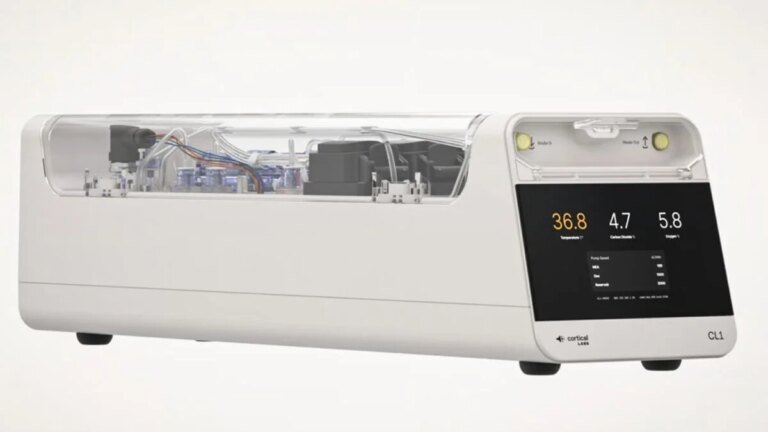
Equal1’s Bell-1 is a six-qubit silicon spin qubit system built using CMOS manufacturing — the same foundry process that produces the chips inside smartphones and laptops, as detailed in Equal1’s November 2025 agreement announcement. That manufacturing heritage is the entire point of the machine’s practical advantage.
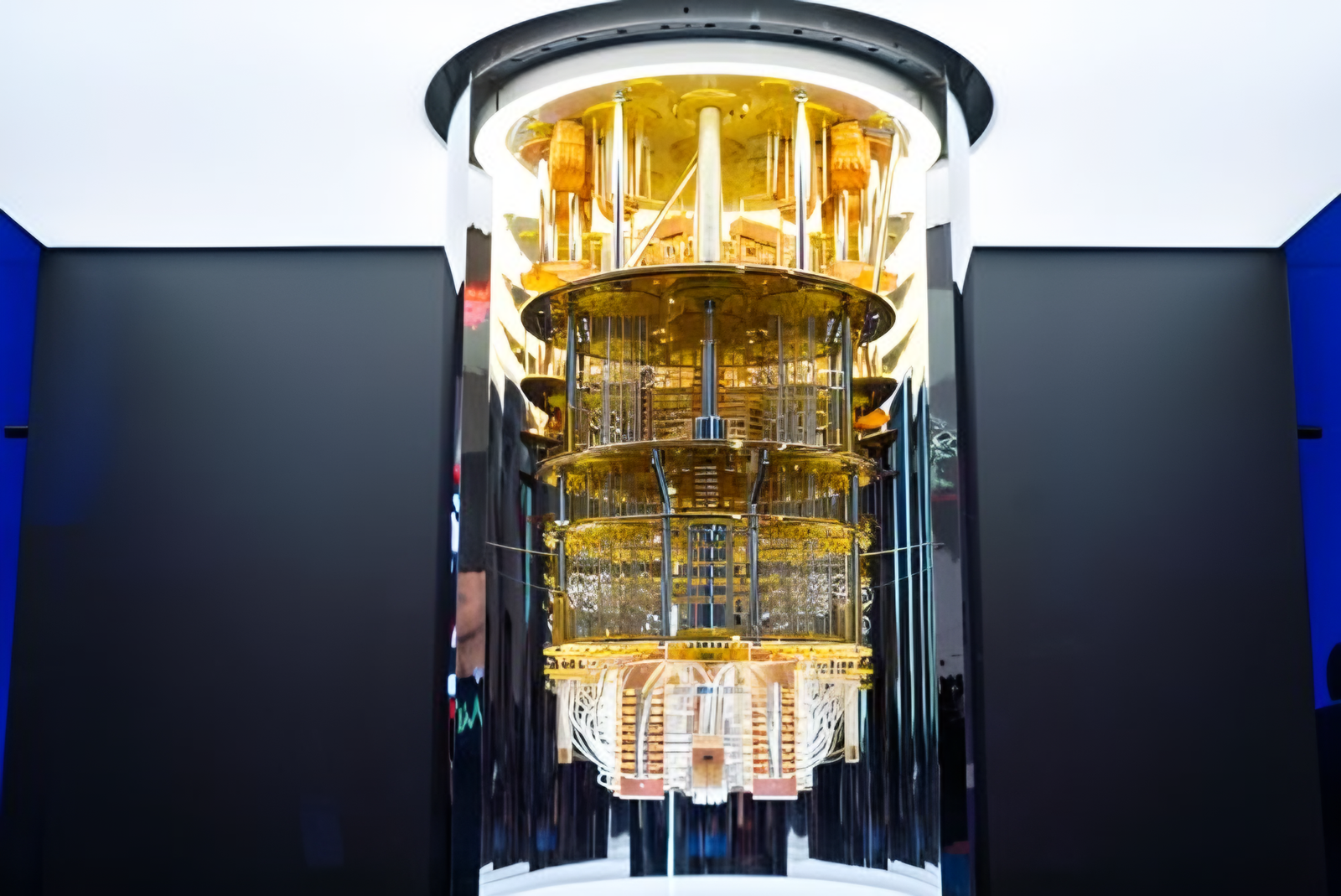
Competing quantum computing platforms from IBM and Google use superconducting circuits cooled to roughly 15 millikelvin — about 20 times colder than Bell-1’s operating temperature of 0.3 kelvin, as documented in technical reviews of superconducting quantum systems. That temperature gap requires dilution refrigerators: bespoke, building-scale cryogenic systems that consume 10 to 25 kilowatts for their cooling plant alone and need dedicated shielded rooms to function. Bell-1, by contrast, contains an integrated closed-cycle cryocooler — roughly the size and electrical footprint of a single high-end GPU server — that brings the chip to 0.3 kelvin without external liquid helium tanks or special room preparation, as described in Equal1’s technical specifications.
The practical upshot is that Bell-1 was installed directly into ESA-ESRIN’s existing data center infrastructure, sitting alongside the agency’s HPE Space HPC cluster rather than requiring a separate facility, as Data Center Dynamics confirmed. CMOS fabrication also means that as Equal1 scales qubit count in future Bell systems, it can do so through standard semiconductor foundry processes rather than building bespoke manufacturing lines.
The operating temperature compromise does carry tradeoffs. Silicon spin qubits running at 0.3 kelvin face decoherence challenges — the tendency of qubits to lose their quantum state to environmental noise — and the six-qubit configuration of Bell-1 is far below the threshold where quantum error correction becomes practical. Useful quantum error correction requires at minimum three physical qubits per logical qubit and substantial overhead, putting error-corrected computation well beyond six-qubit hardware.
How the Hybrid Architecture Actually Works
Bell-1 will not replace ESA’s classical HPC cluster. It will run alongside it in a hybrid architecture where the classical system handles the data-heavy work that quantum hardware cannot yet touch — ingesting petabytes of Sentinel satellite imagery, preprocessing raw sensor data, and processing outputs — while Bell-1 handles specific algorithmic subroutines where quantum properties might offer an advantage, as The Quantum Insider’s reporting on the Phi-lab pilot confirms.
The use cases under investigation are drawn directly from ESA’s 2023 Quantum Computing for Earth Observation study, which mapped the computational structure of satellite data problems against the expected capabilities of near-term quantum hardware. Two use cases stand out as near-term candidates, according to the QC4EO study’s use case analysis.
Hybrid quantum neural networks for land use and land cover classification — a machine learning task that involves classifying satellite pixels by vegetation, urban area, water, and other categories — could in principle benefit from quantum kernel methods that map high-dimensional data into quantum state spaces more efficiently than classical kernel approximations. And satellite mission planning for ESA’s constellation — an optimization problem asking which satellite should acquire which ground target in what order — is the class of combinatorial scheduling problem where quantum annealing and quantum optimization algorithms have received the most research investment, a point underscored by a July 2026 Thales and Pasqal demonstration using Maximum Independent Set methods on a neutral-atom quantum processor.
A third application, Synthetic Aperture Radar raw data processing, involves the Range Doppler algorithm — a frequency-domain computation that transforms raw radar signals into the resolved imagery used in flood monitoring, subsidence detection, and ice-sheet tracking. ESA’s study identified a quantum Range Doppler algorithm as a theoretically promising target because Fourier transforms — the core of the classical algorithm — have quantum analogs that scale more efficiently for certain input sizes, per the QC4EO study’s SAR processing use case.
ESA’s Own Roadmap Study Put Full Satellite Data Quantum Advantage 15-Plus Years Out
Before describing what ESA hopes Bell-1 will demonstrate, it is important to understand what ESA’s own commissioned research said it would not demonstrate — at least not on a six-qubit system in the next year.
The 2023 QC4EO study, conducted by a consortium including Forschungszentrum Jülich, Thales Alenia Space, INFN, and IQM under ESA contract, evaluated 12 Earth observation use cases across a 15-year timeline, according to the study’s executive summary. Its conclusion was direct: small problem instances of EO tasks could be experimentally tractable on quantum hardware in a three-to-five year window. Full-size operational problems — the scale at which quantum computing would actually change how ESA processes satellite data — require hardware that does not yet exist and is not expected to exist for at least 15 years, per the same QC4EO study timeline.
The study identified superconducting qubits and ion-trap systems as “the most promising technologies” for its projected timeline — neither of which describes Equal1’s CMOS silicon spin approach. That does not disqualify Bell-1: the study predates its commercial availability, and CMOS silicon spin qubits’ room-for-growth scaling story is precisely why they represent a serious long-term bet. But it does set the context for what a six-qubit pilot is and is not. The field overall remains in what researchers call the NISQ era — Noisy Intermediate-Scale Quantum — where hardware is too small and error-prone for most practically useful computations, and hybrid quantum-classical approaches represent the most realistic path to near-term value, as a July 2026 analysis of NISQ-era limitations by physicist Amit Hagar makes plain.
A July 2026 preprint by Hagar argued that with one contested exception, every NISQ-era flagship claim of “quantum advantage” has been classically reproduced or foreclosed by a simulability theorem within 18 months, according to the paper’s abstract. That is the context against which any honest pilot program must be measured.
Giuseppe Borghi, Head of ESA’s Φ-lab Division, framed Bell-1’s arrival in exactly these terms: the goal is to rigorously identify where quantum methods deliver real value, not to assume that they will. “By bringing quantum computing into our Earth observation research environment, we can rigorously test where it delivers real value, develop hybrid algorithms for practical applications, and build the scientific foundations for the next generation of climate, weather and Earth intelligence,” Borghi told The Quantum Insider.
What the Pilot Will Actually Test
After installation, Bell-1 is available for ESA internal research for one year from commissioning. The Φ-lab plans to complete a pilot demonstration by the end of 2026, after which findings will be shared with the broader scientific community at a joint workshop co-hosted with Equal1, as The Quantum Insider reported.
The pilot’s value is not primarily in its results. It is in the research infrastructure it creates. On-premises access — running an algorithm against real Earth observation datasets, observing errors, modifying the circuit, running it again — is qualitatively different from submitting jobs to a cloud-based quantum computer operated by a third party, a distinction The Quantum Insider confirmed in its reporting on the testbed’s design. That access loop, iterated repeatedly, is what tends to generate the unexpected observations that move a research field forward.
Equal1’s CTO Brendan Barry described the installation as a template for broader deployment: “The integration of our quantum hardware within ESA’s high-performance computing environment will not only accelerate critical Earth observation research but also serve as a blueprint for how quantum and classical systems can collaboratively address grand scientific challenges,” Barry told ESA.
For scale comparison: IBM’s Nighthawk processor, independently validated in June 2026, operates with 120 physical qubits and passed performance verification in particle physics simulation and network optimization, as reported by TechTimes. Google’s Willow chip demonstrated below-threshold error correction with over 100 qubits in late 2024. Bell-1’s six qubits place it at an early demonstration scale appropriate for algorithm development and hardware characterization — not for competing with production-grade systems on problem size.
Equal1 raised a $60 million Series A in January 2026, bringing the company’s total funding to over $85 million, according to The Quantum Insider’s coverage of the round. The Dublin-based company employs around 45 people and was founded in 2017 by Dirk Leipold, a semiconductor veteran with prior experience at Qorvo and Texas Instruments, per the same coverage.
What Comes Next
ESA will release pilot findings at the joint workshop following the end of the one-year program. Whether those findings will show any measurable quantum advantage over classical methods for any of the identified use cases is genuinely unknown — and that honesty is part of what makes the installation scientifically credible. Simonetta Cheli, ESA’s Director of Earth Observation Programmes, put the stakes plainly: “By bringing quantum computing into our Earth observation ecosystem, we are exploring technologies that could transform how we extract knowledge from satellite data — accelerating scientific discovery while enabling faster, more informed responses to global challenges,” she said in the official ESA statement.
The rack in Frascati is running. The question of whether quantum computing will eventually earn its place in the satellite data pipeline is now something ESA can test from the inside — one algorithm, one dataset, one correction at a time.
Frequently Asked Questions
What is a silicon spin qubit and how is it different from the quantum computers IBM and Google use?
Silicon spin qubits store quantum information in the spin state of a single electron trapped in a silicon chip made using standard CMOS semiconductor manufacturing — the same process that produces transistors in smartphones. IBM and Google use superconducting qubits, which require cooling to roughly 15 millikelvin (about 20 times colder than Bell-1’s 0.3 kelvin operating point) using dilution refrigerators that are the size of large appliances and consume substantially more power than a standard server, as reviews of superconducting quantum systems confirm. Bell-1’s warmer operating temperature is what allows it to fit in a standard data center rack without a custom facility.
Can quantum computers actually process satellite data better than classical supercomputers today?
Not at current hardware scales. ESA’s own 2023 QC4EO study, which evaluated 12 Earth observation use cases, concluded that full-size operational satellite data problems will require quantum hardware that does not yet exist — and is not expected to be available for at least 15 years, according to the study’s findings. Small problem instances may be experimentally tractable in three to five years. Bell-1’s six-qubit pilot is a benchmarking and algorithm-development exercise — valuable for learning where quantum methods may eventually apply — not a production system that outperforms classical HPC today.
What is hybrid quantum-classical computing and why does ESA use it?
Hybrid quantum-classical computing divides a computational task between a classical processor and a quantum processor, with each handling the portion it does best. As Microsoft’s Azure Quantum documentation explains, the classical computer manages data input, output, and algorithm orchestration; the quantum processor handles specific mathematical subroutines — such as quantum kernel evaluations or optimization subproblems — that may benefit from superposition and entanglement. ESA uses this approach because near-term quantum hardware is too small and error-prone to run algorithms end-to-end, but certain subroutines within hybrid Earth observation algorithms may still benefit from quantum processing even on a six-qubit system.
What happens at the end of the pilot program?
After the one-year commissioning period and before the planned end-of-2026 pilot demonstration, ESA Φ-lab and Equal1 plan to host a joint scientific workshop to share results with the broader research community, as The Quantum Insider confirmed. The findings will reveal whether any of the tested use cases — land classification, mission planning, or SAR data processing — showed measurable quantum benefit over purely classical approaches on real Earth observation datasets. Those results will inform whether and how quantum hardware scales into ESA’s long-term satellite data infrastructure.