For the first time in history, scientists have detected sugar in interstellar space, and the discovery touches on one of humanity’s biggest questions: if an ingredient linked to the origin of life floats among the stars, the likelihood increases that life, as we know it, is not exclusive to planet Earth.
A discovery announced on July 13, 2026, has literally sweetened one of science’s greatest questions. For the first time in history, astronomers have identified sugar in interstellar space, a milestone that changes the way we view the chemistry of the cosmos. According to g1, scientists detected for the first time a real sugar in the interstellar medium, a discovery that reinforces the hypothesis that the ingredients linked to the origin of life may be much more common in the universe than previously thought. It’s not a figure of speech: there is sugar floating among the stars.
The name of this molecule is erythrose, a sugar composed of four carbon atoms. According to Correio Braziliense, erythrose is the first real sugar confirmed outside Earth, as previous discoveries had only found molecules similar to sugars, such as glycolaldehyde, but none considered chemically a complete sugar. The difference seems technical, but it is enormous for those studying the origin of life.
How scientists detected sugar in space
Finding such a small molecule thousands of light-years away seems impossible, but science has its tools. And the secret lies in listening to the universe, not just looking at it. According to Correio Braziliense, erythrose was identified by the Yebes 40-meter and IRAM 30-meter radio telescopes in Spain, which captured the electromagnetic signature of the molecule in a cloud of gas and dust. Each molecule emits a kind of fingerprint in radio waves, and it was this mark that scientists tracked.
-
Notebooks up to R$ 6,000: three models with 16 GB of RAM for work, study, and gaming

-
Researchers discover that only 0.1% of seawater can hold enough magnesium, lithium, and other critical minerals to supply humanity for 50,000 years.
-
A study that ran 800,000 years of simulations raised a red flag: the gigantic ice sheet of West Antarctica could collapse with just an additional 0.25°C of ocean warming, and the melting would raise sea levels by up to 4 meters, reshaping the planet’s coastline.

-
10,800 cars on a single ship: China has stopped relying on South Korea and Japan and has started building its own 230-meter megaships to transport the production that has made it the world’s largest automobile exporter.

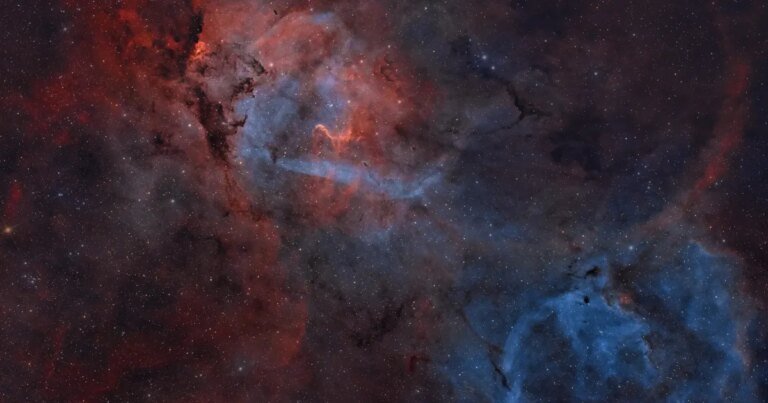
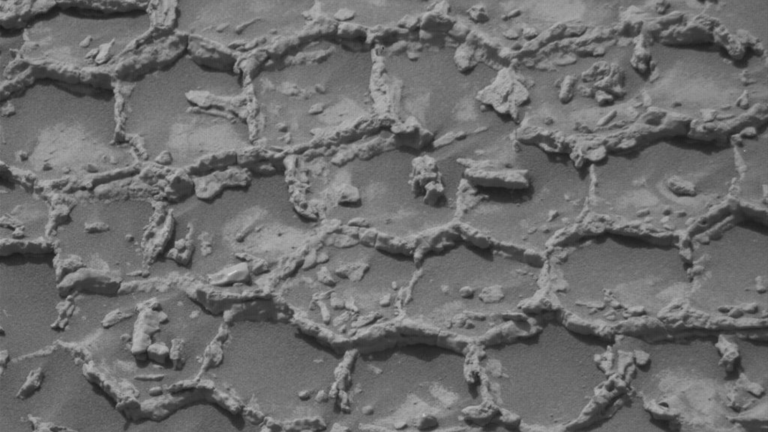
Image caption (sugar-space-2.jpg): Erythrose was detected in a cloud of gas and dust near the center of the Milky Way, 26 thousand light-years from Earth. Photo: Reproduction/documentary.
The cosmic address of sugar in space also impresses by the distance. According to Correio Braziliense, the molecule was found in the molecular cloud G+0.693-0.027, located near the center of the Milky Way, about 26 thousand light-years from Earth, in one of the richest regions in chemical compounds in the entire galaxy. It’s like finding a grain of sugar on the other side of the galaxy, hidden in one of the largest chemical pantries of the universe.
This cloud is known among astronomers as a true natural laboratory. According to Correio Braziliense, the region G+0.693-0.027 is considered one of the richest in chemical compounds in the entire Milky Way, and in it, the extreme cold and grains of icy dust act as benches where complex molecules form over millions of years. With each new observation, this type of cloud reveals more sophisticated substances, and erythrose is the most recent and surprising piece of this puzzle about sugar in space.
What sugar in space says about the origin of life
The big question that this discovery rekindles is ancient: how did life arise on Earth? And the finding sheds light precisely on the first ingredients of this recipe. Erythrose belongs to the same family of molecules that participate in the formation of DNA and RNA, the instruction manuals of every living being. Finding this sugar in space suggests that the basic building blocks of the origin of life are not exclusive to our planet.
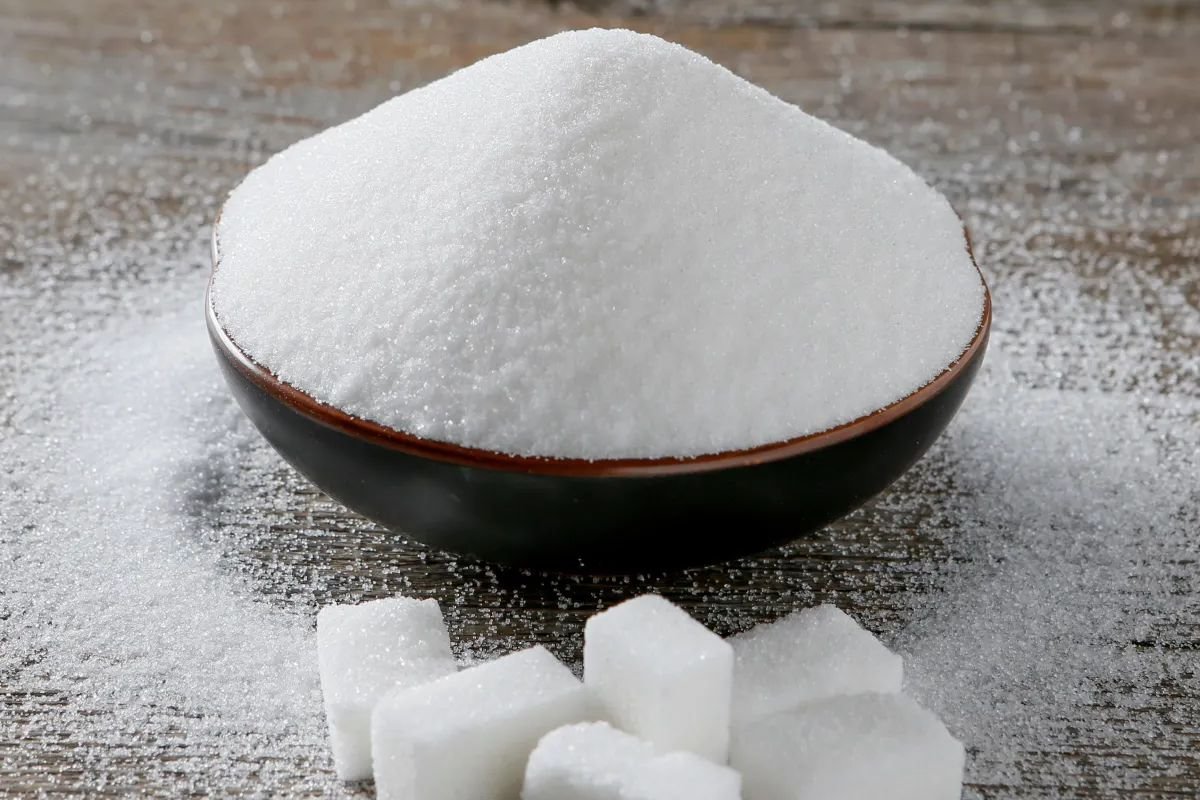
Image caption (acucar-espaco-3.jpg): Erythrose belongs to the same family of molecules linked to DNA and RNA, the manuals of life. Photo: Reproduction/documentary.
And there is a concrete bridge between this distant sugar and primitive Earth. According to Correio Braziliense, part of these molecules may have been produced in ice grains in clouds even before the Solar System existed and then transported to young Earth by comets and asteroids during the so-called Late Heavy Bombardment, between 4.1 and 3.8 billion years ago. In other words, the ingredients of the origin of life may have literally fallen from the sky.
The numbers of this cosmic transport are breathtaking. According to Correio Braziliense, estimates indicate that between 500,000 and 50 million tons of erythrose may have reached the planet during this bombardment period. A rain of sugar from the stars, spreading over the newly-formed Earth the compounds that may have helped ignite life.
The researchers themselves, however, urge caution and do not sell the discovery as a final answer. According to Correio Braziliense, scientists emphasize that the finding does not alone explain the origin of life but shows that important compounds for biological processes can form naturally in the interstellar environment. It is one more piece, and one of the most revealing, in a puzzle that humanity has been trying to decipher for centuries.
Why this discovery matters to science
Besides the enchantment of knowing there is sugar in space, the detection of erythrose has real scientific weight. It expands the catalog of complex molecules known in the universe and helps map which compounds nature can assemble on its own, without any form of life nearby. Each new molecule found in the stars refines the models that astronomers use to understand how matter evolves in the cosmos.
The finding also strengthens a rapidly expanding field, astrobiology, which studies the chances of life beyond Earth. If ingredients linked to the origin of life naturally appear in clouds scattered across the Milky Way, logic suggests that other corners of the universe may have had access to the same raw materials. This does not prove that other living beings exist, but it makes the question much harder to ignore.
For humanity, the message of this discovery is both scientific and philosophical. A simple sugar floating among the stars connects the cold chemistry of space to the warm life that pulses on Earth, and suggests that perhaps we are made of the same material that fills the universe. As new telescopes scan the sky in search of more molecules, each erythrose found brings science a little closer to answering whether we are, or are not, alone in the cosmos. Tell us in the comments: do you believe there is life somewhere else in the universe?