The Sky Today on Monday, July 6: Catch the sparkling Coma Star Cluster
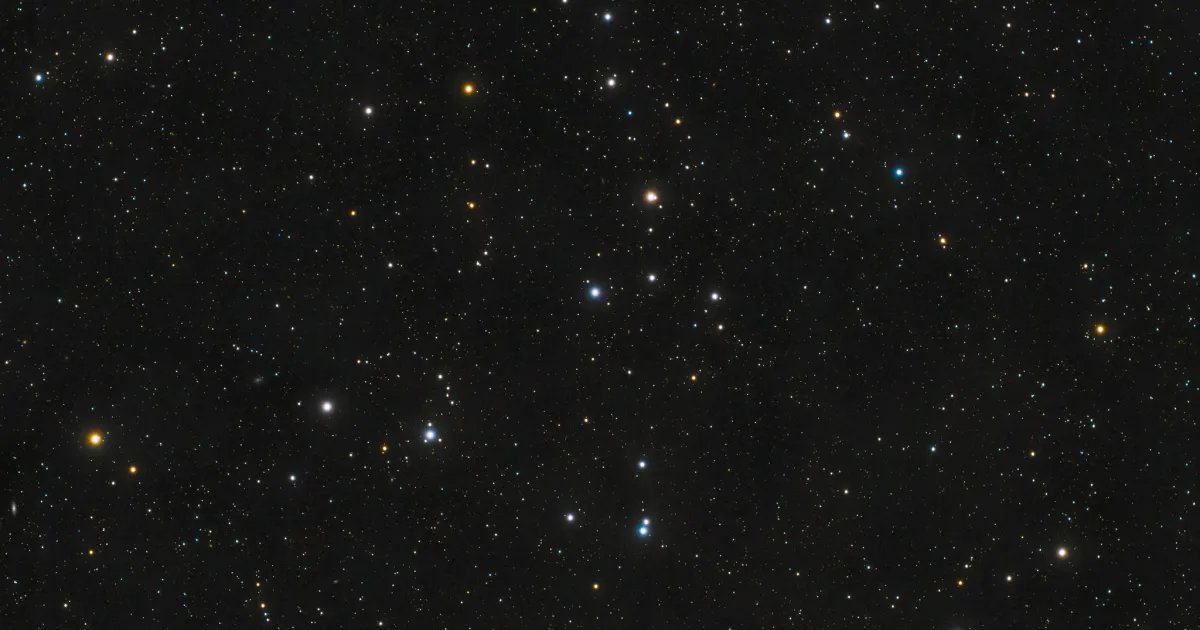
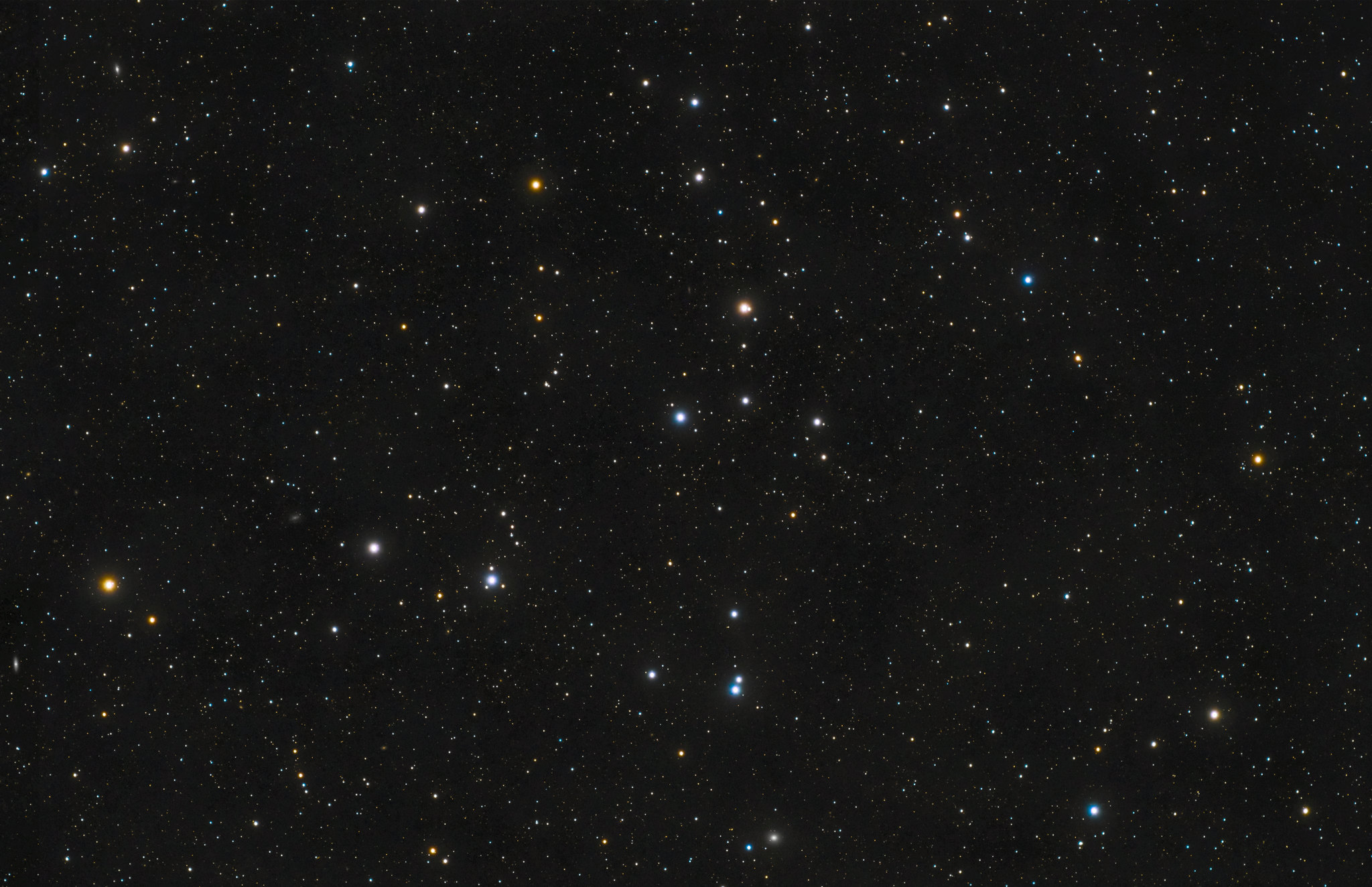
Spread across a large swath of sky, the Coma Star Cluster is visible this evening for several hours after sunset, gorgeous in any optics
Looking for a sky event this week? Check out our full Sky This Week column.
July 5: Capture a view of Saturn’s moons
About two hours after sunset, the constellation Coma Berenices is still some 40° above the western horizon. It’s a great time to take in the Coma Star Cluster, also called Melotte 111. Spanning 4°, this lovely open cluster is visible to the naked eye, but is also great to view with binoculars or a small scope (or your telescope’s finder scope). The cluster lies just south of magnitude 4.3 Gamma (γ) Comae Berenices. With the naked eye, you’ll see a smattering of 4th- and 5th-magnitude stars. Add some optics, and you’ll be able to pull out 40 or so suns that shine at magnitude 10 or brighter.
The Moon passes 5° north of Neptune at 11 P.M. EDT. We’ll try to catch it — along with Saturn — in the early-morning sky tomorrow before dawn (details below).
Sunrise: 5:38 A.M.
Sunset: 8:32 P.M.
Moonrise: —
Moonset: 12:10 P.M.
Moon Phase: Waning gibbous (58%)
*Times for sunrise, sunset, moonrise, and moonset are given in local time from 40° N 90° W. The Moon’s illumination is given at 10 P.M. local time from the same location.
An hour before sunrise, the Moon stands high in the southeast, to the upper right of magnitude 0.7 Saturn. The ringed planet is easily visible to the naked eye. To the Moon’s lower right is Neptune, although this distant world is invisible without optical aid.
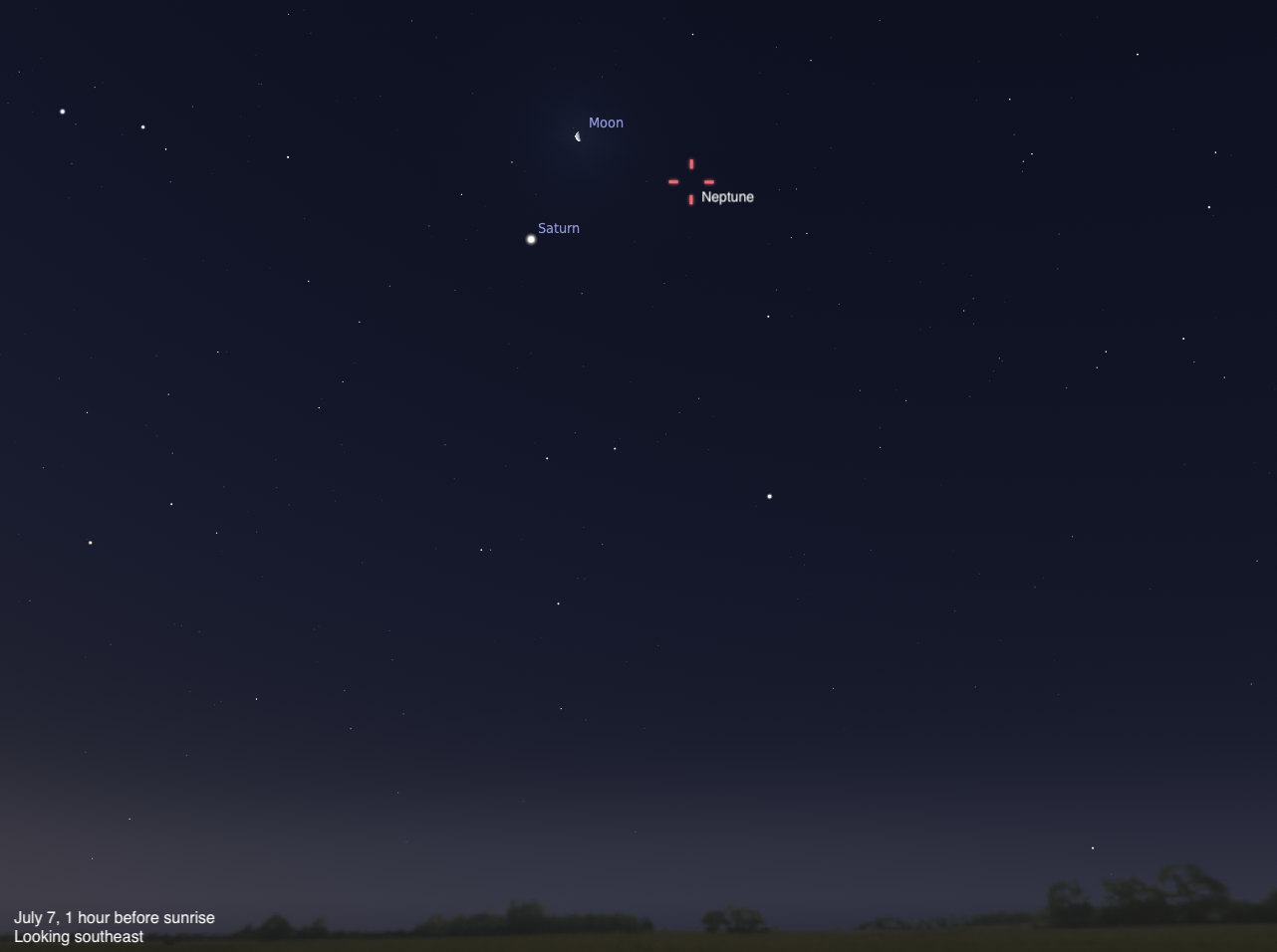
Using binoculars or a telescope, look for Neptune about 7° southwest of the Moon, or 10° west of Saturn (the latter is the more reliable guide, as the Moon moves through our sky relatively quickly). You may need to try viewing the magnitude 7.7 ice giant even earlier in the morning, when the sky will be darker and provide better contrast for its faint light.
Alison Klesman is senior editor of Astronomy magazine. She holds a Ph.D. in astronomy and has studied a variety of topics, from minor planets to supermassive black holes.