A Cave So Dangerous to Reach, It Preserved 179 Ritual Objects for More Than 1,100 Years

To reach the deepest chambers of a cave tucked into a canyon in southern Mexico, archaeologists had to descend more than 32 feet (10 meters) straight down using ropes, then cross a narrow flooded passage. That difficulty is almost certainly why, for well over 1,100 years, nobody disturbed what was waiting on the other side.
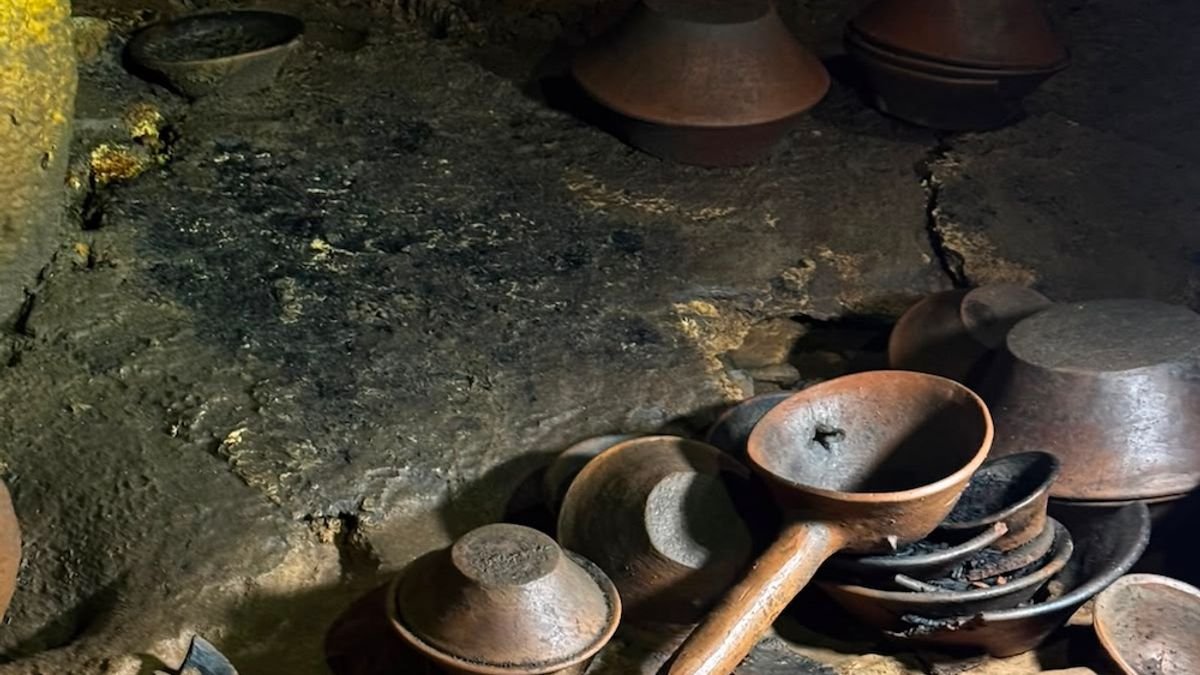
Incense burners decorated with thorn-like designs stood along a route leading deeper in. Bowls rested beside stalagmites that someone had reshaped to resemble people. Further inside, an open-mouthed serpent crowned the handle of a ceramic vessel.
A local tourism guide named Jairo Díaz Barreiro found the cave’s entrance in January 2026, near the Arco del Tiempo, one of the largest natural rock arches in the world, in Chiapas. He reported it to Mexico’s National Institute of Anthropology and History (INAH), and investigators who explored the site found a space symbolically tied to what the ancient Zoque called the underworld, or ts’uan, holding 13 ritual deposits with 179 ceramic objects untouched since the region’s Late Classic period, roughly 600 to 900 A.D.
“The protection of heritage begins when there is a relationship of trust between communities and the institutions responsible for investigating and conserving it,” said Claudia Curiel de Icaza, the Secretary of Culture of the Mexican Government, in a translated press release.
Following a Ceremonial Route Through the Mundo Zoque Cave
The cave itself is a natural formation, more than 328 feet (100 meters) long, but the objects placed inside it seem to trace a ceremonial route. Those thorn-carved incense burners, meant to evoke the ceiba tree, considered sacred across ancient Mesoamerica, appear to mark that path leading deeper inside.
Squeezing through the narrow entryway gives way to something larger, room after room where stalactites hang from the ceiling and mineral spires rise to meet them from below.
About 98 feet (30 meters) in, a siphon blocks the way except during the dry season. Beyond it, two ascending chambers wait, one holding those human-shaped stalagmites, the other filled with ceramic basins, several with handles molded into human figures.
The path finally opens into a main chamber holding five deposits packed with fine, orange-toned pottery, including that serpent-topped censer.
Read More: Ancient Human DNA on Cave Walls Could Reveal Who Touched These Sites — and Their Art
What Jaguars, Owls, and Snakes Symbolized for the Zoque
Many vessels depict jaguars, owls, and snakes, animals associated with caves and the nighttime world in Zoque belief.
Josuhé Lozada Toledo, the archaeologist leading the project, said the jaguar, or kank, “symbolizes darkness and is guardian of the underworld and the heart of the mountain.”
Owls represented night and wisdom, while snakes embodied strength and the cycle of life and death.
A Site for Rain and Agricultural Fertility, Not Shelter
Researchers believe the rituals performed here were aimed specifically at rain and agricultural fertility, not habitation of any kind. The serpent-topped censer, its handle stretching about 12.6 inches (32 centimeters), is also marked with a cross-shaped symbol representing the four cardinal directions, a common motif in Mesoamerican cosmology.
That focus on agricultural ritual fits what’s known about the Zoque. According to Encyclopedia Britannica, farming has always anchored Zoque life, with corn, beans, and squash serving as staple crops sustaining communities across what’s now Chiapas, Tabasco, Veracruz, and Oaxaca.
Researchers still plan to examine the interiors of the well-preserved vessels. INAH says they may contain chemical residues, traces of copal, ashes, or even human bones, potentially preserved since the cave’s ceremonial use more than 1,100 years ago.
For over a millennium, the cave protected the objects by making them difficult to reach. Díaz Barreiro’s decision to report what he found offered them a different kind of protection.
Read More: Bones Buried in Italian Necropolis Offer Clues on Ancient Diets and Society Before the Romans
Article Sources
Our writers at Discovermagazine.com use peer-reviewed studies and high-quality sources for our articles, and our editors review for scientific accuracy and editorial standards. Review the sources used below for this article: