A Major Ocean Current Is On The Verge of Collapse. Scientists Say The Effects May Reach California : ScienceAlert
Earth’s climate systems are inexorably and often unexpectedly interconnected.
Dust from North Africa’s Sahara Desert drifts thousands of miles to fuel food webs in the Amazon and the ocean’s depths, while pollution-eating microbes hitch a ride through the atmosphere on gusts of wind or wisps of fog.
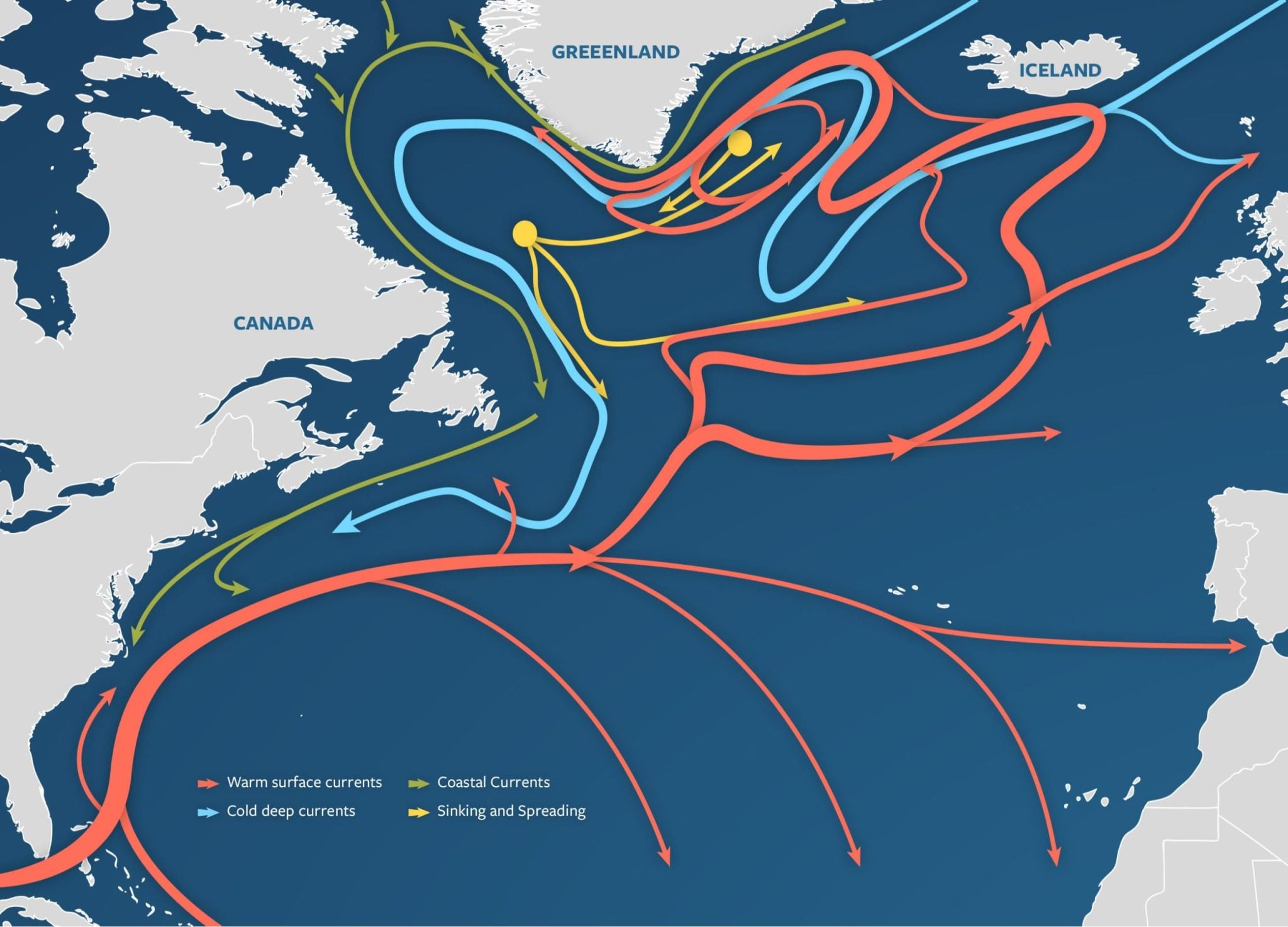
Among the most influential planet-shaping forces is the Atlantic Meridional Overturning Circulation (AMOC), an immense Atlantic Ocean current system that acts as a planetary conveyor belt. It brings balmy water northward from the tropics to Europe, then cycles the cooled water back south along the seafloor.
However, human-caused climate change is slowing this vital system and even threatening a potentially near-future collapse.
Given the gravity of the situation, there has been much debate among scientists about how likely this is to happen – and when.
The latest effort to iron out our understanding of the AMOC and the consequences of its stalling comes in the form of a study published in Nature Communications.
A team of scientists used decades of NASA-acquired atmospheric data and climate simulations to project the evolution of the AMOC, forecasting life-changing shifts for communities around the globe.
“It is well known that the AMOC is a big player in the world’s climate system, and that it is slowing down,” says Mohima Mimi, a climate dynamics researcher at the University of California, Riverside, and the study’s lead author.
“What we didn’t know is exactly how the AMOC might impact atmospheric moisture and storms outside the Atlantic region.”
The researchers have determined that an amok AMOC could exert significant climatic differences on a worldwide scale, as Mimi explains:
“It turns out a weakening AMOC will strengthen storms across parts of North America by the end of the century, along the California coast in particular, while reducing them over Greenland and the Arctic.”
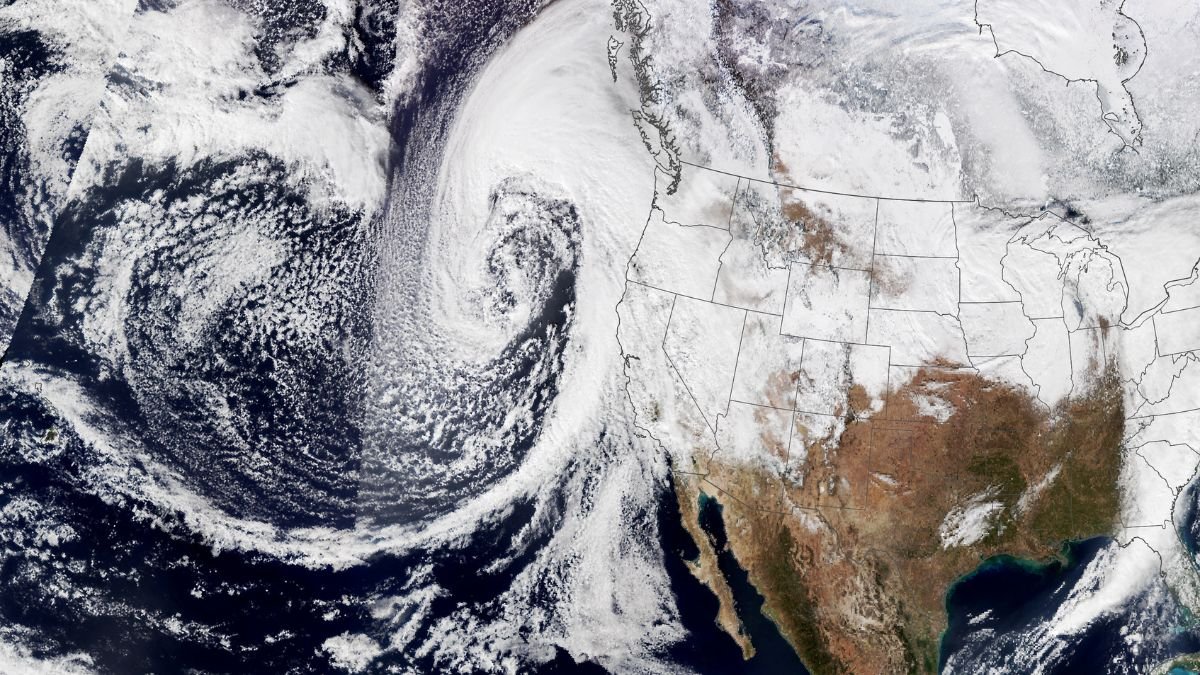
This is because weakening of the oceanic conveyor belts affects a similar system in the sky: atmospheric rivers.
Atmospheric rivers (ARs) are long, narrow strips of concentrated water vapor in the atmosphere. Especially strong systems can carry up to 15 times as much water as what flows through the mouth of the Mississippi River.
Unsurprisingly, they significantly influence regional climates.
“In California, atmospheric rivers are a double-edged sword,” Mimi says. They supply up to 50 percent of annual rainfall in the western US, especially California, and are the main driver of the state’s volatile water supply.
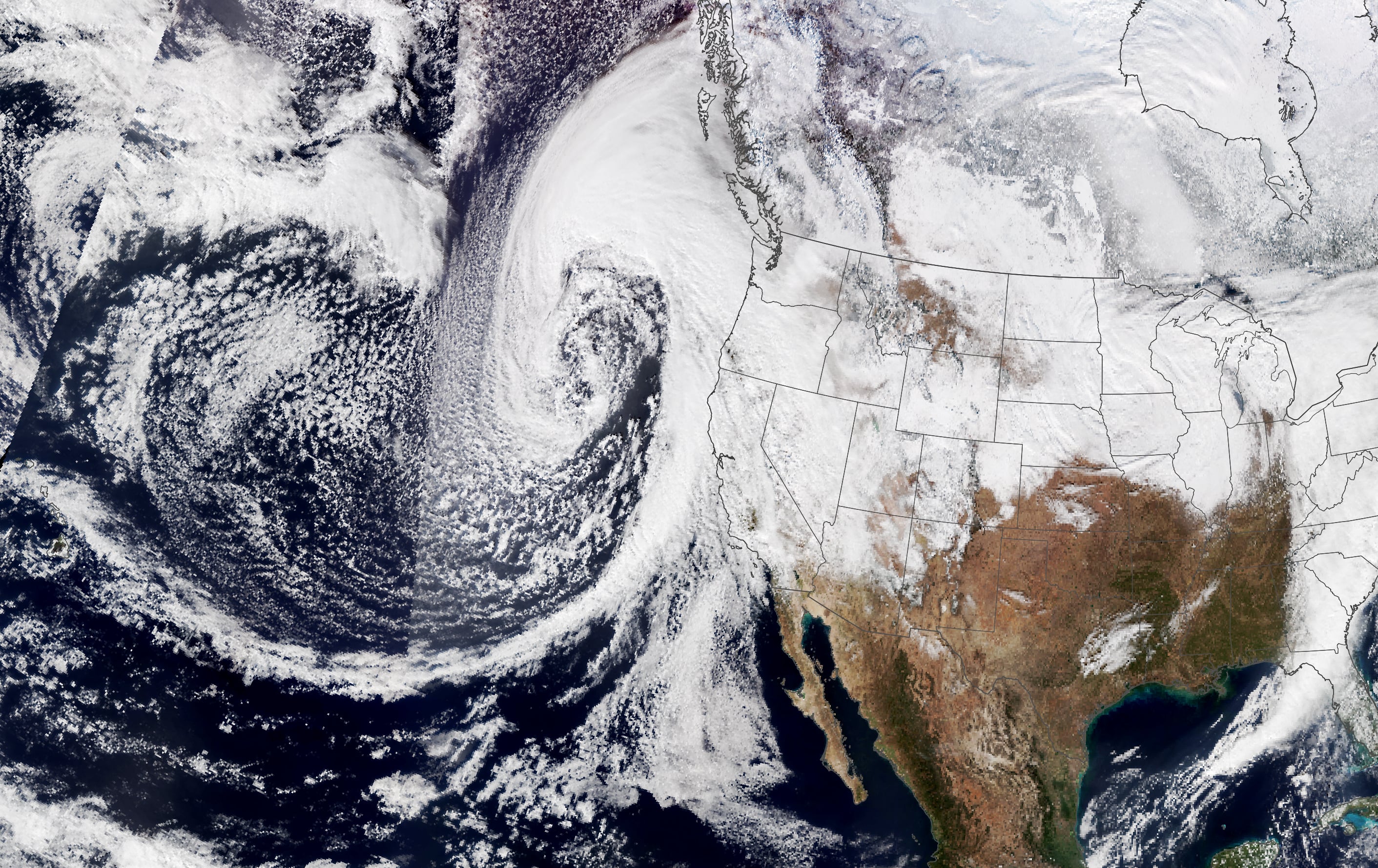
They also raise flood risk: Atmospheric rivers frequently generate floods, even during droughts, that endanger individuals, destroy homes and infrastructure, and impact water quality statewide.
Zooming out to our oblate orb’s coolest regions, atmospheric rivers facilitate surface warming and ice loss at the poles, with crucial consequences.
“Over Antarctica, ARs account for 40 to 80 percent of summer meltwater in West Antarctic ice shelves, which threatens ice stability and accelerates global sea level rise,” the researchers explain in their paper.
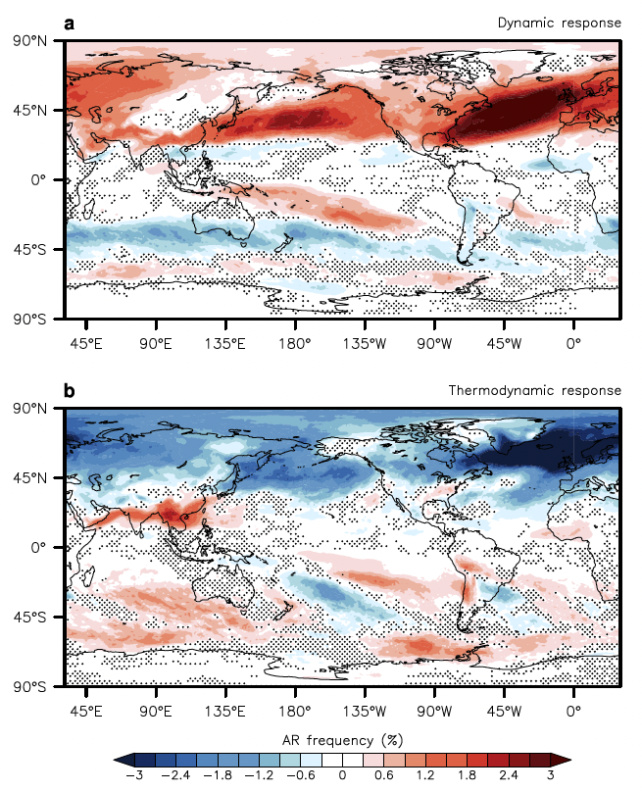
Furthermore, the global mean frequency of atmospheric rivers may increase by around 50 percent, the team reports.
ARs may also transport more moisture and last longer, penetrating higher latitudes as the high-altitude westerly jet stream shifts toward the poles in response to anthropogenic warming.

Overall, as the AMOC slows, it will alter oceanic temperatures and decrease atmospheric moisture in the Northern Hemisphere, while increasing it in the Southern Hemisphere.
In turn, atmospheric rivers are projected to become more frequent and dump more rain in certain parts of the world: South America’s east coast, southern Asia, western Europe, parts of the Pacific, and around Antarctica.
The greatest increases are expected to occur along North America’s west coast, from Baja California to Alaska.
Conversely, atmospheric rivers may become less frequent across the Arctic, Greenland, and northern Asia, as a weakened AMOC leads to cooler surface air temperatures and reduced moisture content.
Other lower-latitude areas, including northern Australia and the South Pacific, may also experience a decrease in AR frequency.
This isn’t necessarily a foregone conclusion. It depends on the world’s industrial inertia, which is warming our green globe through increased greenhouse gas emissions from burning fossil fuels that have lain locked deep inside the Earth for hundreds of millions of years.
Revisiting the double-edged sword, the sometimes-destructive ARs also provide opportunities. Research shows that places like California may be able to capture more water by restoring natural landscapes to ameliorate persistent droughts caused by hotter, drier weather.
Related: Scientists Rule Out a Worst-Case Climate Scenario, But We’re Not Off The Hook
Finally, this work reminds us how our planetary processes are irreversibly intertwined. A change in a single (but major) ocean current can ripple for thousands of miles, driving storms across America, intensifying Amazonian rainfall, and displacing tropical rain belts southward.
“This research shows that the effects of the AMOC extend far beyond the Atlantic Ocean,” Mimi says.
“Understanding these connections will help us better prepare for future changes in water resources and extreme weather.”
This research was published in Nature Communications.
This article was fact-checked by Michael Irving and edited by Clare Watson. While we pride ourselves on our process, we are only human. If you spot a mistake, please let us know.