A rare 3-D snake fossil is spilling secrets of its unusual lifestyle
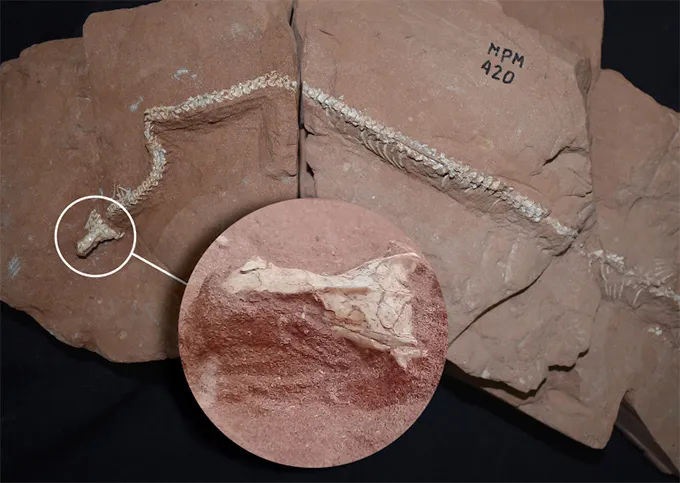
Most snake fossils are two-dimensional. Sandwiched within rocks, the pressure of millions of years flattens them like a pancake. But in 2020, scientists uncovered a uniquely well-preserved snake fossil in southeastern Brazil. The snake’s tiny skull — only 20 millimeters in length — was 3-D, with its braincase still intact.
The fossil’s well-preserved skull has now provided the earliest concrete evidence of a fossorial snake — a serpent that burrowed underground. And that suggests early snakes explored more habitats and lifestyles than previously thought, researchers report July 22 in Nature.
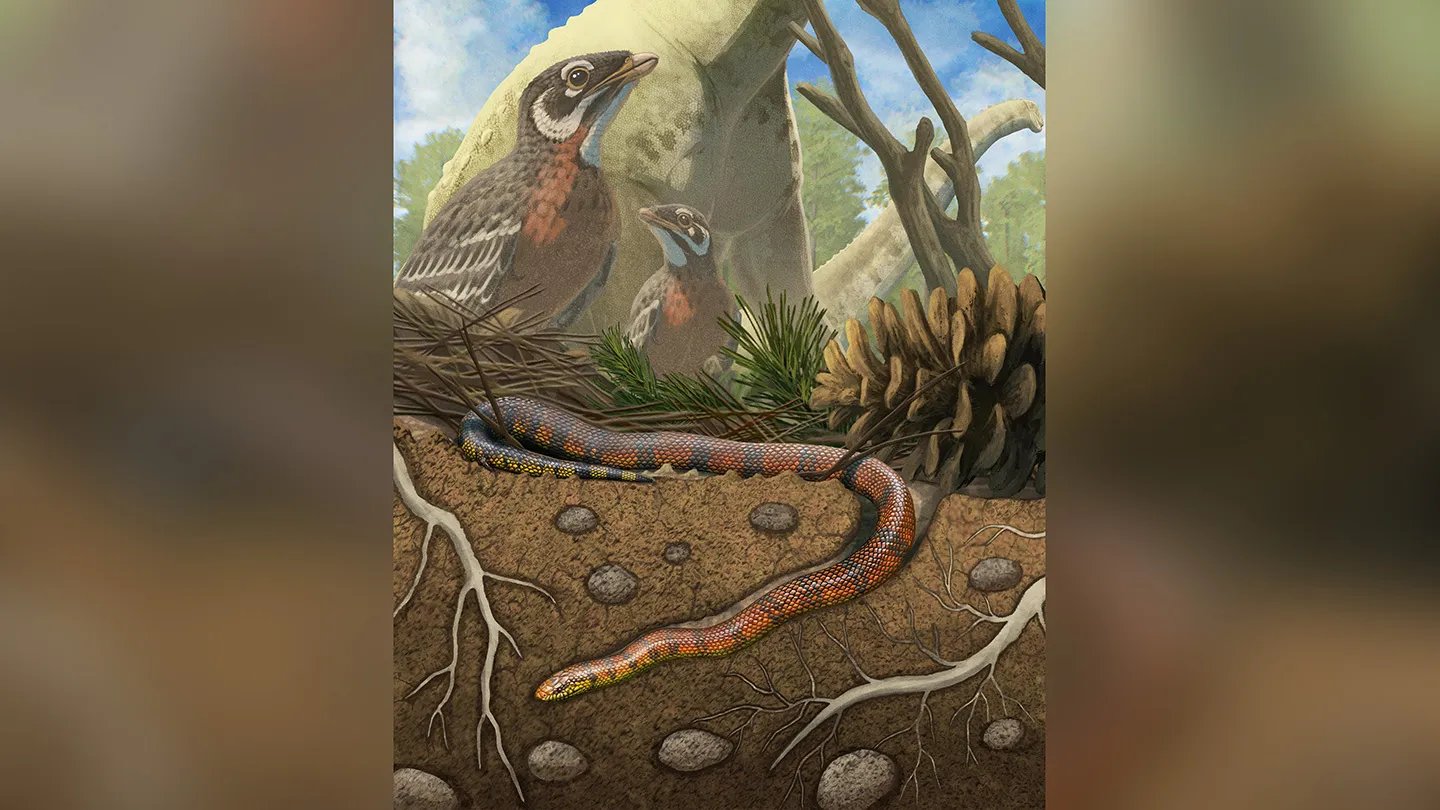
The fossil belongs to a previously unknown snake species that lived 85 million to 75 million years ago. Researchers named it Tametara mirim, after the words for “adorned” and “small-sized” in the Tupí-Guaraní language of Brazil. It is one of only four snake fossils from the Age of Dinosaurs preserved this well.
“This quality of preservation allows us to answer questions you simply cannot answer if you don’t have the right body parts preserved,” says paleobiologist Tiago Simões of Princeton University.
Unlike human brains, which float in fluid within our skulls, the shape of snake brains closely matches the inside of their braincase. Using CT scans, the researchers reconstructed T. mirim’s brain anatomy. Well-developed brain regions correspond to the senses the snake relied on most.
T. mirim had a poorly developed optic lobe, so it probably couldn’t see very well. But its otic capsule, a bony structure that protects the inner ear, was enlarged — a feature often seen in snakes that sense vibrations. It also had an unusually thick skull. These features suggest T. mirim lived underground, digging tunnels by butting its head against the dirt.
The environment where snakes first originated remains a mystery. But the earliest known snake ancestor — which lived 167 million years ago — may have been somewhat adapted for an underground lifestyle, though was not nearly as good at burrowing as T. mirim, Simões says.
By the Cretaceous Period, snakes were swimming, slithering and, in T. mirim’s case, digging. Simões says the apparent increase in diversity in the Cretaceous could be because snakes evolved new sensory functions and abilities very quickly or because they were diverse all along. Finding new fossils with intact braincases could help resolve that debate.
What is clear is that early snake evolution was much more complex than previously thought, says Michael Caldwell, a paleontologist at the University of Alberta in Edmonton, Canada, who was not involved in the research. The snake family tree probably included many branching lineages with their own unique anatomies and lifestyles.
To better understand how snakes diversified into all their modern forms, scientists will need to find fossils that show the transitions between different lifestyles. “When organisms become highly specialized for a particular environment, they don’t become so in the blink of an eye,” Simões says. “What we have today are the endpoints of a very long evolutionary history.”