AI breakthrough: Sony robot beats elite table tennis players
ⓘ Sony AI via YouTube
Robots can play table tennis, shoot baskets and fight in the ring. For most people, that is probably no longer sensational. But when a robot surpasses the level of a top human athlete, it is still remarkable. Sony’s AI division has now achieved this with its table tennis robot “Ace.” In a Nature study published on April 22, 2026, the researchers describe Ace as, to their knowledge, the first real-world autonomous system capable of competing with elite table tennis players.
In April 2025, Ace competed against five such elite athletes. These were players with more than ten years of intensive experience and around 20 hours of training per week. The robot won three of the five matches and seven of the 13 games overall. Although Ace lost both matches against two professional players from Japan’s T.League, it still managed to win one game. After further improvements, the robot competed against three professionals again in March 2026 and won at least one match against each of them.
Not a humanoid robot
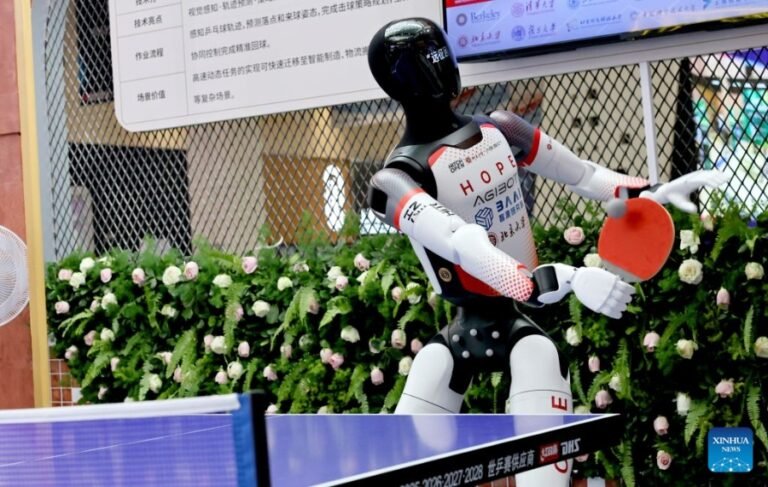
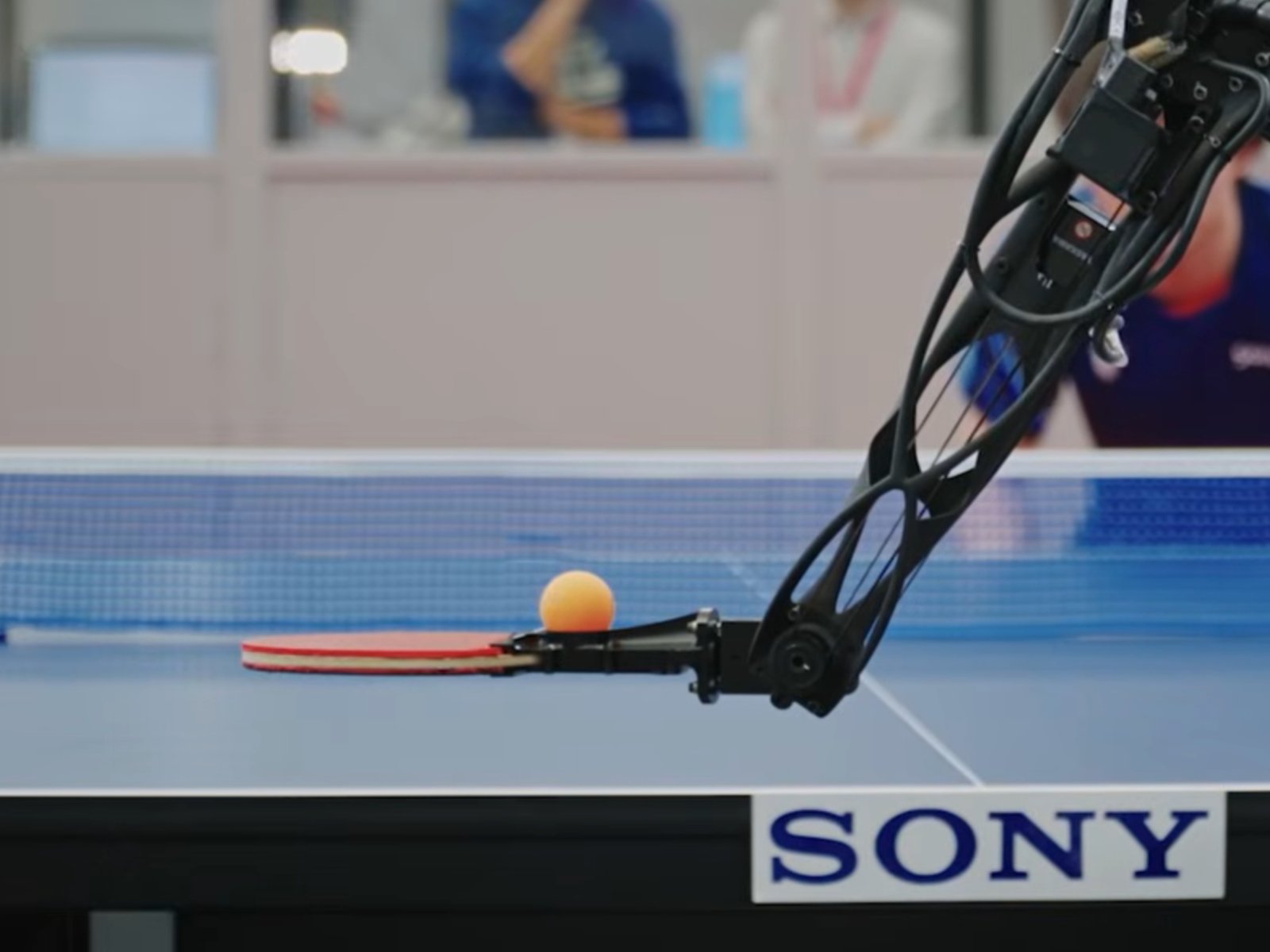
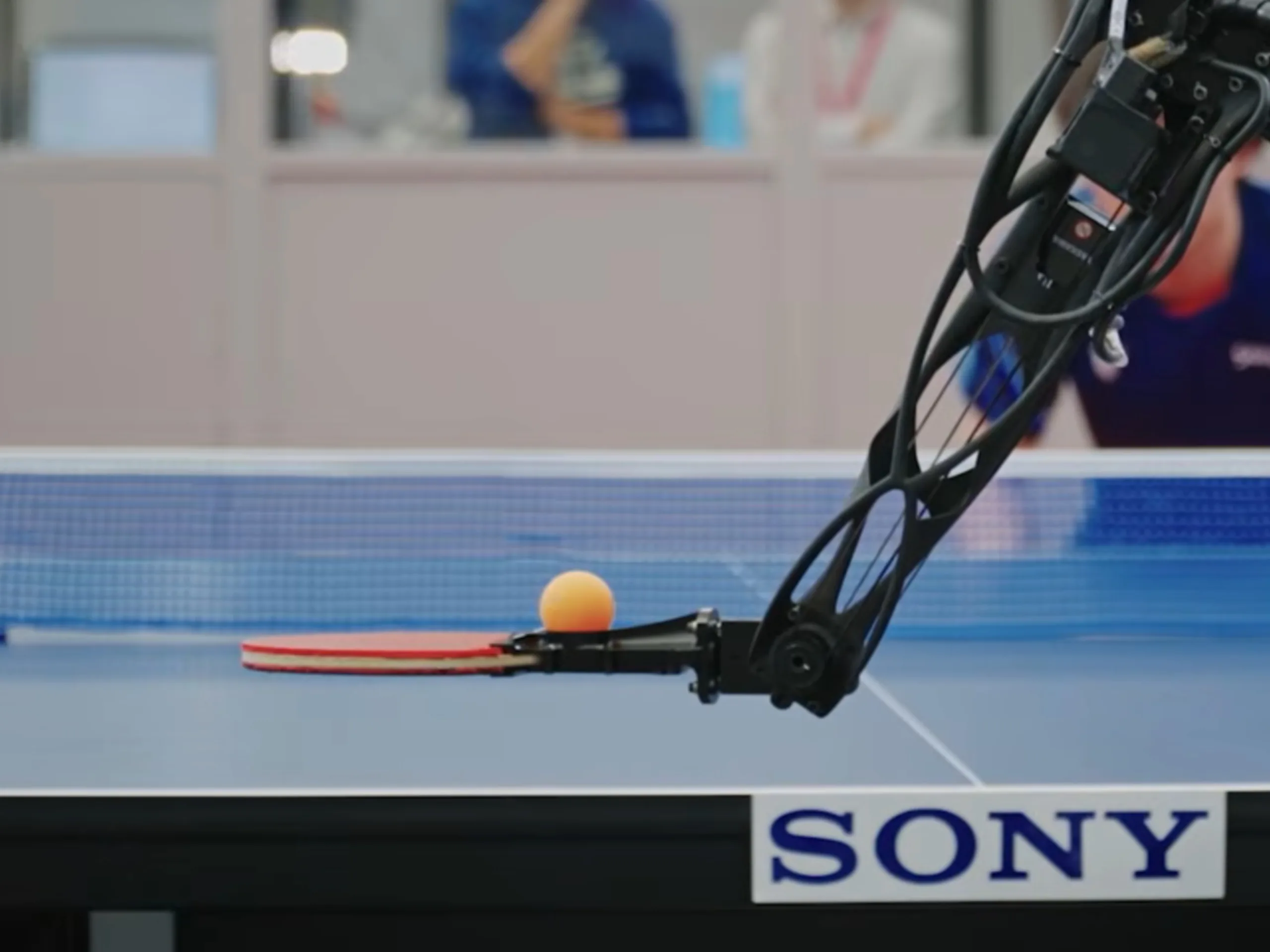
Unlike Unitree’s G1, which has also played table tennis matches, Ace is not a humanoid robot but a stationary system designed exclusively for table tennis. The robot consists of nine cameras, three event-based vision sensors, an eight-axis robotic arm and an AI controller based on reinforcement learning. The ball’s position is captured in 3D 200 times per second, while its rotation is estimated using several hundred measurements per second.
AI breakthrough
Sony chief scientist Peter Stone describes the project as a breakthrough in physical AI and draws a comparison with Deep Blue, the IBM chess computer that defeated Garry Kasparov in 1997. The comparison may be somewhat far-fetched, but it is not entirely unfounded. While AI systems have long beaten humans in board games, video games and simulations, table tennis is far more difficult for machines. A victory against top athletes can therefore be seen as a breakthrough. On Reddit, many share this view. However, some users argue that the comparison with humans is not entirely fair, as Ace uses multiple cameras from different perspectives and is not a humanoid player.
Given the current results, it does not seem unlikely that humanoid robots could soon outperform humans in elite-level sports as well. Only recently, the Unitree H1 showed remarkable results in the 100-meter sprint and these could improve further in the coming years.

As a child in the 90s, my Gameboy was my steady companion. After school, the PlayStation was fired up. When I finally got my first PC, I was completely hooked. My passion for gaming has never waned since. For me, writing for Notebookcheck means reporting on topics that are really close to my heart – in addition to gaming, I also like to write about e-mobility, photovoltaics and innovative gadgets. When I’m not sitting at my computer, I’m probably on water rescue duty on the Baltic coast or trying to counteract the downsides of my geek life – namely sitting for long periods – at the local swimming pool.