Alien Signals May Hide in Unexplored High Radio Frequencies
Confirming the existence of extraterrestrial intelligence via radio signals, also called technosignatures, is the cornerstone of radio astronomy. While humanity has been asking since time immemorial whether or not we’re alone in the universe, radio astronomers are at the frontlines trying to tirelessly answer this longstanding question. To accomplish this, they’ve traditionally focused on a specific radio frequency band called the “water hole”, which resides between 1.42 and 1.66 GHz. This is due to two water-forming molecules, hydrogen and hydroxyl, emitting these frequencies.
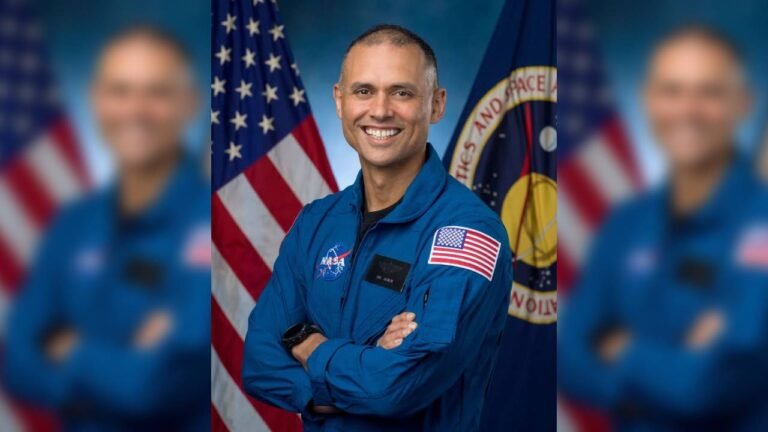
However, a lone researcher has decided to buck the trend by asking since we continue to come up empty with alien signals, what if we’re looking in the wrong frequency band? The researcher, Louisa Mason, who is a PhD student at the University of Manchester, proposed how searching high-frequency radio wavelengths could be used to search for alien signals. Her findings were presented last week at the Royal Astronomical Society’s National Astronomy Meeting in Birmingham and hold the potential to expand the search for extraterrestrial intelligence, specifically focusing on SETI.
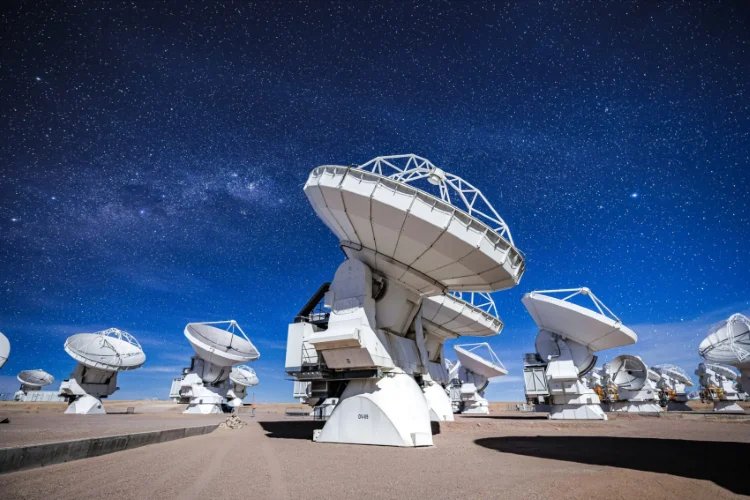
For the study, Mason analyzed archived data obtained from the Atacama Large Millimeter/submillimeter Array (ALMA) in Chile with a radio band known as Band 3, which comprises 90.642 GHz and 93.151 GHz. While no technosignatures were identified, Mason successfully enhanced the methods for observing stars for radio signals by capturing more stars than just the ones that radio astronomers are targeting.
“For decades, SETI searches have concentrated on a relatively small part of the radio spectrum,” said Mason. “We wanted to ask what might happen if we looked somewhere very different. The millimeter and submillimeter radio bands remain almost completely unexplored for SETI, so this is really about opening up a new area of parameter space to search.”
For context, the “water hole” radio frequencies used by radio astronomers fall within what’s known as the decimeter or centimeter radio waves, whereas the millimeter and sub-millimeter radio waves go from 30 GHz to 300 GHz and 300 GHz to 3,000 GHz, respectively. The frequency bands are calculated by dividing the speed of light (3 x 10⁸ m/s) by the frequency (in this case, 90 x 109 Hz as used by Mason), to get 3.33 millimeters.
While scientists have traditionally used long-time databases like Gaia, Mason took this one step further by using what’s known as a Besançon Galactic Model. This is a highly detailed computer model of the Milky Way Galaxy that informs astronomers what additional stars they’re observing when they only target a specific star. In the end, Mason used the Besançon Galactic Model on a previous SETI radio survey of 1,327 observations, which initially used Gaia to estimate about 288,000 stars were in the survey, to about 6.1 million stars.
“One of the most exciting things about this work is realising that we’ve surveyed many more stars than initially thought,” said Mason. “Even a very small observation can contain a huge number and diversity of stars that we might never have intended to study. By combining high-frequency observations with galactic simulations, we can better understand exactly what we’ve searched and where we should look next.”
For now, SETI and the rest of radio astronomy continue coming up empty regarding confirming a definitive technosignature. However, arguably one of the most famous potential technosignatures ever identified is known as the Wow! Signal, which was identified on August 15, 1977, by astronomer Jerry R. Ehman was reviewing a data printout from a few days prior. The resulting printout displayed a very loud signal lasting for 72 seconds, prompting Ehman to write “Wow!” on the printout. However, despite countless searches, astronomers have never been able to replicate the signal.
What new insights into alien signals potentially hiding in unexplored high radio frequencies will researchers make in the coming years and decades? Only time will tell, and this is why we science!
As always, keep doing science & keep looking up!