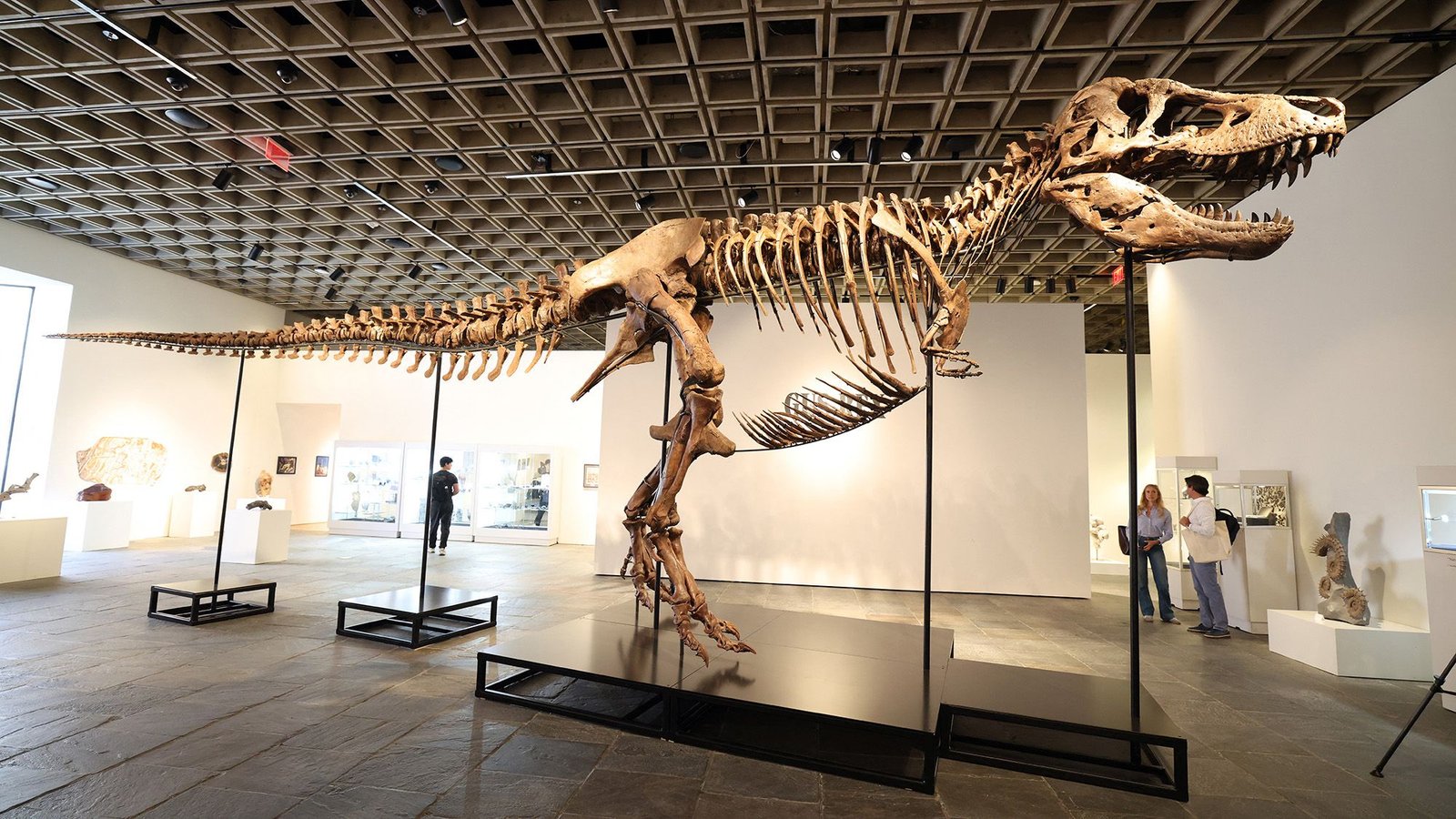
To paleontologists like me, however, a fossil like “Gus” — excavated from the Hell Creek Formation in South Dakota over three years starting in 2021 by commercial collector Thomas Heitkamp and his team — is not a trophy or a work of art. It is an irreplaceable scientific archive. Fossils preserve evidence of evolution, extinction, growth, disease, injury and ancient ecosystems. They are finite, nonsubstitutable records of life’s history on Earth.
Science depends on independent verification of claims and healthy debate. Researchers must be able to revisit specimens, test earlier conclusions and ask new questions.
Latest Videos From
But once a scientifically important fossil enters a private collection, access for researchers is no longer guaranteed. Collectors typically sequester their fossils in their homes. Even when privately owned specimens are loaned to museums, the owners can change their minds, ending access at any time. This issue is especially of note when it comes to Tyrannosaurus rex; a 2025 study found that while there were 61 T. rex fossils in public trusts at that time, 71 were privately held.
That is why the Society of Vertebrate Paleontology, of which I’m a long-term member and president-elect, has long argued that scientifically significant vertebrate fossils belong in the public trust, curated in museums and universities that preserve them permanently, make them available for research and share them with the public.
Finding a fossil
Supporters of commercial fossil sales often argue that without sales to private collectors, specimens like “Gus” would remain buried or erode away. They’re right about one thing: Discovery matters. Many extraordinary fossils have been found by ranchers, hikers, amateur collectors and commercial excavators. Paleontology is accessible to everyone who has an eye for observing nature — you don’t need to be an expert with academic credentials to make an important discovery.
Fossil kits are sold on Amazon and other online retailers, encouraging curiosity in budding paleontologists.
(Image credit: Amazon)
But discovery is only the beginning. A fossil’s scientific value depends on careful documentation of where it was found, the rocks surrounding it, and the plants and animals preserved alongside it. Those details allow scientists to reconstruct ancient ecosystems, understand how an animal lived and died, and interpret how its remains became fossilized. When that contextual information is incomplete or lost, much of the fossil’s scientific value is lost as well.
Get the world’s most fascinating discoveries delivered straight to your inbox.
Yet even discovery, excavation and publication barely scratch the surface of a fossil’s scientific importance. The greatest scientific value of a specimen often comes decades later, when researchers ask new questions and apply new technologies that earlier generations never imagined. A specimen that seems fully studied today may yield surprising new information tomorrow, but only if it is still available for study.
Delayed discoveries
Consider the iconic dinosaurs, including T. rex, Triceratops, Diplodocus and Stegosaurus, first collected more than a century ago. Early paleontologists could describe their shapes but had no way to dig deeper by peering inside the bones. Because those specimens were preserved in museum collections, later generations could revisit them with technologies that didn’t exist when they were discovered.
Paleontologist Larry Witmer and his collaborators at Ohio University started using CT imaging 20 years ago to reconstruct the internal anatomy of historic dinosaur fossils without damaging them, based on how X-rays travel through specimens. Brain cavities, inner ears, air spaces, nerves and blood vessels became visible for the first time, revealing how dinosaurs balanced, heard, smelled and perceived their world.
More recently, molecular paleontologist Jasmina Wiemann and her collaborators have identified chemical traces preserved in fossil bone, eggshell and skin that reveal aspects of dinosaur biology unimaginable even a generation ago. Until now, paleontologists had no way to know details about metabolic rates and reproduction or the colors of skin, feathers and eggs.
A thin section of a Diplodocus femur reveals the microscopic architecture of the bone, preserving a record of the animal’s growth and life history.
(Image credit: Kristina Curry Rogers)
In my own research I use microscopes to uncover the hidden stories preserved inside dinosaur bones and teeth. Thin sections of fossil bones reveal that dinosaurs grew more like mammals and birds than like oversized reptiles. Microscopic modifications to bones capture traces of ancient scavenging, and tiny signatures deep inside baby dinosaur bones indicate the moment of hatching.
None of these discoveries would have been possible if the original fossils had vanished into inaccessible private collections.
Shared natural heritage, on the auction block
Fossils are not static objects whose scientific value is exhausted once they are described. Their value grows as science advances, but only if future researchers can continue to examine the original specimens.
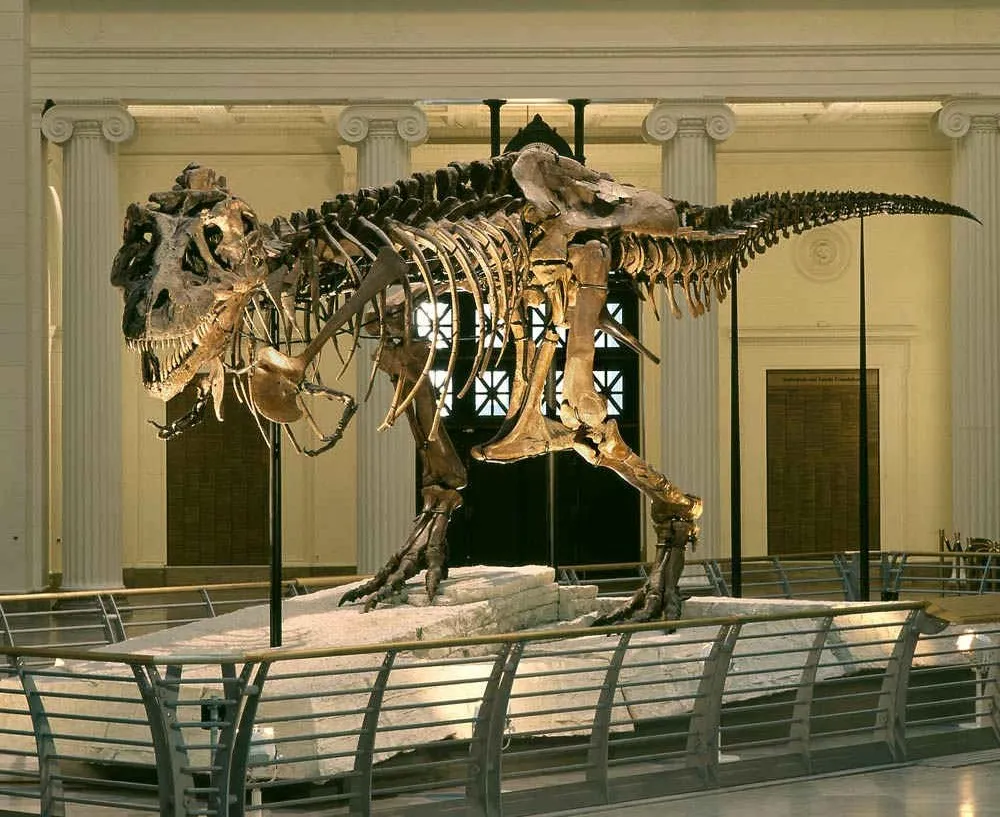
Of course, sometimes dinosaur fossils are rescued from obscurity through purchase and immediate deposition or donation to natural history museums. Some of the world’s most important dinosaur fossils are accessible today because individuals, companies or organizations with the means to acquire extraordinary specimens recognized that they belong where scientists can continue to study them and where future generations can learn from them.
Schoolchildren were among the first to visit ‘Sue’ the T. rex once it was displayed at the Field Museum of Natural History in Chicago, Ill., thanks to funding from the California State University system, Walt Disney Parks and Resorts and McDonald’s.
(Image credit: copyright The Field Museum)
Purchasing a fossil in order to place it permanently in the public trust is fundamentally different from acquiring it as a private collectible: One expands access, the other leaves access uncertain.
Dinosaurs belong to our shared natural heritage. They inspire wonder because they connect all of us to a world unimaginably older than our own. For me, the question raised by auctions like the one on July 14 of “Gus” is not who can afford to own these relics of the past. It is whether future generations have the chance to study and learn from them.
Students at Vanderbilt University in Nashville, Tennessee, assist in the development of technologies to help neurodivergent individuals achieve success in the workplace.Credit: Keivan Stassun / Vanderbilt University When academics talk about neurodiversity and training the next generation of scientists and engineers, we often begin with the need to give students extra time in exams, along…
Twelve people are about to embark on the world’s longest sleepover, all in the name of space research. The group will be confined to beds designed to mimic the rigors of space for 60 days straight. Some of the volunteers will also be testing strategies that can hopefully reduce the bodily strain caused by a…
This year’s El Niño is shaping up to be among the strongest on record, and it’s set to create chaotic weather around the world. A new study suggests that there could be a way to mitigate some of the impacts of future El Niños and global warming: dimming the sun. El Niño develops naturally in…
Image Credit: Esa Kapila, via Aalto University’s LinkedIn Artificial intelligence is now fast becoming an important component in scientific investigations, and its recent achievement may have very significant effects on the advancement of technology. Scientists devised a way to utilise artificial intelligence in scientific research, which has not only resulted in the discovery of two…
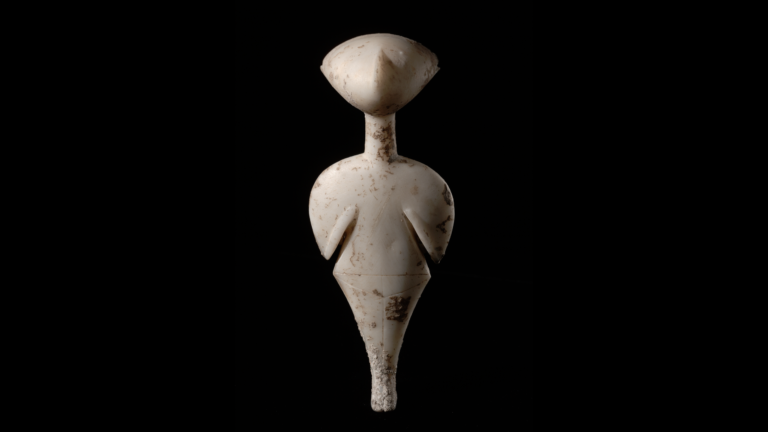
The Stargazer figurine was carved from marble around 5,000 years ago. (Image credit: Cleveland Museum of Art / Leonard C. Hanna Jr. Fund; John L. Severance Fund 1993.165 (Public Domain)) QUICK FACTS Name: The Stargazer What it is: A marble figurine Where it is from: Kırşehir, Turkey When it was made: Circa 3000 B.C. This…