Antwerp’s Sightera Biosciences raises €3 million to scale its patient-derived AI drug discovery platform
Sightera Biosciences, an Antwerp-based AI drug discovery startup and spin-off from the University of Antwerp (UA) and Antwerp University Hospital (UZA), today announced the closing of a €3 million pre-Seed financing led by Entourage, Anacura and QBIC.
The company plans to use this funding to expand the team, accelerate the expansion of its AI-native drug discovery platform as well as its pre-clinical asset portfolio, advance its lead molecular glue oncology programme toward preclinical candidate selection, and strengthen strategic platform partnerships with pharma and BioTech.
Pieterjan Bouten, General Partner at Entourage, said, “At Entourage, we back founders who rethink entire industries from first principles. Sightera doesn’t ask AI to predict biology. It lets biology teach AI. That’s a fundamentally different approach to drug discovery. By learning directly from real patient biology, Sightera can identify promising new molecules in months instead of years. That speed matters. As billions in blockbuster drug revenues approach the patent cliff, pharma urgently needs a faster path to the next generation of medicines. We believe Sightera is built for exactly that moment.”
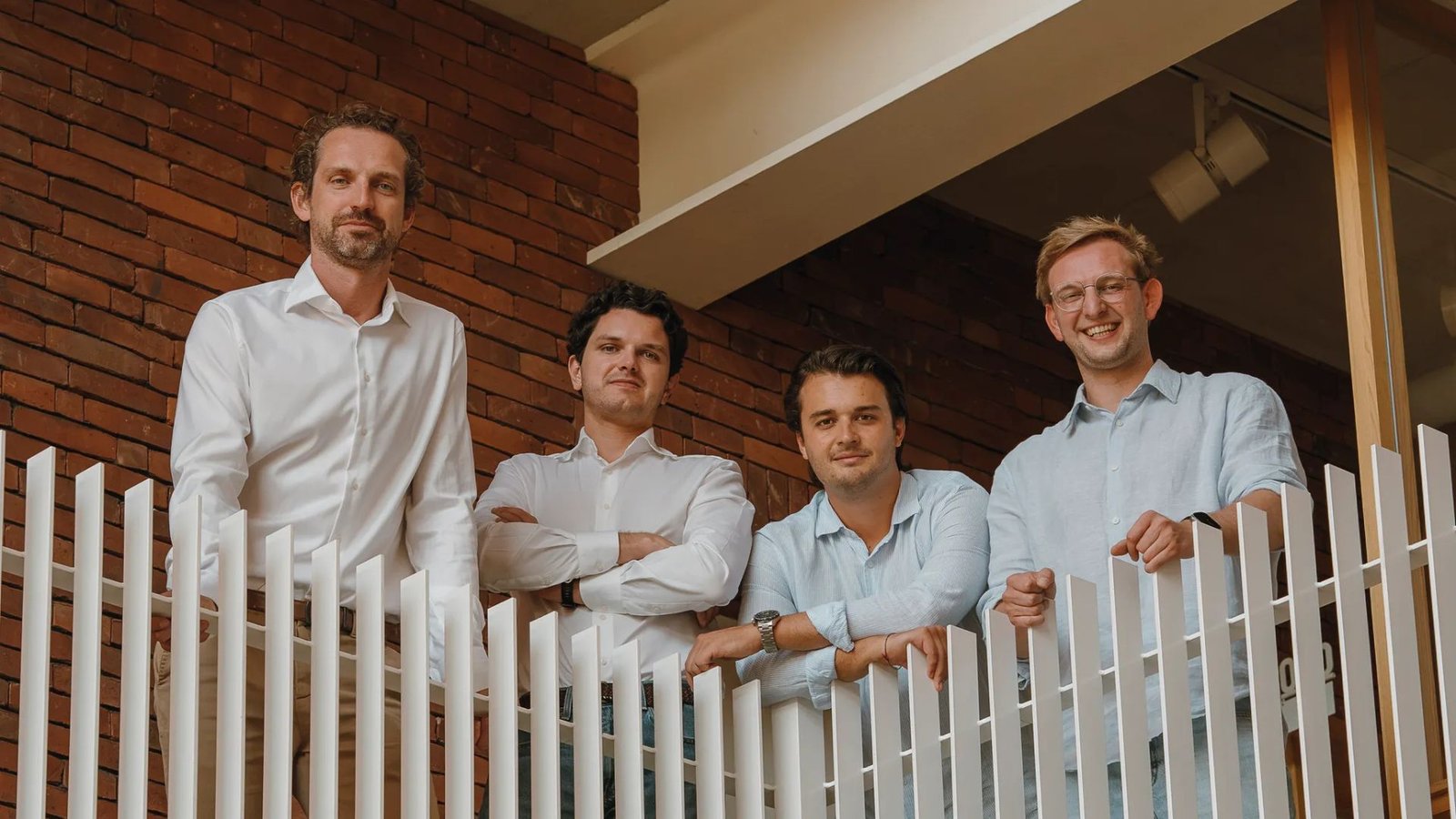
Sightera was founded in January 2025 by Hendrik Vercammen (CEO), Maxim Le Compte (CSO), Lars Vanlommel (CBO), and Christophe Deben (CDO). It spun out from UA and UZA in January 2026. Sightera is a BioTech company that uses AI to discover and design new medicines, with a current focus on oncology and fibrosis.
The company states that what distinguishes it from many other AI drug discovery firms is its approach to training its models. It explains that rather than relying on generic or publicly available datasets, its AI is trained on proprietary data generated directly from patient-derived biological material.
This material is obtained from patients with advanced, therapy-resistant or end-staged disease biology, so-called extreme biology, where conventional treatments have failed, and the underlying biology has fundamentally rewired.
It further notes that from these patient samples, Sightera establishes scalable preclinical models, including patient-derived organoids, that preserve these extreme disease biology as it is seen in humans.
These models are then employed in high-throughput drug screening campaigns to generate “rich, dynamic and longitudinal” drug-response datasets that capture how patient-derived biology responds to therapies, the startup mentions.
Sightera’s AI platform is based on these proprietary datasets and helps the company design novel small molecules whose biological behaviour in patient-derived biology is engineered from day one. It claims that it designs molecules to produce the desired biological response in patient-derived systems, rather than simply generating compounds with attractive chemical properties.
By engineering patient-derived biological responses into every molecule from the very beginning, Sightera aims to overcome one of the major reasons why many AI-designed drug candidates fail during translation to the clinic.
“Many AI drug discovery platforms begin by designing novel molecules against a predefined biological target and only then evaluate their activity in complex biological models. At Sightera, we reverse that paradigm. We start with complex patient-derived biology, learn directly from therapeutic responses in patient-derived biology, and use those insights to design entirely new small molecules. Our goal is not simply to accelerate drug discovery, but to improve the probability of clinical success by placing human disease biology at the very beginning of the drug discovery process,” said Vercammen.
The company also revealed that the €3 million round is a deliberate first step toward a larger financing that will take SIGHT001 into patients. “We are currently preparing a larger financing round to take our lead program SIGHT001 into clinical trials, to put our drug into patients and prove our hypothesis clinically. This recently closed €3 million round is a first, important step toward that goal,” Vercammen added.
The company’s business model involves focusing on the early stages of drug discovery and development, advancing multiple programs across different therapeutic areas to key value-inflexion points, and out-licensing these assets to pharmaceutical companies with the expertise, resources, and global commercial infrastructure to complete clinical development and ultimately bring these therapies to patients worldwide.