Autonomous Driving Era Sparks ‘Memory Crisis’ — Automakers Scramble to Secure Supply Chains — BigGo Finance
The memory semiconductor supply shortage, sparked by the artificial intelligence (AI) server market, is rapidly spreading to the automotive industry. As the transition to autonomous driving technology and software-defined vehicles (SDVs) accelerates, the memory capacity required per vehicle is surging, prompting global automakers to respond by securing stable supply chains through long-term contracts and other measures.
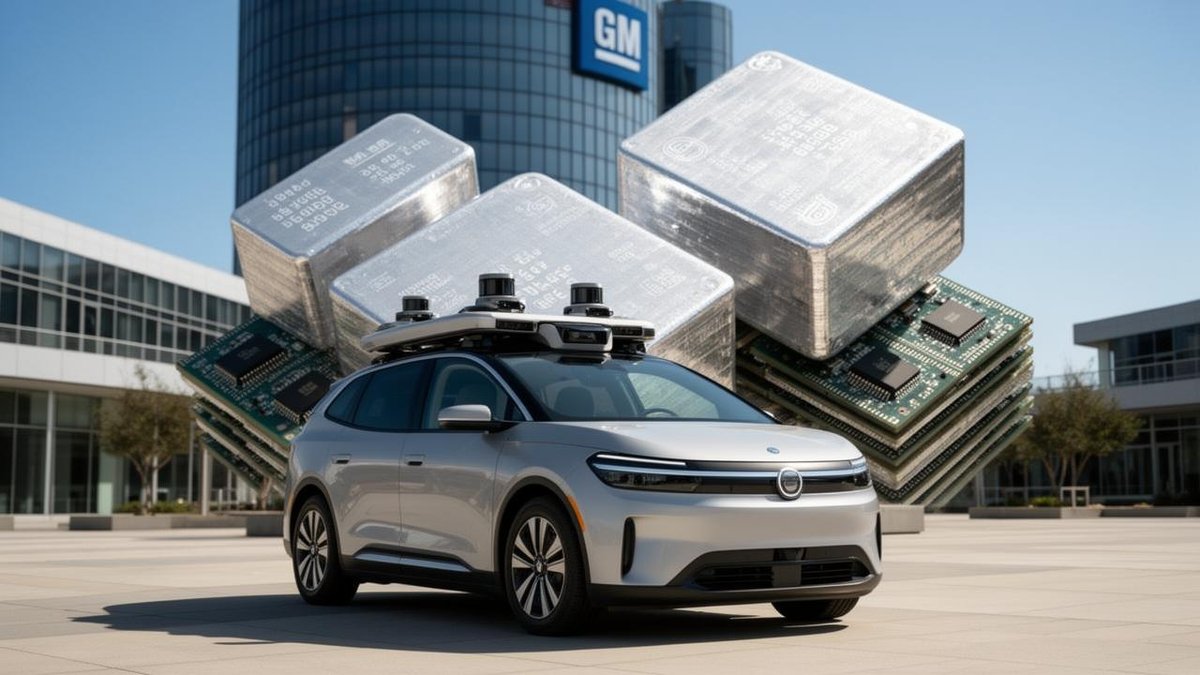
According to semiconductor and automotive industry sources on the 24th, automakers worldwide are facing rising memory prices and supply shortages. Paul Jacobson, Chief Financial Officer of General Motors (GM), projected during the company’s second-quarter earnings release that rising raw material costs, including DRAM prices, would result in an additional cost burden of $1.5 billion to $2 billion (approximately 2.2 trillion to 2.9 trillion won) this year. As a result, GM announced it would raise vehicle prices in North America by about 0.5% this year.
These remarks came just weeks after GM and Ford signed long-term supply agreements with Micron Technology for future automotive memory and storage platforms. Industry analysts view this as a strategic move by automakers to build stable supply chains amid a landscape where AI data centers are absorbing a significant portion of global memory production.
As AI demand has exploded, major memory semiconductor manufacturers — including Samsung Electronics (005930.KS), SK Hynix (000660.KS), and Micron — are strengthening strategies that prioritize data center customers over consumer electronics. Micron even wound down its consumer (B2C) memory brand “Crucial” late last year to focus on data center demand. This shift in supply structure is already impacting consumer markets: Apple raised prices on some Mac and iPad models last month, and Microsoft also increased Xbox prices.
Concerns over rising memory prices are not limited to GM. Chinese electric vehicle maker BYD raised the price of its separately sold driver assistance features by 20% earlier this year. BYD attributed the price hike to “a decision to maintain high quality amid global memory price increases.”
The fundamental driver of surging memory demand in the automotive industry is the increasing electrification of vehicles and the advancement of autonomous driving technology. In the past, automotive memory was primarily used for infotainment systems such as navigation and audio. Today, however, its applications have expanded significantly to include Advanced Driver Assistance Systems (ADAS), digital instrument clusters, in-vehicle AI, autonomous driving computers, and vehicle operating systems. High-capacity DRAM and NAND flash are essential for processing the vast amounts of data collected by multiple cameras, radar, and LiDAR in real time, as well as for continuously improving vehicle functions through over-the-air (OTA) software updates.
Data clearly illustrates the explosive growth in automotive memory demand. According to Micron, the total combined capacity of DRAM and NAND flash storage used in an average vehicle was approximately 90GB in 2023, but is projected to more than triple to roughly 278GB by 2026. Some premium vehicles are expected to approach 2TB. Micron noted that while a typical passenger car currently contains about 16GB of DRAM, a Level 4 autonomous vehicle could require over 300GB of DRAM. The industry estimates that vehicles equipped with advanced ADAS will have two to four times the memory capacity of conventional vehicles.
The market size is also growing steeply. Market research firm IMARC Group projects the global automotive memory market will grow more than 2.5 times, from $7.5 billion (approximately 10.9 trillion won) last year to $19.2 billion (approximately 28 trillion won) by 2034. Analysts suggest that just as AI servers drove demand for High Bandwidth Memory (HBM), SDVs and autonomous vehicles will become another growth axis driving demand for automotive DRAM and NAND flash going forward.
Consequently, competition over memory supply chains is intensifying. Micron has recently signed Strategic Customer Agreements (SCAs) with Qualcomm, Samsung subsidiary Harman, Denso, and Hyundai Mobis (012330.KS), strengthening cooperation with major automakers and parts suppliers. This reflects a trend where the automotive industry is also moving to secure stable supply volumes through long-term contracts in a market environment where AI server memory supply takes priority.
Automakers’ supply chain management efforts are also accelerating. Hyundai Motor Group stated, “While the market environment, including global memory shortages and price increases, is challenging, we are actively responding by strengthening strategic collaboration and expanding networking with global semiconductor companies.” Renault Korea explained that “semiconductor components are procured through the group’s global sourcing system.” Domestically, Hyundai Mobis established the “K-Automotive Semiconductor Alliance” last fall with 23 South Korean companies and institutions, including Samsung Electronics.
Memory semiconductor manufacturers are also accelerating their push into the automotive market. Samsung Electronics is expanding its LPDDR5X low-power DRAM and automotive UFS (Universal Flash Storage) product lines, and plans to begin mass production of automotive UFS 5.0 optimized for on-device AI by the end of this year. SK Hynix is also ramping up development of high-reliability automotive DRAM and next-generation low-power memory.
A semiconductor industry insider commented, “It’s no longer just Big Tech — global automakers from Germany and Japan are now actively pursuing long-term contracts and supply chain management to secure memory first. As we enter an era where AI servers and automobiles simultaneously require memory, the battle for supply chain dominance will only intensify.”