Bangkok Post – New Thai tech trends revealed
Intelligent enterprises are touted
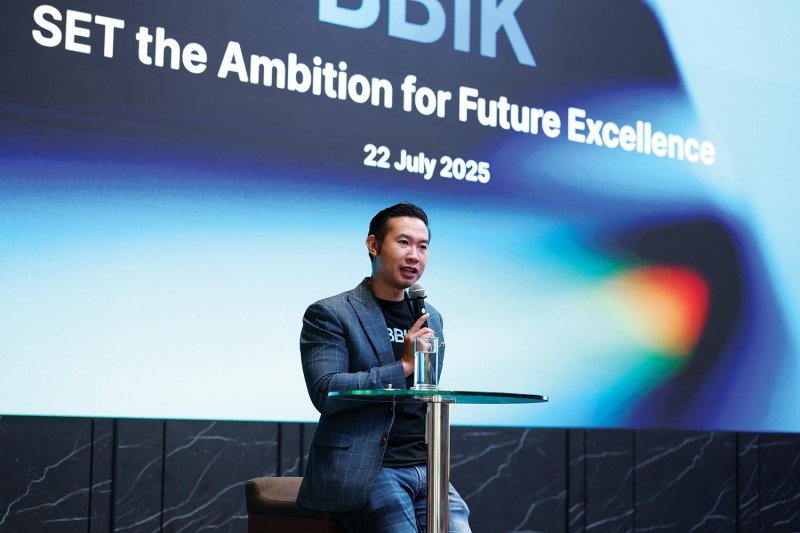
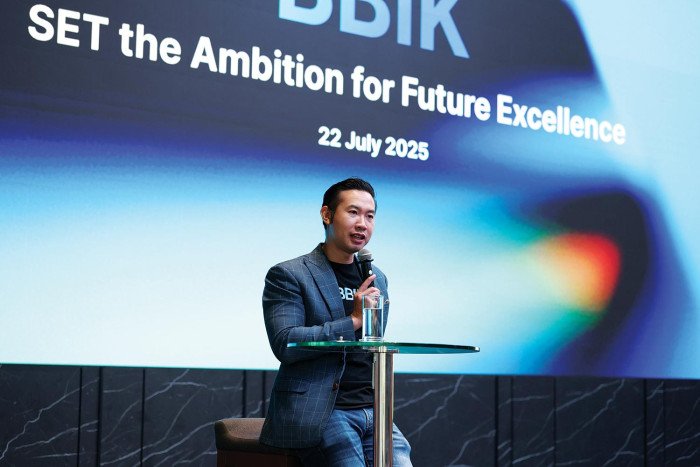
Tech consulting firm Bluebik Plc foresees three megatrends that will transform organisations into intelligent enterprises amid a volatile economy and intense competition.
This shift is expected to drive Bluebik’s continued growth of 20% this year, fuelled by artificial intelligence (AI) transformation.
“We continue to see a shift in technology spending from traditional business transformation to AI transformation. Within the enterprise, AI is becoming core infrastructure used to increase competitiveness, reduce costs and drive revenue generation,” said Pochara Arayakarnkul, chief executive of Bluebik Group.
He added that intense competition and higher customer expectations are driving the shift towards the “intelligent enterprise”.
By integrating people, processes and AI, organisations can use data-driven insights to boost efficiency, stay agile and achieve sustainable growth.
The first of three megatrends driving the intelligent enterprise is hyper-efficient operations across the value chain.
By reducing redundancy and accelerating decision-making, organisations can significantly cut costs.
A prime example is the autonomous back-office, where AI-powered straight-through processing can analyse loans or other documents to reduce approval times from days to mere minutes in banking, insurance and government.
Multiple AI models are used for planning and forecasting with optimisation algorithms such as optimising the supply chain/manufacturing.
The second trend is described as an intelligent adaptive customer experience, driven by AI recommendation engines and hyper-personalisation. For instance, traditional chatbots are evolving into AI “empathy agents” capable of analysing voice tone and context.
This allows them to provide faster, more human-like responses that significantly enhance customer service.
The third trend refers to digital trust and resilience. As data becomes the lifeblood of AI, cybersecurity is essential for protecting sensitive information, ensuring model transparency, and managing legal impacts.
Organisations must adopt a Zero Trust AI Access framework, enforcing least-privilege access across every layer to prevent unauthorised data exposure. Furthermore, AI-powered defence is now a necessity to detect, analyse and respond to sophisticated new threats like deepfake phishing and AI-driven cyber-attacks.
“AI governance ensures that systems are transparent, compliant and accountable, enabling safe, responsible and scalable enterprise adoption,” Mr Pochara said.
“For high-risk activities, it is essential to maintain a ‘human-in-the-loop’ approach for decision-making, ensuring that workflow automation remains controllable and ethically sound,” he said.
“The winners will be those who can experience, compete, adapt and decide in real time.”
Mr Pochara cited a report surveying 100 leading enterprises which found that 51.5% of organisations are still in the AI pilot stage, while 28.9% have begun to scale AI implementation across multiple departments.
Only 3.1% have not yet taken any action regarding AI. This highlights the fact that AI has become a strategic priority for Thai businesses; however, moving from “experimentation” to “enterprise-wide adoption” remains a significant challenge.
“Some 80% of AI projects currently focus on cost-saving initiatives or ‘quick win’ use cases that demonstrate a clear return on investment. Predictive sales forecasting, supply chain optimisation, and fraud risk modelling have emerged as highly successful AI use cases,” Mr Pochara said.
He said that Bluebik plans to invest nearly 100 million baht in adopting new tools to enhance its AI service offerings.