Best Budget Smartphones in Canada 2026 – Tech Insider Canada
Last updated: 20 July 2026
Added Pixel 10a (launched May 2026) as top pick; removed Nothing Phone 3a (discontinued) and iPhone 16e (unreleased/never launched); added Galaxy A16 5G and Moto G Power 2026 as new budget leaders
The best budget smartphones in Canada for 2026 prove that you no longer have to spend flagship money to get a phone that takes excellent photos, lasts all day on a single charge, and keeps working reliably for years. The under-$500 tier has become the most competitive part of the market, and the lineup has shifted meaningfully since our last update: Google’s Pixel A-series has a new, sharper camera system, Samsung has refreshed both ends of its Galaxy A range, Motorola has pushed battery capacity even higher, and Nothing has replaced its transparent-design wildcard with a cheaper, faster successor. This guide walks through the five best budget and mid-range phones you can actually buy in Canada right now, with current Canadian-dollar pricing, the specs that matter, and straightforward advice on who each phone suits. If you are still deciding between ecosystems before you shop, our breakdown of iPhone versus Samsung Galaxy is a useful companion read. With that settled, here is the current shortlist, starting with the phone that tops it.
This is a living guide, not a one-time list: prices, availability, and even which phones are worth recommending change every few months in Canada, so we revisit it regularly and swap in whatever the market actually supports today rather than leaving stale picks in place. That is why you will not find the Nothing Phone (3a) or the iPhone 16e here anymore – the 3a has been discontinued and replaced by a genuinely stronger successor, and the 16e never actually shipped, so it no longer belongs in a list of phones you can buy. In their place, this update adds the Google Pixel 10a as the new top overall pick, brings in the Samsung Galaxy A16 5G and the redesigned Motorola Moto G Power as new budget leaders, and keeps the Galaxy A56 5G and a stylish Nothing Phone (4a) in the mix. Every price below is approximate CAD pricing as of July 2026; promotions, carrier deals, and trade-ins will move the number in either direction, so treat these as a starting point for comparison rather than a guaranteed checkout price.
Don’t miss new tech stories on Google
Add Tech Insider once in the Google app and our stories appear in your news suggestions.
The Best Budget Phones in Canada at a Glance
Before the full breakdowns, here is the shortlist in one place. The Pixel 10a takes the overall crown on camera quality and everyday performance, the Galaxy A56 5G is the strongest do-everything Android pick, and the field rounds out with a rock-bottom-priced 5G option from Samsung, a battery champion from Motorola, and a design-forward wildcard from Nothing. Use the table to see where each phone sits on price, then read on for the reasoning behind each ranking.
| Rank | Phone | Price (CAD) | Battery | Main camera | Chipset | Best for |
|---|---|---|---|---|---|---|
| 1 | Google Pixel 10a | $499 | 5,000mAh | 64MP | Tensor G4 | Best overall |
| 2 | Samsung Galaxy A56 5G | $361 | 5,000mAh | 50MP triple | Exynos 1480 | Best all-rounder |
| 3 | Samsung Galaxy A16 5G | $170 | 5,000mAh | 50MP | Octa-core | Cheapest reliable 5G |
| 4 | Motorola Moto G Power (2026) | $240 | 6,000mAh | 50MP | Snapdragon 4 Gen 2 | Best battery life |
| 5 | Nothing Phone (4a) | $399 | 5,000mAh | 50MP dual | Snapdragon 7s Gen 3 | Best design / wildcard |
1. Google Pixel 10a – Best Overall Budget Phone
If you want the single safest budget buy in Canada right now, the Pixel 10a is it. At $499, Google has once again built a phone that punches well above its price bracket, and the camera is the headline reason why. The 10a’s 64MP main sensor is a meaningful jump from the phone it replaces, and paired with the same Tensor G4 chip family that powers Google’s pricier Pixels, it leans on computational photography to deliver point-and-shoot reliability that puts some considerably more expensive phones to shame. Night shots, portraits, and everyday snapshots all come out clean and well-balanced with minimal fuss, which matters most for buyers who just want a phone that takes a good photo the first time, every time.
The Tensor G4 chip handles everyday tasks, multitasking, and moderate gaming without complaint, and it is the same silicon Google uses across its current Pixel lineup, so the 10a does not feel like a stripped-down experience the way some budget phones do. A 5,000mAh battery backs it up, which should comfortably carry most people through a full day of typical use, from messaging and social media to streaming and navigation, with room to spare on lighter days. Google’s Pixel A-series has also built a strong reputation for long-term software support, typically among the best commitments in the Android world, so buyers who want to hold onto a phone for several years rather than replace it every two tend to gravitate toward the Pixel line for exactly that reason.
On the software side, the 10a runs a clean, close-to-stock version of Android, free of the duplicate apps and interface clutter that some rivals ship with, plus Google’s growing set of on-device AI features for photo editing, call screening, and search. It is not the cheapest phone on this list – at $499 it sits right at the top of what most people would call a true budget price – but it is the one with the fewest compromises. If your priority is the best camera and the cleanest software experience available under $500 in Canada, and you are comfortable paying a bit more than the rock-bottom options below, the Pixel 10a is the easiest recommendation on this list.
- Pros: Best camera in this price class, clean and fast software, strong all-day battery, flagship-adjacent chip.
- Cons: The most expensive phone on this list, and some rivals offer bigger batteries or more cameras for less money.
2. Samsung Galaxy A56 5G – Best All-Rounder
Samsung’s Galaxy A series remains the best-selling mid-range line in Canada, and the Galaxy A56 5G is the strongest all-round entry in the current lineup. At $361, it undercuts the Pixel 10a by well over a hundred dollars while still delivering a genuinely well-rounded phone, and that gap is exactly why it is the pick for buyers who want most of what the Pixel offers without paying quite as much. The A56 is built around a versatile 50MP triple-camera system that gives you more flexibility for different types of shots than a single-lens setup, from wide group photos to close-up detail, and while it does not quite match the Pixel’s computational polish, the results are punchy, vivid, and very usable straight out of the camera app.
Power comes from Samsung’s own Exynos 1480 chipset, a capable mid-range processor that handles everyday apps, browsing, streaming, and light gaming smoothly, even if it will not chase benchmark records against pricier Snapdragon silicon. The 5,000mAh battery matches the Pixel’s capacity and should get most users through a full day comfortably. Samsung also brings One UI to the table, which layers deep customisation, ecosystem links to Galaxy Watches and Buds, and a long list of extra features on top of stock Android – some buyers love the flexibility, others find it busier than Google’s cleaner approach, so it is worth handling both in person if you can before deciding.
Samsung has also extended its long-term software support commitment across much of the current A-series lineup, which narrows what used to be a clear gap behind the Pixel and makes the A56 a safer long-term hold than budget Samsung phones used to be. Reliable 5G connectivity across Canadian networks, a solid in-hand feel, and Samsung’s wide retail and carrier presence round out the package. If you want a phone that does nearly everything well, benefits from strong resale value and brand recognition, and costs noticeably less than the segment leader, the Galaxy A56 5G is the most sensible all-rounder on this list.
- Pros: Versatile 50MP triple camera, reliable 5G, One UI’s deep customisation, strong value against the Pixel 10a.
- Cons: The Exynos 1480 trails Snapdragon and Tensor rivals on raw performance, and One UI can feel busier than stock Android.
3. Samsung Galaxy A16 5G – Cheapest Reliable 5G Phone
Not everyone needs, or wants, to spend close to $500 on a phone, and the Galaxy A16 5G exists precisely for that buyer. At just $170, it is by far the cheapest phone on this list, yet it still delivers proper 5G connectivity, a 5,000mAh battery, and a 50MP main camera – specs that would have been unheard of at this price only a couple of years ago. It is unmistakably an entry-level phone, built around a modest octa-core chip rather than a name-brand Snapdragon or Tensor processor, so do not expect it to handle demanding games or heavy multitasking gracefully. For messaging, browsing, social media, streaming, and everyday photos, though, it covers the basics capably.
The standout feature, and the real reason the A16 5G belongs on this list, is Samsung’s commitment to six years of security updates on the device. That is an extraordinary promise for a phone this cheap, and it means a $170 purchase today can realistically stay safe to use for banking, email, and other sensitive tasks for the better part of a decade. Most phones in this price range are abandoned within two or three years, which quietly makes them a worse long-term deal than their sticker price suggests. The A16 5G flips that equation: it is not just the cheapest 5G phone worth buying in Canada, it may also be one of the safest to keep using for years without upgrading.
This is the phone to buy as a first smartphone for a teenager, a low-fuss device for an older relative, a reliable backup phone, or simply the most sensible option for anyone who finds the idea of paying $300 or more for a phone unnecessary. Pair it with a discount carrier plan and the total cost of ownership becomes genuinely hard to beat anywhere else in the Canadian market. Just go in with realistic expectations: this is a phone built for reliability and longevity on a tight budget, not for speed.
- Pros: Lowest price on this list by a wide margin, proper 5G, six years of security updates, dependable battery life.
- Cons: The modest chip struggles with demanding games and heavy multitasking, and the camera is basic next to pricier rivals.
4. Motorola Moto G Power (2026) – Best Battery Life
Motorola has carved out a reliable niche at the affordable end of the market for years, and the 2026 Moto G Power is its strongest argument yet for buyers who care about one thing above all else: battery life. At $240, it sits comfortably between the Galaxy A16 5G and the pricier all-rounders above it, and it justifies the jump with a genuinely huge 6,000mAh battery – the largest of any phone on this list by a meaningful margin. For anyone who has ever watched their phone die by mid-afternoon, or who simply hates thinking about charging, that battery is the whole pitch, and it is a compelling one.
Motorola pairs that battery with a 50MP main camera and a Snapdragon 4 Gen 2 chipset, a sensible mid-range processor that handles everyday tasks, streaming, and casual apps smoothly without chasing flagship-level performance. Motorola’s software remains one of its quiet strengths: a light, close-to-stock version of Android that tends to feel smooth out of the box, without the clutter or duplicate apps that weigh down some rivals. It will not win benchmark contests against the Pixel or the Nothing Phone, and heavy gamers should look elsewhere, but for messaging, browsing, streaming, and everyday photography, it is thoroughly capable.
At $240, the Moto G Power (2026) also makes a strong value argument against its closest neighbour on this list: for $70 more than the Galaxy A16 5G, you get a considerably bigger battery and a better camera, which is an easy trade for a lot of buyers. The trade-off to weigh is software longevity, which has historically been shorter on Motorola’s Moto G line than on Google’s or Samsung’s current promises, so it is worth checking the specific update commitment on the model you buy if you plan to keep it for many years.
- Pros: Class-leading 6,000mAh battery, clean near-stock Android, strong value at $240, capable 50MP camera.
- Cons: Shorter software update window than the Pixel or Galaxy A-series, and performance trails pricier chips under heavy load.
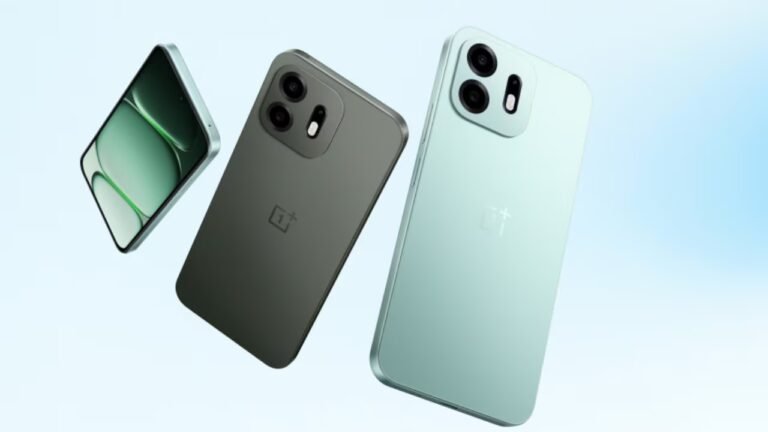
5. Nothing Phone (4a) – Best Design and Performance Wildcard
For buyers who want a phone that does not look and feel like every other slab of glass and aluminum, Nothing has become a credible mid-range player, and the Phone (4a) is its newest and most polished budget entry yet. Priced at $399, it replaces the Phone (3a) with a phone that is both cheaper and more capable, built around a 50MP dual-camera system and a noticeably stronger Snapdragon 7s Gen 3 chipset that gives it more performance headroom than most phones at this price. If previous Nothing phones are any indication, expect the brand’s signature semi-transparent design language and distinctive lighting accents to carry over, which remains one of the most recognisable looks in the entire smartphone market.
Beyond the looks, the hardware is genuinely competitive for the money. The Snapdragon 7s Gen 3 chip handles everyday apps and moderate gaming with more headroom than the Exynos and lower-end Snapdragon chips found elsewhere on this list, and the 5,000mAh battery keeps pace with most of the field for all-day use. Nothing has also leaned into a clean, thoughtful take on Android, layering its own minimal design touches and AI features on top without burying the interface in clutter. It is the kind of phone people buy partly because it has personality, which is a refreshing change in a category where most devices are visually interchangeable.
The honest caveat is availability. Nothing is a smaller company than Samsung or Google, and as with previous Nothing launches, Canadian availability may be more limited than the major carriers offer for the phones above – check Nothing’s official store and authorized resellers before you buy, since you will likely be purchasing unlocked rather than picking it up through a Big Three carrier. If you value standing out and do not mind buying unlocked, the Phone (4a) is a genuinely fun, well-priced pick. If you want the widest possible retail and carrier support, the Pixel or a Galaxy A is the safer route.
- Pros: Distinctive design, strong Snapdragon 7s Gen 3 performance for the price, capable dual camera, cheaper than its predecessor.
- Cons: Narrower Canadian retail and carrier availability than Samsung, Google, or Motorola.
Cameras, Batteries, and Performance: How the Five Compare
Camera quality is the area where this lineup has improved the most, and the differences are smaller than the spec sheets suggest. The Pixel 10a’s 64MP main camera and Google’s computational processing set the bar for reliability in tricky light, including after dark, which matters most if photos of family, food, and travel are a big part of how you use your phone. The Galaxy A56 5G’s 50MP triple-camera system and the Nothing Phone (4a)’s 50MP dual setup both produce punchy, vivid results in daylight and give you more framing flexibility than a single lens. The Galaxy A16 5G and the Moto G Power cover the basics competently in good light but show their price more in shadows and at the edges of the frame, which is perfectly fine for social media and less convincing for low-light or zoomed shots.
Battery life is a genuine strength across the whole lineup, largely because efficient mid-range chips sip less power than flagship silicon. The Moto G Power’s 6,000mAh cell is the clear endurance leader and the obvious choice for anyone who hates reaching for a charger mid-afternoon, while the other four phones share a 5,000mAh capacity that should comfortably clear a full day of normal use for most people. None of these phones lead with fast charging the way some flagships do, and several ship without a charger in the box, which has become a standard cost-saving move across the industry, so budget a compatible charger separately if you do not already own one.
On raw performance, the Tensor G4 in the Pixel 10a and the Snapdragon 7s Gen 3 in the Nothing Phone (4a) offer the most headroom in this group, making them the two best choices if you play games occasionally or run several demanding apps at once. The Exynos 1480 in the Galaxy A56 5G and the Snapdragon 4 Gen 2 in the Moto G Power sit a step behind but remain smooth for everyday browsing, streaming, and messaging. The Galaxy A16 5G’s modest octa-core chip is the clear budget outlier, built for efficiency and longevity rather than speed, which is a fair trade-off at $170 but worth knowing before you buy if performance matters to you.
How to Choose a Budget Phone in Canada
With five very different phones spanning $170 to $499, the right pick depends more on your priorities than any single spec sheet. It helps to think in three rough tiers. Under $200, the Galaxy A16 5G is essentially the only phone worth considering if you want a modern, secure 5G device without stretching your budget. Between $200 and $400, the Moto G Power and Nothing Phone (4a) compete on very different strengths – battery life versus design and performance – while the Galaxy A56 5G sits at the top of that range as the most well-rounded option. Above $400, the Pixel 10a is the clear pick if camera quality and software polish matter more to you than saving another hundred dollars.
Network compatibility is worth checking before you buy, especially with unlocked or imported phones. Canada’s mobile market runs on three dominant national networks – Rogers, Bell, and Telus – plus Freedom Mobile, and all of them operate cheaper sub-brands on the same towers: Fido under Rogers, Virgin Plus under Bell, and Koodo under Telus sit in the middle on price, while discount and prepaid brands like Chatr, Lucky Mobile, Public Mobile, and Fizz target the lowest monthly costs. Every phone on this list supports 5G, but it is still worth confirming a specific model supports the bands your preferred carrier uses, particularly if you are importing a phone or buying from a smaller retailer rather than a carrier directly.
Beyond price, three things separate a good budget phone from a false economy: battery capacity, camera quality, and software update length. A big battery, like the Moto G Power’s 6,000mAh cell, matters most if you are away from a charger for long stretches during the day. Camera quality matters most if photos are a big part of how you use your phone, and it is the area where the Pixel 10a and the Nothing Phone (4a) pull ahead of the field. Update length matters more than most buyers realise: a phone that stops getting security patches after two years is a phone you should stop trusting with banking apps, which is exactly why the Galaxy A16 5G’s six-year commitment is such a strong selling point despite its low price.
How you buy matters almost as much as what you buy. Separating the phone purchase from the plan is usually the cheapest approach: buy the phone unlocked from a retailer like Best Buy Canada or directly from the manufacturer, then pair it with a low-cost discount carrier rather than accepting a bundled deal from a Big Three brand. Trade-in programs from manufacturers and carriers can knock a useful amount off a new purchase if you have an old phone gathering dust in a drawer, and it is worth getting quotes from more than one source since credits vary. Keep in mind that all prices in this guide are approximate and exclude tax – promotions, carrier deals, and new launches will shift them throughout the year.
Frequently Asked Questions
What is the best budget smartphone in Canada right now?
The Google Pixel 10a is the best overall budget phone for most Canadians at $499. It pairs a 64MP main camera and Google’s Tensor G4 chip with clean software and strong all-day battery life. If you want to spend less, the Samsung Galaxy A56 5G at $361 is the strongest all-round alternative.
What is the cheapest good 5G phone in Canada?
The Samsung Galaxy A16 5G is the cheapest phone worth recommending on this list at $170. It is a basic phone in terms of raw performance, but it offers real 5G connectivity, a 5,000mAh battery, and an unusually long six-year commitment to security updates for the price.
Which budget phone has the best battery life?
The Motorola Moto G Power (2026) leads the field with a 6,000mAh battery, the largest of any phone in this guide. At $240, it is built specifically for buyers who want to go as long as possible between charges without paying flagship prices.
What happened to the Nothing Phone (3a) and the iPhone 16e?
Both have been removed from this guide. The Nothing Phone (3a) has been discontinued and replaced by the cheaper, faster Nothing Phone (4a), which now holds the wildcard spot on this list. The iPhone 16e, which appeared in earlier versions of this guide as an anticipated budget iPhone, never actually launched, so it no longer belongs in a list of phones you can buy today.
Is it worth paying more for the Pixel 10a instead of a cheaper option?
It depends on what you value. The Pixel 10a costs up to $329 more than the Galaxy A16 5G, but it delivers a noticeably better camera, a more capable chip, and Google’s cleaner software experience. If photography and performance matter most, the extra cost is worth it. If you mainly need a dependable phone for calls, messaging, and browsing, the cheaper options on this list will serve you just as well.
How long will these phones receive software updates?
Samsung has confirmed six years of security updates for the Galaxy A16 5G, one of the longest commitments available at this price. Google’s Pixel A-series has historically offered similarly strong long-term support. Motorola and Nothing typically offer shorter update windows, so if you plan to keep a phone for many years, the Pixel or the Galaxy A16 5G are the safer long-term choices.
Do any of these phones support all Canadian carriers?
All five phones support 5G on Canada’s major networks, but it is still worth confirming band compatibility with your specific carrier before buying, especially if you are purchasing unlocked or through a smaller retailer. Buying directly from a carrier removes most of the guesswork, while buying unlocked and pairing the phone with a discount carrier is usually the cheaper route overall.
Are budget phones good enough for gaming?
Casual and mid-weight games run fine on all five phones, but none of them are built for demanding, high-refresh-rate gaming. The Nothing Phone (4a)’s Snapdragon 7s Gen 3 and the Pixel 10a’s Tensor G4 offer the most headroom for gaming among this group, while the Galaxy A16 5G’s modest chip is best reserved for lighter titles.
The Bottom Line
Five phones, five very different strengths, and no genuinely bad options among them – that is the real headline of the Canadian budget phone market in 2026. For most buyers who want the fewest compromises and do not mind paying close to $500, the Google Pixel 10a is the easiest recommendation: the best camera in this class, a capable chip, and clean software make it the safest choice on this list. If you want nearly the same experience for noticeably less money, the Samsung Galaxy A56 5G is the strongest all-rounder, and if $170 is your ceiling, the Galaxy A16 5G is the best 5G phone you can buy at that price anywhere in Canada.
From there, it comes down to what you value most. Choose the Motorola Moto G Power (2026) if battery anxiety is your biggest complaint about phones in general, and choose the Nothing Phone (4a) if you want a phone with genuine personality and do not mind buying unlocked. Whichever you pick, buy the way that fits your wallet: separate the phone from the plan, compare a discount carrier against a bundled deal, and use a trade-in if you have an old phone worth cashing in. Every phone on this list would have cost far more only a couple of years ago, and that is good news for anyone who refuses to overpay for a phone.
Related Reading
Reviewed by Liam Tremblay for the Tech Insider Canada editorial team. Pricing and specifications reflect publicly available information as of July 2026 and can change with promotions, carrier deals, and new releases. This article is general information to help you compare devices, not purchasing advice.