Binghamton City Council reviews Flock license plate reader contracts amid data privacy debate
BINGHAMTON, N.Y. (WBNG) – The Binghamton City Council held a public information session on its use of Flock Safety automated license plate reader (ALPR) cameras, hearing from the company, a policing policy researcher, and city police leadership as it considers whether to renew two existing contracts.
No vote was taken at the meeting; however, council members said additional meetings with police leadership are planned before any action is taken.
Binghamton police currently operate under two Flock Safety contracts covering different sets of cameras. Data is retained for 30 days and then automatically deleted. Patrol officers can receive alerts when a vehicle on a hot list is detected, but only supervisors, detectives, and investigators have access to search for specific vehicles or plates.
Binghamton Police Chief John Ryan said every search in the system requires a user login, an associated case number, and a written justification. Those records are permanently stored in an audit log, and the department conducts audits every two weeks.
“Members of the department are authorized users of the system,” Chief Ryan said. “There’s different levels of access or security clearance, so to speak, on what they can see and what they can do within the system.”
Chief Ryan said the department does not share Flock data with federal agencies. He said a hot list entry from an outside agency — including a federal one — would be visible to officers if a matching vehicle was detected in Binghamton’s camera network, but officers are required to verify any hit through separate law enforcement databases before taking action.
“It’s a notification, and then that may be the initiating factor for a police officer to take further investigative action,” Chief Ryan said.
Data-sharing with other agencies
Captain Dan Flanders confirmed that Binghamton currently has data-sharing agreements with Binghamton University and the Town of Vestal Police Department. He said he was not aware of any agreements allowing other jurisdictions to mount cameras on city infrastructure.
The city’s two Flock contracts are part of a larger network of automated license plate readers in the area. Councilmember Rebecca Rathmell said there are nearly 300 ALPRs in the region, the majority of which are from Flock, though contracts with Motorola also exist. Binghamton University operates more than a dozen cameras in the downtown area.
The Broome County Sheriff’s Office also employs license plate readers on multiple platforms and uses a Motorola system currently in development. The Sheriff’s Office also has Axon fleet cameras in patrol vehicles. Captain Ben Harting, a member of the Sheriff’s Office Law Enforcement Division, said the agency has approved specific data-sharing agreements with other departments, including the Binghamton Police Department, and partners with the Southern Tier Crime Analysis Center to compile and analyze data.
“Together, using those license plate readers, we’re able to parse together different pieces of the puzzle to make effective arrests,” Harting said.
Flock officials share statistics and more information
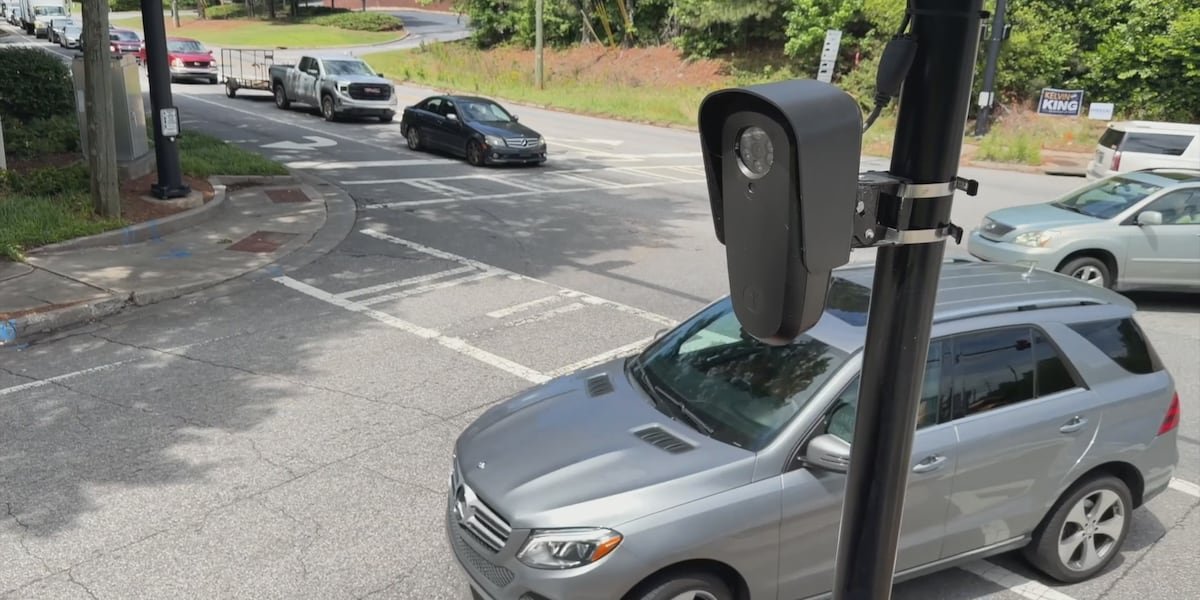
Karl Bach, public affairs manager for Flock Safety, told the council the company operates in more than 6,000 communities across the country. He said the cameras capture the make, color, model, and license plate from the rear of a vehicle, and are used only to support criminal investigations.
Bach said the data is stored on Amazon Web Services cloud infrastructure, which he described as the highest level of security available in the commercial arena. He said Flock is compliant with the Criminal Justice Information Services, or CJIS, standards, has been independently audited, and has hired outside groups to search for vulnerabilities.
“Flock has never been hacked, but we know that we need to be vigilant,” Bach said.
Bach said data collected by the cameras is 100% owned by the contracting agency and will never be sold. He said agencies control who they share data with, and that Flock does not enable automatic sharing.
“Your agency decides who to share with and who not to share with,” Bach said.
Bach said the system does not use facial recognition, is not connected to any DMV system, does not automatically generate enforcement tickets, and does not track vehicles continuously.
On the question of data retention, Bach said Flock’s internal analysis was guided by the National Incident-Based Reporting System, or NIBRS. He said the average time to clear a rape case in the U.S. is 32 days, negligent manslaughter 28 days, and human trafficking 32 days — figures he cited to support the current 30-day default retention window.
When asked about the possibility of Flock going out of business, Bach said data would not follow the company. “If Flock were to be gone tomorrow, that data is scheduled for permanent deletion after 30 days and does not follow the company,” he said.
Location and use of cameras
Harting said the cameras are placed at strategic locations — such as choke points near high-crime areas or major exit routes — and are not positioned to track routine daily movements.
“They’re not at every street corner tracking everybody’s movement,” Harting said. “They just give a notification of when that vehicle and that plate has gone by.”
Harting said the Sheriff’s Office has used license plate reader data to locate stolen vehicles, identify shooting suspects, resolve bank fraud cases, and track larger criminal enterprises operating across the region and Northeast. He said a recent shooting suspect was located using Flock cameras.
“Without those Flock cameras, I have no idea when that person would have been found, and there could have been more victims,” Harting said.
Harting said removing the cameras would represent a significant loss for law enforcement. “The removal of those LPRs is a big downside. It takes a big hit on local law enforcement trying to solve crimes,” he said.
Tech researchers raise concerns
Quincy Blair, tech advocacy counsel at the Policing Project, a nonprofit, nonpartisan research center at NYU School of Law, presented a series of policy concerns about automated license plate readers.
Blair said hot lists have led to wrongful traffic stops when they contain outdated information, and that some states use identical license plate numbering schemes, which can result in false matches. She cited an example in Aurora, Colorado, where police held a woman and her family at gunpoint after an ALPR matched her license plate to a stolen vehicle — a motorcycle from a different state with the same plate number.
Blair also cited examples of misuse, including a Connecticut case where an officer used a law enforcement database to check whether he was under investigation, and a Pennsylvania case where an officer used ALPRs to monitor his estranged wife’s location. She also said the NYPD used ALPRs to track and monitor Muslims arriving at a mosque without any suspicion of wrongdoing.
Data-sharing & privacy concerns
On data sharing, Blair said there have been instances where ALPR data was shared with federal immigration authorities, sometimes without the knowledge of local agencies. She also cited a data leak involving Flock in which sensitive information — including license plate numbers, case numbers, and search reasons — was publicly indexed by search engines including DuckDuckGo and Bing.
“There have been a number of instances where data has been used beyond local policing and being shared both across the country as well as with federal immigration authorities, sometimes without the knowledge of local agencies,” Blair said.
Blair said the Policing Project recommends that any legislation governing ALPR use include: a warrant requirement to access historical location data; limits on data retention; rules governing inter-agency data sharing; offense-type restrictions on when the tool can be used; and a prohibition on unvalidated analytics features such as convoy analysis, which she said can reveal associational information about drivers.
Binghamton Councilwoman raises concerns
Councilmember Rebecca Rathmell said residents have legitimate concerns about how their personal information is being collected and used, and that the debate is not limited to Binghamton.
“This isn’t just a local conversation. It’s a regional conversation,” Rathmell said. “There are over 80 municipalities nationally that have ended their contracts with Flock.”
Rathmell said Ithaca moved to terminate its Flock contract in March, and that Syracuse finalized hardware removal this week after not renewing a contract eight months ago.
Rathmell said the council has been reviewing the terms of Binghamton’s contracts and comparing BPD regulations against Flock’s stated policies. She said Chief Ryan responded to a list of questions submitted by the council, and that those responses have been shared publicly.
“Over and over and over again, we see a discrepancy between what Flock Safety represents as its common function and use of the data and what’s playing out on the ground,” Rathmell said. “And that’s the discrepancy that needs to be addressed.”
The future of the contracts remains undecided
Rathmell said the authority to terminate or not renew the contracts rests solely with the mayor as the authorized signatory, based on guidance from the city’s legal department. She said the council plans to advance recommendations regarding restrictions, up to and including termination or non-renewal.
“It’s not about restricting public safety. I think we’ve seen, and there’s plenty of data to demonstrate that the flock cameras don’t prevent crime in the first place. And the crimes that they do solve is actually a significantly small portion of the function of the cameras locally,” Rathmell said.
Rathmell said the council is working with two separate renewal timelines — one coming next month and another in December. She said the council wants to address all components of both contracts, and that the broader use of automated license plate readers by other entities in the area is also part of the conversation.
County Legislator Tim Ames, whose district falls entirely within the city of Binghamton, submitted a written statement calling for a series of protections to be written into law before any contract is renewed. Those include a 48-hour data retention cap, a prohibition on data sale or third-party sharing, a quarterly public oversight panel, and offense-type restrictions on when the cameras can be used.
2025 Syracuse data exposure
Ames cited a data exposure incident in Syracuse, in which the Syracuse Police Department’s Flock database was left open to outside departments. He said law enforcement agencies around the country performed 4.4 million searches of Syracuse’s license plate reader data between June 2024 and July 2025, including 2,097 labeled as immigration-related.
“Syracuse only found out because local reporters asked,” Ames said in his statement.
Ames also cited New Hampshire’s law, which requires ALPR data to be purged within three minutes of capture unless it triggers an arrest, citation, or active alert, and Maine’s law, which bars nearly all private use of the technology and requires deletion of non-investigative data within 21 days.
Next steps
Council members said they plan to hold a separate, non-public meeting with police leadership to discuss additional questions, including the number of inquiries the department generates and receives through the system. Council members also said they have not yet examined alternatives to Flock, including locally controlled systems, and indicated that discussion would be part of future meetings.
“We want to take as many steps as we can to ensure that we’re addressing all of the components of those contracts,” Rathmell said.
The next public comment period is scheduled for the business meeting on Wednesday, July 29, at 6 p.m.
To watch the full meeting, click here.
Copyright 2026 WBNG. All rights reserved.