Bitcoin Fell 50% and MSTR, BMNR, BSTR Are Paying the Price: What’s Happening? – Strategy (NASDAQ:MSTR)
Bitcoin (CRYPTO: BTC) treasury companies now sit on tens of billions in unrealized losses after the token dropped 50% from its October peak.
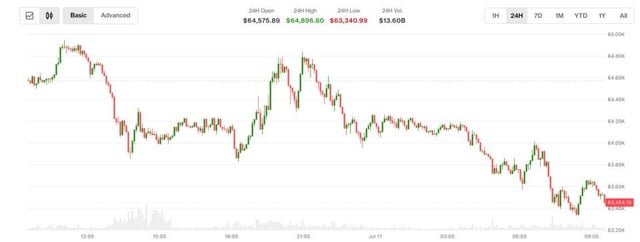
• How is Bitcoin doing today?
How Bad Are The Losses Across Treasury Companies?
Artemis Analytics data cited by Bloomberg shows the damage runs deep across the sector. The biggest unrealized losses belong to the largest players:
The only companies bucking the trend are those focused on Hyperliquid, with Hyperliquid Strategies (NASDAQ:PURR) sitting on a $1.3 billion unrealized gain.
What Is Happening To SPAC-Based Treasury Companies?
BSTR Holdings scrapped its planned merger with a Cantor Fitzgerald-affiliated blank-check company (SPAC) earlier this month, citing the need to revise terms to better reflect current market conditions.
BSTR was co-founded by Adam Back, whose 1997 cryptographic system Hashcash was cited in the original Bitcoin white paper.
The SPAC route has proved particularly brutal, with sponsors scrapping a $1 billion vehicle that had lined up former U.S. Commerce Secretary Wilbur Ross for its board.
Why Did This Model Get So Popular So Fast?
“It got very heated, very quickly,” Jiang told Bloomberg. “We were getting pitched left and right,” he added.
Pantera invested in more than 20 crypto treasury deals and made money overall thanks to standout performers like Bitmine and Hyperliquid Strategies, but even those names trade well off their peaks.
What Is The Core Problem With The Model?
Treasury companies are effectively a leveraged bet on whatever token they hold. Shares tend to amplify both gains and losses relative to the underlying asset, which works brilliantly in a bull market and devastatingly in a bear one.
Strategy alone holds roughly 4% of Bitcoin’s total 21 million supply.
Back framed the model’s logic as an arbitrage on Bitcoin’s long-run growth curve outpacing the cost of capital.
Bitcoin trading at $66,000, still below its price at the time of Donald Trump’s November 2024 presidential election victory, has made that arbitrage considerably harder to close.
Photo via Shutterstock