Britain’s semiconductor pivot is built on sand
“The best time to plant a tree is 20 years ago, and the second best time is today,” is not a logic that applies to the manufacture of silicon chips.
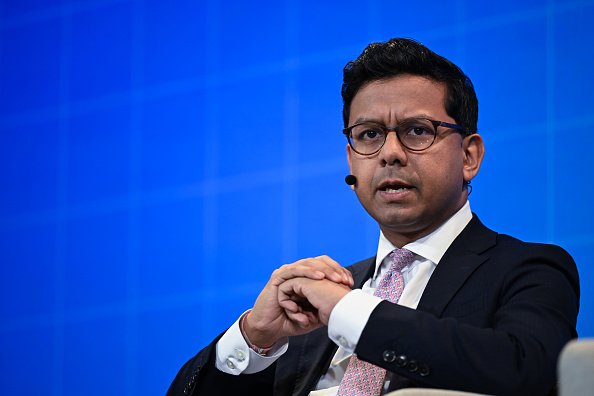
Last week, newly-created Minister for AI Kanishka Narayan came out swinging for a UK chip manufacturing industry. He said he was “focused on AI chips being built here” because hardware was “where most of the economic value, most of the leverage and most of the supply chain constraint is. It’s also what the British public wants to reindustrialise.” He went on to discuss the need for chip factories, while stressing the importance of a plan on drones and defence.
Narayan is the first UK minister for AI, and in that sense he stands on the shoulders of pygmies. British politicians don’t do long-term. They tend to turn up at the end of a party, inquiring where all the free beer and attractive people went. In June, for instance, the Government announced it would invest £1.1 billion in AI hardware, with a £150 million commitment to buy chips from British groups. For comparison, Goldman Sachs estimates the four big US cloud computing companies — Meta, Microsoft, Amazon and Alphabet — will spend $5.3 trillion between them over the next five years.
Big industries which trade on the tech of the future have their own internal logic, driven by supply network effects. Trade gravity is also real: by the time a $100 billion supply chain has anchored itself in the South China Sea, it is hard to convince every link in that chain to wander off to the North Atlantic.
What confuses the political class is that Britain is tantalisingly close to certain aspects of these new and profitable industries. Brits are always in demand in Silicon Valley. The country produced Demis Hassabis and his DeepMind, which effectively created the AI industry as we know it. The UK created ARM, whose chip designs are in most of the world’s smartphones.
But Hassabis sold DeepMind to Google in 2014. His one proviso — that the company remained headquartered in Britain — is what has anchored the entire King’s Cross tech cluster. And in 2016 ARM was sold abroad via Japan’s SoftBank. At the time, there were a few scuffles in the press over whether Britain should let a potential strategic asset walk out the door. The truth was that it would have been nigh-on impossible to raise the capital domestically: paradoxically, no British company would be big enough to buy it. And if any future British titans of technology reached that scale, they too would walk out the door in the same way, for the same reasons.
So, what about the lower end of expectations? Narayan elides the distinction between “chip design” and chip building. At the very least, he says, Britain can design world-beating chips, as ARM did. One issue that didn’t apply to the ARM generation is that we are rapidly approaching the threshold after which AI models will design the very chips on which they run. Frontier models that do this will be gated by the AI superpowers, China and America. Chip improvements will be a national security red line. Will either country really allow Europe to get in on their game?
The truth is that Britain is no longer big enough to play Madison Square Garden — it is a bespoke workshop for occasional goods. There’s no dishonour in that. In fact, the second part of Narayan’s positing makes more sense, emphasising “drones and defence”. Mass manufacturing left decades ago, but SME manufacturing has actually increased, in both scale and revenue. Britain can thrive in the world of advanced materials science, high-innovation Cambridge clusters, components hubs and traditional strength in armaments. It can’t, however, build the future.