Business leaders urged to embrace AI and prepare for a new world order – News
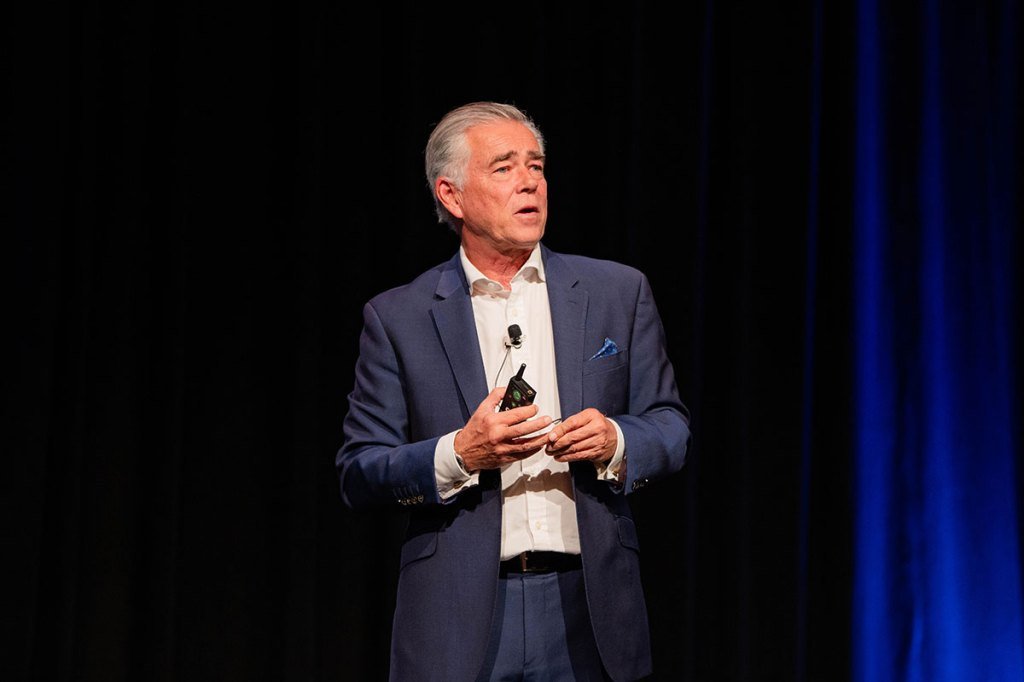
Those are among the key messages from internationally respected economist and strategist Jonathan Pain, who will headline the South Australian Business Chamber’s upcoming Global Crossroads Business Luncheon.
Designed for executives, directors and decision-makers navigating an increasingly complex operating environment, the event will provide practical insights into the global economic outlook, emerging geopolitical risks and the opportunities Australian businesses can seize in a rapidly changing world.
Drawing on decades of experience advising governments, institutional investors and business leaders around the world, Pain believes the pace of change is accelerating – and businesses that fail to adapt risk being left behind.
His advice for chief executives is simple: “Embrace and adapt to the wonders of technological change.”
At the centre of that transformation is artificial intelligence, which Pain believes should no longer be viewed as a future opportunity but as an immediate business priority that should become part of everyday leadership.
“Have regular meetings with your teams to see how they’re using AI and see it as a friend, not a threat,” he says. “Identify the individuals in your business who can lead the implementation of AI in your company.
“As a business leader, the CEO must lead from the front and be familiar with the latest AI models, their capabilities and their relevance to the business.”
The consequences of delaying, he warns, are clear. “In a competitive marketplace, your competitors will have a huge advantage over you if you don’t.”
While technological disruption is transforming the way businesses operate, Pain believes an equally profound shift is underway in the geopolitical landscape.
“We need to accept the new geopolitical reality,” he says. “We now have an Axis of Autocracy comprised of Russia, China, Iran and North Korea. We have great power competition once again. We have Donald Trump in the White House. The post-war rule book has been torn up.”
For business leaders, he says, the implications are significant. “The decades ahead will not look like the decades behind us.”
Rather than focusing on the world that was, Pain believes Australian businesses should position themselves for the one that is emerging.
“Look at the phenomenal rise of Asia,” he says. “Sadly, look at the decline of Europe and the rise of populism across the continent. Europe is in the crosshairs of populist upheaval and seismic socioeconomic change. Hopefully we don’t see chaos rather than change.”
Pain believes Australia’s greatest economic opportunities lie within its own region.
“Australia should continue to look to Asia for business and economic opportunities – India, Indonesia, Vietnam and many others,” he says. “The Asian economic model will triumph in the decades ahead. We must embrace this new economic reality.”
Pain says Australian businesses are well placed to succeed if they are prepared to adapt; however, he is concerned the nation’s political system is too focused on the short term to address long-term national challenges.
“My fear is that Canberra has an instinctive impulse to embroil itself in petty tribal politics,” he says. “Politicians spend more time squabbling with and attacking each other, while our media amplifies this reality-TV-style politics. The victim is our democratic system.”

The electoral cycle, he says, discourages governments from making decisions that build long-term resilience.
“The short lifespan of the electoral cycle guarantees that the primary focus of our political parties is to get re-elected rather than to govern. Our political system entrenches an excessive focus on short-term fixes, with too little attention given to the more substantive issues.”
He points to Australia’s fuel security as an example.
“When conflict broke out in the Persian Gulf, Australia had just 30 days of fuel supplies – by far the lowest in the developed world,” he says.
“Australia consumes more diesel on a per capita basis than any other country in the world, yet we had only 30 days of diesel supply. Japan and South Korea each had around 210 days of fuel reserves.
“For decades we’ve seen incompetence in Canberra, shared equally by both major political parties. Energy security should be a national priority. Have they rectified this perilous situation? No.”
With global uncertainty showing no signs of easing, the message is clear: understanding the forces reshaping the world is no longer optional – it’s a competitive advantage.
Business leaders wanting to stay ahead of the curve are encouraged to secure their place at the South Australian Business Chamber’s Global Crossroads Business Luncheon before tickets sell out.




![Obtaining Irregular Learning Curves with HyberBand Tuned ANN model for Price Prediction [P]](https://jobssz.com/wp-content/uploads/2026/07/qe783f41csch1.png)