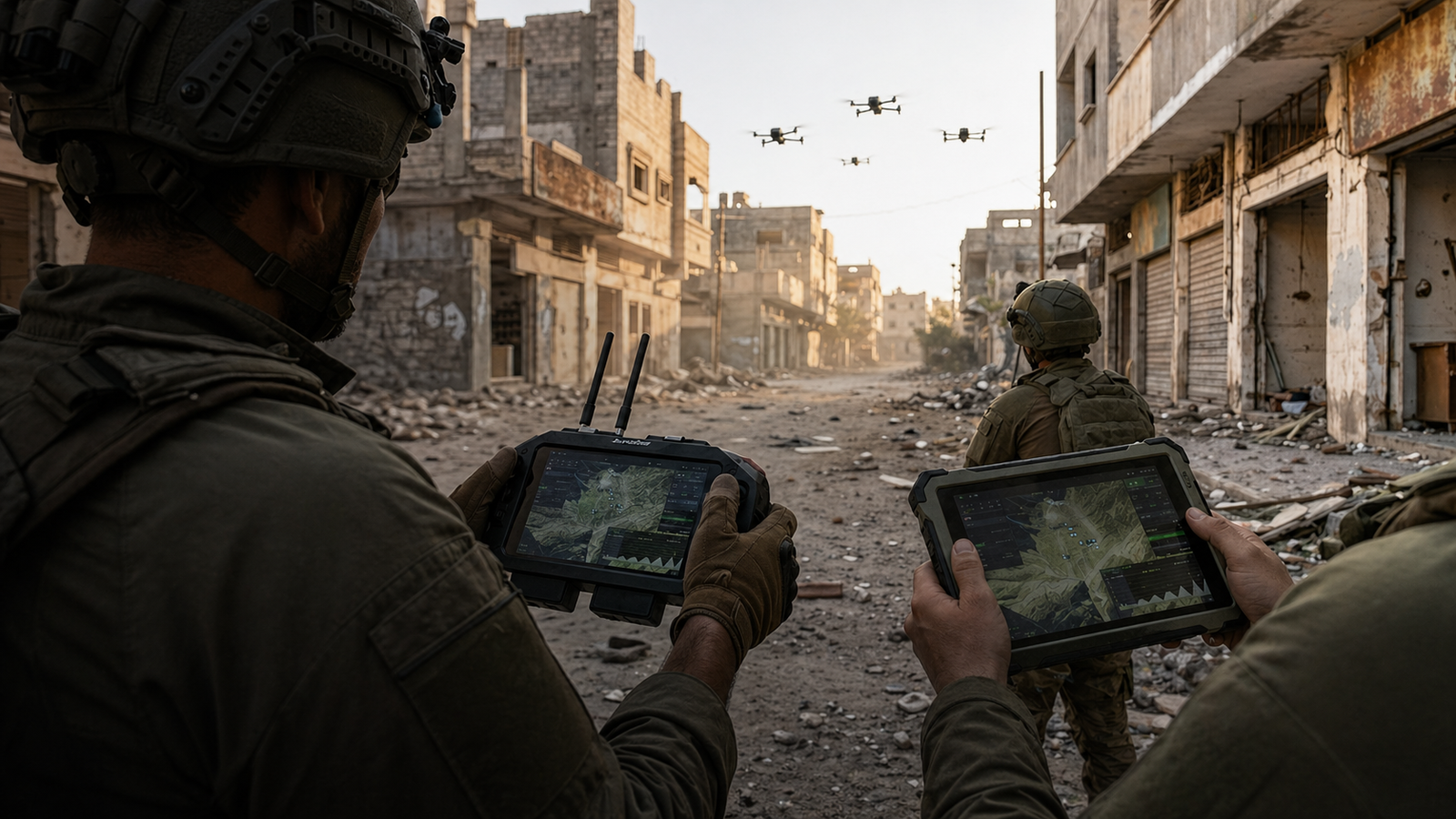
By unifying controls, startup led by slain soldier’s brother puts drone war in IDF’s hands
On the eve of Rosh Hashanah on October 2, 2024, Cpt. Eitan Itzhak Oster, 22, was killed in a Hezbollah ambush in a village in southern Lebanon just a few hundred yards from the Israeli border on the northern front.
Eitan was remembered as the first casualty of Israel’s ground operation in Lebanon against the Iran-backed terror group. For his older brother Udi Oster, a serial tech entrepreneur, the family tragedy exposed a deadly gap. Israel’s superior tech and firepower were unable to meet the actual demands of the modern battlefield, where conditions are constantly shifting and seldom ideal.
“Even though Israel is known to have one of the world’s best defenses, they found themselves at a disadvantage,” said Oster. “Because it was highly overcast and the difficult terrain and topography, they couldn’t get any air backup, and evacuation was impossible for hours, so they were basically alone with what they had in their arsenal.”
At the time of his brother’s death, Oster was already working to address one facet of that difficulty via his startup EyesAtop, which has developed a plug-and-play platform to easily integrate and operate multiple drones simultaneously, giving soldiers a larger range of tactical options in complex battlefield scenarios.
Today, the main challenge facing troops in southern Lebanon are Hezbollah’s first-person view (FPW) fiber-optic drones, which the Iran-backed terror group has used in attacks on Israeli troops in southern Lebanon and northern Israel to deadly effect.
In Lebanon and elsewhere, as terror groups have made effective use of off-the-shelf drones, state militaries have countered with robotic systems, including surveillance, interceptor, and heavy-lift drones.
With these weapons marking warfare’s bleeding edge, an arms race is taking place between drone technology and innovations meant to combat them. But Israel has struggled to keep up, according to Oster, relying on systems not built to adopt and integrate fast-evolving technology for battlefield use.
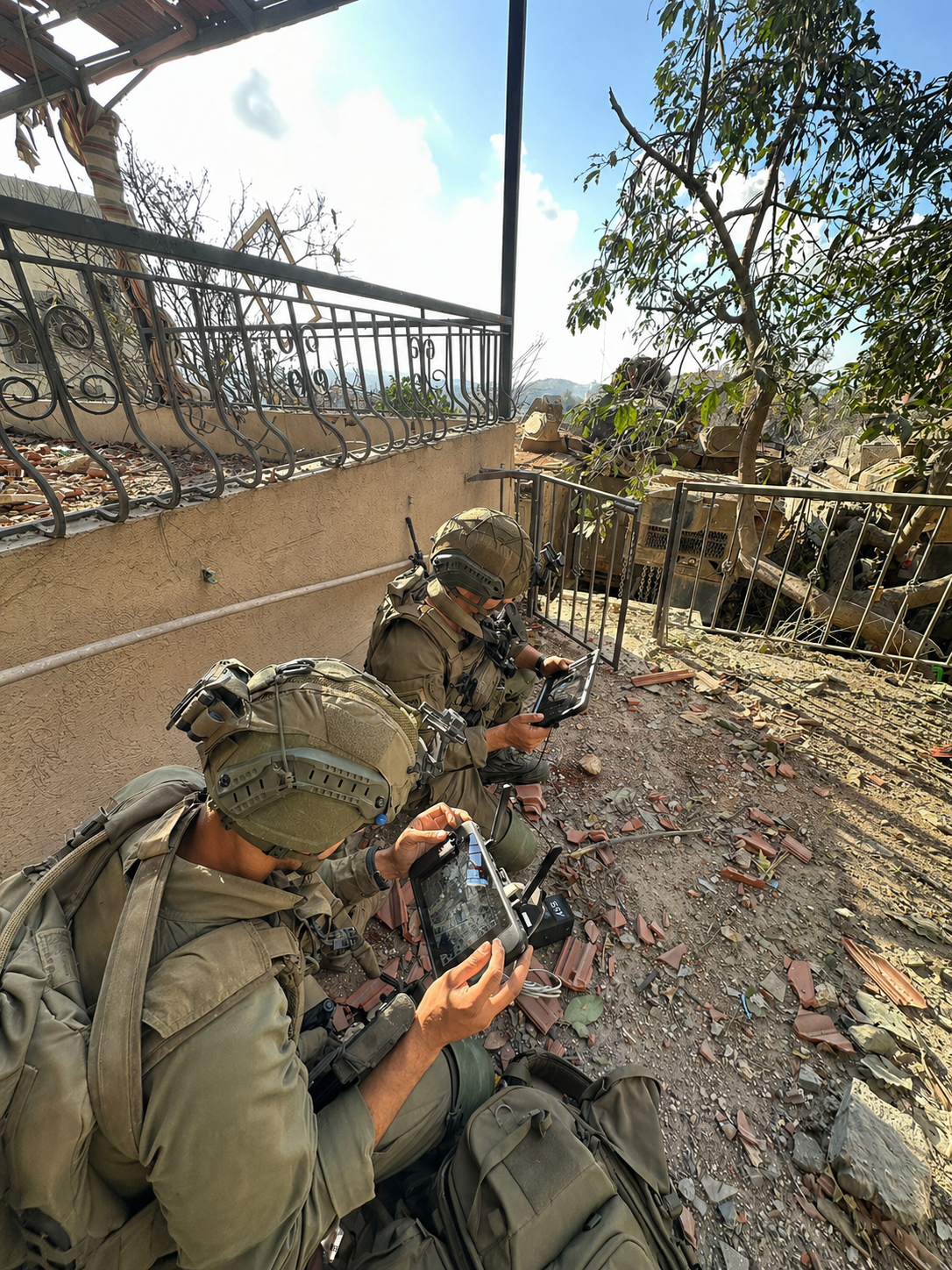
Oster, who took over the defense tech startup together with fellow IDF intelligence unit 8200 veteran Daniel Almog weeks into the October 7, 2023 onslaught, emphasized that drones and autonomous tools can do what human soldiers can’t, in places soldiers can’t safely go, while artificial intelligence is rapidly transforming how those drones operate.
Prior to October 7, EyesAtop was run by founders Idan Itzhak, Einav Harazi and Ben Barkay, who were working with the IDF on a drone management kit deployed for limited operational areas and missions.
The system was developed for the management of a number of surveillance drones to help forces eliminate threats from high-ground terrain, spotting suspects on rooftops or buildings.
Led by Oster and Almog, the system has been revamped and expanded to integrate additional surveillance drones, logistics and strike drones, as well as advanced intelligence UAVs, for broader deployment to other areas where Israel faced challenges. Oster and Almog previously co-founded Israeli food ordering startup Tapingo, which was acquired by Grubhub for $150 million in 2018.
“We wanted to close the gap as we saw it at the time, between the pace of technology that exists in the outside world and what the military was using to make sure the best robotic system gets in the hands of the warfighter at the edge as seamlessly as possible with the press of a button,” said Oster. “It was clear to us that winning in modern warfare and saving lives is not just about who has the best technology, it’s who is capable of bringing the best technology that is out there to the hands of the soldier who needs it.”
Since the Russia-Ukraine war and following the October 7 onslaught, drones have assumed an increasingly dominant role in reshaping today’s combat operations and modern warfare.
Despite having some of the world’s best defenses against missiles and rockets, Israel has been challenged by the new and quickly evolving threat of low-cost enemy drones, which have caused casualties and damage throughout the war with Hamas and Hezbollah in the north over the past two and a half years.
“October 7 exposed a huge gap — the technology that existed outside in the private market did not exist in the military,” said Oster, referring to the bloody Hamas-led invasion of October 7, 2023. “There was a crazy gap between technology that has value in the battlefield versus what soldiers actually got equipped with.”
According to Oster, more and more robotic and drone systems are entering the battlefield to deal with emerging threats. But each system requires its own controller and operator, complicating integration and coordination.
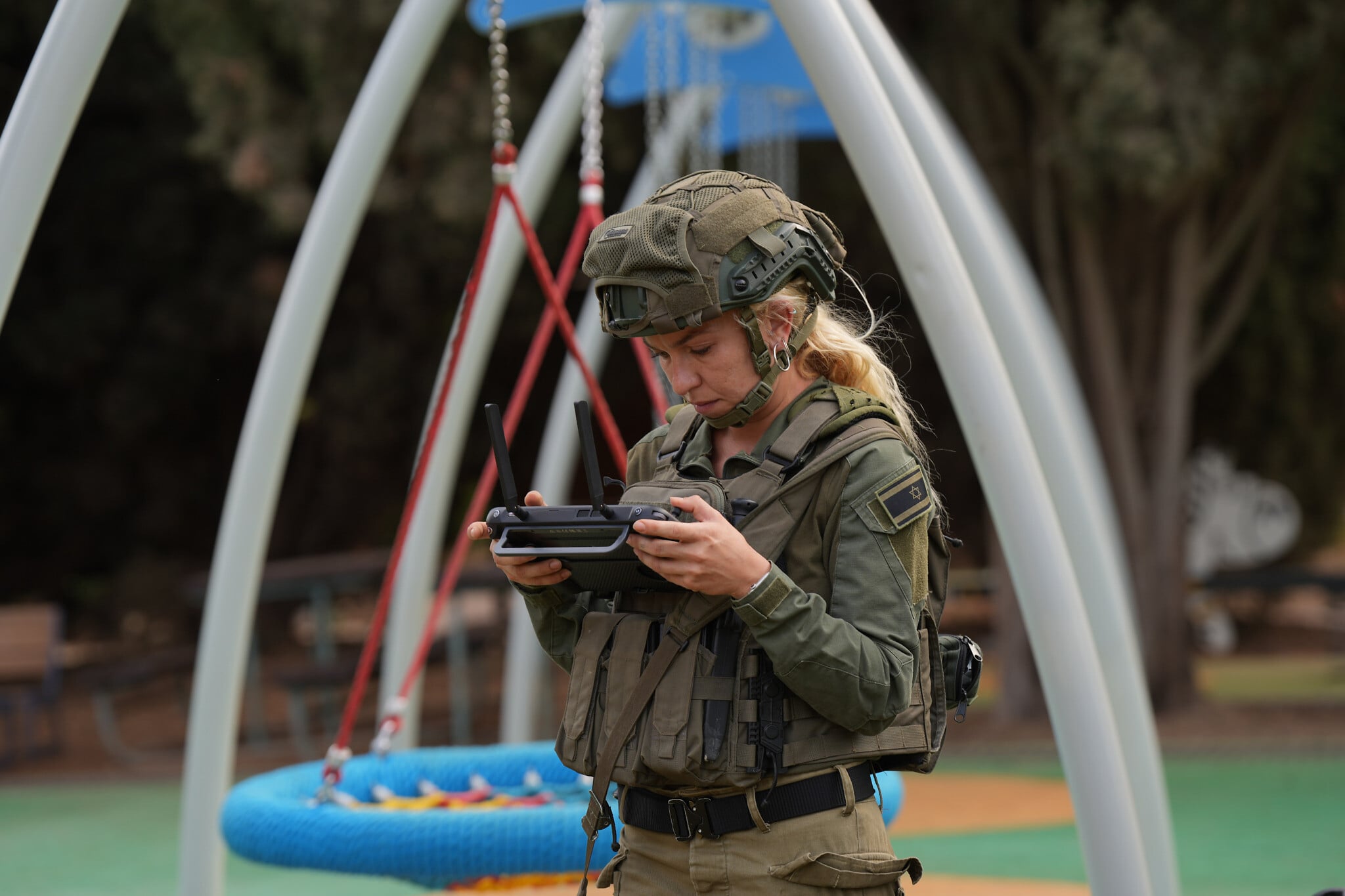
Oster said that in the months after October 7, EyesAtop increasingly started to equip the IDF with its handheld screens and upgraded universal remote controller system for broader missions in the north and south of the country. The system enables soldiers to operate multiple types of drones from various manufacturers simultaneously to compress the entire “kill chain,” from identifying and tracking threats in real time to launching a strike, into minutes, he added.
Oster’s brother, Eitan, was killed in action in Lebanon before his unit had deployed EyesAtop’s leveraged drone kit system.
“With our AI hardware kit at the edge, instead of three or four soldiers, the number is reduced to one soldier who can operate different types of drones with a universal remote controller,” said Oster.
Currently, EyesAtop’s universal controller is integrated with more than 20 different types of drone platforms, according to Oster.
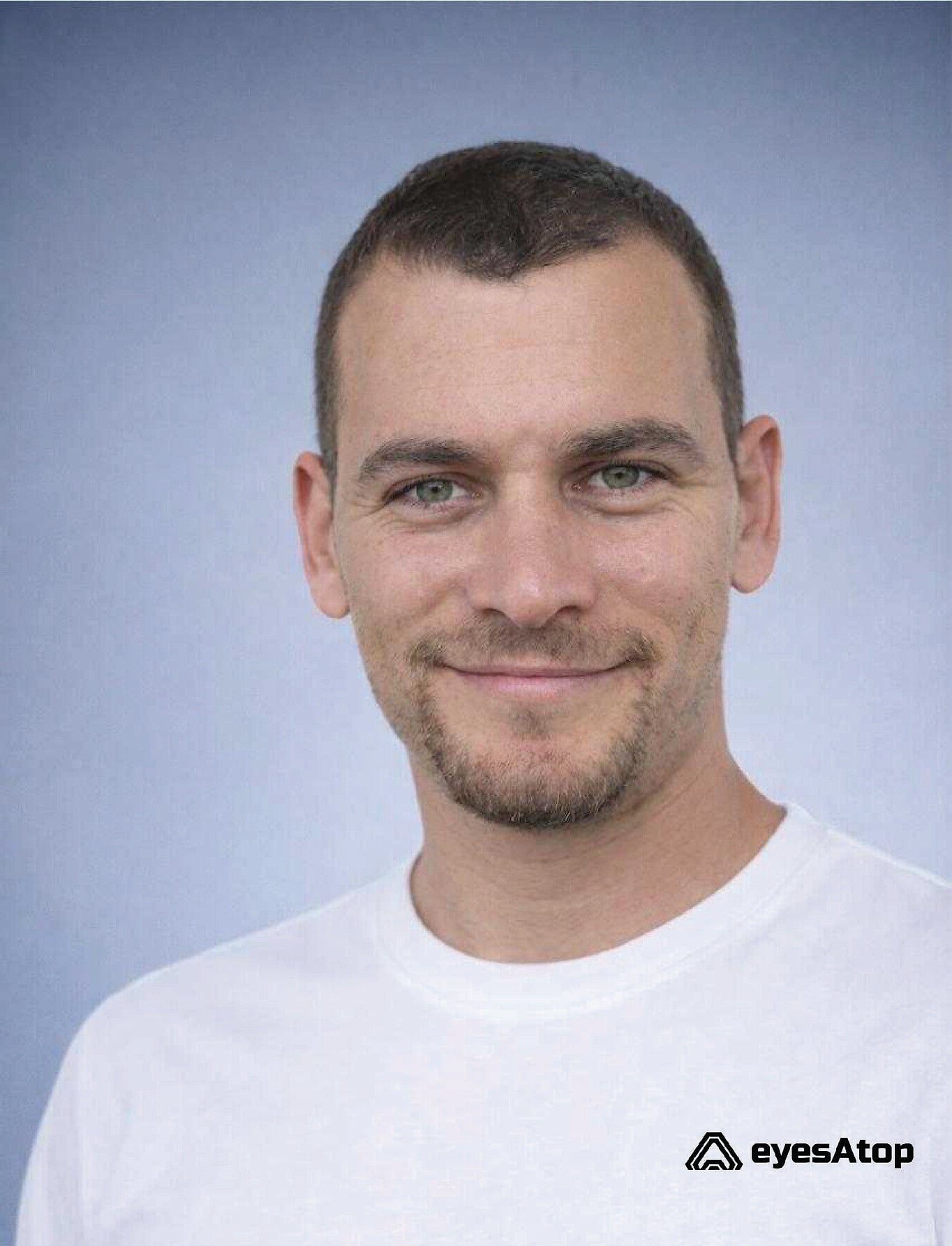
“There are new types of technology-based weapons and robotic systems that are rolled out by companies and vendors every month that war fighters could use and will save their lives on the battlefield,” said Oster. “With our universal platform, if an attack drone from vendor A is in operation at one point and the next month there is an attack drone that is better and cheaper from vendor B, you can just swap them, and the system will still work.”
He said the universal operating kit was currently being used by most reconnaissance units using drones or robotics as part of ground-based maneuvers.
The Defense Ministry’s Directorate of Defense Research and Development, the body charged with sourcing and scaling defense innovation into battlefield use, confirmed a “productive partnership” with EyesAtop.
Oster’s father, Dov Oster, is one of the developers and initiators of Israel’s high-powered laser interception system, dubbed “Iron Beam.” In Eitan’s memory, the Defense Ministry last year renamed the system in Hebrew Or Eitan, which also translates to “steadfast light.”
With offices in New York and Ramat Gan, EyesAtop has a team of 50 employees and has raised about $15 million in funding from investors, including former OpenAI Chief Product Officer Kevin Weil, Silicon Valley venture capitalist Ben Ling of Bling Capital, and angel investor Gokul Rajaram. Among its advisors are former defense minister Shaul Mofaz and former US Congressman Max Rose.
“We are starting to work to deploy our system in the US, and we have a few allied countries as well that we are expanding to,” said Oster. “At the end of 2026, we hope to generate between $7 to $10 million in sales outside of Israel.”