ChatGPT LLM Training Prima Facie Covered U/S 52 Copyright Act: Delhi High Court Dismisses ANI’s Interim Injunction Plea Against OpenAI
The Delhi High Court has held that OpenAI’s storage of ANI’s original literary works for training the LLMs underlying ChatGPT prima facie falls under “private or personal use, including research” under Section 52(1)(a) of the Copyright Act, 1957, and therefore does not amount to infringement under Section 51.
The Court was hearing ANI Media Pvt. Ltd.’s application for an interim injunction against Open AI OpCo LLC, alleging unauthorised use of ANI’s copyrighted works in two respects: storage of ANI’s works for training ChatGPT’s LLMs, and reproduction of ANI’s works in outputs generated by ChatGPT.
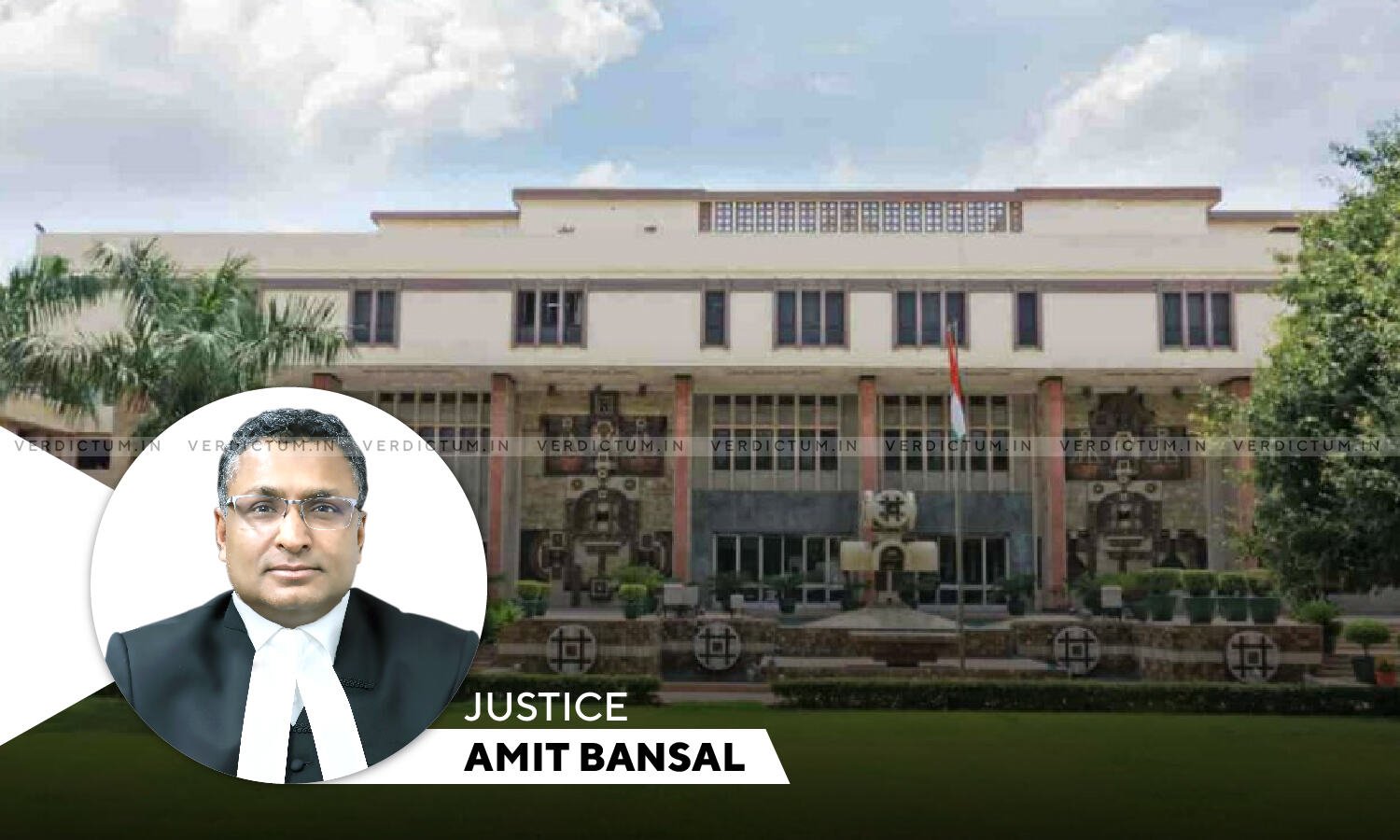
A Bench of Justice Amit Bansal, while dismissing ANI’s interim injunction application, held:
“Based on the discussion above, I am of the prima facie view that Open AI’s act of storing ANI’s original literary works for training LLMs underlying ChatGPT falls under Section 52(1)(a) of the Copyright Act and therefore, does not amount to infringement under Section 51 of the Copyright Act. I am also of the prima facie view that the outputs generated by ChatGPT using RAG technique does not amount to infringement under Section 51 of the Copyright Act since the outputs generated by Open AI were not substantially similar to ANI’s original literary works. Further, ANI has failed to satisfy this Court that any memorization and regurgitation of ANI’s original literary works has happened through the responses generated by ChatGPT.”
“In view of the discussion above, ANI has failed to make out a prima facie case for grant of interim injunction. Balance of convenience is also against grant of interim injunction, … Irreparable injury would be caused not only to Open AI but also to the public at large, if an interim injunction is granted in favour of ANI at this stage,” the Bench further added.
Advocate Sidhant Kumar appeared for ANI, while Senior Advocate Amit Sibal appeared for OpenAI.
Background
ANI sued OpenAI, alleging copyright infringement on two counts. First, it alleged that OpenAI copied and stored ANI’s data to train the LLMs underlying ChatGPT. Second, it alleged that ChatGPT reproduced ANI’s works in outputs generated for users.
The Court noted that the case raised issues arising from the interaction between copyright law and generative AI. It framed questions on territorial jurisdiction, output infringement, storage for training, and fair dealing under Section 52 of the Copyright Act.
Several intervenors appeared in the matter, including industry bodies representing publishers, digital news publishers, music producers, AI entities and technology policy groups. The Court also heard two amici curiae.
Court’s Observations
The Court first considered whether it had jurisdiction, since OpenAI contended that the training process occurred on servers outside India.
The Court held that, at the prima facie stage, the suit could not be thrown out on that ground.
The Court observed: “In my view, the act of Open AI in scraping of ANI’s copyrighted material and training of its LLM cannot be entirely divorced from the output claim. Since the output claim is based on training of the LLM, and the output is reproduced within the jurisdiction of this Court, I am not inclined to separate the two causes of action.”
It accordingly held that it could not be said at this stage that the Court lacked territorial jurisdiction or that the training claim necessarily involved extra-territorial application of the Indian Copyright Act.
On the output claim, the Court examined whether ChatGPT memorised and regurgitated ANI’s copyrighted works.
The Court noted that the instances relied upon by ANI were published after the cut-off dates for training of the relevant LLM models, namely April 2022 for GPT-4 and April 2024 for GPT-4o. It therefore found that those instances could not establish memorisation from training data.
The Court observed: “As discussed earlier under the Section ‘Working of LLMs’, it could be inferred that when an LLM refers to information on which it was not trained, it is using RAG technique. Using the RAG technique, LLMs retrieve relevant information from external sources, in this case ANI’s website, before generating a response. Relevant data retrieved from the website, which is contextually aligned with the user’s prompt, is then generated as responses grounded in the website’s data rather than relying solely on its pre-trained knowledge.”
The Court further noted: “Therefore, responses that are not based on the trained data cannot be used against Open AI in respect of claims based on memorisation. Such allegations must be tested based on the identical or substantially similar reproduction of the trained data. Therefore, this Court is of the prima facie view that the instances given in the plaint alleging infringement are not a result of memorisation, rather they are in the nature of live links, perhaps reflecting RAG technique.”
The Court then considered whether ChatGPT’s responses amounted to substantial reproduction of ANI’s articles. Applying copyright infringement principles, including R.G. Anand (1978), the Court held that ANI could not claim copyright over facts underlying news articles.
On the illustrations placed before it, the Court found that ChatGPT’s responses were not identical or substantially similar to ANI’s articles.
The Court held: “Based on discussion above it cannot be concluded that the responses produced by ChatGPT are a substantial reproduction of the news articles of ANI. Hence, at a prima facie stage, ANI has failed to make out a case of copyright infringement based on the responses generated by ChatGPT i.e. the output claim.”
On storage and training, the Court held that Section 52(1)(a) required a two-step enquiry: whether the use fell within one of the specified purposes, and whether it qualified as fair dealing.
The Court held that commercial use is not automatically excluded from Section 52(1)(a), since the provision does not contain a non-commercial limitation where the legislature has expressly used such language elsewhere.
The Court then found that training LLMs could fall within “private or personal use, including research.”
The Court stated: “From the submissions made in the present case, it transpires that the process of training LLMs underlying ChatGPT involves machine learning of the stored literary works by screening and organising them. In this process, the data is analysed by making extractions from the literary works and converting them into machine-readable training inputs. This data is used to train the LLMs iteratively to rectify errors and generate the most probable statistical output. Accordingly, the process of training of LLMs underlying ChatGPT can be considered as a form of research for generating new knowledge and advancing artificial intelligence systems.”
The Court added that when Section 52(1)(a) was last amended in 2012, the legislature could not have imagined AI or LLMs, but the provision had to be interpreted in light of technological change.
The Court held that the purpose test and fairness test under Section 52(1)(a) were satisfied.
It found that ANI had not established memorisation, regurgitation or communication of exact copies to the public. It also held that the use of ANI’s works by OpenAI would not result in market substitution.
The Court observed: “Except for bare averments, nothing has been placed on record on behalf of ANI to show that they have lost any market share or there has been a reduction in subscription revenues due to operations of Open AI.”
It further held: “Hence, in my prima facie opinion, the use of ANI’s works by Open AI would not result in market substitution of ANI’s works and consequently, will not affect its market share or cause actual or potential damage to ANI.”
On public interest, the Court noted: “The public benefits flowing from such trained LLMs underlying ChatGPT are considerable. They are designed to assist users in analysing and generating text, improving access to information, supporting education, assisting scientific research, facilitating software development, enabling translation and communication, and creating tools for persons with disabilities. The technology is also capable of supporting research, learning, and knowledge dissemination at scale, thereby advancing science and the useful arts in a broader societal sense.”
The Court also held that the balance of convenience was against interim injunction. It noted that ANI had the ability to block third-party web crawlers and that OpenAI had stated it had internally blocked ANI’s website from scraping for training and from ChatGPT search/RAG.
The Court observed that ANI had offered OpenAI a licence for its content, showing that ANI’s claim was quantifiable and compensable in monetary terms if it succeeded.
The Court stated: “Any interim injunction granted at this stage would, in my opinion, be detrimental to the growth of AI and more particularly, to the LLMs being developed in India. It would also have adverse impact on public interest, including millions of users of ChatGPT in India, many of whom would not be paid subscribers.”
Conclusion
The Court dismissed ANI’s interim injunction application, holding that ANI had failed to establish a prima facie case, and that balance of convenience and irreparable injury also weighed against granting interim relief.
The Court clarified that its observations were only for deciding the interim application and would not affect the final outcome of the suit.
Cause Title: ANI Media Pvt. Ltd. v. Open AI OpCo LLC (Neutral Citation: 2026:DHC:5900)
Appearances
Plaintiff: Advocates Sidhant Kumar, Akshit Mago, Manyaa Chandok, Anshika Saxena and Lahar Jain
Defendant: Senior Advocate Amit Sibal with Advocates Sanjeev Kapoor, Nirupam Lodha, Madhav Khosla, Gautam Wadhwa, Moha Paranjpe, Abhi Udai Singh Gautam, Rebecca Cardoso, Hardik Malik, Vanshika Thapliyal and Rajat Bector