China is preparing its citizens for AI upheaval in ways the West can only dream of
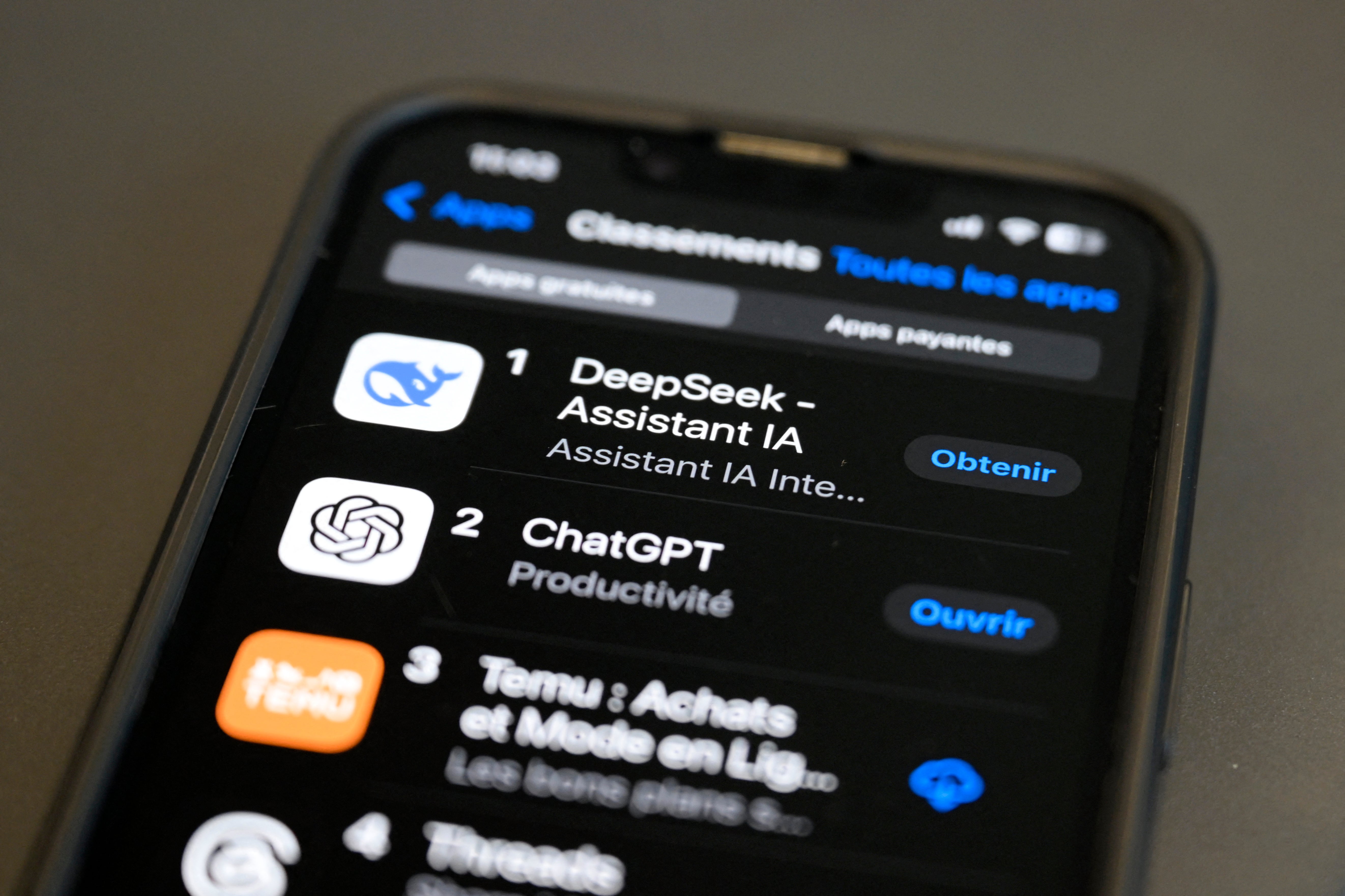
In January 2025, Chinese AI company DeepSeek caused the biggest single-day destruction of corporate value in Wall Street history. Its low-cost model prompted investors to question whether the AI boom really required so many expensive chips, wiping $593bn (£441bn) from Nvidia’s market value.
The “DeepSeek moment”, as it was coined, was an early shock to the financial system. And the next earthquake came this week, when shares in memory chip maker CXMT rose 466 per cent on their Shanghai debut, making it one of China’s most valuable listed companies in an instant.
That a relatively unknown company is now threatening the US’s ranking as global leader when it comes to frontier laboratories has caused shockwaves through world markets. But this is not the only area the Chinese are racing ahead in the world of AI. Whether it is humanoid robots, an education revolution, and even protecting its citizens from psychological harm by restricting AI companions, China’s preparedness for what is coming looks like it could be more robust than the West. And Washington is spooked.
At the World Artificial Intelligence Conference in Shanghai this month, Xi Jinping pitched China’s open-source AI as a global public good and promised training, infrastructure and co-operation for developing countries – all at a lower price than the costly models produced by the likes of OpenAI, Anthropic and Google.
While open-source AI allows researchers, universities, healthcare providers and businesses in poorer countries to build local applications rather than relying on costly imported technology, it is also a smart strategic move. It extends its technological influence, as well as helping promote Chinese technology standards and ecosystems internationally.
And China is making some bold moves around the societal impact of AI.
Future-proofing
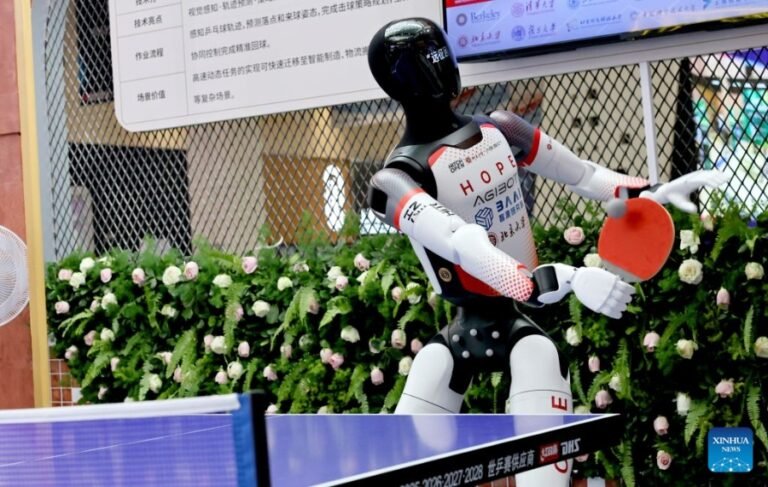
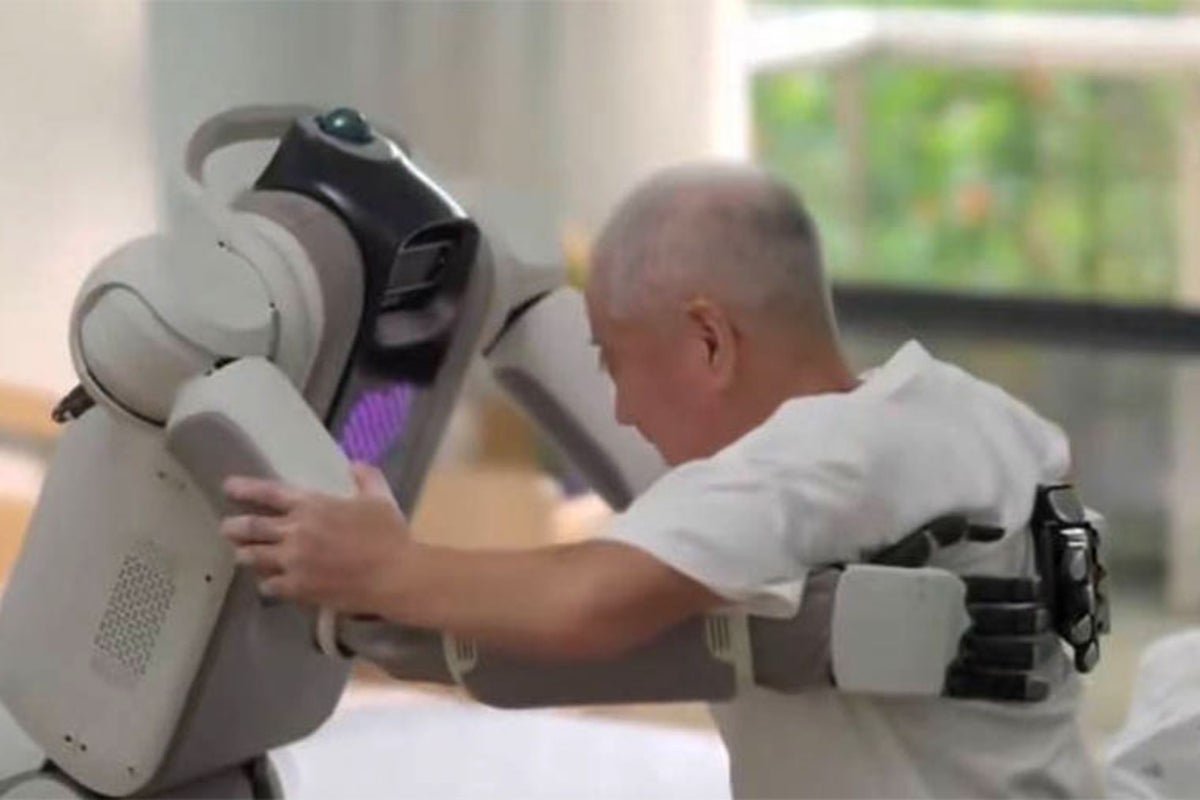
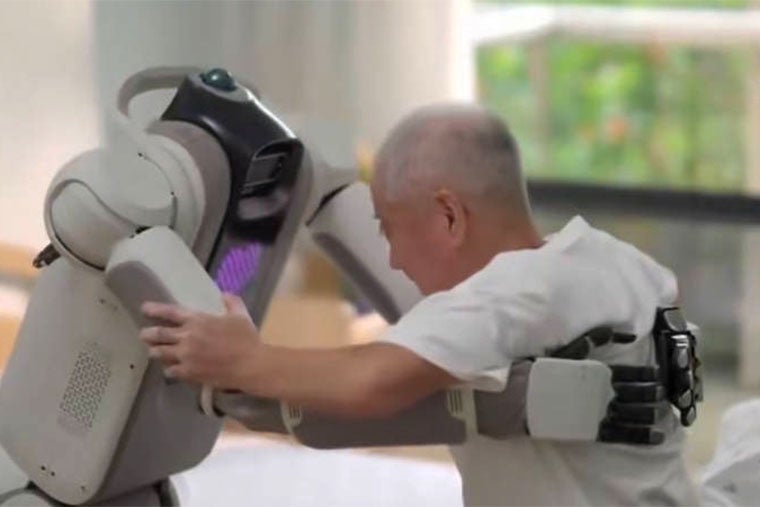
China is way ahead of the West when it comes to AI in the physical world and outside of a chat window. The International Federation of Robotics says China installed 295,000 industrial robots in 2024, more than half of all the new robots installed worldwide that year, and now has more than 2 million working in its factories. The aim is to maintain or increase productivity even as the working-age population declines, a problem of demographic decline which Western economies are still trying to wrestle with.
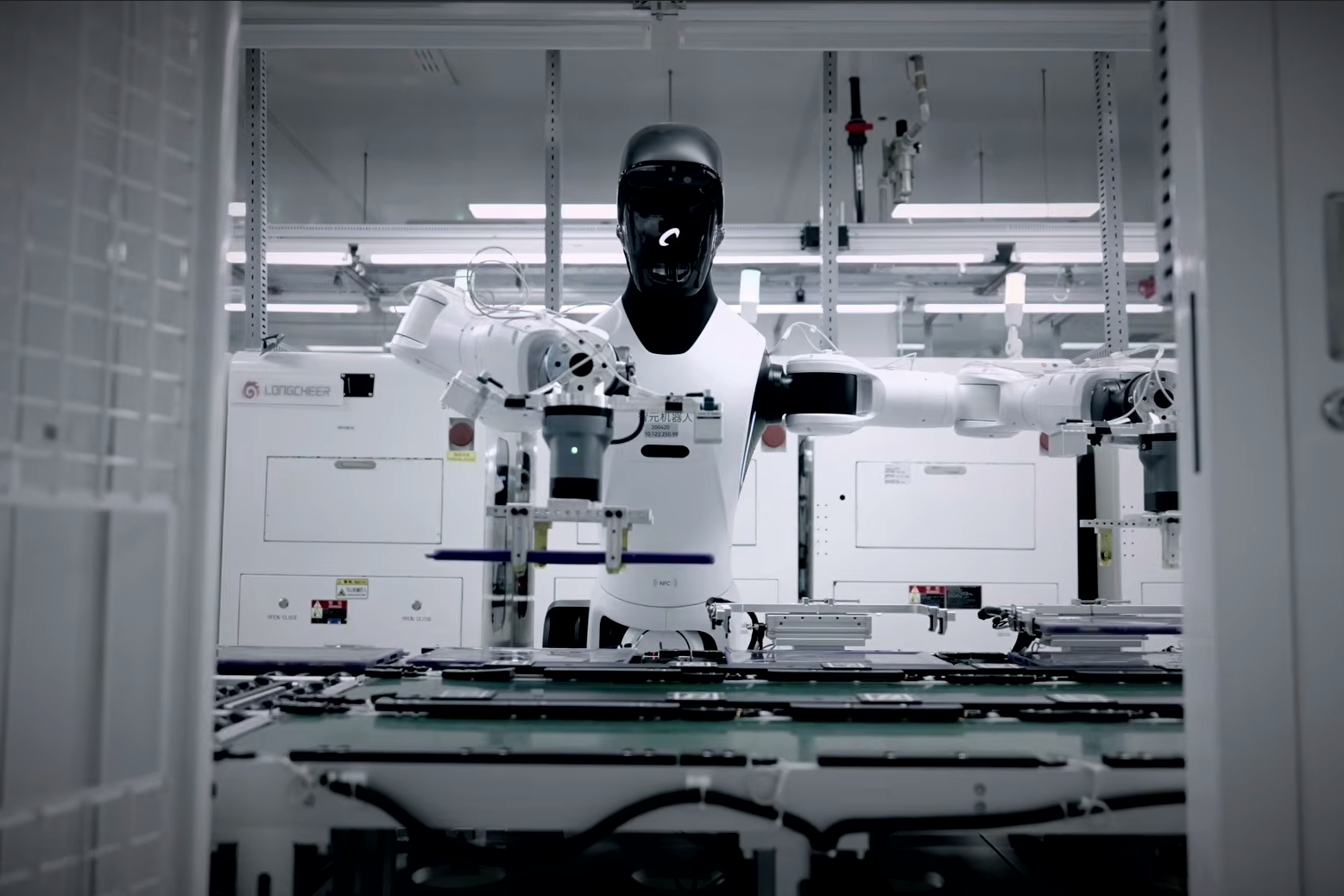
The rise of humanoid robots has so unnerved the Trump administration that it has banned new advanced models from entering the US, citing “unacceptable risks” to national security. The move targets humanoid and four-legged robots, many of them made in China, America’s main competitor in the race to develop super-intelligent robotics and AI.
While the US may be squeamish about Sinocentric robots, other countries may have fewer foibles: at the UN AI for Good summit in Geneva in early July, China’s industry minister, Li Lecheng, described embodied AI – systems able to perceive, decide and act through robots – as moving “from labs to factories”. China or Chinese companies had a disproportionately large presence on the convention hall floor and within its discussion rooms.
Responding to the needs of a changing world, China has also dramatically withdrawn or retooled the number of courses it offers students at university, pausing enrolment on 2,220 programmes and slashing another 1,428 entirely from its 62,800 undergraduate programmes in 2024. It also added 1,839 new programmes that year.
Those new courses are specialising in what China sees as the educational requirements of the future: AI, integrated circuits, the digital economy, biotechnology, new energy and other sectors Beijing sees as strategically important.
China can deploy education as a form of industrial policy in a way the more fragmented Western education system can’t do. By preparing their young and reshaping their education at pace, they are ensuring that their citizens will be best placed to lead the economy of the future.
The state’s hand can also be seen in how China’s government allows its citizens to interact with AI. In mid-July, the country introduced rules that require companies providing AI companion chatbots to disclose that users are speaking to a machine, provide reminders that they are not talking to a human, and intervene when conversations suggest self-harm. This was all being done with the express intention to guard against psychological dependence and injury.
“This is really the China piece of an AI story, not an AI angle on a China story,” says Jeremy Daum, a senior research scholar at Yale Law School’s Paul Tsai China Center. Other countries are wrestling with the same risks, he says, and China’s approach is “prevention-heavy rather than punitive”.
While it isn’t a ban on AI partners per se, it does show how China is introducing protections for its people as it develops new and useful AI products. As tech companies lobby against excessive legislation in the US, China has taken the reverse approach and put it at its heart. And while this approach is, of course, designed to support broader government priorities, including content control, social stability and cybersecurity, the ultimate result of paying attention to standards, deployment and social consequences has been to create useful products that reduce the chance of psychological harm to its citizens.
China has also expressed concern about technologies that may encourage social withdrawal or emotional dependence, so these guardrails could have a further consequence by helping fix China’s low birth rate too.
Preparedness is everything
With the gap between the United States and China narrowing, and the latter putting in place a much more comprehensive package of policies around all aspects of the innovative technology, China increasingly looks like it is better prepared for the hard-fought contest in the months and years to come.

China’s intention to throw the weight of a nation behind robots has a precedent in electric vehicles. Chinese electric vehicles (EVs) are among the most AI-intensive cars on the market and AI is central to how many Chinese automakers differentiate their vehicles. Chinese manufacturer BYD sold more than 4.6 million electric vehicles in 2025, while the International Energy Agency says Chinese EV exports doubled last year.
In markets outside Europe and the United States, imports from China supplied 55 per cent of electric-car sales – up from less than 5 per cent just five years earlier. And those cars have AI baked through them like a stick of Blackpool rock: the intelligent driving functions and advanced driver assistance systems act as a spur for AI development in China, helping keep its labs hyper-competitive with the US.
The last sprint in the AI race is to become competitive in hardware and foundation models, which is what seems to have sparked this week.
Chinese developers have released highly capable open-weight models – meaning AI systems whose parameters can be downloaded and adapted to personal tastes – through companies including Alibaba, DeepSeek, Zhipu and Moonshot AI.
The gap between the frontier on benchmarks and in domains that really matter – for example, cyber – is closing
Kristy Loke, research fellow at MATS
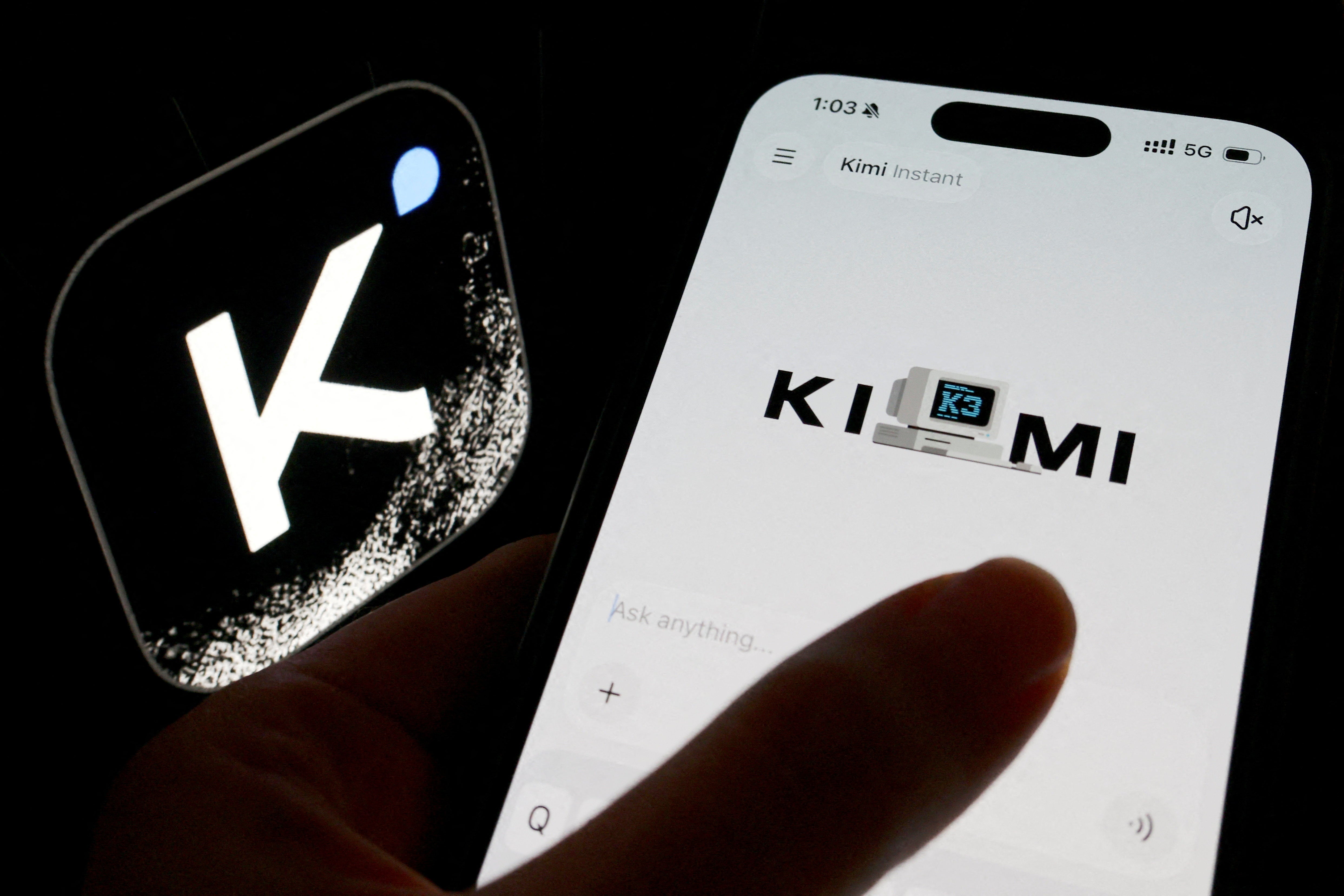
Moonshot’s new Kimi K3 model is a 2.8-trillion-parameter model with its full weights released publicly. While Kimi’s own technical paper concedes it isn’t as good as the most powerful proprietary American systems overall, the gap is closing.
“It puts a lot of pressure on US AI companies and on the idea of not just American leadership in AI, but American dominance,” says Kyle Chan, a fellow at the Brookings Institution’s John L Thornton China Center. Kimi, GLM and Qwen models have arrived “in rapid succession”, Chan says, recalling the first DeepSeek shock, when “a whole bunch of Chinese models” appeared to be narrowing the gap at once.
America still holds a trump card in the form of computing power. Nvidia and other US companies design the accelerators used to train advanced AI, while American allies dominate the equipment required to manufacture them. But even that is slipping now. Export controls were meant to preserve that advantage by restricting China’s access to the best chips. What it actually did was create adversity that encouraged Chinese companies to squeeze more from less and develop substitutes.
“The gap between the frontier on benchmarks and in domains that really matter – for example, cyber – is closing,” says Kristy Loke, a research fellow at research lab MATS, who studies China’s AI governance and innovation strategy. China’s growing hard power comes from increasingly capable models and hardware, she says, while its soft power lies in offering those tools to other countries.
“The one superpower [the US] has is control over computer supply,” says Loke. But China’s response is about building “strategic or systemic resilience” that is able to absorb sanctions and supply shocks rather than remaining permanently dependent on foreign technology.
CXMT’s rise is the poster child for that attitude. The company raised $8.6bn in Asia’s largest initial public offering of 2026 and accounted for around 9 per cent of global DRAM memory chip shipments early this year.
That memory is vital to AI servers, smartphones and cars. CXMT is a world away from the scale of Nvidia, remaining smaller than competitors Samsung, SK Hynix and Micron, and specialising in memory chips that aren’t useful for training the leading AI models. But the capabilities are increasing and they could eventually do so.
“If China is able to solve this chip problem through engineering and energy, then in the long run I think it is a very competitive AI power,” says Loke.
A long-term, state-led strategy that integrates industrial policy, workforce and people planning, and technological development is what makes it differ so markedly from the more market-driven approach in the United States.
It is one which might just have the winning edge in a world where there will be many losers.