Chip firm priced as most valuable China firm pre-IPO on crypto site
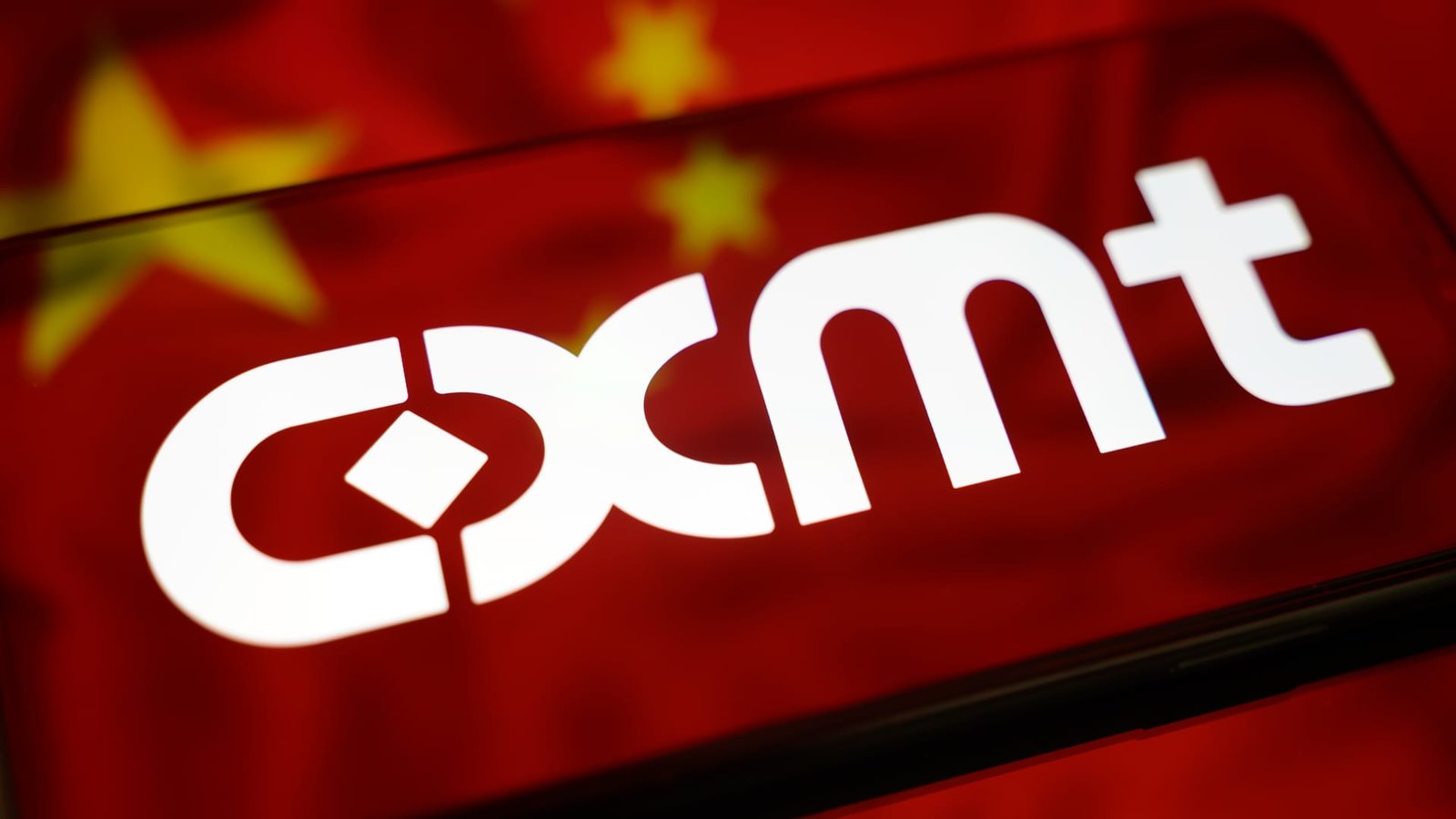
The CXMT logo is displayed on a smartphone screen placed on a reflective surface on which the flag of China is projected, in Creteil, France, on July 17, 2026, as the initial public offering (IPO) of Chinese DRAM memory chip giant ChangXin Memory Technologies generated interest and raised nearly 8.6 billion dollars on Shanghai’s STAR Market.
Nurphoto | Nurphoto | Getty Images
Crypto traders are pricing China’s largest memory chipmaker, ChangXin Memory Technologies, at levels that would make it the most valuable company listed on the mainland, days before its record Shanghai debut.
Crypto startup Trade.xyz offers the CXMT-linked contract on Hyperliquid, a decentralized derivatives exchange, enabling investors to speculate on the chipmaker’s valuation ahead of its official debut.
The perpetual futures contract tracking CXMT traded near $6.35 per share on Hyperliquid on Thursday, after it peaked recently at $8.60, just days before the chipmaker’s blockbuster listing in Shanghai next Monday. CXMT didn’t immediately respond to a request for comment about the valuation.
The current price implies a market capitalization of roughly $425 billion, or about 2.9 trillion yuan — which would make it more valuable than Industrial and Commercial Bank of China, the mainland’s largest listed company at roughly 2.56 trillion yuan.
The offer price was initially set at 8.66 yuan ($1.28) per share, giving the company a valuation of just 579 billion yuan at listing, which would still make it the biggest IPO in the tech-oriented STAR market’s history.
Hyperliquid’s perpetual contracts are derivatives that allow traders to speculate on various assets, such as crypto, commodities, and equities, without holding the underlying asset.
The outsized premium was fueled in part by offshore investors who, locked out of one of the world’s most anticipated listings, turned to crypto rails to build a parallel market for the Chinese chipmaker. The Shanghai debut is effectively closed to foreigners, and even mainland retail investors face steep barriers to the STAR market, which requires a 500,000 yuan account balance and two years of trading experience.
Analysts say the premium reflects scarcity of access as much as conviction in the underlying business.
“A market like this isn’t valuing the company; it’s forecasting where the price of the stock might open,” said Eric Chen, co-founder and chief executive officer of Web3 finance firm Injective Labs.
Given how Chinese IPOs are typically priced, and the thin initial float, a strong debut is a reasonable expectation, he said — but with most global investors unable to access the underlying shares and few liquid venues to short the stock, the price reflects the most optimistic participants.
“Part of the premium is a forecast,” Chen said. “Part of it is simply what the world will pay for exposure it can’t get directly in the equities market.”
The listing of the world’s fourth-largest DRAM memory chipmaker also comes amid a historic memory upcycle, with AI-driven demand and a global supply shortage lifting prices across the industry. The company is set to raise up to $8.6 billion in what would be Asia’s largest IPO this year.
‘Gauge of demand’
Crypto-native platforms are increasingly serving as informal price discovery for assets investors can’t otherwise reach — pre-IPO names, restricted markets, off-hours trading — and some early contracts have closely tracked eventual opening prices, Chen said. “When that path is limited, it should be read as a gauge of demand, not a precise pricing event.”
The record so far is mixed. Hyperliquid’s pre-IPO perpetuals have created “synthetic, 24/7 derivative markets” for private tech firms, Tanay Ved, a senior research associate at digital-asset data firm Coin Metrics, wrote in a report last month. Its Cerebras Systems contract settled within about 1.3% of the stock’s Nasdaq opening price, Ved said.
Its SpaceX contract traded roughly 20% above the fixed $135 offer price ahead of the June debut after peaking above $220 in May — though still nowhere near the CXMT premium.

“What the funding and open interest tell you is that this is still a small, sentiment-driven market: enthusiastic longs on one side, and a smaller group positioned for convergence on the other,” Chen said. “At this size, I believe the headline valuation is being set by a very modest amount of capital.”
The frenzy is drawing fresh scrutiny to Hyperliquid itself. The Monetary Authority of Singapore added the platform to its Investor Alert List in June, which publicly notifies people that an entity is neither licensed nor authorized in the city-state. Hyperliquid said the listing is not a ban or enforcement action, and that it has never claimed to be regulated by MAS.
What’s more, Kyle Samani, the Multicoin Capital co-founder who chairs Forward Industries said that “Hyperliquid is not permissionless,” a claim it makes on its website, and accused the platform of misrepresenting its architecture given its closed-source code and concentrated validator set.
Hyperliquid didn’t respond to CNBC’s request for comment.
Once CXMT lists, the contract will re-anchor to the traded price, and gaps like this tend to close abruptly rather than gradually, Chen said. If the open comes in below the contract, the repricing would be immediate; strong onshore demand, on the other hand, could push prices even higher, he added.
“The more interesting question is what’s left afterward: a 24/7 market on a stock that trades only Shanghai hours,” Chen said. “Any persistent gap reflects the access barriers themselves rather than the company.”