Customs Revises Import Values for 70 Mobile Phone Accessories After Two-Year Gap
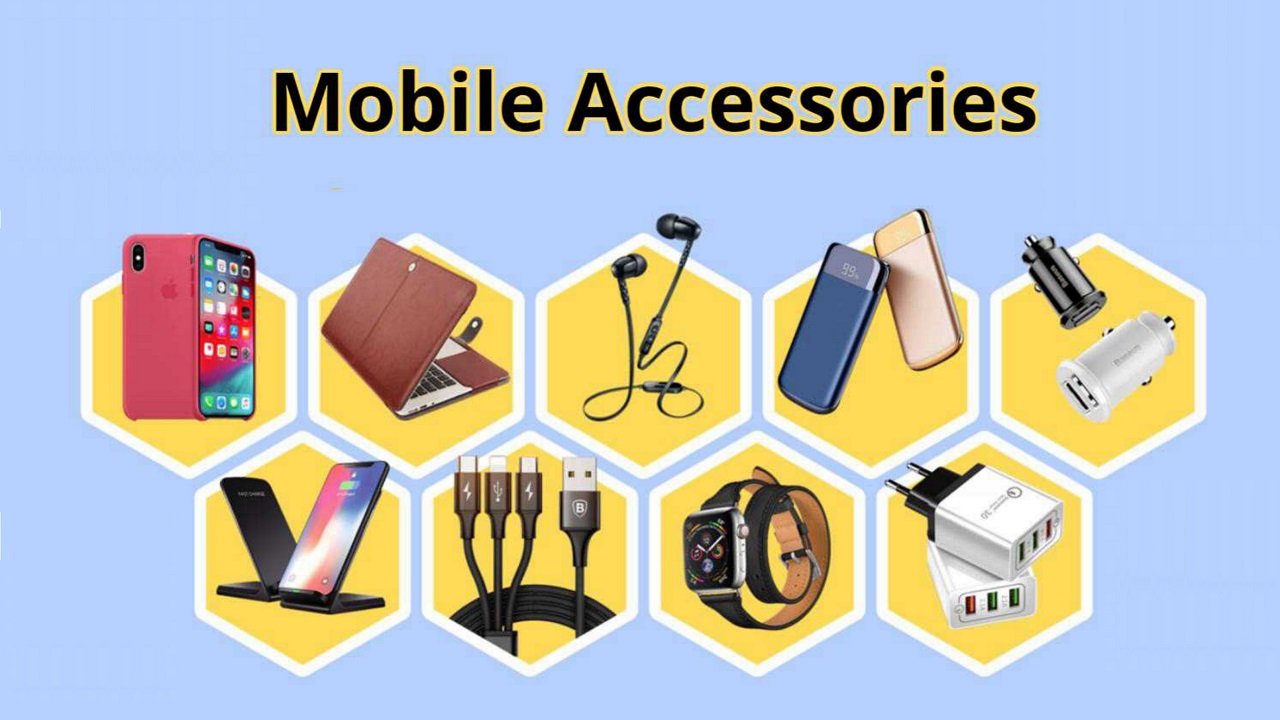
Anyone importing chargers, cables, cases, or other phone accessories into Pakistan is about to be working off a new set of numbers. The Directorate General of Customs Valuation Karachi has issued Valuation Ruling No. 2105 of 2026, fixing new Customs values on the import of 70 different types of mobile phone accessories. The ruling was released on Wednesday, replacing rates that had stood since 2024.
Why the Old Rates Were Retired
The previous benchmark, Valuation Ruling No. 1887-1-2024, had determined Customs values for mobile accessories under Section 25A of the Customs Act, 1969. By this year, that ruling was over two years old, and international market prices for these items had moved on without it.
That gap is what triggered the re-determination exercise. Customs values that don’t track current global pricing create a mismatch between what importers actually pay for goods abroad and what duty gets assessed at the border, a problem that compounds the longer a ruling sits unrevised.
How the New Values Were Calculated
A stakeholder meeting was held on the ruling date, where industry participants presented their positions and were asked to back them up with documentary evidence. From there, the directorate pulled and scrutinized 90 days’ worth of import data, cross-checked it against the stakeholder submissions, and conducted market enquiries as required under Section 25(7) of the Customs Act.
What’s notable here is how many standard valuation methods the directorate had to rule out before landing on a final approach, and it tells you something about how fragmented the accessories market actually is.
The transaction value method, the default and most straightforward approach under Section 25(1), was ruled out first, because the information required under Section 25(2) simply wasn’t available. Next, the identical goods and similar goods valuation methods under Sections 25(5) and 25(6) were considered but dropped for lack of demonstrable evidence on quantities and qualities and because declared values for similar goods showed inconsistent variation, undermining any reliable comparison.
The deductive value method couldn’t be applied on its own either, since accessories available in the local market span too wide a range of types and quality tiers to treat as a single comparable category. And the computed value method under Section 25(8) was ruled out too, due to the unavailability of manufacturer pricing.
With every standard method either partially or fully inapplicable, the directorate settled on Section 25(9), applying what the ruling describes as ‘reasonable flexibility’ to the deductive value method, combined with Section 25(7) and Rule 121(2) of the Customs Rules, 2001, to arrive at final values for the 70 accessory categories.
What This Actually Means for the Market
Here’s the practical gap in this ruling as released: it confirms that new Customs values exist for 70 accessory types but doesn’t specify the categories, the old versus new rate comparisons, or the percentage shift involved. Without that breakdown, it isn’t possible to say with certainty which accessory categories saw values rise, fall, or stay roughly flat, or by how much.
What can be said is the direction of travel: a two-year-old valuation being replaced because international prices moved generally points toward an upward revision, since global electronics and accessory pricing has broadly trended higher over that period, but this ruling text alone doesn’t confirm that for every one of the 70 categories covered.
Why It Matters Beyond Importers
Customs valuation rulings like this one sit upstream of retail pricing. When the declared value Customs assesses duty against changes, that shift eventually works its way into what importers pay to bring accessories into the country and, from there, into what retailers charge. For a market as accessory-dependent as Pakistan’s, where chargers, cables, cases, and screen protectors move in high volume alongside phone sales, a revision covering 70 categories at once is a meaningful reset, even without the line-item detail attached.
Importers and retailers working with any of the affected accessory categories will want the full schedule attached to Ruling 2105 of 2026 rather than relying on the summary alone since that’s where the category-specific values and any actual cost impact will actually show up.
Mobile Phone Taxes Portal
Find the PTA Taxes on All Phones on a Single Page using our Taxes Portal.
Note: Mobile phone tax rates and calculations fall under the jurisdiction of the Federal Board of Revenue (FBR), not the Pakistan Telecommunication Authority (PTA).
![[Monitor] ASRock Phantom Gaming 25" Full HD 144Hz IPS with AMD FreeSync (Adaptive Sync) 1ms Computer Monitor – $72.99](https://jobssz.com/wp-content/uploads/2026/07/p4_7YjyAcCXaSntAW5Ux4le0JW2Zav-LUteRfNCrfm8.jpeg)