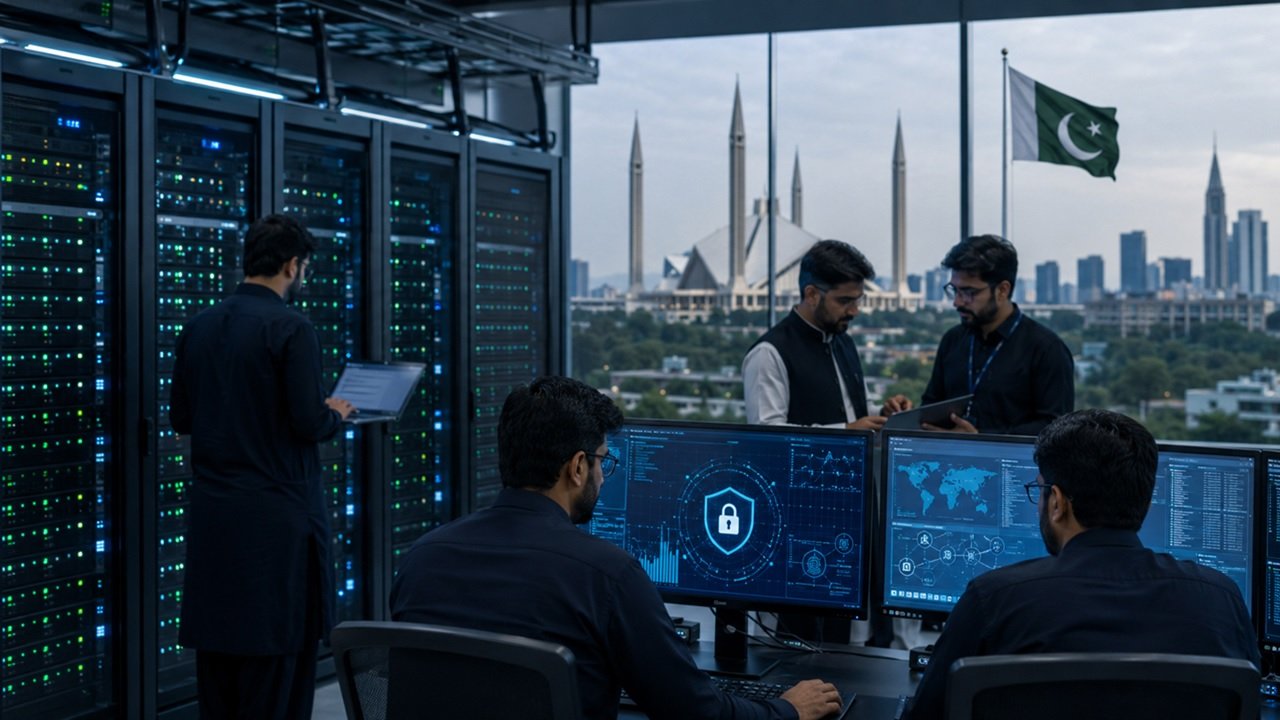
Cybersecurity Push: Pakistan Plans to Shift Data from Foreign Servers to Local Data Centres
Pakistan is preparing to shift most of its public and private sector data from foreign servers to local data centres as part of a broader effort to improve cybersecurity and protect sensitive information. The move comes amid growing geopolitical tensions and an increase in cyberattacks targeting the country’s digital infrastructure.
According to industry experts, more than 90% of Pakistan’s data is currently hosted overseas, mainly in countries such as the United States and Singapore. Government departments, businesses, and digital services rely on foreign cloud platforms, web hosting providers, and mobile application services to store and manage their data.
Experts warn that keeping critical data outside the country increases cybersecurity risks and raises concerns over data sovereignty. They believe hosting sensitive information within Pakistan will give the country greater control over its digital assets while reducing exposure to external threats.
Cybersecurity Push: Pakistan Plans to Shift Data from Foreign Servers to Local Data Centres
The government’s renewed focus on data localization follows a rise in cyberattacks. According to Pakistan Computer Emergency Response Team (PKCERT) Director General Dr. Haider Abbas, Pakistan recorded 253 cyberattacks in 2026. One recent ransomware attack targeted a government organization, encrypting its data and forcing officials to restore systems using backup copies.
The country also experienced 927 cyberattacks on critical infrastructure during 2024-25, affecting both public and private sector organizations. Experts say ransomware remains one of the most serious cyber threats, with many attacks believed to have originated from outside Pakistan.
To address these challenges, the federal government has proposed a new cybersecurity framework that would require government organizations hosting websites and digital services abroad to move them to data centres located within Pakistan.
Industry leaders believe the shift will improve national cybersecurity while offering several other benefits. Local data hosting can reduce dependence on foreign digital infrastructure, lower foreign exchange spending on overseas hosting services, improve disaster recovery, and reduce long-term data management costs.
Mehwish Salman Ali, Chief Executive Officer of Data Vault Pakistan, said the government should first relocate data belonging to strategic and defense institutions. She suggested that public sector organizations, banks, financial institutions, healthcare providers, and logistics companies should follow in later phases.
She added that the government is upgrading its information and communication technology (ICT) infrastructure to provide secure computing resources while ensuring that critical national data remains within Pakistan’s jurisdiction.
As part of this effort, the National Telecommunication Corporation (NTC) has signed a three-year agreement with Data Vault Pakistan. Under the agreement, data belonging to more than 100 public sector organizations will gradually be migrated from overseas hosting services to local data centres. The project will also support upgrades to artificial intelligence infrastructure.
See Also: Pakistan Intensified Cybersecurity Measures During Tensions with India, Economic Survey Reveals
Pakistan already has more than 30 operational data centres. Several government organizations, including the State Bank of Pakistan (SBP) and the Pakistan Telecommunication Authority (PTA), along with many private companies, have established local facilities to provide hosting and digital infrastructure services.
Experts say moving government websites and digital platforms to locally hosted sovereign data centres is now a matter of national security rather than just a technology upgrade. They recommend implementing the migration through a phased strategy that prioritizes critical government systems, introduces clear data residency policies, strengthens cybersecurity standards, and encourages partnerships with local data centre operators.
They also believe the expansion of Pakistan’s data centre industry will create new investment opportunities, generate high-skilled jobs, encourage technology transfer, and strengthen the country’s growing digital economy.
With cyber threats continuing to increase worldwide, Pakistan’s plan to localize its data could become an important step toward building a more secure and resilient digital infrastructure while reducing reliance on foreign technology providers.
Mobile Phone Taxes Portal
Find the PTA Taxes on All Phones on a Single Page using our Taxes Portal.
Note: Mobile phone tax rates and calculations fall under the jurisdiction of the Federal Board of Revenue (FBR), not the Pakistan Telecommunication Authority (PTA).