DeepSeek V4 AI Models Disrupt China’s Market Competition
Something significant just shifted in China’s AI race. DeepSeek has launched the beta version of its V4 AI models, a move that lands squarely in the middle of an already brutal pricing war among Chinese technology firms — and one that carries implications far beyond Beijing.
Key takeaways
- DeepSeek has released the beta version of its V4 AI models, including the upgraded V4-Flash API, which retains its original architecture while undergoing a retrained upgrade.
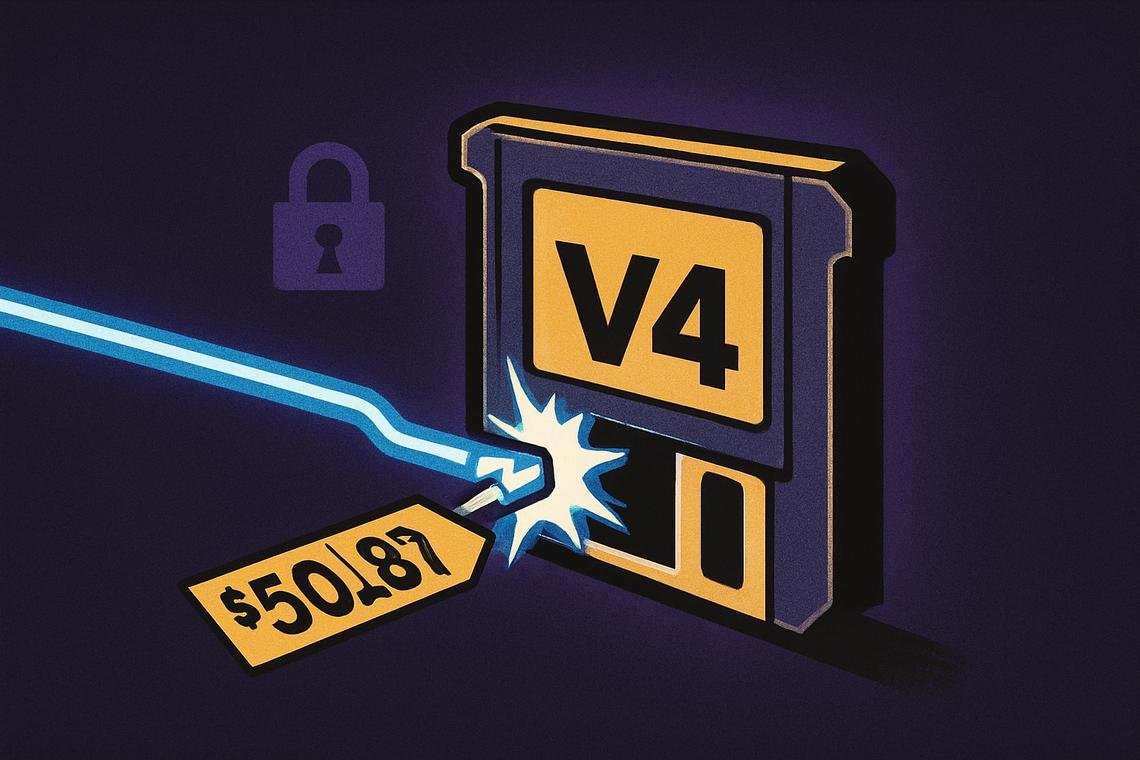
- The V4 models are positioned as cost-effective alternatives amid China’s intensifying AI price war, where output tokens from DeepSeek-V4-Pro cost approximately $0.87 per million — compared to $50 for Anthropic’s Fable model.
- The launch intensifies competition with Alibaba for leadership in the Chinese AI market.
- Anthropic’s AI model dominance is currently priced at 93% YES in prediction markets, with forecasts pointing to continued leadership through the end of August 2026.
- Chinese AI models — from DeepSeek, Moonshot, and Z.ai — now account for six of the top ten slots on OpenRouter, the popular developer model marketplace.
DeepSeek Releases V4 Models Into a Crowded, Fast-Moving Market
The beta release of DeepSeek’s V4 models arrives at a moment when China’s AI sector is moving faster than almost anyone in the West expected. The V4 lineup includes the upgraded V4-Flash API, which preserves its original architecture while incorporating a retrained upgrade — a deliberate design choice that signals continuity for developers already building on DeepSeek’s infrastructure.
At the center of this launch is price. The ongoing AI price war among Chinese firms has turned cost-per-token into perhaps the most-watched number in the industry. According to Fortune, one million output tokens from DeepSeek-V4-Pro costs roughly $0.87 — a figure that makes Anthropic’s Fable model, priced at $50 per million output tokens, look like a luxury product by comparison. Z.ai’s GLM-5.2 comes in at $4.40, and even Moonshot’s Kimi K3, considered relatively expensive by Chinese standards, sits at just $15.
That pricing gap is not an accident. Chinese AI labs operate under chip constraints imposed by U.S. export controls, which paradoxically pushed them to squeeze dramatically more efficiency out of less powerful hardware. The result is a generation of models that compete on capability while undercutting on cost — a combination that is proving hard to ignore.
Impact on China’s Intensifying AI Market Competition
DeepSeek’s V4 release sharpens a competitive dynamic that has been building for months. Chinese firms are no longer simply chasing U.S. labs — they are racing each other.
Heightened Rivalry Among Chinese AI Firms
The past few months have seen a rapid succession of major Chinese model launches. In mid-July, Moonshot AI debuted Kimi K3, the largest open-source model ever released, which one independent benchmark from Arena.AI ranked as the best model currently available — ahead of Anthropic. Days earlier, Z.ai had stolen headlines with its GLM-5.2 model, which showed particular strength in coding and creative design. Even Meituan, primarily known as a food-delivery platform, entered the frontier AI race with its LongCat-2.0 model, claiming it was trained entirely on Chinese-made processors.
DeepSeek’s V4 beta drops into this environment not as a lone announcement, but as another move in a rapid-fire sequence. Developer adoption is already shifting: according to Business Insider, open-weight models accounted for about 55% of tokens flowing through Vercel’s AI Gateway in July, up from just 4% in January — a shift that accelerated directly after the releases of DeepSeek V4, Z.ai’s GLM-5.2, and Kimi K3.
Potential Challenge to Alibaba’s Market Position
Alibaba has held a strong position in the Chinese enterprise AI market, with companies like Airbnb previously citing Alibaba’s Qwen model for customer service operations. But the field is crowding fast. DeepSeek’s V4 launch could pressure Alibaba’s competitive standing, particularly as enterprise buyers — domestic and international — evaluate whether cheaper, high-performing alternatives offer better economics.
The broader implication is that no single Chinese lab currently holds an unchallenged lead. Market share is being contested model-by-model, release-by-release, in a race where the next launch is always weeks away.
Market Forecasts and Anthropic’s Expected Lead
Despite the noise from Chinese labs, Western prediction markets remain firmly behind Anthropic — for now.
Anthropic’s Model Dominance Priced at 93% YES
Anthropic’s continued leadership in AI model rankings carries a 93% YES probability in current market pricing, reflecting strong confidence in its near-term position. That confidence is partly structural: Anthropic’s Fable model remains widely regarded as among the most capable publicly available systems, and the company’s R&D depth gives it a buffer that pure cost competition cannot easily erode.
Expectations for Market Leadership by August 2026
Market participants broadly expect Anthropic’s models to maintain their leading position through the end of August 2026. That timeline, however, is already under pressure. Anthropic CEO Dario Amodei had previously suggested that Chinese labs would need at least another six months to approach U.S. performance levels — a forecast that Kimi K3’s July debut effectively invalidated ahead of schedule.
The 93% confidence figure is high, but it is not 100%. And the speed at which Chinese labs have been closing the gap suggests that number deserves more scrutiny than it might have six months ago.
What the Price War Means Beyond China
One of the more surprising consequences of China’s AI pricing pressure is who benefits in the U.S. According to Business Insider, enterprise software stocks have rebounded sharply as cheap Chinese models appeared — HubSpot rose nearly 30% in one month, Adobe gained more than 20%, and Salesforce, ServiceNow, and Intuit each climbed at least 12%. William Blair analysts described cheaper, more open AI models as “unambiguously good” for software companies, since AI becomes simply another falling input cost.
Coinbase CEO Brian Armstrong publicly explained how the platform halved its AI spending by shifting employees toward Kimi and Z.ai’s GLM models. DoorDash’s chief technology officer said the company delegates lower-level coding work to Kimi, achieving better quality at lower cost. By mid-July, Chinese AI models accounted for 57% of tokens used by U.S. firms on OpenRouter in a single week, according to data cited by Fortune.
The strategic logic here is worth sitting with. U.S. export controls were designed to slow China’s AI development by restricting chip access. Instead, they may have accelerated a different kind of competition — one based on efficiency, open-source distribution, and aggressive pricing rather than raw compute. Chinese labs now release models under permissive licenses, letting any developer download, customize, and deploy them at no cost, paying only for local compute and energy. That fundamentally changes what it costs to build an AI product.
For developers globally, the math is simple: access to competitive intelligence at a fraction of the price is too attractive to ignore, regardless of where the model was built. The geopolitical complications — congressional scrutiny of U.S. companies using Chinese AI, concerns about data sovereignty, access restrictions — have not yet outweighed the economic incentive. Whether that balance holds is the real open question heading into 2026.
FAQ
What is the significance of DeepSeek’s V4 AI model launch?
DeepSeek’s beta release of the V4 models marks a key development in China’s AI market, offering cost-effective competitive technology amid an intensifying price war. The launch adds pressure on domestic rivals like Alibaba and continues a broader trend of Chinese labs closing the capability gap with U.S. companies at dramatically lower prices.
How might DeepSeek’s V4 models affect Alibaba’s position?
The launch could challenge Alibaba’s leading position in the Chinese AI market. As more enterprise buyers evaluate cost-per-token economics, DeepSeek’s pricing advantage — with V4-Pro output tokens costing roughly $0.87 per million — makes it a compelling alternative for developers previously relying on Alibaba’s models.
What is the market outlook for Anthropic’s AI models?
Anthropic’s models are expected to lead the market through the end of August 2026, with prediction markets currently pricing that outcome at 93% YES. However, the pace of Chinese model development has already beaten previous forecasts, and that confidence level may face reassessment if Chinese labs continue releasing competitive models ahead of schedule.
Why is China experiencing an AI price war?
Chinese AI firms, including DeepSeek, Moonshot, and Z.ai, compete aggressively on price to capture market share and establish their models as a de facto standard. U.S. chip export controls also pushed Chinese labs to maximize efficiency from constrained hardware, inadvertently making their models cheaper to run. The widespread adoption of open-source licensing further reduces barriers, allowing any developer to access powerful models at minimal cost.
Article produced with the assistance of artificial intelligence and reviewed by the editorial team.