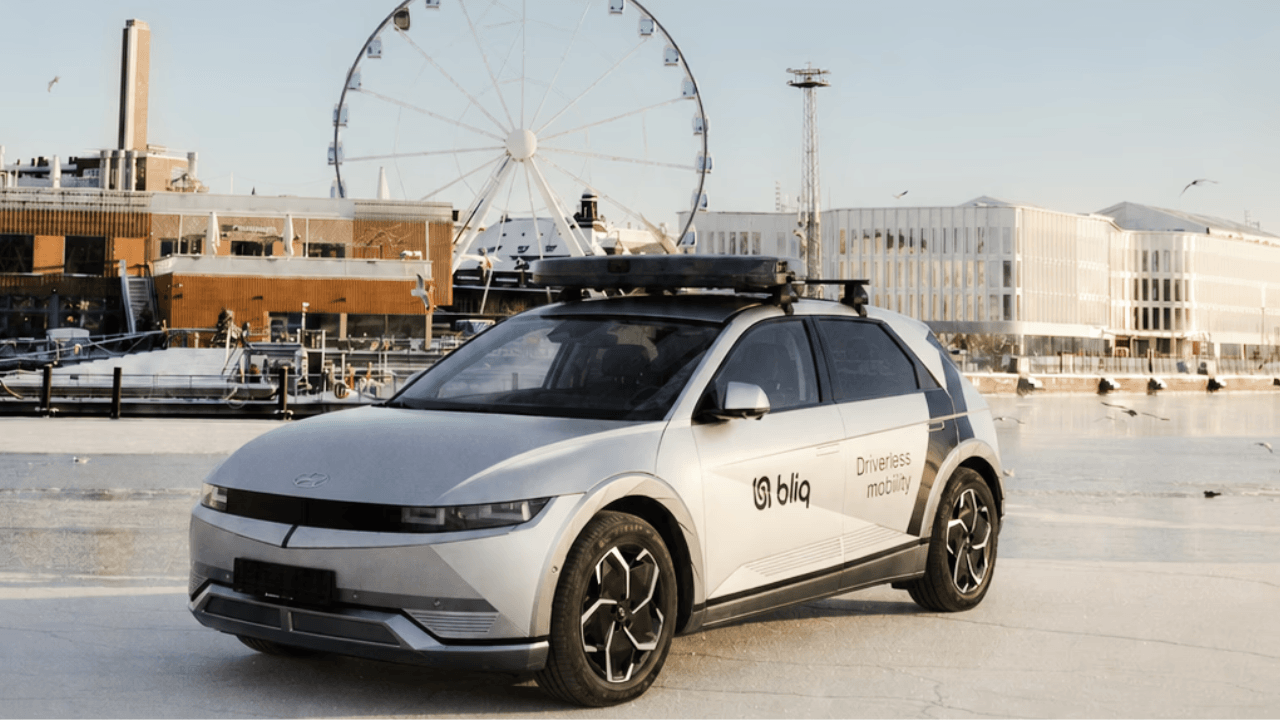
Finland clears Bliq.ai for driverless vehicle operations

Bliq.ai today announced that Finland has approved Bliq Driverless for public road operations with immediate effect. The decision follows Finland’s recognition of Bliq’s existing .

Operations will initially take place with a safety driver onboard as part of the first deployment phase, allowing Bliq to validate the system under local conditions and prepare for its first winter operations in Finland.

Bliq is building driverless cars for private and business use, starting in Europe. Rather than manufacturing purpose-built autonomous vehicles, the company upgrades existing software-defined vehicles with a fast-to-integrate sensor and compute stack, turning them into fully driverless cars. Its current product generation combines an AI-based Level 2 driving system with remote human supervision, enabling rapid deployment while maintaining robust safety oversight.

Testing in and around Helsinki will begin shortly.

“We are beyond excited. This approval brings us closer to making driverless mobility part of everyday life across Europe,” said Julian Glaab, CEO and Co-Founder of Bliq.

“For people and businesses in Finland, this means access to cars that can handle the driving for them, giving them more freedom, more productive time, and a safer way to travel.

Finland also gives us the opportunity to validate Bliq Driverless in one of Europe’s most demanding operating environments.”

Bliq’s Finnish deployment will be led by Erik Safonov, who currently oversees the company’s activities across the Baltics from Tallinn and will now also lead the Helsinki launch.

“Expanding from Tallinn to Helsinki is a natural next step for Bliq,” said Erik Safonov, Operations Lead at Bliq.

“Helsinki gives us a new environment in which to build real-world experience. Our focus now is on launching carefully, learning quickly, and establishing a strong foundation in Finland.”

Building momentum for autonomous vehicles in Europe, in April, autonomous vehicle startup Verne announced the launch of Europe’s first commercial robotaxi service, starting in Zagreb, Croatia, enabling members of the public to book and pay for a Pony.ai-powered autonomous ride through the Verne app.


Similar Posts

  • Google pays $250K for Linux vulnerability allowing guest VM escapes

    A Linux vulnerability that allows untrusted virtual machines to gain root access to host machines is one of two high-severity flaws to surface this week in the open source operating system. The vulnerability resides in KVM, which is, in essence, a virtual machine app included in the kernel of many Linux distributions. The vulnerability, tracked…

  • Meta launches low-cost Muse Spark 1.1 as enterprise AI spending comes under scrutiny

    Meta has unveiled Muse Spark 1.1, saying the frontier AI model rivals leading LLMs on coding, computer use, and agentic AI benchmarks while undercutting OpenAI and Anthropic on API pricing, potentially lowering the cost of deploying AI agents in enterprises. The latest model, which was teased last week, matched or was competitive with leading models,…

  • US cyber agency warns over forgotten SharePoint flaw

    A recently identified but accidentally unpublicised remote code execution (RCE) flaw in Microsoft SharePoint, tracked as CVE-2026-45659, has been added to the US Cybersecurity and Infrastructure Security Agency’s (Cisa’s) Known Exploited Vulnerabilities (Kev) catalogue after evidence of active exploitation in the wild was identified. Microsoft is understood to have made a patch for CVE-2026-45649…

  • How Behavioral Analytics and AI Are Redefining Cybersecurity for Boca Raton Businesses

    The cybersecurity tools that most businesses relied on five years ago shared a foundational assumption: that threats could be identified by matching observable characteristics against a database of known malicious patterns. Signature databases, rule-based detection, and blocklist-driven filtering all operate on this principle. Know what bad looks like, and you can stop it when you…

  • プロダクトエンジニアの台頭——AIがモダンテックチームを再形成する

    AI調達プラットフォームakirolabsはエンジニアリングチームの変革に成功した。キーワードは共有オーナーシップ。同社によれば、開発スピードは最大45%向上したという。 純粋な専門特化の終焉 長年、ソフトウェア組織は専門特化を中心に最適化されてきた。プロダクトマネージャーが要件を所有し、エンジニアが実装を担い、デザイナーがUXを、QAが品質を受け持つ——このモデルは機能していた。しかし製品の開発速度が四半期単位ではなく週単位で測られる時代。状況は変わった。 AIがさらにその変化を加速させている。それが「プロダクトエンジニア」の台頭だ。Fortune 500企業を顧客に持つAI調達プラットフォーム、akirolabsでは、CTOがエンジニアリングチームの組織を段階的に変革してきた。最初は専門特化のサイロを壊し、次にジェネラリスト型へ移行した。しかしやがて気づいたのは、AI時代に最もパフォーマンスが高いのはスペシャリストでもジェネラリストでもなく、プロダクトとビジネスを深く理解したエンジニアだということだ。 このモデルはプロダクトマネージャーを置き換えるものではない。むしろ優れたプロダクトマネージャーを解放する。プロダクトマネージャーは顧客対応、ロードマップの優先順位付け、要件の検証、戦略的な方向性により集中できるようになる。AIアシストのプロトタイピングやバイブコーディングツールにより、エンジニアリングの実装が始まる前に初期コンセプトや機能的な下書きを作れるようにもなる。 一方エンジニアは、プロダクトドメイン、顧客のワークフロー、ビジネスの優先事項への理解を深め、明確に定義された範囲内で多くのプロダクトレベルの意思決定を独立して行えるようになる。 このモデルは3つの繰り返し可能な原則で構成される。 プロダクトコンテキストのオーナーシップ:エンジニアは技術タスクだけでなく、顧客のワークフローとビジネス目標を深く理解する 分散型意思決定:チームはすべてを上位にエスカレーションせず、小さなプロダクト・実装の意思決定を自ら行う権限を持つ AIネイティブな実行:エンジニアはAIツールを孤立したコーディングタスクのアシスタントとしてではなく、デリバリーサイクル全体を通じた統合されたコラボレーターとして使う プロダクトエンジニア導入により望める変化は? このモデルの運用上の影響は比較的早く現れた。エンジニアリングデリバリーサイクル全体で収集した内部指標によれば、このモデル導入後に開発速度が約15〜25%改善した。エンジニアがすでに機能の「なぜ」を理解しているため、要件確認ミーティングは短く少なくなった。同じスコープでのリリースタイムラインが少なくとも10〜15%短縮された。 AIツールが日常のワークフローに入ってくると、効果はさらに顕著になった。プロダクトエンジニアは技術的な実装とプロダクトの意図の両方を理解しているため、AIコーディングシステムと効果的に協働できる。より良いプロンプトを作り、問題を正しく分解し、プロダクトとエンジニアリングチーム間の複数の変換レイヤーを必要とせずにAI生成のアウトプットを検証できる。 プロダクトエンジニアモデルと最新のAIツールを統合した後、開発・イテレーションサイクルで最大35〜45%の削減を記録し、機能デリバリーのサイクルタイムが数カ月から数週間に短縮された。 しかし最も重要な変化はスピードではなく、オーナーシップだ。 従来のエンジニアリング構造では、エンジニアはプロダクト貢献者ではなくチケットの実行者になりがちだ。曖昧な決定はすべて上位にエスカレーションされ、実行を遅らせ、マネジメントのキャパシティを消耗させる。これに対し、プロダクトエンジニアモデルは意思決定をより効果的に分散させる。これまで幹部の関与が必要だった多くの小・中規模のプロダクト決定を、ドメイン理解の強いエンジニアが直接処理できるようになる。 また、コミュニケーションのオーバーヘッドも組織全体で減少する。要件確認ミーティングが減り、チームは確認や承認を待つ時間が減る。「バスファクター(特定の人物がいなくなると機能しなくなるリスク)」も改善する。品質管理にも顕著な変化があり、実際のオーナーシップを持つエンジニアはプロダクト品質とビジネス成果に大幅に積極的になる。実装から6カ月で本番環境のバグが約25%減少した。 効果的にスケールするには しかしこのモデルの実装は簡単ではない。最大の課題は人材だ。すべてのエンジニアが効果的なプロダクトエンジニアになれるわけではない。技術的な深さ、プロダクトの直感、コミュニケーションスキル、ビジネスの認識、強い自己管理が必要だ。採用はコーディング能力だけで評価できないため難しくなる。 運用上の落とし穴もある。最も危険な間違いの一つは、十分なリーダーシップの監視や組織の成熟度なしに早すぎる段階でプロダクト権限を委任することだ。強いプロダクトエンジニアには強いフレームワークが必要だ——規律あるリリースプロセス、明確な説明責任の境界、信頼性の高いテストインフラ、経験豊富な技術リーダーシップ。マルチステージのテスト環境、構造化されたリリース管理、自動検証パイプライン、本番デプロイ前の多層的な自動・手動レビューによって分散型意思決定のリスクを軽減する管理が必要だ。 AIもまた複雑さをもたらす。AIツールの能力を過大評価し、適切な検証なしに生成されたアウトプットを信頼し始めるエンジニアもいる。逆に過度に懐疑的で生産性を大幅に改善できるツールを十分に活用しないエンジニアもいる。適切なバランスを維持するには、エンジニアリングリーダーシップの積極的な関与と社内のAI専門知識が必要だ。 AIネイティブなエンジニアリング組織の未来 長年、ソフトウェア開発は専門特化を中心に最適化されてきた。人間同士のコミュニケーションコストがシステム間の調整コストより低かったからだ。AIはその方程式を変える。実装がAIによって加速されるにつれ、組織のボトルネック——コーディングそのものではなく——が実行スピードの主な制約になる。最も速く適応する企業は、最大のエンジニアリング部門を持つ企業ではないかもしれない。オーナーシップ、プロダクト理解、AIネイティブな実行を中心にエンジニアリングの役割を再設計する組織かもしれない。 プロダクトエンジニアモデルは、究極的には新しい肩書きの下で責任を組み合わせることではない。プロダクトの判断をエンジニアリングの実行に直接埋め込み、現代の製品が今求めるスピードで考え、決定し、デリバリーできるチームを構築するという、より広いシフトを反映している。

Leave a Reply

Your email address will not be published. Required fields are marked *