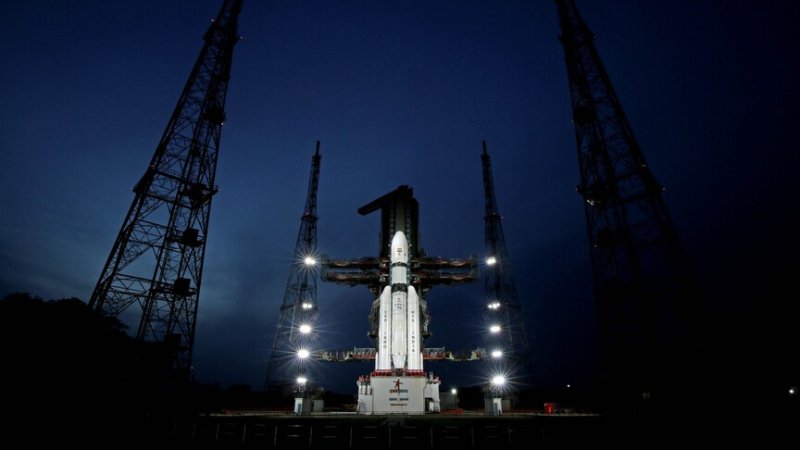
India’s next rocket launch changes everything for space
India is on the verge of a historic milestone in commercial space flight. This Saturday, Hyderabad-based startup Skyroot Aerospace will attempt its first-ever orbital launch, signaling a major shift in how the country reaches the stars.
Here is what you need to know about this groundbreaking mission, News.Az reports, citing Anadolu Agency.
The Launch Window: Saturday at 11:30 a.m. local time (0600 GMT).
The Location: Satish Dhawan Space Centre in Andhra Pradesh, India.
The Goal: Safely navigate all flight stages and successfully deploy a payload into low Earth orbit (LEO).
How to Watch: The event will be streamed live across Skyroot Aerospace’s official digital platforms.
Named after Vikram Sarabhai—the father of India’s space program—the Vikram-1 rocket stands roughly 20 meters (66 feet) tall.
While Skyroot made headlines in 2022 by launching a suborbital rocket (which briefly touched the edge of space), entering orbit is a far more grueling technical challenge.
Suborbital vs. Orbital: Suborbital flights briefly cross into space before falling back to Earth. Orbital rockets must achieve extreme, precise speeds to ensure a satellite stays in space, counteracting Earth’s gravity to circle the planet continuously.
If successful, Vikram-1 will validate Skyroot’s systems, paving the way for the company to begin commercial operations hauling small satellites for communication, research, and Earth observation.
For decades, the state-run Indian Space Research Organisation (ISRO) held a strict monopoly on Indian rocket launches, while private firms were relegated to supplying parts.
Everything changed in 2020 when the Indian government introduced sweeping reforms. By allowing private companies to build launch vehicles and utilize government facilities, India opened the floodgates for dozens of space tech startups.
This pivot mirrors the success of the U.S. commercial space sector, where companies like SpaceX and Rocket Lab have become indispensable partners to NASA. By leveraging lower manufacturing and engineering costs, India hopes its domestic private sector can capture a massive slice of the booming global satellite launch market.