Industry: Unified framework needed to chart course for Web3 ecosystem
This article first appeared in Digital Edge, The Edge Malaysia Weekly on July 13, 2026 – July 19, 2026
Malaysia has established itself as an attractive operating base for Web3 companies, offering lower costs, multilingual talent, a growing developer pool, regional access and political stability that make it a practical base for teams building global products and serving wider Asian markets.
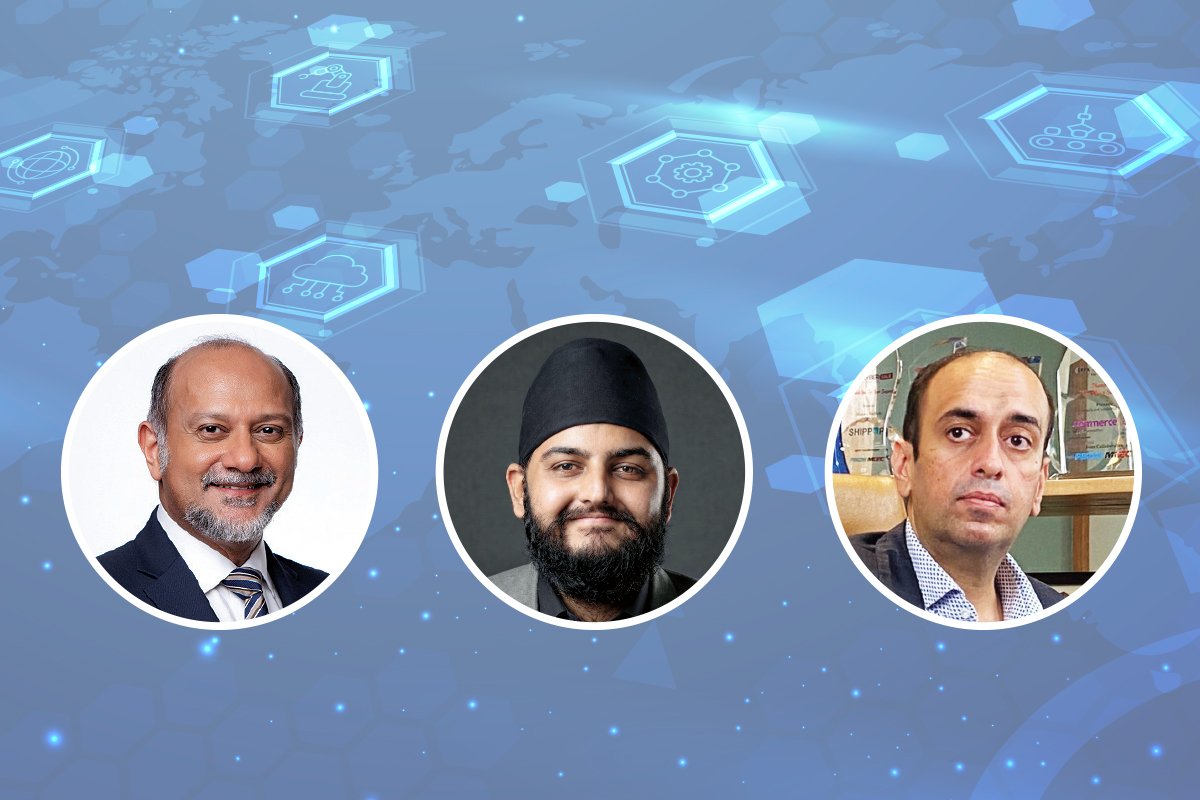
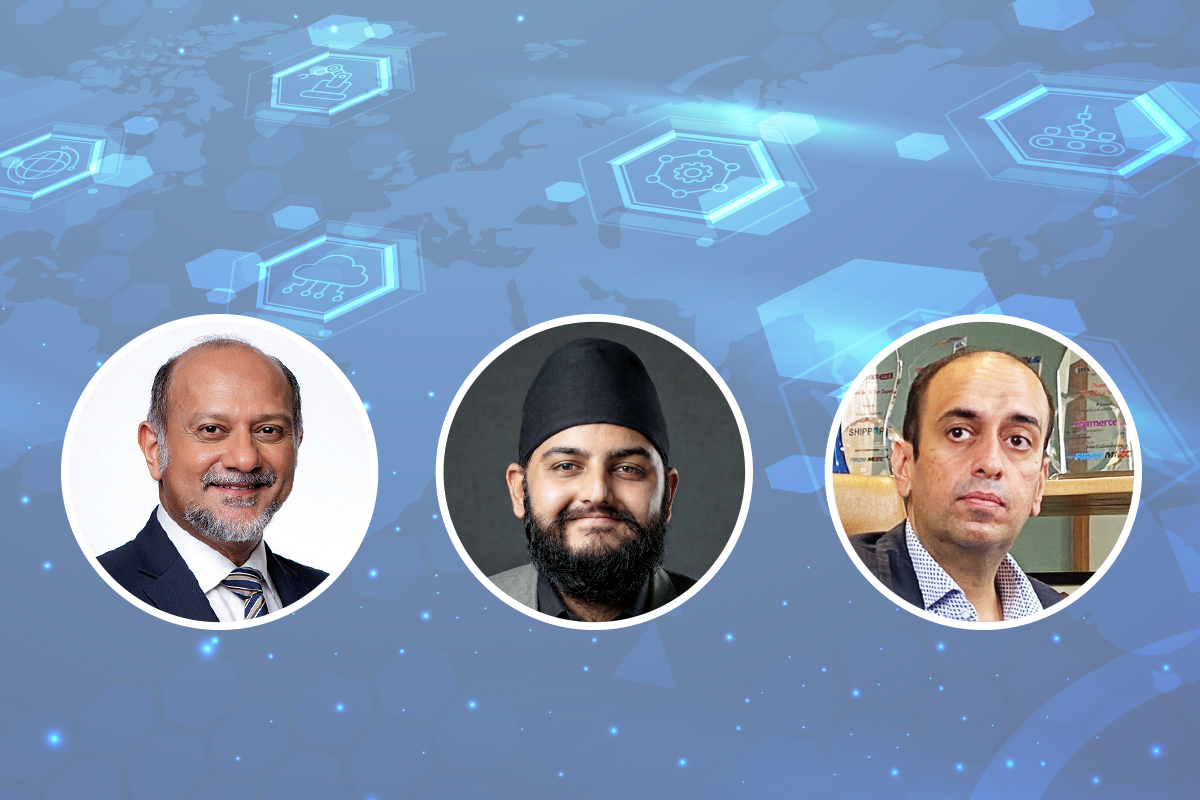
But what is still missing is a unified framework that brings the different pieces of the Web3 ecosystem together, says Access Blockchain Malaysia president Harpreet Singh Maan. Having such a methodology is important so that founders, investors, banks and regulators have clearer guidance on how the government intends to treat the sector.
“The leadership signal has to come from the very top — the prime minister and the relevant ministers — to instruct and drive the vision of Malaysia’s blockchain and digital asset ecosystem direction. Without that top-down mandate, individual regulators will continue to optimise within their own perimeters, and the gaps between those perimeters will persist,” says Harpreet.
The upcoming National Blockchain Policy is an important step in that direction, as it is expected to provide enhanced clarity for Malaysia’s blockchain and Web3 ecosystem.

“The leadership signal has to come from the very top … to instruct and drive the vision of Malaysia’s blockchain and digital asset ecosystem direction. Without that top-down mandate, individual regulators will continue to optimise within their own perimeters, and the gaps between those perimeters will persist.” – Harpreet, Access Blockchain Malaysia
The policy’s six thrusts – governance; infrastructure and ecosystem; workforce and talent; funding; and research and development — are meant to address the full life cycle of what a Web3 builder needs, Minister of Digital Gobind Singh Deo tells Digital Edge in an email interview.
This includes capital pathways to grow, infrastructure to build on, talent to hire and real-world use cases to anchor them.
“This is not a document about blockchain technology in the abstract. It is a national commitment to positioning Malaysia as the preferred innovation nation in Southeast Asia. Retaining founders and capitalising on what Malaysia has produced requires competing not just on cost, but on facilitation,” says Gobind.
Harpreet says the policy will be important in clarifying where Malaysia wants to head next, especially as blockchain activity increasingly overlaps with digital assets, tokenisation, decentralised finance (DeFi) and other Web3 use cases.

“This is not a document about blockchain technology in the abstract. It is a national commitment to positioning Malaysia as the preferred innovation nation in Southeast Asia.” – Gobind, Minister of Digital
The recently concluded National Blockchain Roadmap 2021-2025 excluded digital assets and cryptocurrencies from its scope.
Without a clear national position, some parts of the Web3 ecosystem risk falling between regulatory perimeters. Individual regulators may move on specific issues, but wider questions that cut across securities, payments, banking, advertising and decentralised infrastructure require a more coordinated approach, says Harpreet.
For instance, in July 2024, the Securities Commission Malaysia (SC) issued an updated Guidance Note on Provision of Investment Advice, which extends to financial influencers (dubbed “finfluencers”) promoting capital market products on social media. Digital assets that meet the prescribed criteria are classified as securities under the 2019 Prescription Order, which means the guidance does cover them.
But what is still lacking is a broader advertising and promotional code for the digital asset sector as a whole. This would cover paid social campaigns, event sponsorships, educational content referencing specific tokens, cross-border advertising reaching Malaysian audiences and promotion of services that fall outside the securities perimeter, such as non-custodial wallets or DeFi front ends.
Extending Malaysia’s framework in this way would give compliant players a clearer marketing pathway and help consumers distinguish licensed offerings from unlicensed or higher-risk ones, says Harpreet.
“The advertising code gap exists because digital assets that meet the prescribed criteria are securities, while wallets, DeFi front ends and infrastructure providers sit outside the securities perimeter. Only a unified stance can authorise a sector-wide code that bridges both,” says Harpreet.

“If we can combine our operational strengths with better access to capital and stronger institutional support, Malaysia becomes even more competitive as a regional base for Web3 builders.” – Ganesh, Xamble Group
Strengthening Web3 ecosystem
Being the place where great Web3 companies start is different from being the place where they stay and scale. If Malaysia wants to nurture more globally relevant Web3 companies, it needs a more conducive environment for founders, including dedicated capital, stronger early-stage support and a system that makes it easier for promising companies to stay and grow here, says Ganesh Kumar Bangah, chairman of Xamble Group Ltd.
“What needs to happen next is for Malaysia to sharpen that advantage by strengthening the surrounding ecosystem. That means making funding more accessible, continuing to improve policy support and creating an environment where founders do not feel they need to move elsewhere in order to grow. If we can combine our operational strengths with better access to capital and stronger institutional support, Malaysia becomes even more competitive as a regional base for Web3 builders,” says Ganesh.
Gobind says the Ministry of Digital, along with agencies such as the Malaysia Digital Economy Corp (MDEC), will continue to focus on ecosystem development to ensure that the next generation of Malaysian Web3 founders has both the institutional support and commercial infrastructure “to build from Malaysia, not just start here”.
Through the Malaysia Digital (MD) Status programme, blockchain is an explicitly recognised qualifying activity, with MD Status companies eligible for tax incentives, import duty exemptions, foreign knowledge worker facilitation, and MDEC’s one-stop facilitation and business matching services.
Under the MD Tax Incentive scheme, eligible companies in blockchain can enjoy a reduced corporate tax rate of 0% on intellectual property (IP) income and 5% or 10% on non-IP income for 10 years.
Other parts of the ecosystem are also playing a role, from venture capital (VC) firms and founder networks to universities building the talent pipeline.
AppWorks, a Taiwan-based VC firm and recipient of funding under Jelawang Capital’s Regional Managers Initiative, is actively engaging more Malaysian founders, not only through capital but also through its founder community.
The firm sees capital as only one of the things founders need. Its accelerator is free and designed as a community for entrepreneurs to connect, exchange experiences and grow, rather than as an investment-driven programme or funding competition.
Investment may happen later, but only with the right fit and timing. A founder may approach AppWorks when capital is needed, or AppWorks may follow a company over time and invest if it sees strong potential, says Ching Tseng, a principal at AppWorks.
“[We have] plans to invest in Malaysia, no doubt. Otherwise, we wouldn’t be doing so many founder community [activities] there. I hope the community grows, becomes more mature and will have several founders willing to share their experience with others,” says Ching.
Universities also have a hand in building the talent pipeline. Asia Pacific University of Technology and Innovation (APU) launched its Web3 Innovation Lab in August 2024 to provide hands-on training, certification and industry-linked development work in areas such as blockchain and self-sovereign identity.
The university has embedded blockchain into its curriculum, with technical students exposed to blockchain development and business students exposed to blockchain applications.
Beyond formal courses, APU runs weekend workshops on Solidity, Rust and Algorand through its Blockchain and Cryptocurrency Club, which began in 2022 as a student crypto interest group. It has since evolved into an upskilling and talent-development platform with about 1,600 students.
APU has also brought industry partners into its Web3 talent-building efforts, such as Regov Technologies, Masverse and Acxyn. Its model is to connect students directly with industry players so that training is tied to the skills companies actually need, says Vinesh Thiruchelvam, chief innovation officer and chief sustainability officer at APU.
“The challenge, of course, lies in the non-common software and programming languages that we will have to teach our talents. Because it is new, trendy and current, the teaching fraternity also needs to be educated, and that takes time because there are no degrees or qualifications in this area. This area is totally new and fresh,” he says.
“So the adoption process is slow. When the educator has a slow upskilling curve, the delivery will be dampened. But in APU, what we do is we educate very quickly. We certify our educators, lecturers and professors, so that at least you have one or two in the beginning who can be the frontier in delivering this.”
Save by subscribing to us for
your print and/or
digital copy.
P/S: The Edge is also available on
Apple’s App Store and
Android’s Google Play.