Judge rules SAVE tool violates voter data and privacy laws. It’s been used in Arizona
The SAVE tool has been touted by the Trump administration as a way they can root out noncitizens illegally registered to vote.
But now, a judge has blocked it from being used, calling it a violation of voter data and privacy laws.
The Show’s next guest this morning found the Systematic Alien Verification for Entitlements tool is prone to mistakes and falsely flagged hundreds of voters as potential noncitizens. And it’s been used here in Arizona.
Jen Fifield broke the story for ProPublica and she joins The Show now to tell us more.
Full conversation
LAUREN GILGER: Good morning, Jen.
JEN FIFIELD: Good morning.
LAUREN GILGER: So tell us how this SAVE Tool works. What data did it use?
JEN FIFIELD: So, to be clear, the SAVE Tool has been in use in Arizona by state election officials for years now. They’ve checked the citizenship status one at a time for voters that have come through their system. This is a revamp of the system the Trump administration took on, and they connected it to everyone’s Social Security data.
And that’s the problem here. That’s the problem that the court had. They said, “You took all of our Social Security data and put us in this tool so that we could do these mass checks of entire voter rolls, all at once. And by doing that, you trampled on our privacy rights and also, you’re threatening our right to vote because the tool is not connecting to the most up-to-date citizenship information anymore.”
LAUREN GILGER: Right. So you found that this tool is not always accurate at all, particularly when it comes to assessing the status of people who are born outside the U.S.
JEN FIFIELD: Sometimes it can’t — it couldn’t find passport information at first. Sometimes when someone doesn’t have a naturalization certificate, say that their parents were born here — or, sorry, their parents became citizens and they automatically became citizens and that’s not recorded — it’s just struggling with these unique situations. But that’s hundreds of people that we found.
LAUREN GILGER: Right, right. You looked in particular, I think, at Texas in your reporting and found hundreds of these people who were falsely flagged. What happened? Like, did they continue to be able to vote?
JEN FIFIELD: So Texas took a really stringent approach and started to just immediately remove people that didn’t respond after 30 days saying they were a citizen. And that’s where the court stepped in and said, “This is potentially disenfranchising these people.”
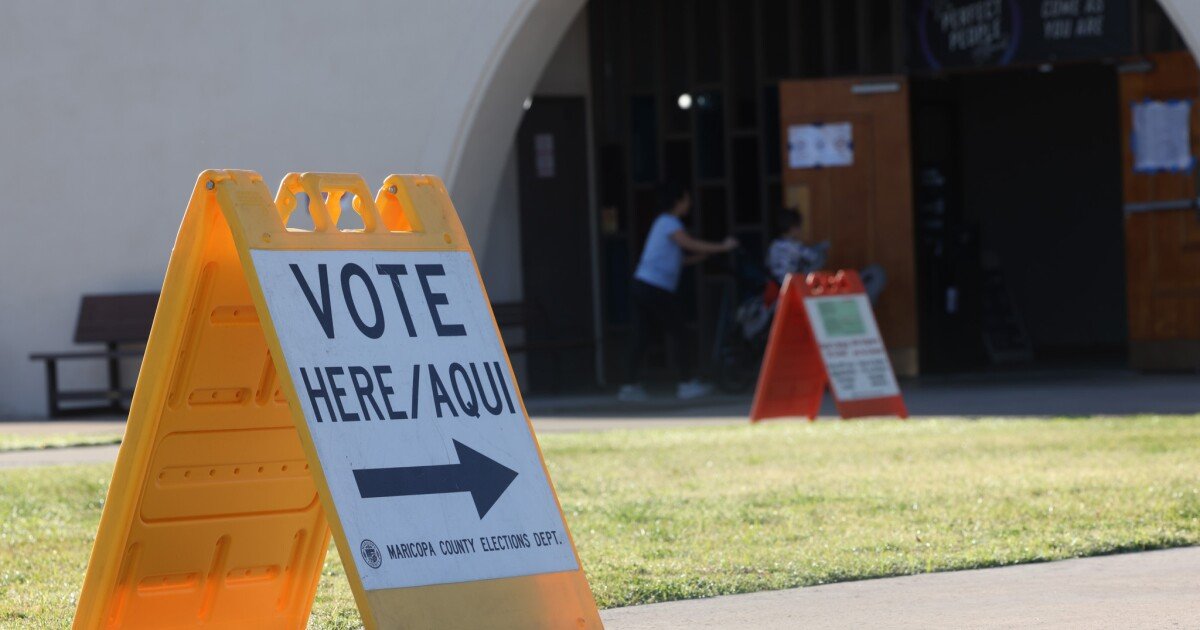
LAUREN GILGER: So, Jen, this also has been used in Arizona, as you said, and it’s been used more recently by Maricopa County Recorder Justin Heap, who has, you know, been locked in this battle with the County Board of Supervisors that’s, you know, about who gets to control what parts of elections and sort of is at its root all about these concerns about election integrity, right?
JEN FIFIELD: Right. So he took, you know, he took the voters that hadn’t provided proof of citizenship caught up in our motor vehicle error, where they had never provided proof of citizenship, and put them in the tool all at once using this mass tool and found about 200 voters and referred those to our local county prosecutor’s office.
We don’t know what happened to those. Hopefully, they’re doing diligent investigations to see whether these are actually non-citizens.
LAUREN GILGER: OK. So tell us more about this ruling, Jen. What exactly did the judge say here? What was the legal kind of reasoning behind blocking this revamped tool?
JEN FIFIELD: Well, it had a lot to do with the privacy concerns, actually. Some people think it was more due to the errors. That definitely played a part, but they had to find that they were violating federal laws. And so she said — the judge said, you know, “You’re violating the Social Security Act, the Privacy Act, the Administrative Procedure Act,” because you didn’t properly notify formally the public that you were putting this data in there, and you didn’t give them a chance to provide public comment on it.
And the reason why they won the lawsuit is they had — they found that they had standing, these voting rights groups that came had standing, because of the inaccuracies, because their voters were being threatened.
LAUREN GILGER: Um, that makes sense. So how many states have used this tool more recently in this revamped version? Like, do we know how extensive these, you know, mistakes that you were able to find pretty easily could be?
JEN FIFIELD: Yeah, we know about half the states signed on to use it, not clear if all of them have, but USCIS, which is the division of Department of Homeland Security that runs this tool, announced about 24,000 potential non-citizens — notice the word potential there — that have been flagged across the country.
You know, even if all of those turn out to be non-citizens, we have a president who has made this his goal because he says that millions of non-citizens are registered. And that claim is not panning out, even with the inaccuracies.
LAUREN GILGER: Yeah. Do we know if the Trump administration will appeal this decision? What’s the response been like from them?
JEN FIFIELD: So the Trump administration did not immediately respond to me when I asked them, but they did post on social media saying that this is preventing them from finding, quote, “alien voters” on the voter rolls. And I have read since then in other media reports that they will appeal.
LAUREN GILGER: OK. This is also, Jen, kind of tied up in President Trump’s sort of pet project, right, the SAVE Act, which would pretty much overhaul elections in many ways in America, including requiring proof of citizenship to register to vote. It would also require states to use this SAVE Tool, should that pass?
JEN FIFIELD: It would. Now, I, you know, obviously it has not passed. It has been, you know, half a year of them trying to get this rammed through the Senate and Congress. It isn’t happening yet.
But you do wonder about this line that says, you know, “All states must use the SAVE Tool.” If the court has now shut down the tool entirely, I found that they completely have blocked states from using it moving forward. So we’ll see if that survives.
LAUREN GILGER: Jen, last minute or so here. Tell us what you think kind of debates like this, rulings like this, tools like this, this whole conversation could do or is doing already to, I guess, a chilling effect when it comes to who thinks they are eligible to or who’s willing to register and actually vote in the country.
JEN FIFIELD: That’s a great question. I hear from voters who were flagged by the tool that just receiving the letter inaccurately that they, you know, they are a non-citizen has spooked them because of the immigration enforcement we’ve seen across the country.
And also, you know, I hear from election officials saying that, you know, people that have immigrated to this country or still have family who are non-citizens are less likely to participate in elections from what they’ve been told, or even volunteer at the polls anymore.
LAUREN GILGER: Mm. So, yes, you’re definitely seeing the ripple effects there. OK, Jen Fifield with ProPublica joining us. Jen, thank you so much for coming on the show as always. Appreciate it.
JEN FIFIELD: Yeah. Thank you.
KJZZ’s The Show transcripts are created on deadline. This text is edited for length and clarity, and may not be in its final form. The authoritative record of KJZZ’s programming is the audio record.