JWST May Have Just Found Heavy Water on an Alien World : ScienceAlert
The James Webb Space Telescope (JWST) is one of humanity’s greatest gifts to itself, revealing our cosmic surrounds like never before.
The telescope’s revolutionary infrared sensitivity makes it perfectly suited to probing the most pertinent cosmic questions.
Besides exploring the earliest eras of the Universe, JWST is being increasingly used to study alien atmospheres in the ultimate search for extraterrestrial life, ushering in what NASA calls a “new era in exoplanet research”.
Among its most tantalizing targets is water, which appears to be necessary for life (as we know it) to emerge.
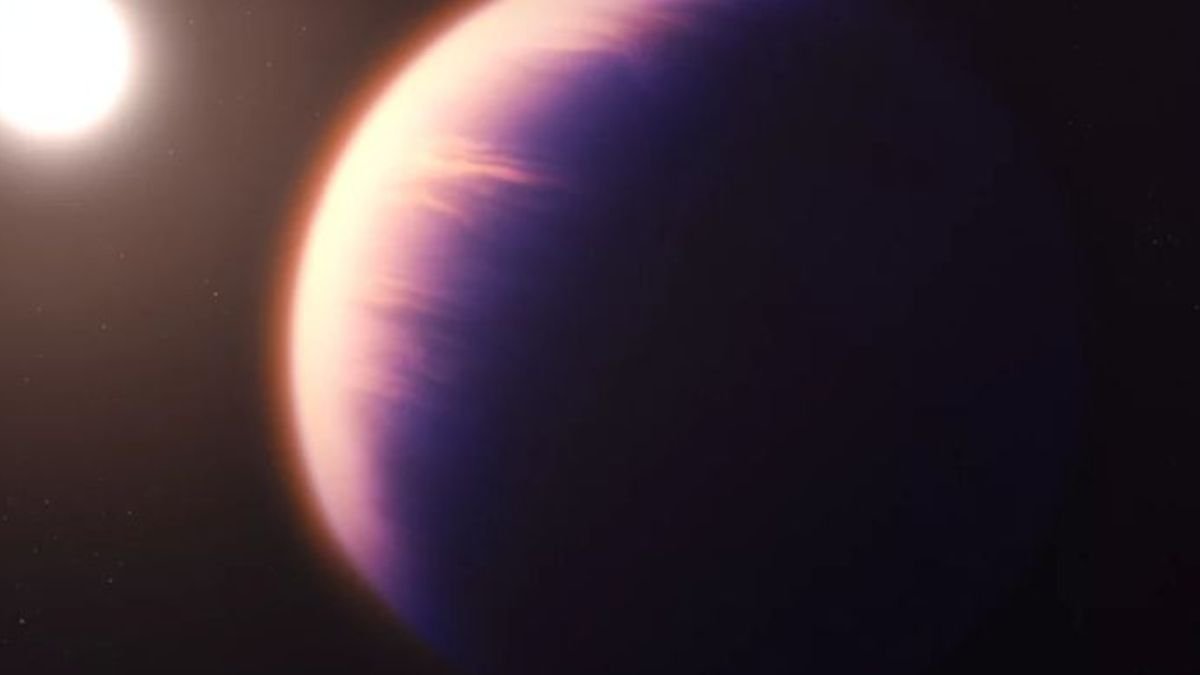
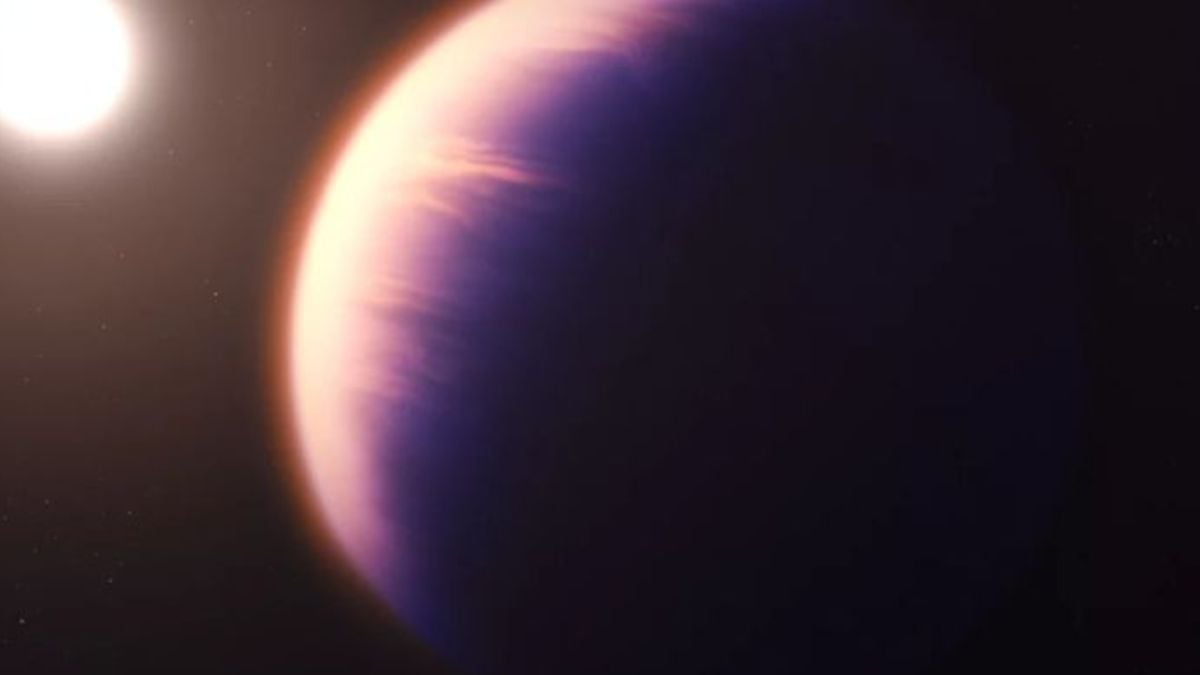
Now, astronomers using JWST have modeled the atmospheric properties of the exoplanet WASP-39b and detected the presence of semi-heavy water, a potential habitability marker, on this alien world, located nearly 700 light-years from Earth.
Their study searched for water isotopologues, or diverse variants of the H2O molecule that differ in the amount of neutrons that they have.
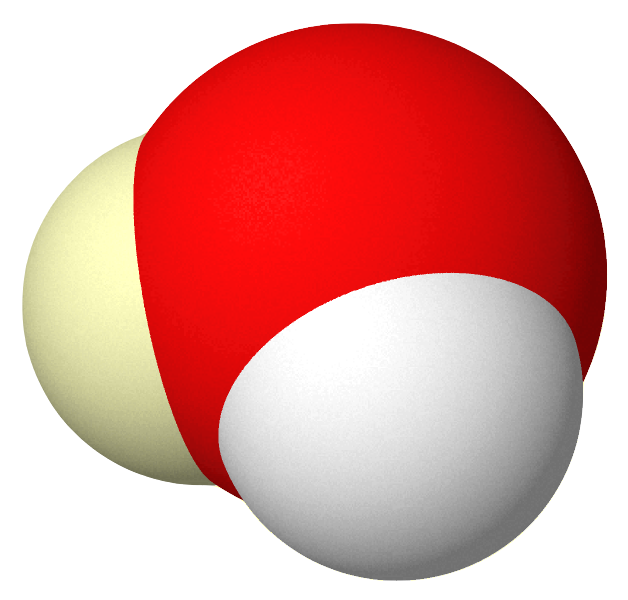
Semi-heavy water, or HDO, is like a regular H2O molecule except that one of its two hydrogen atoms is a deuterium isotope made slightly heavier by an added neutron. (The other hydrogen atom has only one proton and one electron.)
The researchers wanted to determine the deuterium-to-hydrogen (D/H) ratio in the water in WASP-39b’s atmosphere, to infer what we can about how the planet formed.
WASP-39b was a logical choice because it is among the most well-studied alien worlds, a “benchmark exoplanet” previously observed across infrared wavelengths by JWST’s four primary instruments.
This has given astronomers an absolute goldmine of information.
“This leaves us with the most detailed transmission spectrum of any exoplanet to date,” write the team behind the new study.
“Nevertheless, our understanding of its atmospheric chemistry remains incomplete. Measuring the water D/H ratio of this planet would offer invaluable constraints on its chemical environment and formation pathway,” they explain.
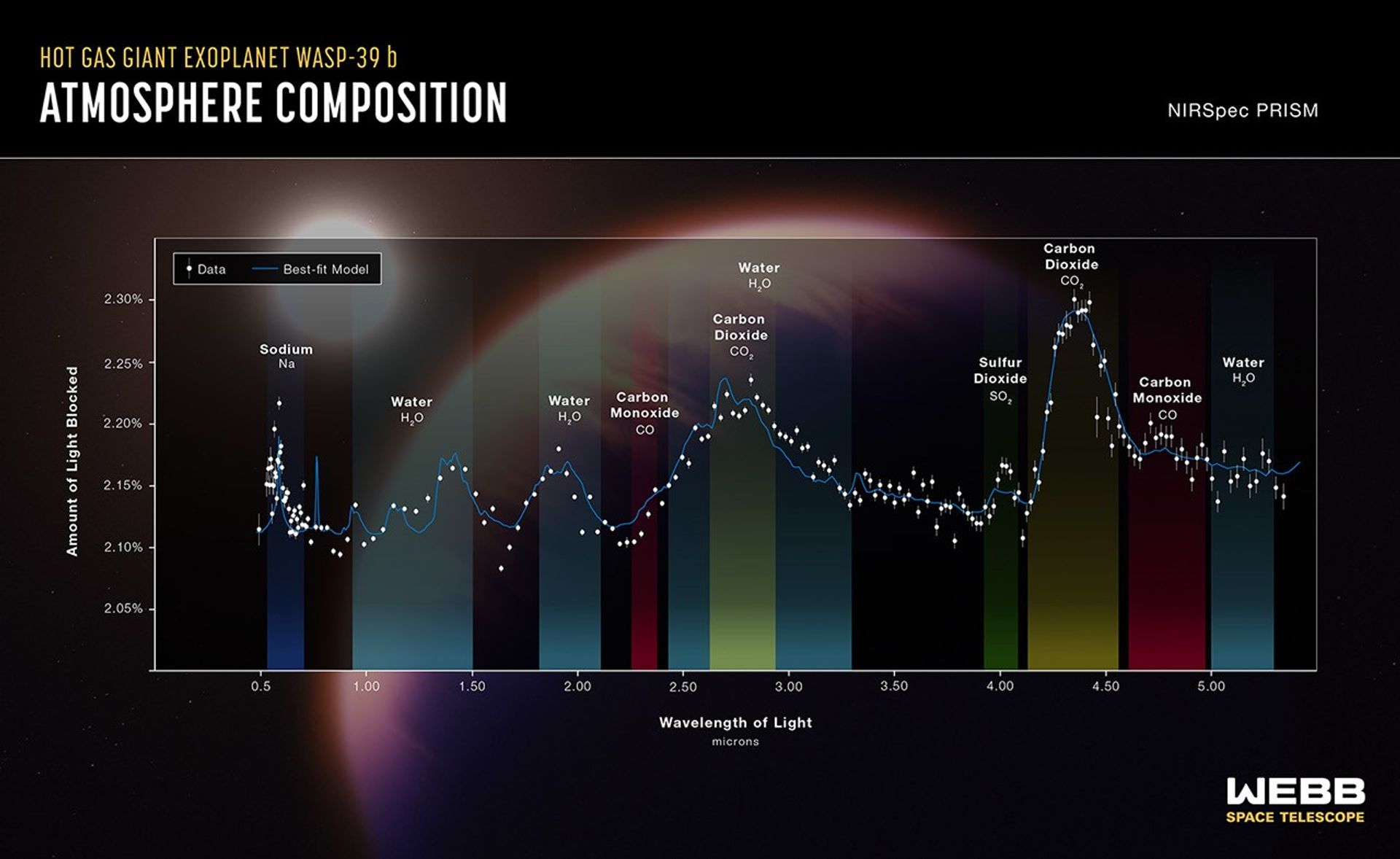
So, the researchers compared predefined atmospheric models with real JWST data, accounting for factors such as temperature, cloud cover, molecular abundances, and atmospheric opacity.
They found that WASP-39b’s inferred D/H ratio is “significantly elevated compared to the Solar System gas giants, the objects which might be expected to be the closest local analogs to WASP-39b.”
This may be due to a process called atmospheric escape.
Pulled down by its slightly higher molecular weight, heavier water is not as likely to escape into space as regular water, which seeps from smaller, more Sun-adjacent bodies that are too gravitationally puny and irradiated to hold onto it.
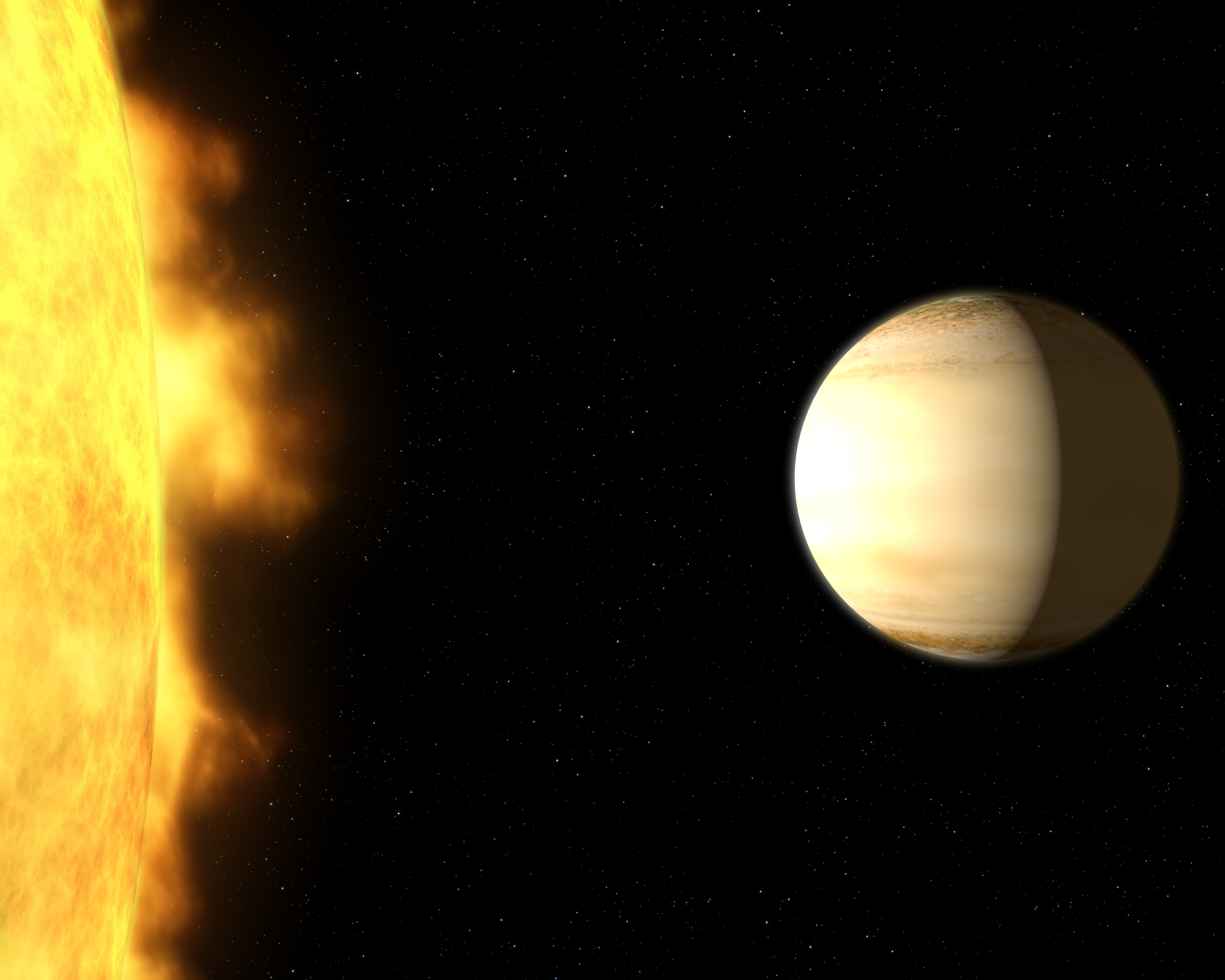
WASP-39b is a scorching hot, low-gravity, puffy exoplanet, so it could logically lose its regular water like nobody’s business.
Atmospheric mixing and light-driven chemical reactions might have also contributed to the observed D/H ratio.
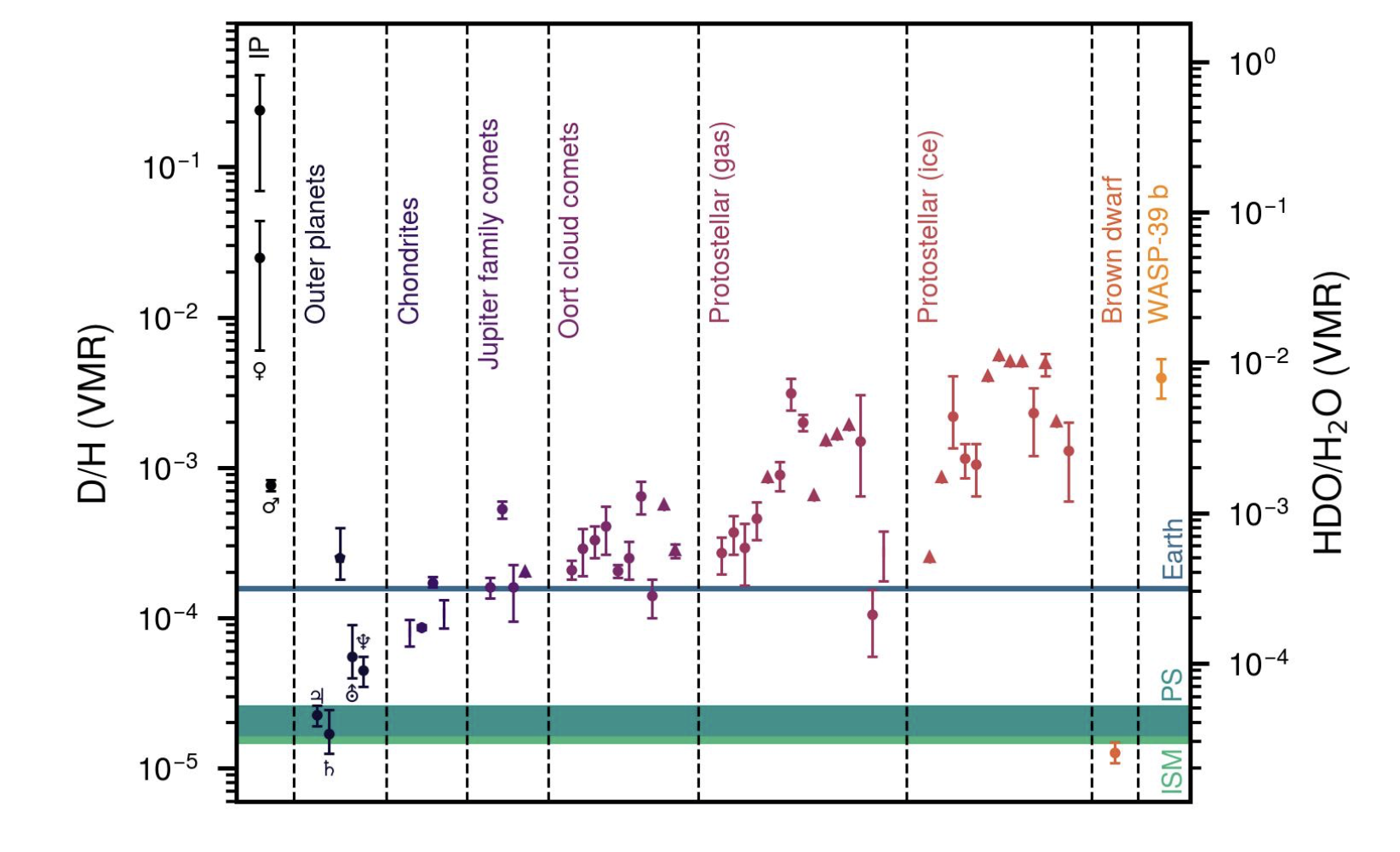
The other option is that WASP-39b formed in the colder, more distant reaches of its exosolar system, where it inherited water-rich material beyond the ‘snow line’ of its protoplanetary disk, and later migrated inward toward its star.
“Observations of protostellar ices from this region that show a degree of deuterium-enrichment consistent with the D/H ratio inferred from WASP-39 b,” the researchers write.
However, “determining whether this scenario could produce the observed values requires detailed chemical modeling.”
Other tracers of the D/H ratio might also provide more insight, but for now, semi-heavy water is the best indicator we’ve got.
“HDO, however, currently remains the most accessible tracer due to its distinct spectral features, and its detection may even be possible on temperate rocky exoplanets in the near future, where it could serve as a potential habitability marker,” the researchers conclude.
Of course, WASP-39b is a scorching, gassy world approaching 1,000 degrees Celsius (1,832 degrees Fahrenheit), so it’s not a role model for habitability.
Still, not all worlds are so harsh – and life as we know it may not be the only life possible in a Universe that constantly proves itself stranger than fiction.
This research was published on the preprint server arXiv.
This article was fact-checked by Fiona MacDonald and edited by Clare Watson. While we pride ourselves on our process, we are only human. If you spot a mistake, please let us know.