Lee’s Silicon Valley Trip Energizes K-Startups, Raising Support Hopes

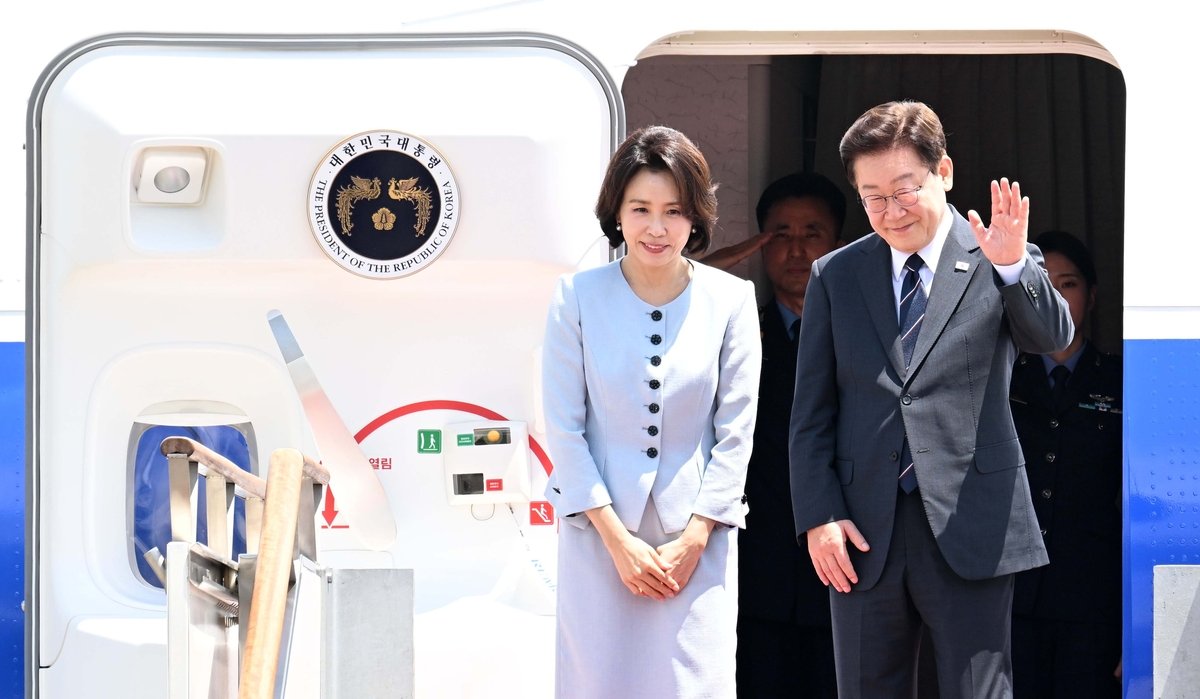
As President Lee Jae-myung embarks on a trip to Silicon Valley in the United States, home to global big tech and information technology (IT) startups, the local Korean startup ecosystem is heating up further. In Silicon Valley, numerous Korean startups are already delivering results, attracting investment from leading U.S. venture capital (VC) firms and expanding cooperation with global companies. Observers expect that, spurred by this trip, the Korean government’s startup nurturing policy will significantly broaden its scope of support beyond domestic startups to include overseas startups that are founded abroad and target local markets.
Indeed, the influence of Korean founders in Silicon Valley is growing by the day. Not only have startups such as Moloco and Sendbird, which have already firmly established themselves, emerged, but a growing number of newly founded companies are also winning praise and attracting investment from U.S. VCs based on original ideas.
A representative example is “SUME,” which develops a video production AI agent. After establishing a U.S. corporation early this year, SUME received investment from local accelerator “Founders.” Although an early-stage startup, it has secured tens of thousands of users, and with the share of paid users rising, its revenue is also on an upward curve.
“In Korea it took several years to receive an investment offer, but in the United States there is a tendency to make quick decisions based on a founding team’s execution rather than academic background or resume,” said Lim Do-hyun, CEO of SUME. “Our goal is to grow into the strongest company in the global video AI agent market.”

Park Chae-geun, CEO of Pickle, which develops personal AI avatars, also moved to Silicon Valley and founded his company in 2025. Pickle attracted a total of $4.5 million in investment from world-class accelerator Y Combinator (YC) and others. “I thought that to build a technology company that changes people’s daily lives, you have to start in Silicon Valley, where large-scale capital and global expansion experience are concentrated,” Park explained. “It is harder than founding a company in Korea, but it is a path I absolutely had to take.”
Han Yoon-seok, head of development and co-founder of “BlockitAI,” which operates a scheduling AI agent, jumped into entrepreneurship based on his experience working at Google. A major help was the fact that his co-founder, a former Sequoia Capital investor, had secured a strong investor network. “Silicon Valley is a market that runs on connections, so receiving investment from a good accelerator or VC allows you to gain strong trust in follow-on investment and hiring,” Han said.
According to Startup Alliance, the number of Korean startups newly founded in the United States is preliminarily estimated to have grown from around 16 in 2022 to around 40 annually in 2025. Analysts say Silicon Valley’s investment culture, which prioritizes technological capability and growth potential in the global market over a founder’s university and country of origin, is promoting overseas entrepreneurship.
As overseas entrepreneurship takes hold as a new trend in the venture ecosystem, voices are growing louder in the venture industry that the government should move away from viewing these companies simply as foreign firms and expand the scope of its support. The argument is that support should be based on how much the results achieved in the global market translate into domestic employment, R&D, and follow-on startups, rather than on the location of the corporation or the founder’s nationality. There are also calls to strengthen policy support to link the standing of the semiconductor industry built by Samsung Electronics and SK hynix—which translates into global investors’ trust in Korean deep-tech startups—to investment attraction and overseas market entry.
“Moloco is a U.S. company, but it uses money earned abroad to hire excellent talent in Korea,” said Kim Kwang-rok, CEO of Sazze Partners. “Beyond the inflow of foreign currency and job creation, we can also expect the effect of talent who gained experience at global companies going on to found their own startups, raising the capabilities of the entire venture ecosystem.”
Kim emphasized that the very criteria for judging overseas startups must change. “We should not just consider the founder’s nationality or which country the corporation is located in, but look at what value the company creates for the Korean economy,” he noted. “If a company hires talent in Korea and conducts R&D, or helps domestic companies expand overseas, it needs to be included among the targets of government support.”
The changing view of Korean startups among Silicon Valley VCs is also cited as a reason the government should hurry to support overseas startups. In the past, local investors perceived Korea as a country with a small market and high dependence on domestic demand, but recently they have begun to evaluate it as a cradle of deep-tech companies equipped with semiconductor, AI, and manufacturing technology.
“U.S. VCs have very high interest in startups where founders from Samsung Electronics and SK hynix participate or that cooperate with these companies,” said David Suh, CEO of Korea Investment Partners USA. “It is the same logic as when we highly valued founders from big tech firms like Google and Meta in the past.” The very fact that Korea is a country where companies leading the global semiconductor market have grown, he said, acts as a “trust asset” demonstrating Korea’s technological capability and level of talent.
“Semiconductors, data centers, energy, and bio are not a temporary fad but industries whose growth will continue for more than the next 10 years,” Suh said. “Korea has not only excellent technical talent but also a solid manufacturing base in semiconductors, batteries, and automobiles, giving it conditions worthy of local investors’ attention.”