London-based Greyparrot raises $27M to prove waste data is worth more than the machines sorting it — TFN
- World Wide Technology board member Omar Mir has led a $27 million Series B round into Greyparrot, taking the AI waste intelligence company’s total funding to $60 million.
- The round follows Greyparrot’s AI passing 1 trillion waste detections, while less than 0.1% of the world’s waste is ever audited.
- Mir brings a track record of building an $18 billion AI infrastructure business and working alongside Google, Microsoft and OpenAI.
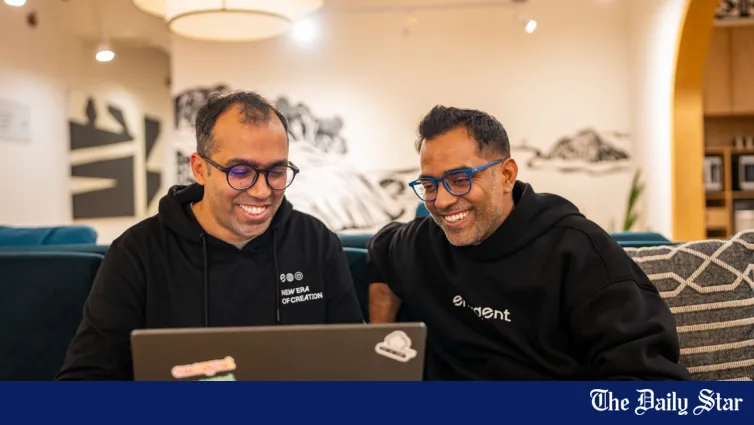
Omar Mir has spent 25 years building AI infrastructure businesses and sitting on the board of one of the largest privately owned technology companies in the US. He is now backing an industry with almost no data at all: waste.
Mir has led a $27 million Series B round into Greyparrot, the London-based AI waste intelligence company, bringing its total funding to $60 million.
He is an International Board Member at World Wide Technology, an adviser to King’s Trust International on AI and advanced technology, and has previously built an $18 billion AI infrastructure business, working alongside Google, Microsoft, Anthropic, AMD and OpenAI.
“Waste is one of the planet’s largest untapped resources, and data is the infrastructure that unlocks it. This funding lets us scale rapidly across North America and Europe and continue growing our AI, data science and product teams,” says Mikela Druckman, co-founder and CEO of Greyparrot.
Every year the world discards 2.3 billion tonnes of waste, and less than 0.1% of it is ever measured. The rest is guessed at through manual sampling or written off entirely.
The round follows Greyparrot’s Analyser systems crossing 1 trillion waste detections, more objects than there are stars in the Milky Way, by the company’s own comparison. It estimates the materials identified so far, including 17.4 billion PET bottles and 4.2 billion aluminium items, represent approximately $2.5 billion in recoverable value, with customers reporting improvements in sorting efficiency of 10% to 30%.
One trillion waste detections and counting
Greyparrot was founded in 2019 by Druckman, Ambarish Mitra and Nikola Sivacki, and is headquartered in London.
Mitra previously co-founded Blippar, one of the UK’s early tech unicorns, and Druckman was Blippar’s chief commercial officer before becoming Greyparrot’s CEO, giving the founding team a shared background in computer vision before turning it on the waste industry.
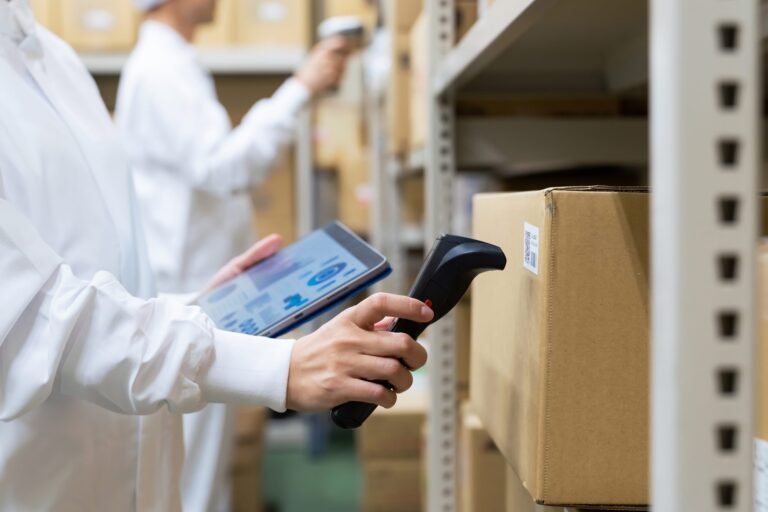
It mounts camera-based Analyser units above conveyor belts at recycling plants, where the AI identifies materials, products and brands as items move along sorting lines in more than 20 countries.
For an operator, that can mean catching a purity problem within minutes instead of discovering it weeks later when a shipment gets rejected. For a consumer brand, it means seeing whether packaging marketed as “recyclable” is recovered in practice, rather than assuming so on paper.
Tech Funding News has tracked Greyparrot since its earliest days, from an $11 million Series A round in 2022 through to a $12.8 million strategic investment from Bollegraaf in 2024. This round is more than double any single raise it has closed before.
In the first quarter of 2026, the UK’s Environment Agency began accepting Greyparrot’s AI-derived waste composition data for statutory compliance reporting, submitted by customers Biffa and FCC. Greyparrot also began working with Kenvue in May 2026 to validate the recyclability of its packaging using the company’s Deepnest platform.
Data versus hardware
That distinction separates Greyparrot from its closest rivals.
AMP Robotics, its best-funded US competitor, builds robotic pick-and-sort arms and raised $91 million in Series C funding in 2024 alone, taking its total to roughly $267 million. Recycleye, a fellow London startup founded the same year as Greyparrot, built AI-guided robotic and optical sorters, and in April was acquired by CP Group, a US materials-recovery-facility manufacturer, folding it into hardware rather than remaining independent. Bulk Handling Systems and TOMRA sell sensor-based sorting machinery with AI layered on top.
Greyparrot doesn’t need to own the sorting equipment if it owns the data that equipment and its operators depend on.
The wider market
The global waste management market was valued at $1.5 trillion in 2025 and is projected to reach $2.4 trillion by 2033, growing at a 6% compound annual rate, according to Grand View Research.
Interest in circular economy technology has picked up recently: textile recycling startup Syntetica raised $30 million backed by Lululemon to solve nylon separation, a sign investors are looking past pure-hardware recycling plays toward the harder materials-science and data problems underneath.
Greyparrot plans to use the capital to expand its Analyser network and grow its AI, data science and product teams as it scales across North America and Europe.
Whether this round pays off will hinge on whether “waste intelligence” becomes a tradeable asset class in its own right, as Mitra has previously framed it, or gets absorbed as a feature inside larger sorting-equipment platforms, as just happened to Recycleye.