Long COVID May Injure the Brain’s Dopamine System, the First Images of Shackleton’s Last Ship, and A New Species of Monkey Discovered
Missed some of our top stories from the week? Check out our round-up below, covering the biggest science news and stories that matter.
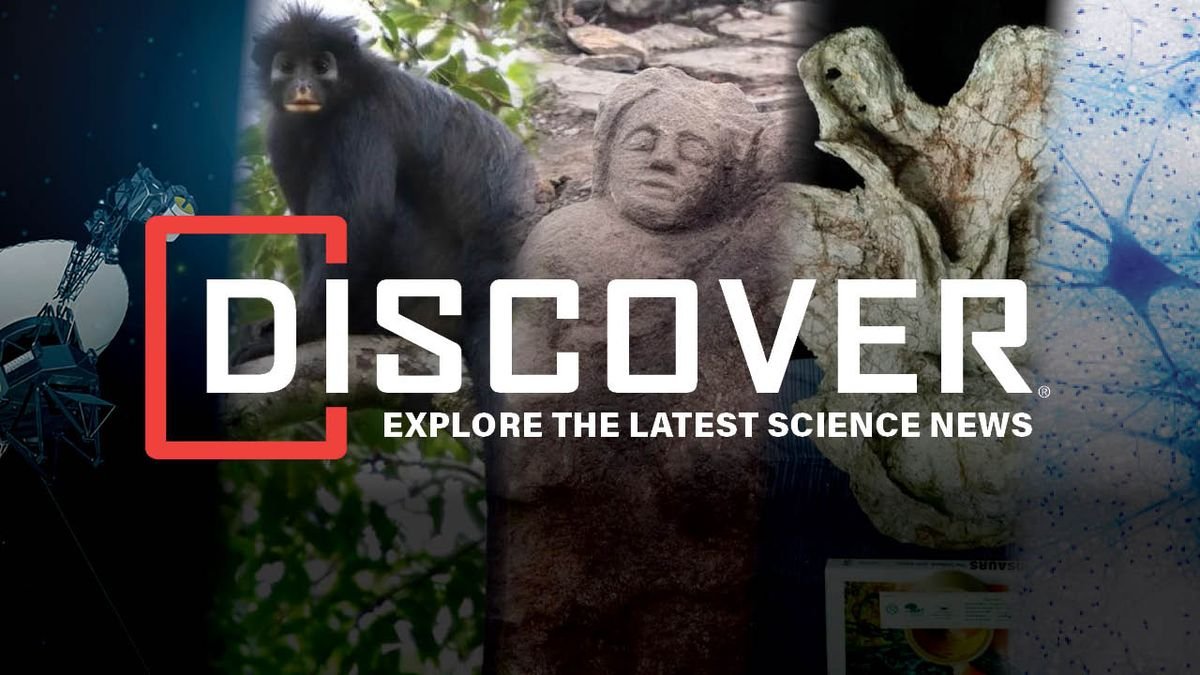
This week’s stories, from July 11 to July 17, 2026, include how long COVID may injure the brain’s dopamine system, the first close-up images of Shackleton’s last ship, a Roman guardian hidden near Hadrian’s Wall, a new species of monkey identified in the Congo, when Voyager 1 will hit one light-day from Earth, and a strange hollow fossil that lead to a dinosaur discovery.
1. Long COVID May Affect Motivation and Memory by Injuring the Brain’s Dopamine System

Neurons under the microscope in the brain. (Image Credit: peterschreiber.media/Shutterstock)
A new study, led by researchers at the Centre for Addiction and Mental Health in Toronto, provides some of the most direct evidence yet that long COVID affects the brain’s dopamine system, building on earlier work from the same team that had found inflammation in these same regions.
Read More: Long COVID May Affect Motivation and Memory by Injuring the Brain’s Dopamine System
2. First Close-Up Images of Quest, Ernest Shackleton’s Last Ship, Reveal Ghost Nets Covering the Wreck
A dive produced the first close-up images of Quest, showing a wreck 64 years after it sank. Its bow, deck sections, and several portholes remain visible, along with a fallen mast, damaged areas, abandoned fishing nets, and marine life growing across the ship.
Read More: First Close-Up Images of Quest, Ernest Shackleton’s Last Ship, Reveal Ghost Nets Covering the Wreck
3. Archaeologist Turns Over a Stone and Finds a Roman Guardian Hidden Near Hadrian’s Wall for 1,600 Years

Genius relief (Image Courtesy of The Vindolanda Trust)
On June 16, 2026, an archaeologist was kneeling inside the remains of a fourth-century barracks when an oddly rounded flagstone caught his attention. He loosened it, turned it over, and found a face staring back at him.
Carved into the sandstone was a Roman figure sealed beneath the barracks floor for roughly 16 centuries. It held a cornucopia in one hand and a shallow offering dish in the other, clues that would soon identify it as a Genius, a protective spirit associated with a household or place.
4. A New Orange-Faced Monkey Was Discovered Deep in the Congo — and It May Already Be Endangered
You’re a scientist working in the Congo Basin, one of the world’s largest rainforests, when a flash of orange catches your eye. You assume it’s nothing new, since finding a new mammal in a place where gorillas, chimpanzees, and dozens of monkey species have been studied for generations seems impossible.
Yet what you actually saw was an elusive monkey that has been photographed only in glimpses and known mostly by local communities as “the branch shaker.”
Read More: A New Orange-Faced Monkey Was Discovered Deep in the Congo — and It May Already Be Endangered
5. As Voyager 1 Nears a Historic Distance, NASA Continues Shutting Down Instruments
According to NASA, Voyager 1 is traveling at about 38,026.79 mph relative to the sun, making it the first human-made object to leave our Solar System and enter interstellar space. Though it’s been traveling at high speeds for about 50 years, the craft has not yet hit one light-day — the distance light travels in 24 hours — away from Earth.
However, NASA experts have officially calculated exactly when Voyager 1 will reach one light-day, and it’s closer than you think. On Nov. 18, 2026, at 2:16:07 a.m. PST, the craft will officially reach one light-day if all goes to plan.
Read More: As Voyager 1 Nears a Historic Distance, NASA Continues Shutting Down Instruments
6. New Long-Necked Dinosaur Discovered in Thailand Thanks to Y-Shaped Fossil Filled With Hollow Cavities
A uniquely shaped bone has revealed that a certain long-necked dinosaur used to roam across Thailand. This dinosaur, Uragasaurus kalasinensis, belongs to a family of sauropods known as Mamenchisauridae; fossils from this group have rarely been unearthed outside of China, but the discovery of U. kalasinensis based on a single vertebra from northeastern Thailand shows that these Jurassic-era dinos may have been more widespread than initially believed.