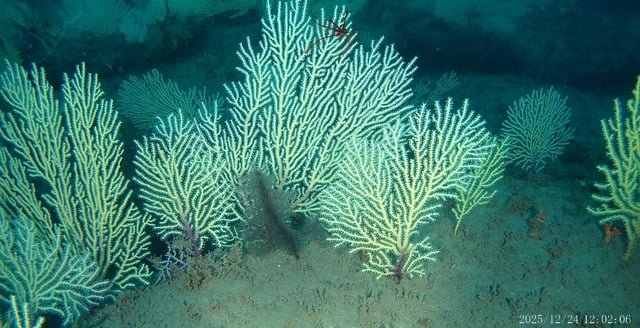
Long-lost coral reefs rediscovered off the coast of Africa
 |
This marine ecosystem in the Gulf of Guinea shows the resilience of coral reefs against climate change submitted by /u/scientificamerican |
| |
This marine ecosystem in the Gulf of Guinea shows the resilience of coral reefs against climate change submitted by /u/scientificamerican |
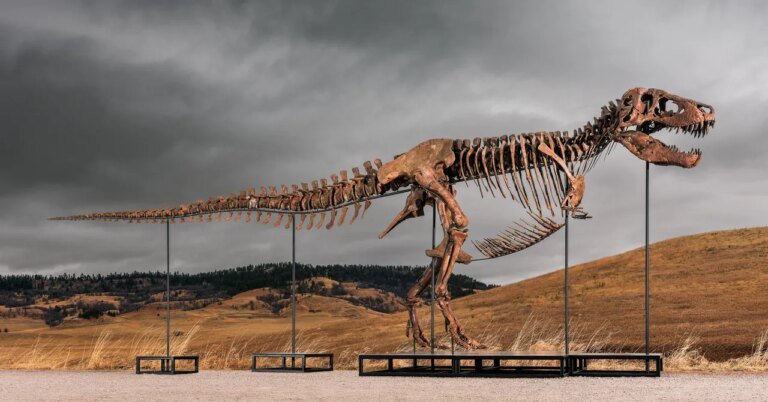
Forget the sale of the century. The auction house Sotheby’s is gearing up for the sale of the epoch. On July 14 it will open live bidding on assorted fossils, but the pièce de résistance is lot 20, a rare 67-million-year-old Tyrannosaurus rex skeleton. The specimen—dubbed Gus—is billed as one of the largest, most complete T….
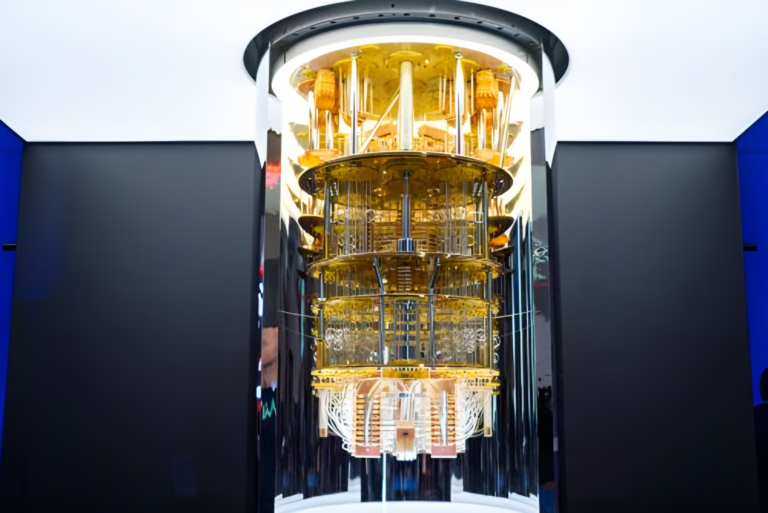
The European Space Agency installed its first quantum computer last week at its ESRIN satellite data center outside Rome — a six-qubit silicon machine from Irish startup Equal1 that fits in a standard server rack, runs on about 1.6 kilowatts of power, and cools itself without a dilution refrigerator, according to the ESA’s official announcement….

Are Milky Way’s coldest stars actually alien megastructures? New study explores Some of the coldest objects currently listed as stars in the Milky Way may not be stars at all. A new study by astrophysicist Amirnezam Amiri from the University of Arkansas suggests that these extremely cold objects could instead be giant energy-harvesting structures built…

The use of nicotine pouches is increasing among teenagers and young adults in the U.S. As researchers who study nicotine use among young people and develop strategies to prevent it, we worry these discreet products might be driving a new public health crisis. It may be that more and more teens are becoming addicted to…

Making a sequel to Ridley Scott’s 1979 classic “Alien” should have been a disaster. This was a movie that defined a whole new sub-genre of outer-space horror, a perfectly structured scarefest that also introduced one of cinema’s greatest-ever monsters to the world. Luckily, James Cameron — then one of Hollywood’s hottest properties off the back…
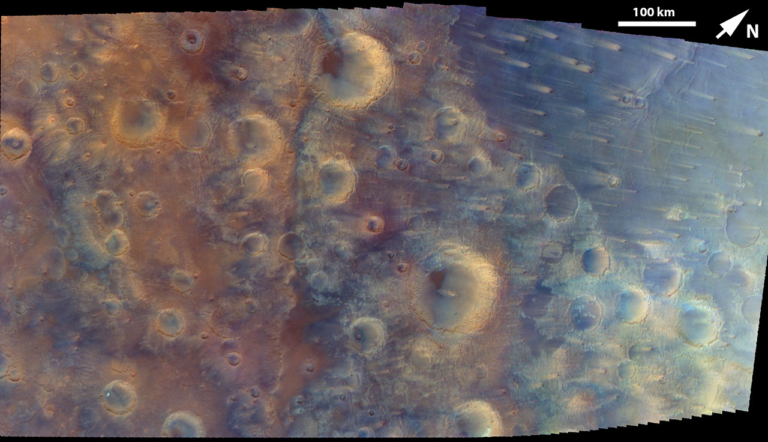
Captured by the multispectral imager instrument on NASA’s Psyche mission, this is an enhanced-color mosaic created from four individual images acquired on May 15, 2026, during the spacecraft’s flyby of Mars. Psyche was traveling from right to left (northeast to southwest on Mars) during the six minutes that it took to acquire the images for this…