Memory Price Surge Sweeps Smartphone Market: Flagship Prices Jump Over 1,000 Yuan as AI ‘Hogs Capacity’ — BigGo Finance
In the summer of 2026, the smartphone industry is experiencing a “wave of price-hike pains” transmitted from the upstream supply chain. From tentative price adjustments on entry-level and mid-range models earlier this year, to Android flagships and foldable phones universally breaching the 1,000-yuan markup threshold by July, the supply-demand imbalance in memory chips has become the core variable roiling the end market. According to a TrendForce survey, DRAM contract prices are projected to rise 13% to 18% quarter-over-quarter in the third quarter of 2026, while NAND Flash contract prices will climb 10% to 15% sequentially. Under the siphoning effect of AI servers on High Bandwidth Memory (HBM), the three major memory manufacturers—Samsung, SK Hynix, and Micron—continue to squeeze consumer-grade capacity, and cost pressures for smartphone makers are now being fully unleashed.
The intensity of this price surge far exceeds previous cycles. According to reports from Jiemian News and multiple media outlets, the top-tier configuration of vivo’s iQOO 15 standard edition has seen a cumulative price increase of 1,500 yuan compared to its launch price; the entire OnePlus 15 series has been uniformly raised by 1,100 yuan; the starting price of the OPPO Find N6 foldable has jumped 1,000 yuan from the previous generation to 9,999 yuan, with higher configurations crossing the 10,000-yuan threshold; and the Honor Magic V6 foldable’s base model has likewise been raised by 1,000 yuan. Even Apple, which had held its ground, has preemptively raised the price of the iPhone 17 Pro Max in the Japanese market, and rumors about a starting price increase for the iPhone 18 Pro Max continue to swirl.
| Brand / Model | Price Adjustment | Adjusted Price |
|---|---|---|
| iQOO 15 Standard (16GB+1TB top config) | Cumulative +1,500 yuan vs. launch price | — |
| OnePlus 15 (all models) | +1,100 yuan | 16GB+1TB: from 5,399 yuan to 6,499 yuan |
| OPPO Find N6 (12GB+256GB base) | +1,000 yuan vs. previous gen | 9,999 yuan, top config 11,999 yuan |
| Honor Magic V6 (base model) | +1,000 yuan | Entire lineup 8,999 to 11,999 yuan |
| iPhone 17 Pro Max (Japan, max storage) | +¥25,000 (approximately $152) | From ¥329,800 to ¥354,800 (approximately $2,164) |
| iPhone 17 (Japan, base model) | +¥13,000 (approximately $79) | From ¥129,800 to ¥142,800 (approximately $871) |
Note: The basis for price increases varies; iQOO 15 reflects the cumulative increase from its launch price, while OPPO and Honor compare starting prices against the previous generation. Apple’s price adjustments took effect on July 18 and apply only to the Japanese market.
Against a backdrop of waning effects from China’s national subsidy policies and a wait-and-see attitude among consumers, China’s smartphone shipments in the second quarter have now declined year-over-year for five consecutive quarters. An industry shakeout triggered by memory chips is accelerating.
Cost Crunch: From ‘Trigger’ to ‘Accelerator’
Memory chips are undoubtedly the “trigger” thrust into the spotlight for the collective price hikes by smartphone makers. In the bill-of-materials cost structure of a flagship phone, DRAM and flash storage hold a pivotal position. According to J.P. Morgan analysis, by 2027, the cost share of memory (including RAM and flash storage) in an Apple iPhone could soar from the current 10% to 45%. This means two small chips will consume nearly half of the entire device’s materials budget.
Real-world data is even more staggering. According to TrendForce and industry estimates, in the first quarter of 2026, the cost of 12GB of smartphone memory had already surged from 200 yuan to 600 yuan (approximately $89), while the unit price of 1TB flash storage tripled. The memory component alone is enough to devour the vast majority of profit margins on low-end and mid-range models. Nabila Popal, Senior Research Director for Global Consumer Devices at IDC, noted that memory costs have risen nearly 300% compared to the same period last year, accounting for over 65% of the total bill-of-materials cost in low-end models, making it increasingly difficult for manufacturers focused on entry-level products to survive.
However, pinning the price hikes entirely on memory chips would be unfair. Beneath the surface of soaring memory prices, the smartphone industry is digesting the bitter fruits left by years of price wars. The costs of core components such as displays, flagship processors, and image sensors have been climbing year by year. Coupled with the continuous increase in R&D investment for AI smartphones, the overall manufacturing cost of a device was already on a slow upward trajectory. The shortage and price surge in memory chips have simply provided the industry with an opportunity to break free from a race-to-the-bottom on pricing and reshape the value system. As industry observers note, brands moving upmarket and products commanding a premium has long been an industry consensus in a stock-competition environment; the memory price surge has merely accelerated this process.
Another easily overlooked fact is that this round of price increases is not a one-off event but the result of waves of adjustments layered on top of each other since March.
Structural Imbalance: AI ‘Steals’ Smartphone Capacity
To understand the ferocity of this price surge, one must delve into the cyclical logic of the memory industry. Unlike previous regular fluctuations driven by consumer electronics demand, the core variable in this cycle is AI.
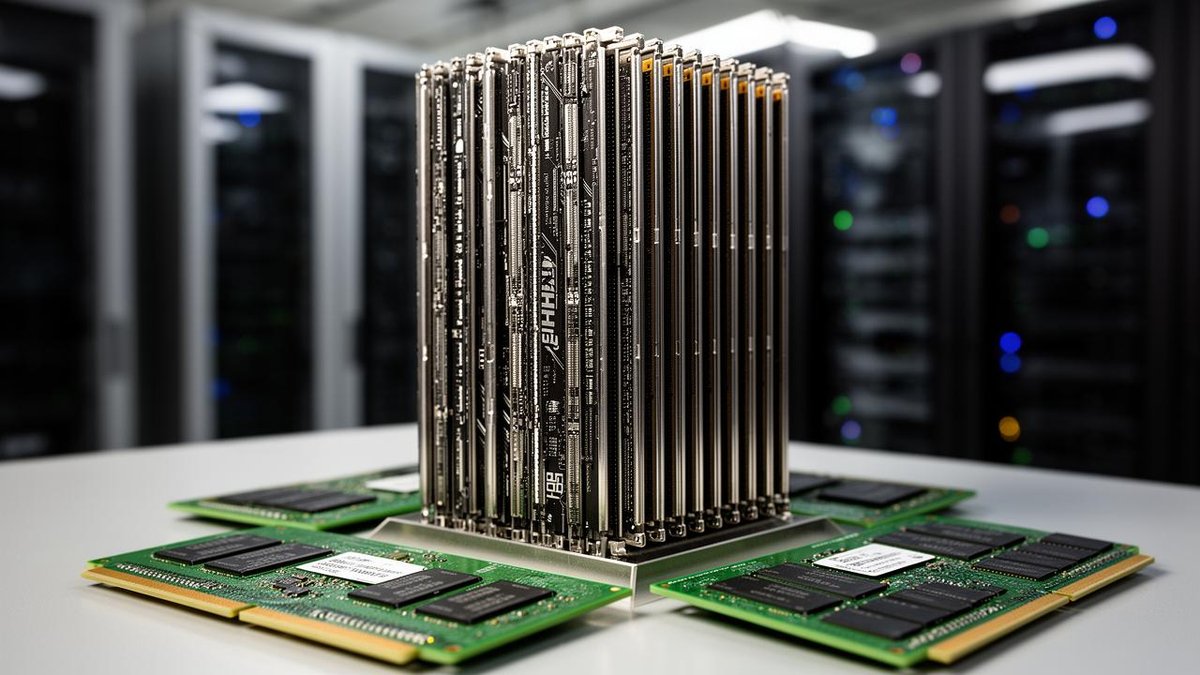
With the explosive growth of large language models and AI servers, High Bandwidth Memory (HBM) has become the most lucrative “golden goose” in the eyes of memory manufacturers. SK Hynix’s HBM production capacity for 2026 is already completely sold out, and Micron’s HBM supply is almost entirely locked in through forward agreements. In pursuit of higher profits, the three major overseas leaders—Samsung, SK Hynix, and Micron—have diverted 70% or even 90% of their advanced process capacity to high-end products like HBM, actively compressing the general capacity allocation for standard DDR5 and consumer-grade NAND Flash.
This “crowding-out effect” has directly led to a continuously widening supply-demand gap in consumer-grade memory. Looking at the actual trajectory of contract prices, while the increases remain fierce, the pace is shifting from explosive to a high-level climb.
| Period | DRAM Contract Price | NAND Flash Contract Price |
|---|---|---|
| Q1 2026 (actual) | QoQ increase over 90% | QoQ increase of 55% to 90% |
| Q3 2026 (estimated) | QoQ increase of 13% to 18% | QoQ increase of 10% to 15% |
Note: Q1 data is from TrendForce; Q3 data is from TrendForce’s latest contract price survey released on July 3. The firm notes that the moderation in Q3 increases is mainly because consumer-end customers in PCs and smartphones are approaching their price tolerance limits, coupled with a higher base of comparison; however, the DRAM market remains in a state of “extreme shortage.”
Reports from institutions like Goldman Sachs suggest that the global supply-demand gap for DRAM and NAND Flash in 2026 has reached its widest point since 2011, and the supply tightness could persist into 2027 or even longer. Although Chinese memory makers CXMT and YMTC are accelerating their catch-up—CXMT’s first-quarter revenue was approximately 50.8 billion yuan (approximately $7.5 billion), a year-over-year increase of over 700%, while YMTC’s first-quarter revenue exceeded 20 billion yuan (approximately $3.0 billion), doubling year-over-year—the combined global market share of the two firms remains below 20%. New capacity additions are expected to gradually come online only from the second half of 2026 into 2027. In the short term, pricing power remains firmly in the hands of the three overseas giants.
It is worth noting that Samsung Electronics is planning to raise the average selling price of DRAM products again in the third quarter of this year, targeting an increase of up to 20%, which would be its third round of price hikes this year. From a quarterly surge of over 90% in Q1 to subsequent rounds of increases, the upward trend in memory prices is now very clearly established.
Market Pain: Sales Divergence and Consumer Psychology
Cost pressures are rapidly transmitting to the end market, triggering intense polarization. IDC data shows that global smartphone shipments in the second quarter of 2026 totaled 277.5 million units, a year-over-year decline of 6.7%, marking two consecutive quarters of decline. In the Chinese market, second-quarter shipments were approximately 66.01 million units, down 4.3% year-over-year, marking five consecutive quarters of decline.
| Market | Q2 2026 Shipments | YoY Change | Consecutive Quarters of YoY Decline |
|---|---|---|---|
| Global | 277.5 million units | -6.7% | 2 |
| China | 66.01 million units | -4.3% | 5 |
The weakness on the demand side was particularly evident during promotional periods: according to IDC, during this year’s “618” shopping festival, overall smartphone sales in China fell by nearly 15% compared to the same period last year.
A noteworthy phenomenon is that consumers buying ahead of anticipated future price increases have actually boosted short-term sales for certain high-end brands. IDC notes that Apple and Samsung have been the only two vendors among the global top five to achieve shipment growth for two consecutive quarters. Apple’s second-quarter shipments hit a record high for the period, primarily driven by strong demand for the iPhone 17 series and precautionary buying by users; its full-year market share could reach a historic high of 22%. Francisco Jeronimo, Vice President for Global Client Devices at IDC, further pointed out that Samsung and Apple expanded their market share by 3.2 and 3.8 percentage points respectively in Q2, with the key to their ability to widen the gap being that they locked in memory supply in advance, and memory costs account for a relatively low proportion of their overall bill of materials.
The situation for Chinese manufacturers is clearly diverging. Kiranjeet Kaur, Associate Research Director for Global Consumer Devices at IDC, stated that the rankings of Xiaomi, OPPO, and vivo remained unchanged from the previous quarter, but the decline among Chinese manufacturers has accelerated, with most leading vendors experiencing double-digit year-over-year drops. Among them, Xiaomi saw the largest decline among the top players, but IDC believes this is the result of its deliberate reduction of low-end shipments and a strategic shift toward higher-priced market segments. Huawei is the exception, with global shipments growing 20.9% year-over-year. In the Chinese market, both Huawei and Apple achieved year-over-year shipment growth of around 20% in Q2—against a backdrop of widespread price increases in the Android camp, the two not only refrained from raising prices but instead launched targeted promotions.
In contrast, manufacturers reliant on mid-range and low-end models find themselves in a dilemma. Nabila Popal analyzed that the key issue is not just cost control, but how to get consumers to accept higher-priced products from traditionally low-end brands. When the price gap narrows and installment plans become convenient, consumers often tend to opt directly for premium brands. As the low-cost inventory materials that manufacturers procured earlier are gradually depleted, cost pressures will be released in a concentrated manner in the second half of 2026. IDC expects that the year-over-year decline in China’s smartphone market shipments could widen to around 20% in the second half of the year.
For consumers, price increases come in more forms than just direct markups. In addition to “explicit hikes” like the uniform 1,100-yuan increase across the OnePlus 15 series or the 1,500-yuan increase on the top-tier iQOO 15, manufacturers also implement “stealth price increases” by adjusting storage configuration combinations. For example, changing the base configuration from 8GB+256GB to 8GB+128GB, or making the price increase for large-memory versions significantly steeper than for base versions, guiding users to pay for higher specifications.
Cycle Debate: Short-Term Pain or Long-Term Ache?
Faced with the surging tide of price hikes, the market’s biggest concern is: is this a short-term rebound after a prolonged slump, or the beginning of a new long-term cycle?
Historically, the memory industry’s cycle of “three years up, three years down” has always existed. But the structural demand shift brought by AI is rewriting this logic. As long as the demand for computing power from AI servers maintains exponential growth, the strategy of memory makers locking capacity into HBM is unlikely to change easily, and the tight supply-demand balance for consumer-grade memory could last longer than in any previous cycle.
TrendForce’s monthly NAND Flash update released on July 21 provides a more specific timeline for this debate. The firm estimates that, driven by AI demand and limited capacity expansion, the NAND Flash market will exhibit a supply shortfall of 4% to 5% for the full year of 2026, with the shortage persisting. However, as process node migrations bring increased bit output, the supply-demand balance is expected to turn positive in the second half of 2027, at which point the supply tightness will gradually ease. The same report estimates that global smartphone production will decline 15% to 20% year-over-year in 2026; while AI flagship models will support high-end demand in 2027, production will decline again amid limited end-market recovery and rising consumer price sensitivity, though the rate of decline will moderate.
It is worth noting that TrendForce also highlights a structure that is often overlooked: while servers now account for over 40% of NAND Flash bit demand, smartphones and notebooks combined still account for nearly 40%—the consumer market has not been marginalized by AI; it remains a key variable determining the overall tightness of supply and demand. This also means that if end demand further contracts due to high prices, the backlash will likewise transmit back upstream.
However, the market’s self-correcting mechanisms will not completely fail. On one hand, the recovery in the consumer electronics market remains relatively weak, and elevated memory prices will eventually suppress downstream demand. On the other hand, once the capacity ramp-up at CXMT and YMTC is released in a concentrated manner next year or the year after, it could very well become the decisive factor that changes the supply-demand landscape.
For the smartphone industry, short-term pain is unavoidable, and the pricing of new models launched in the next six months to a year will likely shift upward across the board. IDC also believes there is no need for excessive pessimism—consumer demand for upgrades has not disappeared, it has merely been delayed. The market is expected to see a recovery when the next replacement cycle arrives around 2028 to 2029. But in the medium to long term, costs forcing manufacturers to abandon a race to the bottom on pricing and instead focus on product experience and brand value may not be a bad thing for the healthy development of the industry. For ordinary consumers, as the adage “buy early, enjoy early; buy late, enjoy discounts” still holds true, unless there is an urgent need to replace a phone, holding onto cash and waiting, or opting for a previous-generation flagship or an older model on promotion, is often the more cost-effective choice. As the era of low prices gradually recedes, the market is forcing everyone to ponder: for your next phone, what kind of experience is truly worth paying for?