NASA Dragonfly rotorcraft enters integration phase ahead of Titan mission
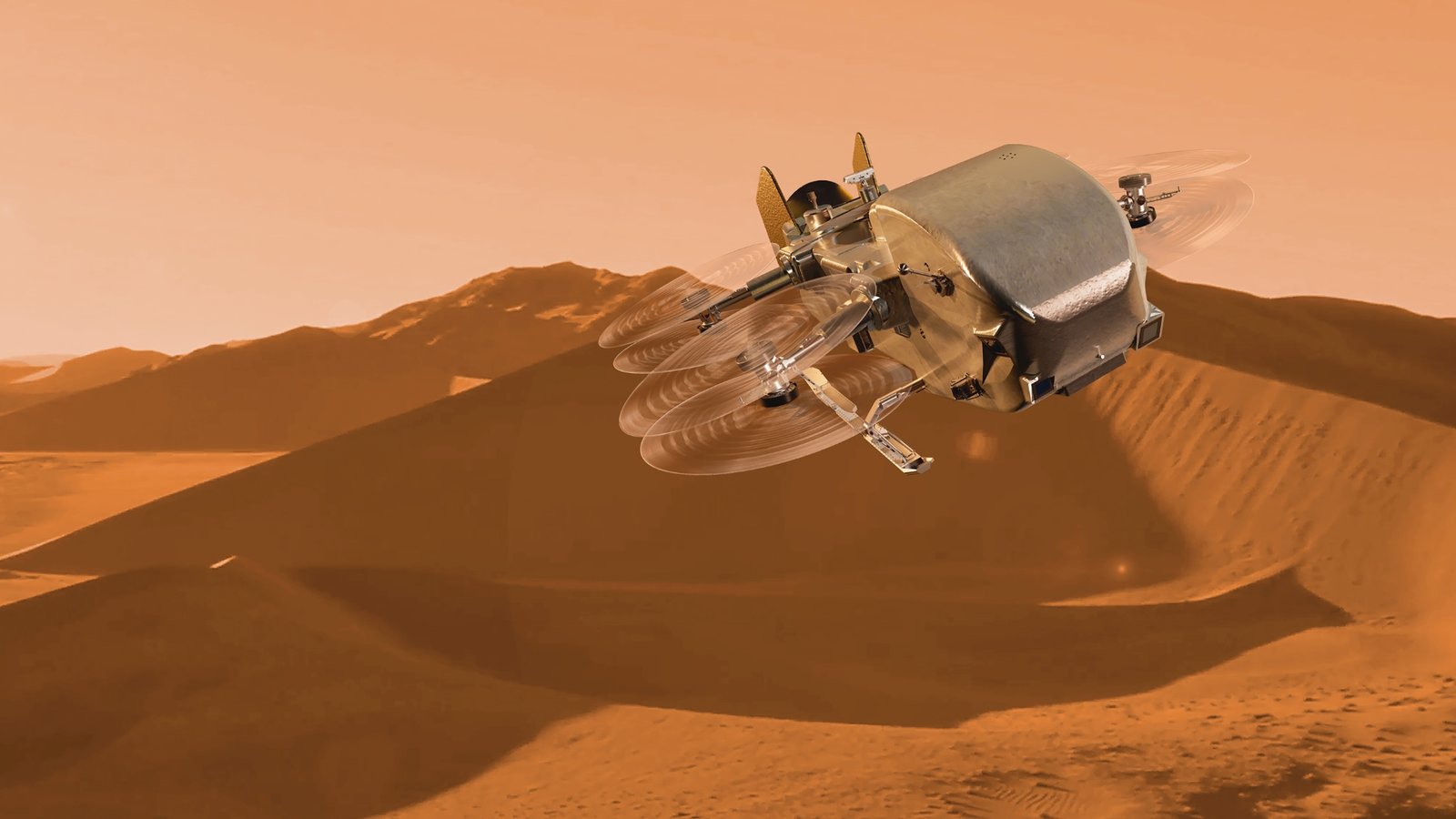
The Johns Hopkins Applied Physics Laboratory has completed frame qualification testing for the NASA Dragonfly rotorcraft. The milestone moves the mission closer to its scheduled July 2028 launch.
When it arrives at Saturn’s largest moon in 2034, the rotorcraft will build upon the legacy of the European Space Agency Huygens probe, which landed on Titan in 2005 and sent back data from the surface for 72 minutes. Titan was fourth planetary body explored by a surface vehicle, following the moon, Venus, and Mars.

Western University planetary scientist Dr. Catherine Neish serves as a co-investigator on the mission, anchoring the Canadian contribution to the project. The octocopter will search for prebiotic chemistry and complex organic molecules in Titan’s equatorial region.
Interestingly, the current Science Advisor to the President of the Canadian Space Agency, John Moores of York University, was a contributor to the 2005 Huygens mission.
Dragonfly isn’t a mission to detect life — it’s a mission to investigate the chemistry that came before biology here on Earth.
Zibi Turtle, Dragonfly Principal Investigator, Planetary Scientist at Johns Hopkins Applied Physics Laboratory
The spacecraft is currently in its integration and test phase after seven years of development. Engineers have validated the lightweight aluminum honeycomb structure for launch and flight loads. This material was specifically chosen to keep the mass low while preventing damage to the landing skids if the craft touches down on rocky terrain.

Operating in a dense atmosphere with temperatures of minus 184 C requires severe thermal management. The team is currently installing 850 custom-made foam tiles that fit together like a three-dimensional puzzle to insulate the vehicle.
“We actually take the heat that is rejected from the power source and we use fans to blow it throughout the entire lander to keep it warm,” said Simi Berman, thermomechanical subsystem lead at the laboratory.

If the internal systems run too hot, the lander can vent heat using mechanical openings that function similarly to the zippers on a winter parka. The thermal design will undergo environmental testing early next year inside a custom vacuum chamber built to simulate Titan’s atmospheric pressure and cryogenic temperatures.
Because real-time manual control is impossible due to communication delays, Dragonfly will use onboard cameras to scout landing sites and fly autonomously. The rotorcraft will conduct flights, collect samples using a cryogenic vacuum drill, and then recharge its battery for two days before moving to a new location during its planned 40-month surface exploration mission.