NASA Picks Starlink to Stream Artemis III Docking Live: Government Relay Era Ends
On July 16, 2026, NASA announced it will install two SpaceX Starlink mini laser terminals on the exterior of the Orion spacecraft ahead of the Artemis III mission, targeting late 2027. The terminals will relay 4K imagery and live video from Orion directly to Mission Control at Johnson Space Center in Houston — the first time a crewed NASA spacecraft will stream live footage of a ship-to-ship docking in orbit, in real time, in high definition. For a mission redesigned in February 2026 to test rendezvous and docking with two commercial lunar landers in low Earth orbit rather than attempt an immediate Moon landing, the communications hardware is not a footnote — it is a preview of how NASA expects to cover every crewed mission that follows.
The announcement also marks something larger: the formal end of NASA’s four-decade reliance on its own government-owned relay satellites for crewed mission communications. As NASA’s Communications Services Project page confirms, the agency is gradually retiring its Tracking and Data Relay Satellite (TDRS) fleet and transitioning future missions to commercial relay providers, starting in the early 2030s.
Why Lasers Beat Radio for Live Docking Coverage
Optical laser communications — also called free-space optical (FSO) communications — transmit data using invisible infrared light rather than traditional radio-frequency (RF) signals constrained by spectrum allocation and bandwidth ceilings. The practical result is far higher data throughput in a single downlink pass. Where Artemis II’s own optical terminal transmitted a total of 484 gigabytes of high-definition video, flight procedures, and engineering data across the entire mission, the Artemis III Starlink terminals are designed to deliver continuous 4K live streaming throughout the active docking sequence.
The architectural difference between the two approaches is significant. Artemis II’s Orion Artemis II Optical Communications System (O2O), developed with MIT Lincoln Laboratory, was a direct-to-ground terminal: it transmitted data to Earth only when the spacecraft had a clear line of sight to a ground station. That constraint made it unsuitable for continuous live coverage during dynamic orbital maneuvers. The Starlink mini laser terminals take a different path entirely. Rather than aiming at the ground, they communicate with the Starlink inter-satellite laser network — the mesh of more than 25,000 laser crosslinks already operating on-orbit to interconnect SpaceX’s constellation. Data hops from Orion to the nearest Starlink satellite, then through the mesh, and eventually down to Earth through a Starlink satellite with a ground-facing link — all without requiring a ground station anywhere in Orion’s line of sight.
That mesh carries a capacity Artemis II’s O2O could not approach. SpaceX engineer Travis Brashears has described the Starlink inter-satellite laser system as capable of delivering 42 petabytes of data daily across the constellation, with link uptime exceeding 99%. Individual inter-satellite laser links operate at up to 100 Gbps. Even a fraction of that capacity, applied to Orion’s feed, is more than sufficient for uninterrupted 4K streaming during a two-week LEO mission.
One technical question NASA has not yet answered publicly: exactly how the data will travel from the Starlink mesh to Houston. The standard Starlink commercial relay path routes data through SpaceX’s ground station network to customers — but the specific downlink architecture for Artemis III’s Mission Control feed has not been described in NASA’s public documentation. That gap will need to be resolved before the mission.
What Prompted the Upgrade: A Mission Redesigned Around Docking
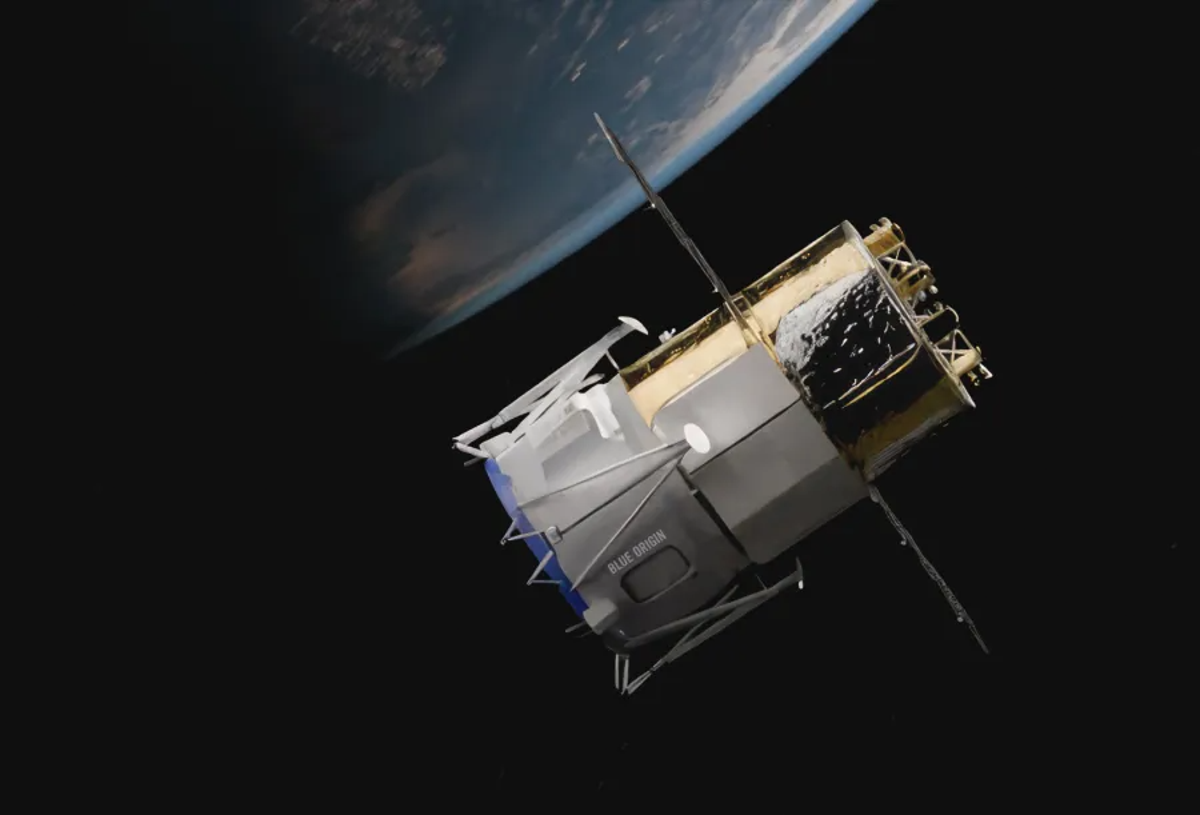
The communications hardware decision is inseparable from how Artemis III itself changed. In February 2026, NASA Administrator Jared Isaacman announced a fundamental restructuring of the Artemis architecture: Artemis III, originally planned as the first crewed lunar landing since 1972, was converted into a low Earth orbit demonstration flight at approximately 463 kilometers altitude. The four-person crew — Commander Randy Bresnik, Pilot Luca Parmitano, and Mission Specialists Frank Rubio and Andre Douglas — will spend roughly two weeks in LEO executing rendezvous and docking operations with test articles of both commercial human landing systems: SpaceX’s Starship HLS and Blue Origin’s Blue Moon lander. The first crewed Moon landing under Artemis is now assigned to Artemis IV, targeted no earlier than 2028.
That mission redesign created a communications challenge that existing infrastructure was not well positioned to handle. NASA’s Tracking and Data Relay Satellite (TDRS) system — a constellation of government-owned relay satellites in geostationary orbit that has served crewed missions since the Space Shuttle era — was engineered for missions at far greater distances from Earth and operates under bandwidth constraints increasingly strained by modern mission requirements. The NASA TDRS mission overview confirms the agency has been planning this commercial transition since 2022. The LEO docking campaign is a data-intensive event: three separate spacecraft must meet at a precise location in orbit, execute approach maneuvers, and complete docking sequences, all while generating the telemetry and video streams that mission controllers depend on for safety oversight. High-bandwidth commercial relay does what TDRS cannot provide at this distance with this data volume.
NASA was explicit that the Starlink terminals will not require any modification to Orion’s primary structure. The units mount to the spacecraft’s exterior using existing power provisions and attachment points — a hardware integration with a smaller footprint than a custom bespoke terminal would require.
Starlink’s Path to Orion: A Track Record Built in Stages
The Artemis III contract did not arrive without precedent. SpaceX demonstrated Starlink laser communications capabilities for NASA as part of a funded Space Act Agreement during the Fram2 mission in 2025 — the first crewed mission to achieve polar orbit — under which the company proved out inter-satellite relay for human spaceflight. Before that, SpaceX had been routing real-time video and telemetry from Starship’s own flight test campaign through the Starlink constellation, providing continuous data through plasma re-entry — one of the most communications-hostile phases of any flight.
The Artemis III award was processed through NASA’s Space Communications and Navigation (SCaN) Communications Services Project (CSP), which distributed $278.5 million across six American companies in April 2022 to accelerate commercial satellite relay for low Earth orbit missions. SpaceX received $69.95 million of that total to demonstrate high-rate science data delivery over optical links using the Starlink network. The Artemis III terminal contract is the direct downstream payoff of that earlier investment — the moment when a funded demonstration transitions into an operational crewed-mission application.
When One Company Holds the Lander and the Radio
The Starlink terminal contract arrives with an institutional context that deserves explicit acknowledgment. SpaceX now simultaneously holds: the Human Landing System contract for both Artemis III and Artemis IV (Starship HLS, valued at approximately $4.3 billion with roughly 6% cost growth as of March 2026, per NASA OIG report IG-26-004); NASA’s sole certified crewed transportation contract to the International Space Station (Boeing’s Starliner remains uncertified following its 2024 flight test anomalies, per NASA OIG IG-26-011, June 2026); and now the primary communications relay for Orion’s crewed missions in low Earth orbit.
That concentration is documented at the level of government oversight. The American Foreign Policy Council noted in October 2025 that US space strategy cannot rely on SpaceX alone, citing the company’s control of more than 90% of US satellite launches and its role in supporting nearly 50 military commands through Starlink. Clayton Swope, deputy director of the Aerospace Security Project at the Center for Strategic and International Studies, wrote in April 2026 that the revised Artemis architecture does not address the risk that many have been discussing for years — whether the human landing systems will be ready on time — and that the new plan introduces its own set of schedule and technical risks.
None of this invalidates the Starlink terminal contract, which is technically sound and grounded in a real performance record. But it is the context in which NASA is making this decision — and the institutional risk the agency is accumulating as it hands successive crewed-mission infrastructure roles to a single commercial entity that filed for its IPO in 2026.
NASA Buys, No Longer Builds: What This Contract Signals
The TDRS constellation — the government-owned relay network that served every crewed mission from the Space Shuttle through Artemis I — has been in planned phase-out since 2022, when NASA announced it would transition crewed and robotic missions to commercial relay providers by the early 2030s. The $289 million price tag of the last individually procured TDRS satellite was part of the case for change.
The Starlink terminals on Orion are an early and visible expression of that transition touching a crewed vehicle. Unlike Artemis II’s O2O terminal — a custom government-developed system requiring its own dedicated ground station infrastructure — the Starlink mini laser terminals are hardware derived directly from the commercial crosslink system already flying on tens of thousands of SpaceX satellites in operational service. NASA is not commissioning new technology. It is adapting commercial off-the-shelf hardware for a crewed spaceflight context.
The logic mirrors what happened in commercial cargo and crew transportation: NASA funded development, industry demonstrated capability, and contracts for operational services followed. The CSP program replicated that model for communications, and the Artemis III terminal contract is the first crewed-mission result. If the demonstration goes as planned during Artemis III, continuous commercial optical relay will likely be the default architecture for every subsequent NASA crewed mission — from Artemis IV’s first lunar landing to any eventual deep-space destination.
What Viewers Will Actually See
From a public engagement standpoint, the practical consequence of the Starlink terminals is that when Orion maneuvers toward a Starship HLS or Blue Moon docking port in 463-kilometer orbit, viewers watching NASA’s live feed will see it unfold in 4K, in real time, from aboard the spacecraft. That has not happened before. Previous ship-to-ship docking coverage in the ISS era has come largely from external cameras with limited frame rates and resolution, or from cameras mounted on whichever vehicle was stationary. The Starlink relay changes the equation: Orion carries its own high-bandwidth downlink, and the docking sequence becomes something closer to live broadcast television than archived mission footage.
For a mission that has already faced sustained public skepticism about Artemis’s pace and direction — including a February 2026 architecture change that removed the Moon landing from its mission objectives — the communications hardware may prove to be one of its most concrete public contributions: a two-week demonstration that commercial space infrastructure can deliver the kind of live, uninterrupted coverage of human spaceflight that once required a broadcast network’s resources. Whether it also validates NASA’s decision to concentrate crewed-mission infrastructure in a single commercial provider is a question whose answer will take longer to arrive.
Frequently Asked Questions
How is Artemis III’s Starlink communications system different from what Artemis II used?
Artemis II’s optical terminal (O2O, developed with MIT Lincoln Laboratory) transmitted data directly to ground stations only when Orion had a clear line of sight to Earth — limiting its availability during orbital maneuvers. The Artemis III Starlink mini laser terminals connect to SpaceX’s inter-satellite laser mesh, which relays data between satellites without needing a ground station in the spacecraft’s line of sight. This enables continuous 4K live streaming during active docking operations rather than the batch transmission that characterized Artemis II’s data return.
Why did NASA stop building its own communications satellites for crewed missions?
NASA’s government-owned Tracking and Data Relay Satellite (TDRS) system — which has served crewed missions since the Space Shuttle era — was designed for missions at greater distances from Earth and operates under bandwidth limits not suited to high-data-rate LEO operations. In 2022, NASA announced it would phase out TDRS in favor of commercial relay providers, targeting a fully operational commercial model by the early 2030s. The $278.5 million Communications Services Project (CSP) seeded six commercial providers to develop and demonstrate alternative services, with SpaceX’s $69.95 million award now bearing its first crewed-mission fruit on Artemis III.
What does it mean that SpaceX now provides both Orion’s lander and its communications relay?
It means that for Artemis III, a single commercial company simultaneously holds the Human Landing System contract (Starship HLS), the sole certified crewed transportation to the ISS (Crew Dragon, following Boeing Starliner’s continuing certification struggles), and now the primary communications relay for Orion in low Earth orbit. The American Foreign Policy Council and NASA’s own Office of Inspector General have both flagged the risk of this degree of single-vendor concentration in US human spaceflight infrastructure. The Starlink terminal contract is technically sound, but it deepens a dependency that exists across NASA’s entire crewed mission portfolio.
Will the public be able to watch Artemis III’s docking maneuvers live?
NASA’s stated intent is to relay the 4K video feed from Orion’s Starlink terminals to Mission Control at Johnson Space Center and, from there, make it available publicly — consistent with NASA’s standard practice for crewed mission coverage. If the terminals perform as planned, viewers should be able to watch the Orion-to-Starship and Orion-to-Blue Moon docking sequences in real time, in 4K, from Orion’s perspective — a level of live crewed-docking coverage that has not been available from any previous NASA crewed mission.