NASA Searches Couch Cushions, Finds Another $600 Million for Moon Missions
Give credit where credit is due: Like a rolling stone, there’s no moss growing on NASA these days.
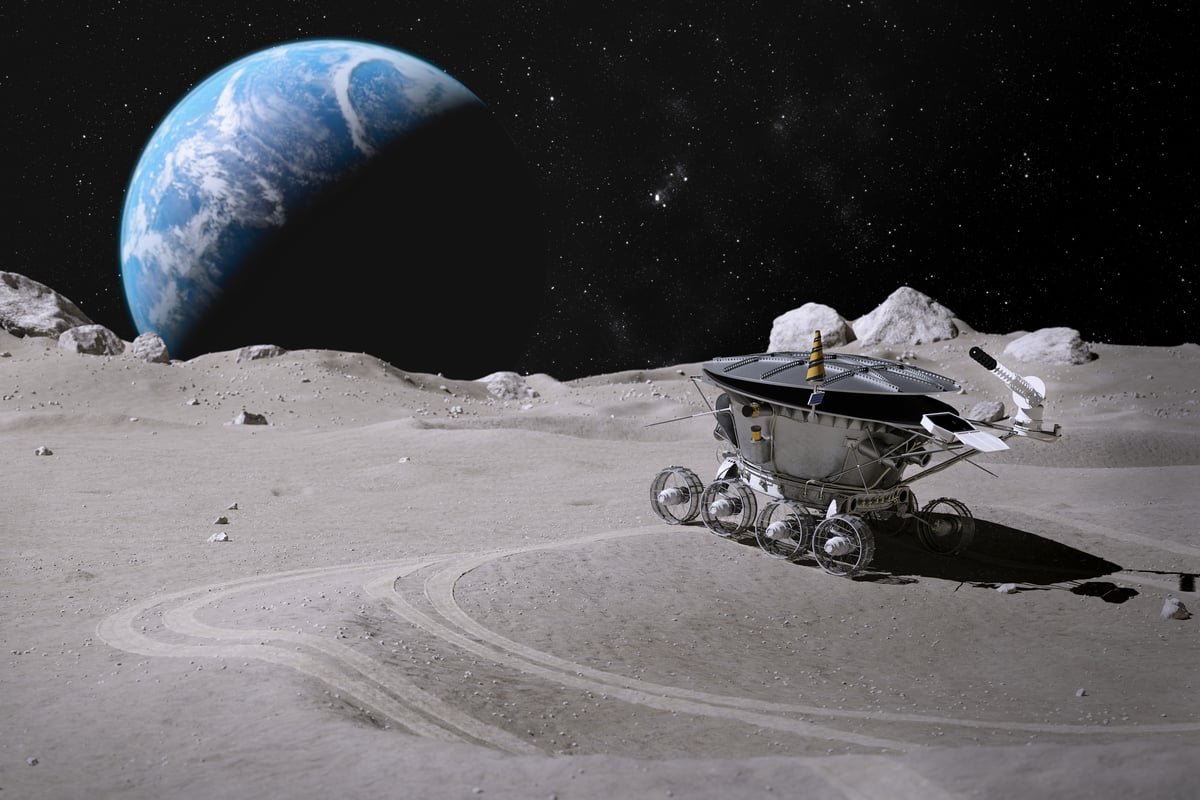
It was barely a month ago that NASA unveiled its latest plan for establishing a permanent human presence on the moon: a three-phase program for building a moon base by 2032, with the first phase alone comprising three separate moon-base missions.
Barely a month later, NASA is revising the plan — and finding more money to fund it.
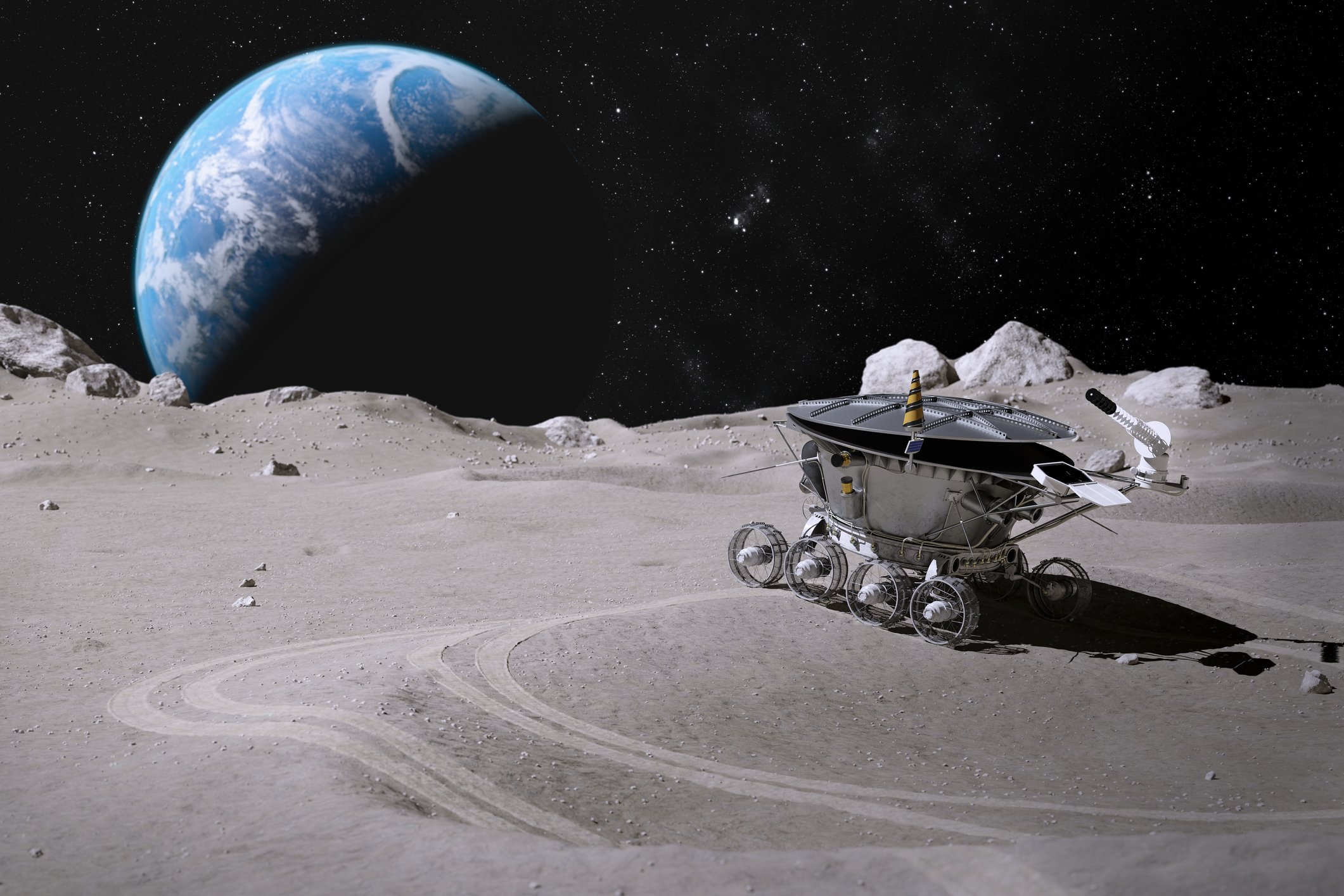
Image source: Getty Images.
$20 billion for a moon base
NASA said in June that it intends to eventually award $20 billion in contracts, but rolled out the project with just a few hundred million dollars’ worth of contract announcements to start. On June 30, however, the agency roughly doubled the amount of money on offer, announcing nearly $600 million in new lunar landing contracts for its space company partners.
Who are the winners?
Voyager Technologies (VOYG +2.34%) announced earlier this month that it has completed its acquisition of lunar-lander-and-rover builder Astrobotic for $300 million. And now we learn that Voyager will make its money back almost immediately. Leading off the list of new contract winners, NASA named Astrobotic the recipient of a $297.9 million contract to make two payload deliveries to the moon.
It’s the biggest of the three awards announced — and bigger than the other two combined. For $148.3 million, Intuitive Machines (LUNR +0.73%) will make a single payload delivery to the moon. For $144.2 million more, so will Firefly Aerospace (FLY +0.20%).
All four of the landers involved in these missions will carry identical payloads, including:
- Four cameras that make up a Stereo Cameras for Lunar Plume Surface Studies (SCALPSS) package to examine how landers stir up dust when landing on the moon.
- A Linear Energy Transfer Spectrometer (LETS) to measure radiation at each landing site.
- A Laser Retroreflector Array (LRA) that lunar orbiters can use to compute their position in orbit in the absence of radar and GPS.
All three of the contracts awarded fall within the ambit of NASA’s Commercial Lunar Payload Services (CLPS) program. All the contractors will also employ updated versions of the spacecraft they’ve successfully landed on the moon, iterating on and improving their designs, to accelerate the rate at which they can make reliable deliveries to get the moon base up and running.
What this means for investors
This is good news for NASA and its plans for a moon base. But what do these contracts mean for investors?
Despite winning significantly more money than the other companies, Voyager Technologies remains among the space stocks farthest away from profitability. Neither it nor Firefly Aerospace is expected to begin reporting consistent profits until 2029 at the earliest.

Today’s Change
(0.73%) $0.09
Current Price
$12.34
Key Data Points
Market Cap
Day’s Range
$11.90 – $12.91
52wk Range
$7.78 – $46.75
Volume
8M
Avg Vol
13.2M
Gross Margin
4.91%
Intuitive Machines is farthest along in this regard. With its first profit forecast to arrive in 2027 (and its first free cash flow in 2028), it’s probably the least “risky” of these three stocks for individual investors.
This isn’t to say that Voyager Technologies and Firefly Aerospace won’t end up doing even better than Intuitive Machines — just make sure you have the patience to wait longer for those two to prove their viability, and are prepared to accept the risk that those profits may not pan out.
Rich Smith has positions in Intuitive Machines. The Motley Fool has positions in and recommends Firefly Aerospace and Intuitive Machines. The Motley Fool recommends Voyager Technologies. The Motley Fool has a disclosure policy.