New technology trial to combat bridge strikes in Queensland
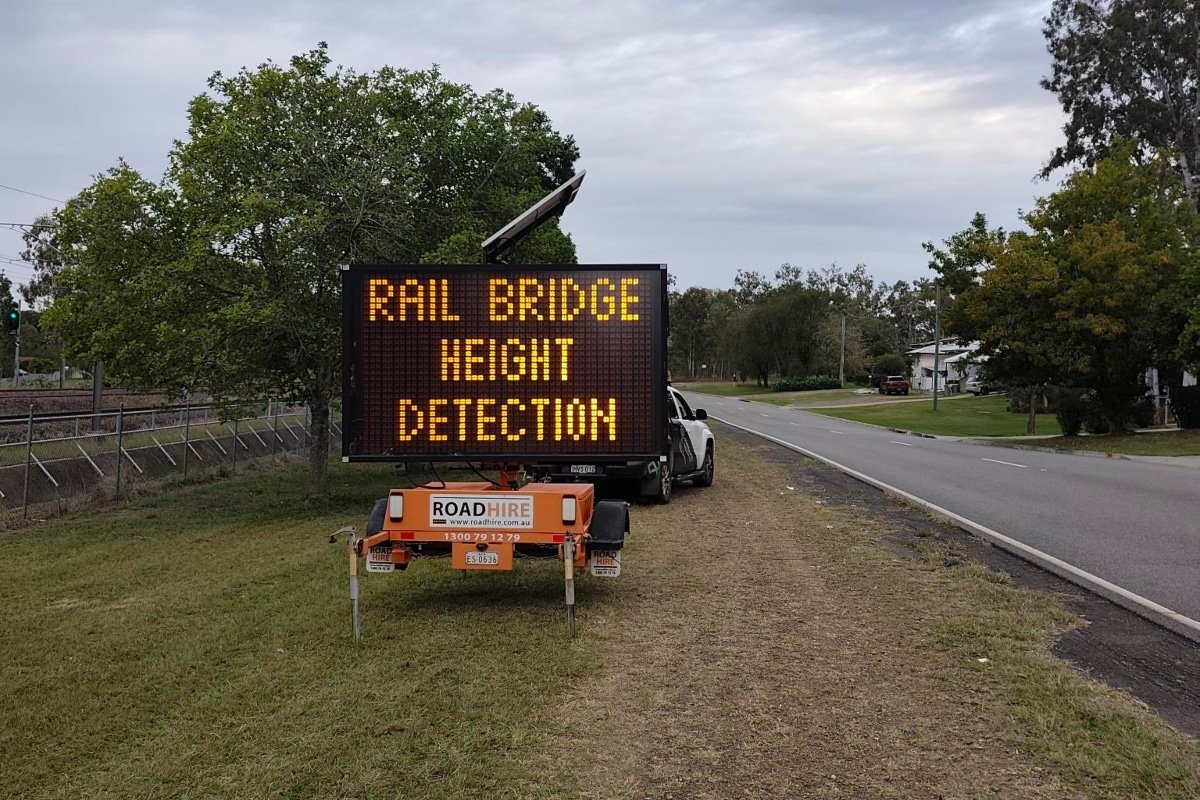
Queensland Rail is trialling new technology aimed at reducing bridge strikes, with a trailer-mounted height detection system being deployed at key sites in Ipswich.
The initiative will test a warning system designed to detect over-height vehicles on roads approaching two rail bridges in the area: Dixon Street in Wulkuraka and Layard Street in Goodna.
Dixon and Layard Street bridges are two of the top 20 most frequently struck bridges on the Queensland Rail network.
Using sensors, the innovative new system identifies vehicles exceeding safe height limits and provides real-time warnings to drivers via a Variable Message Sign (VMS), helping to prevent collisions.
The trailer will remain at each site for approximately two weeks to collect data before moving on to other bridge strike hot spot locations across the South East Queensland (SEQ) network.
In 2025, there were 427 bridge and beam strikes in SEQ. As of the end of May 2026, 157 had already taken place.
Neil Backer, Head of SEQ at Queensland Rail, said bridge strikes are a serious safety concern.
“Bridge strikes not only delay rail customers but are potentially very dangerous to the driver and other road users, as well as impacting road traffic,” he said.
“While we continue to implement new safety strategies to prevent bridge strikes, we remind drivers that ultimately they play the biggest role: know the height and load of your vehicle and plan your journey so you don’t get your truck or load stuck.”
Motorists face fines of $1381 and four demerit points for damaging rail infrastructure. If the matter goes to court, the maximum penalty for causing damage to rail infrastructure is $13,816.