Nikkei 225 Plunges 5,700 Yen in July, Snapping Four-Month Winning Streak as AI and Semiconductor Stocks Stall — BigGo Finance
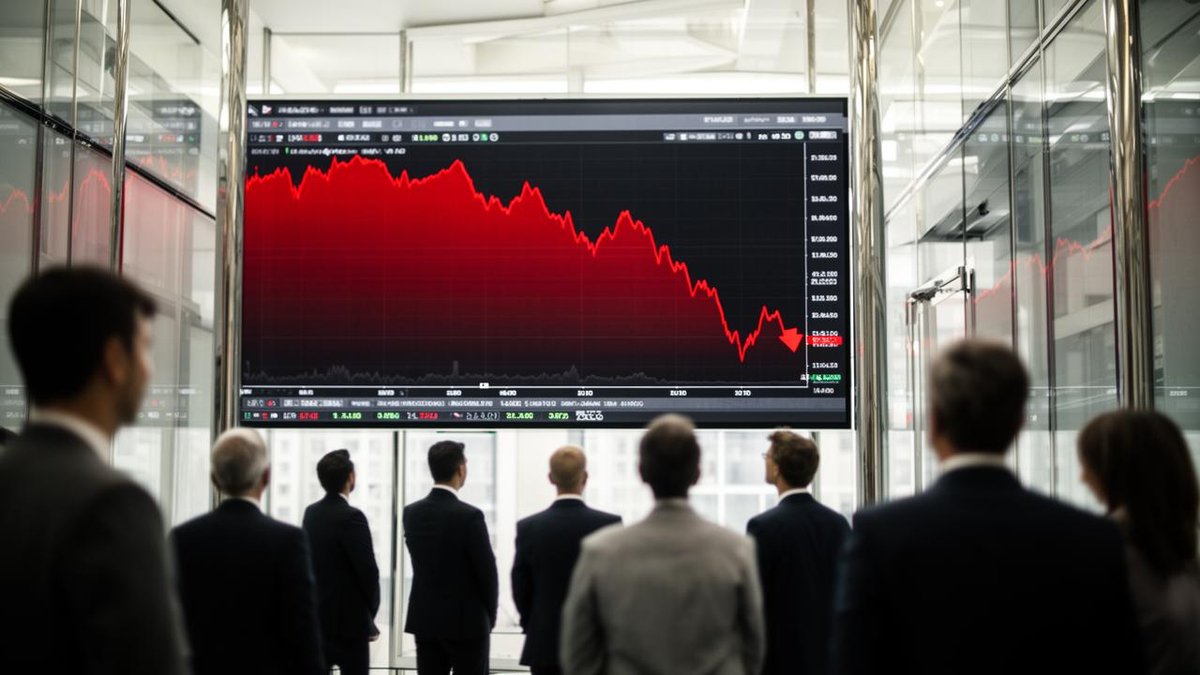
Japan’s Tokyo stock market saw the Nikkei 225 fall 5,700 yen (8%) in July, snapping a four-month winning streak. Concerns over overheating in artificial intelligence (AI) and semiconductor-related stocks—which had been the market’s primary drivers—and growing global skepticism about the sustainability of AI investment prompted investors to aggressively reduce their positions. While strong corporate earnings triggered a sharp rebound toward month-end, price movements throughout July were exceptionally turbulent.
The decline was led by the very AI and semiconductor names whose upward momentum had attracted heavy buying through June. Kioxia Holdings was the most prominent casualty, plummeting 48% for the month and falling to less than half of its all-time high of 112,700 yen reached in June. According to the Nikkei, the stock, which had ranked among Japan’s top listed companies by market capitalization in June, tumbled out of that elite group in just one month. Chart patterns suggest a “grand round trip” over four months is becoming a stark reality.
The July market exhibited the characteristics of a “momentum crash.” The very momentum that had propelled stock prices higher abruptly reversed, becoming a catalyst for selling. On July 29, the Nikkei 225 closed at 61,434, down 930 points (1.49%) from the previous day, hitting a roughly two-month low. Selling pressure on AI and semiconductor stocks, led by Kioxia, intensified and weighed heavily on the broader market.
Behind this sharp sell-off was a global correction in AI and semiconductor shares. Similar movements were observed in the U.S. market, with declines on Wall Street repeatedly triggering selling in Tokyo. Among investors, cautious views emerged questioning whether the surge in AI-related investment was justified by real demand and whether the payback period for capital expenditures might be excessively long. Profit-taking driven by overheating concerns accelerated as prices fell further.
The tide turned on the final trading day, July 30. The Nikkei 225 rebounded after a three-day losing streak, closing at 61,867.43, up 433.24 points (0.71%). Advantest, which had announced strong earnings the previous day, surged sharply, triggering a wave of bargain-hunting that spread across AI and semiconductor stocks. When South Korea’s benchmark KOSPI index showed strength, buying from overseas speculative funds with recovering risk tolerance flowed into the Tokyo market. The Nikkei’s correlation with the semiconductor-heavy KOSPI was notable, as regional interest in Asian semiconductor stocks provided underlying support for Japanese equities.
Monthly performance for major indices and stocks is as follows:
| Name | Monthly Change (Approx.) | Notes |
|---|---|---|
| Nikkei 225 | -8% (approx. -5,700 yen) | First decline in four months |
| Kioxia Holdings | -48% | Fell below half of June high |
Note: Percentage changes are approximate values based on Nikkei reports, including data from the final trading day of the month.
Kioxia’s crash was a symbolic event reflecting wariness toward an AI and semiconductor bubble. Through June, the company’s stock had soared on the back of expanding demand for AI-related storage media. However, as July began, concerns over supply-demand overheating and stretched valuations triggered a massive wave of selling. The Nikkei characterized the phenomenon as a “momentum crash,” analyzing that the momentum-driven investment behavior that had underpinned the rally had collapsed.
Advantest’s strong earnings temporarily alleviated the pervasive pessimism. The sharp rebound on July 30 was interpreted as evidence that real demand in the AI and semiconductor sector remains robust. That said, the stock still suffered significant losses on a monthly basis, and it remains uncertain whether the sharp rebound will translate into a sustained recovery trend. Market participants noted that “differentiation is progressing between stocks that have already reported earnings and those yet to announce.”
The July sell-off once again confronted investors with the risks inherent in AI and semiconductor investment. Stocks that had been bid up solely on earnings expectations are now highly likely to experience significant price swings depending on actual financial results and forward guidance. As the corporate earnings season kicks into full gear from August onward, the alignment between individual company performance and stock prices is likely to face intense scrutiny.
As the global AI investment boom shows signs of having run its course, Japan’s market is also undergoing a shift in evaluation criteria from “momentum” to “fundamentals.” Kioxia’s crash and Advantest’s sharp rebound vividly illustrated both sides of this transition. Investors are entering a phase where they must re-examine corporate fundamentals carefully, rather than being swayed by short-term price fluctuations.