NVIDIA, Imperial Host Roundtable During London Tech Week
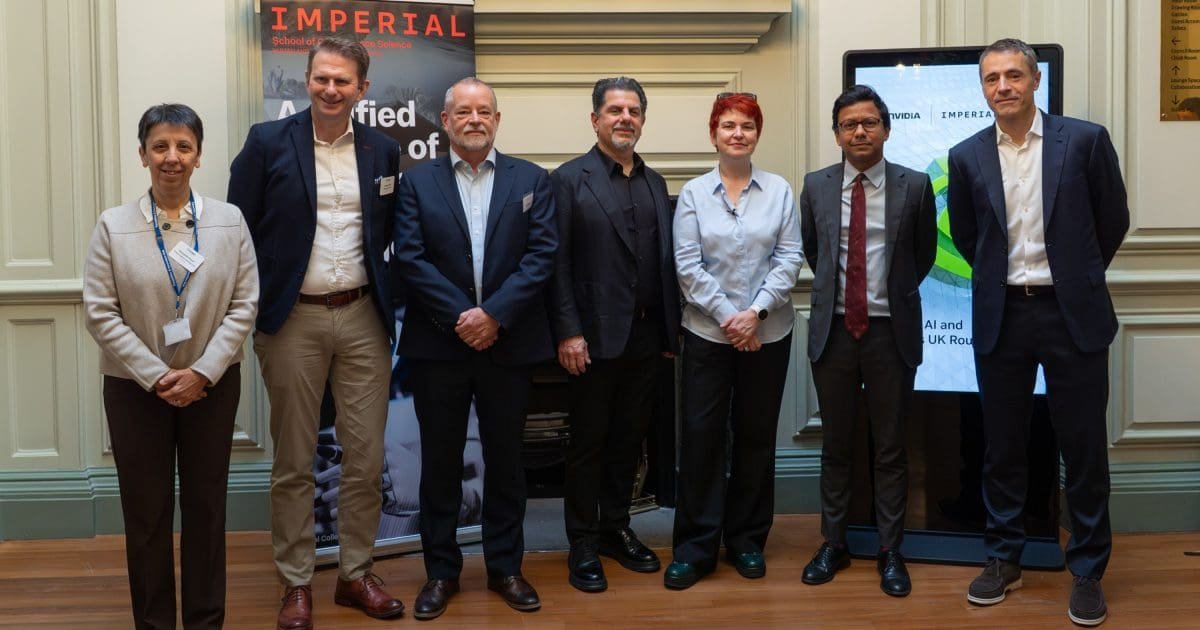
Imperial College London hosted the NVIDIA UK Physical AI & Robotics Roundtable on Tuesday, June 9, positioning the event as a key component of London Tech Week and a focal point for the future of robotics. Co-chaired by Kanishka Narayan, Minister for AI and Online Safety, and Rev Lebaredian, Vice President of Physical AI Simulation at NVIDIA, the roundtable brought together leaders from government, academia, and industry to address the challenges and opportunities in physical AI development. Lebaredian delivered a keynote titled “Building the Physical AI Era: From Simulation to the Real World,” outlining physical AI as the next stage in AI development, systems that can understand and act in the physical world. Discussions centered on how the UK can leverage its research strengths and address national fragmentation to lead in the development and deployment of these technologies across a range of physical industries.
NVIDIA Roundtable Highlights UK’s Physical AI Opportunity
The United Kingdom could benefit significantly from the growing field of physical AI, according to discussions held at a recent roundtable convened by NVIDIA and Imperial College London. Experts suggest the nation possesses the foundational elements to become a global leader in this next wave of innovation. The event was strategically timed to coincide with London Tech Week, positioning it as a central component of a larger, time-sensitive industry gathering focused on future technologies. NVIDIA’s approach, encompassing simulation, AI models, and robotics, was presented as a foundational element for enabling this transition and expanding applications beyond purely digital AI. Roundtable participants acknowledged the UK’s existing strengths, including a history of research excellence and a growing infrastructure capable of supporting physical AI and robotics development.
However, discussions also highlighted the need to address national fragmentation, with Professor Mary Ryan noting that startups, researchers, industry representatives, and policymakers often operate within isolated communities, hindering the translation of research into tangible real-world applications. Imperial’s School of Convergence Science, co-host of the event, was presented as a model for breaking down these silos, organizing research around mission-led areas like Human and Artificial Intelligence and fostering collaboration across disciplines. Professor Ryan explained that the Human and Artificial Intelligence theme is guided by pillars focused on augmenting human intelligence and enabling AI that can operate safely in the physical world.
Attendees were also given a glimpse into ongoing research at Imperial’s robotics laboratories, including facilities like DIGIBAT, an automated research facility accelerating the discovery of energy materials. Participants agreed that strong national coordination, spanning discovery, research, testing, deployment, and adoption, will be critical if the UK is to become a leader in this rapidly advancing field, particularly as investment in physical AI and robotics accelerates globally. Rev Lebaredian stated that the scale and complexity of developing this technology necessitates collaboration across institutions, sectors and countries.
The UK has world-class research in this emergent area. Coupled with a thriving startup ecosystem and policy momentum, this makes the UK ready to lead in physical AI. What this roundtable made clear is that connecting those communities more deliberately, across research, industry and government, is where the real opportunity lies. That is what Imperial is committed to helping build.
Rev Lebaredian Outlines Full-Stack Approach to Physical AI
The convergence of artificial intelligence and physical systems is rapidly shifting from theoretical possibility to demonstrable reality, yet realizing the full potential of “physical AI” demands a cohesive strategy beyond isolated advancements in algorithms or robotics. While much attention remains focused on digital AI, a growing consensus emphasizes the need to bridge the gap between virtual intelligence and real-world action, a challenge that requires a fundamentally integrated approach to development. He outlined NVIDIA’s approach as a “full-stack” solution, encompassing not only advanced AI models but also the crucial components of simulation and robotics, a foundation intended to unlock applications across diverse physical industries. This isn’t simply about improving existing robotic capabilities; it’s about creating systems capable of genuine understanding and adaptive behavior in unstructured environments. The emphasis on simulation as a core element of this full-stack approach is particularly noteworthy.
Lebaredian’s presentation underscored that developing physical AI requires a robust platform for testing and refining algorithms in a virtual environment before deployment in the real world, significantly reducing development time and costs. This simulated environment allows for the exploration of countless scenarios and edge cases that would be impractical or dangerous to test physically, accelerating the learning process and improving the robustness of AI systems.
Imperial Labs Showcase Autonomous Systems & Robotics Research
The event, co-chaired alongside Kanishka Narayan and Professor Mary Ryan, Imperial’s Vice Provost for Research and Enterprise, signaled a concerted effort to translate theoretical advances in artificial intelligence into tangible robotic systems capable of operating effectively in physical environments. Beyond showcasing technological prowess, the roundtable aimed to address the systemic challenges hindering the widespread adoption of physical AI within the United Kingdom. Attendees were given exclusive access to Imperial’s robotics laboratories, offering a glimpse into ongoing research pushing the boundaries of autonomous systems. The DIGIBAT facility, managed by Dr Jingyu Feng and Felix Mildner, demonstrated an automated workflow for accelerating the discovery of energy materials, utilizing an approach where experiments are mirrored digitally for enhanced reproducibility and data analysis.
Further inside the labs, research from the Robot Learning Lab, directed by Dr Ed Johns, focused on robot manipulation, utilizing learning-based approaches like imitation learning and vision-language models to enable robots to grasp, move, and assemble objects in various settings. The Brain & Behaviour Lab, directed by Professor Aldo Faisal, explored the intersection of neuroscience and AI, leveraging human brain function to develop more intelligent and human-centered systems.
Addressing Fragmentation to Accelerate AI Translation
The promise of artificial intelligence extending beyond digital realms and into the physical world hinges on overcoming a critical obstacle: systemic fragmentation within the UK’s innovation ecosystem. Participants consistently identified disconnected communities, encompassing startups, researchers, industry representatives, and policymakers, as a significant impediment to progress. Imperial’s newly established School of Convergence Science was presented as a potential model for addressing this fragmentation. According to Professor Ryan, the school’s function is to actively “break down traditional silos and support the translation of science into real-world action.” This emphasis on interdisciplinary collaboration reflects a growing recognition that physical AI and robotics necessitate expertise from diverse fields, demanding a holistic approach to research and development. Attendees gained firsthand insight into the UK’s research capabilities through visits to Imperial’s robotics laboratories, showcasing ongoing work in areas like autonomous systems, intelligent robotics, and AI-enabled engineering.
These demonstrations served not only as a display of technological prowess but also as a catalyst for identifying potential collaboration opportunities and addressing critical capability gaps. The ultimate goal, participants agreed, is to establish strong national coordination, spanning the entire innovation lifecycle from initial discovery to widespread adoption, if the UK hopes to truly lead in this rapidly evolving field.