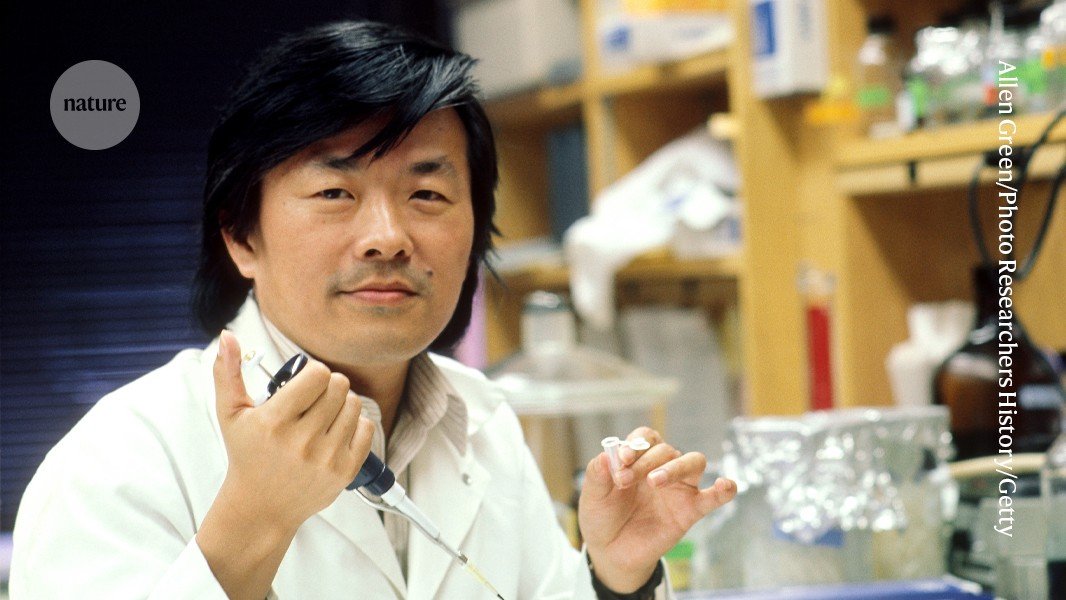
Obituary: Susumu Tonegawa, Japan’s first Nobel prizewinner in physiology or medicine

Credit: Allen Green/Photo Researchers History/Getty
Susumu Tonegawa was a renowned neuroscientist who transformed our understanding of learning and memory. He also had an immense impact on immunology, discovering the genetic mechanism behind the immense diversity of antibodies that target and provide immunity against myriad infections and cancers. This revelation led to Tonegawa becoming the sole winner of the 1987 Nobel Prize in Physiology or Medicine — and the first Japanese person to win the prize.
When asked how he transformed two fields, Tonegawa’s answer evoked a contemporary conundrum. Is it better to ask big questions and consider what technologies would be needed to answer them, or to think about what fresh information the latest technologies can unearth? With his characteristic wry smile, he would bluntly state that the answer lies between the two: scientists should ask how an emerging technology might offer a fresh approach to a really big question. And that’s exactly what he did — twice.

Memory on trial: the new science of when to trust eyewitness testimony
Tonegawa, who has died aged 86, was born in Nagoya, Japan, in 1939. His father, an engineer who was regularly assigned to different cities, sent Tonegawa to live with his uncle near Tokyo so that he could attend the prestigious Hibiya High School. The value of education stayed with him: throughout his life, he remained an irrepressible student, thrilled with any opportunity to learn.
Another influence was a sense of national defeatism felt by many people in Japan in the early 1960s, when he was studying chemistry at Kyoto University. He wanted to embody a fresh start. After reading the game-changing work on gene regulation by François Jacob and Jacques Monod, he was excited by an opportunity to study molecular genetics at the University of California, San Diego.
Like many scientists, Tonegawa struggled, producing a PhD thesis that he was “not particularly proud of”. Nonetheless, it enabled him to become a postdoc at the Salk Institute in San Diego under Renato Dulbecco, studying eukaryotic molecular biology.
Tonegawa was an eternally grateful person, who acknowledged crucial support from his family, friends and colleagues. Dulbecco was an enormous influence on him and shaped his views of mentorship. In 1969, Dulbecco advised him that immunology was ripe for the application of molecular biology and that, given the imminent expiry of Tonegawa’s US visa, the best place might be the newly founded Basel Institute for Immunology in Switzerland.

The brain’s code seems to be in constant flux. Neuroscientists are baffled
A brilliant experimentalist, Tonegawa thought that big scientific questions would yield their secrets if they were approached rationally and unrelentingly. By the 1970s, the diversity of antibodies was well known but unexplained. In 1976, Tonegawa reported that the origin of this diversity lies in the capacity of a type of antibody-producing white blood cell called a B cell to rearrange its genes, thereby expanding the number of antibody proteins that humans can synthesize from about 25,000 to billions (N. Hozumi and S. Tonegawa Proc. Natl Acad. Sci. USA 73, 3628–3632; 1976).
He did this by applying molecular-biology methods to immunology, saying later that he didn’t know why scientists were trying to understand antibody diversity by studying the antibodies rather than the genes encoding them. The answer was that few (if any) other researchers had worked out how to do so — by using serum biochemistry methods and newly identified DNA-restriction enzymes.
Tonegawa’s results, together with studies of colour variegation in the kernels of maize (corn) by Barbara McClintock, showed that genome stability was not sacrosanct, as most scientists assumed. They laid the groundwork for the idea that genomes contain myriad mobile genetic elements and viral DNA segments that have the potential to influence the physiology and evolution of organisms profoundly.