Pacific Ocean pattern helps explain why wildfires surged in the US but not Australia
 |
submitted by /u/Economy-Fee5830 [comments] |

| |
submitted by /u/Economy-Fee5830 [comments] |
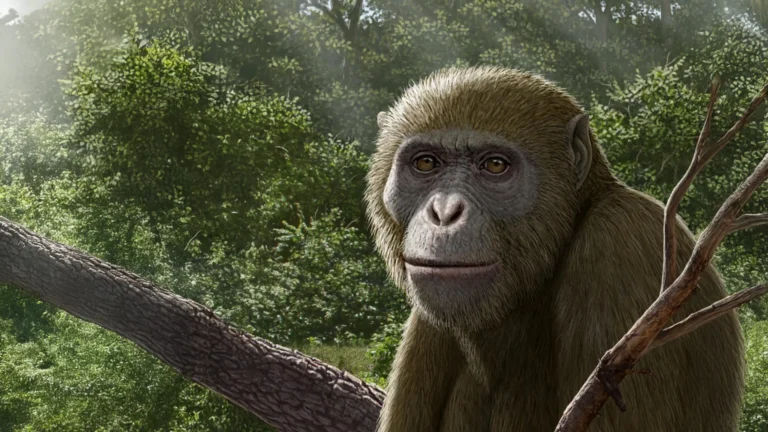
An international team of researchers has identified a previously unknown fossil ape that lived about 17 to 18 million years ago during the Early Miocene. The species, named Masripithecus moghraensis, was described in a study published in Science by scientists from the Mansoura University Vertebrate Paleontology Center (Egypt) and the University of Southern California (USA)….

If you’re a reader of our weekly newsletter, you’ll know that one of our most popular features is our Microscope Mystery. Each week, our team shares a head-scratching microscopic image and asks readers to work out what exactly they’re looking at. Occasionally with hilarious results. (Like the time our assistant editor Clare Watson guessed that…

Sign up to see the future, today Can’t-miss innovations from the bleeding edge of science and tech Robotics company Realbotix has long struggled to beat the allegations that its voluptuous humanoid robots are designed with prurient interests in mind. Its $175,000 robotic companion, dubbed Aria, is platinum blonde, well-endowed, and tends to be decked out…

Tweet link: https://x.com/spacex/status/2080007003875770375 submitted by /u/rustybeancake [comments]

Researchers at Seoul National University and the University of Seoul have developed a programmable photonic integrated circuit that can slow light whenever needed. The team was led by Professors Namkyoo Park and Sunkyu Yu of the Department of Electrical and Computer Engineering at Seoul National University, working with Professor Xianji Piao of the School of…

Released in 1973 and coming out this week in a new 4K UHD transfer on Blu-ray, Soylent Green is set in the distant (!) year of 2022, in a polluted, congested New York City bursting with 40 million inhabitants as the world teeters on the edge of ecological and societal collapse. The film stars Charlton…