Roblox’s AI Game Builder Could Change More Than Mobile Gaming
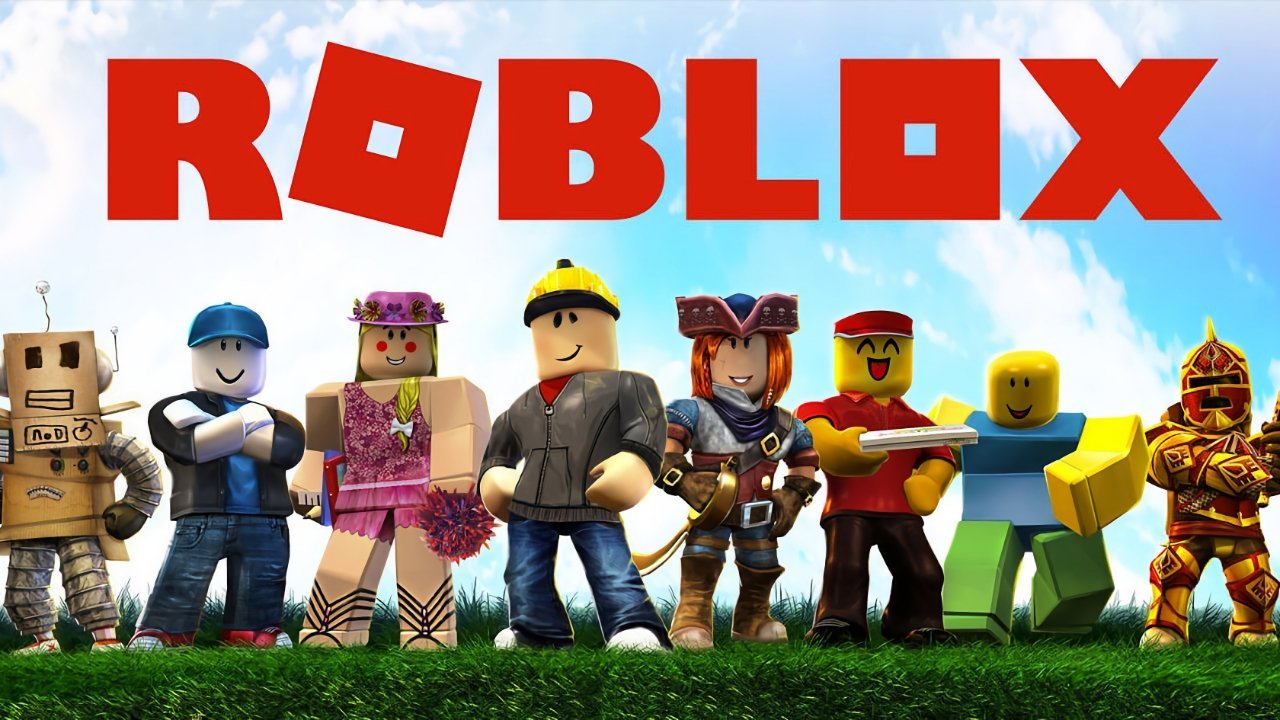
Roblox recently launched Build, a mobile-first artificial intelligence (AI) game developer tool that allows users to create playable games with only text prompts.
The public alpha has been rolled out in New Zealand, and the technology promises to remove the barriers to game development by enabling users to design environments, gameplay, characters and audio without one line of code.
The technology furthers Roblox’s bid to establish themselves as the top AI-powered creation platform in the world. Intriguingly, the tech could be applied in other gaming sectors.
AI is Accelerating Game Prototyping
Instead of spending months building a playable minimum viable product, developers can use plain language to build a functional starting point in minutes.
This type of workflow is in valuable to online casino developers. Slot studios typically experiment with hundreds of themes before backing the title that deserves full production.
Themes include Egyptian adventures, Norse mythology, cyberpunk cities and other forms of branded entertainment. Game mechanics need fine-tuning before launching.
An AI system that can develop playable concepts from only text prompts will drastically reduce the design process within the online casino sector.
It won’t replace game designers, but allows studios to test different styles, feature combinations and user flow before investing resources to build the final product.
Faster Innovation Without Sacrificing Compliance
Online casino site operators operate in a very heavily regulated industry.
Their games have to undergo vigorous testing to verify return-to-player (RTP) percentages, volatility, and random number generator integrity before approval from licensed testing laboratories.
Because of these regulatory requirements, a fully AI-generated casino game won’t be out anytime soon. However, generative AI can assist in the development process.
Developers can use AI to design artwork, animations, sound effects and concepts. while mathematicians and compliance teams oversee the game’s underlying metrics.
Using Generative AI for Personalisation
Personalisation will be Build’s most useful aspect. Developers in NZ can use it to tailor visual experiences for different audiences without messing with the mathematical engine underneath.
All licensed casino New Zealand players will be able to enjoy themes, game flow, sounds and other features that resonate with them.
While one player might enjoy an ancient Aotearoa title, another could prefer a futuristic space game. The gameplay, bonus mechanics and RTP are the same, but the presentation changes.
The tech allows operators to keep their content fresh without creating entirely new games. It is unclear if regulators will allow this level of customisation in their new framework, but the tech is moving in the right direction.
AI Can Improve Testing and Player Engagement
Roblox will be developing AI agents that can automate playtesting, bug detection and engagement optimisation.
That application may be more useful to the online casino sector than AI-generated games.
Casino studios must analyse massive amounts of player data to understand which bonus features, volatility levels and session lengths generate the most engagement.
Advanced machine learning systems can handle this process more quickly, probably predicting player behaviour better and suggesting genre-defining improvements before the game hits the market.
AI systems can simulate gameplay sessions to find bugs and fix gameplay issues, improving overall product quality.
Roblox also put to bed any fears that AI slop will overwhelm the platform and diminish game experiences as the tech lowers barriers to entry.
Human Creativity Will Always Be Essential
There are justifiable fears that AI-generated games could flood the market with poorly thought-out content.
Roblox believes its algorithm can naturally filter out low-quality experiences. However, maintaining originality will still be a problem as AI tools become more widely available.
The online casino industry is also wary. Players are already up in arms about studios releasing games with almost identical mechanics.
If AI makes it easier to make variations of already-existing concepts, developers might choose quantity over quality and innovation.
It is worth noting that some of the biggest successes in this industry have come from simply producing more games.
The titles that have memorable mechanics, exciting narratives and distinctive audiovisuals will always rise to the top because they bring something different to the table.
AI can generate good ideas, but no machine understands human experiences and connects emotionally better than another human.