Samples of Lunar Rock Are Leading Scientists to Rethink the Moon’s History
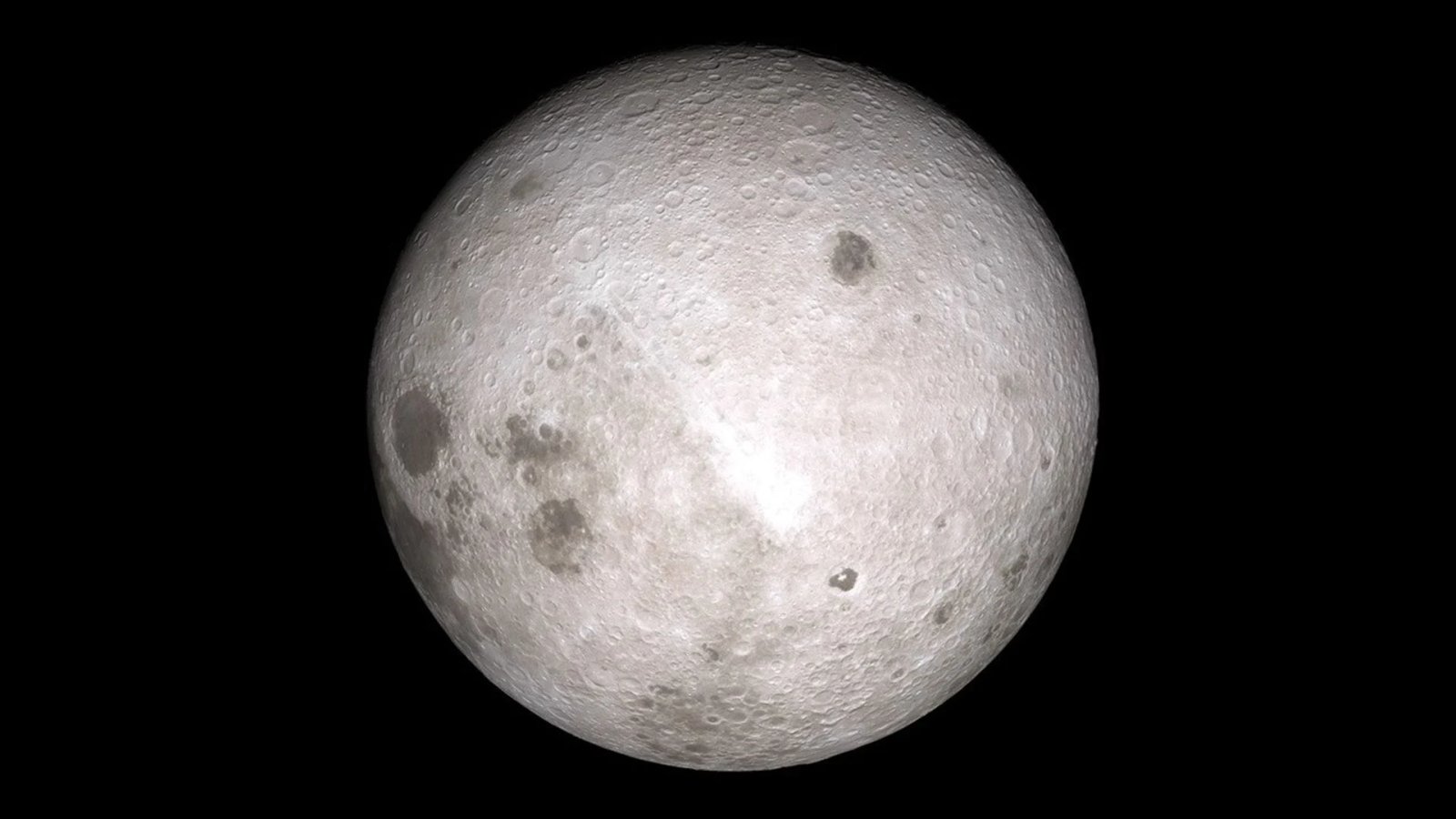
Lunar samples are a gift that keeps on giving! And the samples returned by the Chang’e-6 mission from the Moon’s far side, the first of their kind; the scientific breakthroughs they are enabling are just beginning. In addition to providing a geological record on the far side of the Moon, a record of how and when water and volatiles were delivered to the Earth-Moon system, and the Moon’s interaction with solar wind over billions of years, they’ve also provided information on the impact history of the far side of the Moon.
By comparing these samples with analyses of Apollo lunar samples and others returned from the near side of the Moon, scientists can (for the first time in history) examine how the two hemispheres evolved. A recent analysis has provided a new window into the bombardment history of the Moon, challenging decades of thinking about the timing and intensity of those impacts. The findings also provide insight into the conditions that influenced the evolution of the Earth and Moon during the early Solar System.
The study was led by the State Key Laboratory of Deep Earth Processes and Resources and the Center for Advanced Planetary Science (CAPS) at the Guangzhou Institute of Geochemistry. Additional contributions were made by researchers from the Chinese Academy of Sciences, the NWU-HKU Joint Center of Earth and Planetary Sciences, the Beijing Research Institute of Uranium Geology, and the John de Laeter Center & School of Earth and Planetary Sciences (JDLC) at Curtin University.
Unlike Earth, where volcanic activity, shifting tectonic plates, weathering, and erosion actively erase evidence of ancient impacts, the Moon’s surface acts as a perfectly preserved record of the Solar System’s history. The study of lunar rocks and regolith therefore allows scientists to investigate events that occurred shortly after the planets formed, ca. 4.5 billion years ago. Said co-author Dr. Fred Jourdan, from the JDLC at Curtin University:
The Moon is like a time capsule — it has preserved a record of events that have been erased from Earth by erosion, plate tectonics and other geological processes. Samples collected from the Moon’s far side are particularly significant because they allow us to compare two very different parts of the Moon for the first time. Until now, almost everything we knew came from the side facing Earth.
For decades, scientists have theorized that the Earth and Moon experienced a sudden period of intense bombardment by asteroids and comets known as the Late Heavy Bombardment period (ca. 4.1 and 3.8 billion years ago). This activity is believed to have been triggered by the migrations of the planets in the early Solar System, which pulled many smaller bodies in their wake, leading to a spike in collisions and impacts.
Similarly, scientists believed that this bombardment period was brief (by geological standards), lasting between 20 and 200 million years before declining abruptly. Based on their findings, which appeared in a paper published in Science Advances, the research team found that the Late Heavy Bombardment declined more gradually than previously thought.
 Meteorites bombard a molten landscape in this illustration of the Late Heavy Bombardment. Credit: NASA GSFC Conceptual Image Lab
“By analyzing these ancient rocks, we can better understand when major asteroid impacts occurred and how the early Solar System evolved,” said Dr. Jourdan. “The far side preserves a cleaner record of those earliest impacts because it was much less affected by later geological events than the side facing Earth. These samples are helping us rewrite parts of the Moon’s history and suggest the early Solar System experienced a long decline in asteroid impacts rather than a single catastrophic bombardment.”
For their study, the team analyzed lunar rock fragments collected from the Moon’s South Pole-Aitken Basin using a geochronological technique known as single-clast ⁴⁰Ar/³⁹Ar dating. This process uses neutron irradiation and noble gas mass spectrometry to isolate distinct impact events based on melted deposits left in impact craters. Based on their analysis, the team found evidence of impact events spanning from about 4.33 to 1.13 billion years ago, allowing them to reconstruct more than three billion years of lunar impact history.
Their findings not only address a major part of the Moon’s evolutionary history, but also Earth’s. They also reinforce findings made earlier this year by researchers led by the Key Laboratory of Planetary Science and Frontier Technology at the Institute of Geology and Geophysics. Based on radiometric analysis, the team provided updated estimates on when many impacts originally dated to the Late Heavy Bombardment period occurred. As Dr. Jourdan summarized:
The Moon and Earth share a common history, but the evidence of early impacts has largely disappeared from our planet. Because the Earth and Moon formed together, every major impact recorded on the Moon tells us something about the conditions experienced by the young Earth.
Studying lunar rocks allows us to look back billions of years and better understand the events that shaped the environments of both worlds, and helps us understand the role asteroid impacts played in planetary evolution and the conditions that may have influenced the emergence of life on Earth.
Further Reading: Curtin University, Science Advances.