Samsung Galaxy Watch 9 vs. Google Pixel Watch 4: I compared both Android flagships, here’s what I prefer

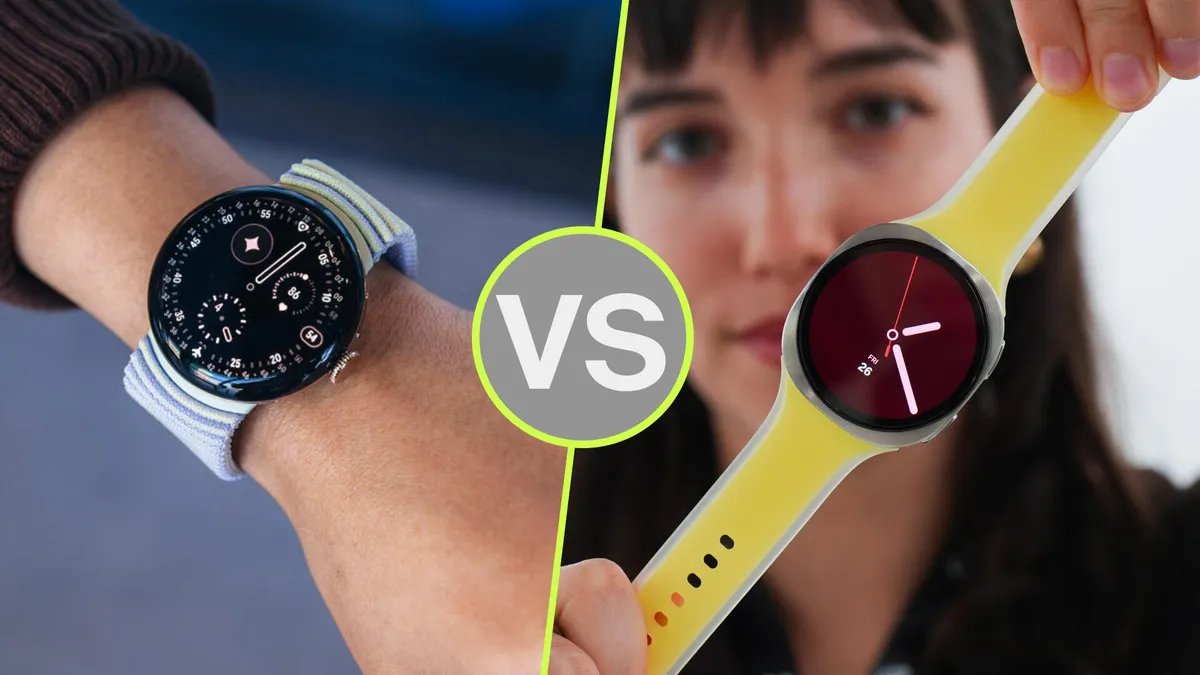
Pixel Watch 4 (left) vs. the Galaxy Watch 9 (right)
Kerry Wan/ZDNET
Follow ZDNET: Add us as a preferred source on Google.
Samsung just unveiled its newest lineup of smartwatches, and its Galaxy Watch 9 gets a few upgrades that puts it in direct competition with another Android flagship smartwatch: the 2025 Pixel Watch 4.
The Pixel Watch 4 is nearly a year old, but it got a facelift when Google added the Gemini-powered Health Coach a few months ago, improving the user experience overall.
Also: Everything announced at Samsung Unpacked 2026: New foldables, smartwatches, and smart glasses
The thing is, these watches pair with their respective smartphone brands for the best user experience. Of course it’s possible to mix and match and use the Samsung Galaxy Watch on a Pixel phone or the Pixel Watch on a Galaxy phone, but you’ll run into a few limitations. But which is the better smartwatch? Let’s get into it.
Specifications
| Galaxy Watch 9 | Pixel Watch 4 | |
| Display | Super AMOLED, 3,000 nits | AMOLED, 3,000 nits |
| Sizes | 40mm/44mm | 41mm/45mm |
| Sensors | Samsung BioActive Sensor (Optical Bio-signal Sensor + Electrical Heart Signal + Bioelectrical Impedance Analysis), Temperature Sensor, Accelerometer, Barometer, Gyro Sensor, Geomagnetic Sensor, Light Sensor | Compass, altimeter, red and infrared sensors, ECG sensors, multi-path optical heart rate sensor, 3-axis accelerometer, gyroscope, ambient light sensor, electrical sensor, temperature sensor, barometer, magnetometer. |
| Processor | Snapdragon Wear Elite | Snapdragon W5 Gen 2 |
| RAM/Storage | 2 GB RAM, 32 GB storage | 2 GB RAM, 32 GB storage |
| Satellite | No | Standalone SOS satellite |
| Battery | 390mAh/445mAh | 325mAh/455mAh |
| Colorways | Cream, Graphite | Obsidian, Lemongrass, Porcelain, Iris |
| Pricing | Starting at $379 | Starting at $387 |
You should buy the Galaxy Watch 9 if…
1. You want a bigger battery
Samsung upgraded its watch lineup with a bigger battery, stretching the smaller 40mm watch’s capacity to 30 hours of use with Always On Display enabled. The 40mm smartwatch got a 360 mAh battery, and the 44mm smartwatch got a 445 mAH battery. This is larger than the Pixel Watch’s 325 mAh in the 41mm size and a bit smaller than the 45mm’s 455 mAh of battery capacity.
Also: Galaxy Watch 9 vs. Galaxy Watch 8: I’ve compared both models, here’s my advice
You’ll get a significant upgrade if you buy the smaller 40mm Galaxy Watch, and a nearly competitive battery capacity with the 44mm Galaxy Watch.
2. You want all the health metrics
There are several detailed metrics you can track on the Galaxy Watch 9 that are absent on the Pixel Watch 4. First, there’s the antioxidant index to gauge your nutrient levels. A new, FDA-cleared sleep apnea score monitors breathing disturbances at night, a daily cardio load score keeps your exercise levels in check, and a heart health score tracks short-term deviations to paint a longitudinal picture of cardiovascular health. These features are on top of the sleep, recovery, and stress scores the watch already provides.
Needless to say, that’s a lot of data. There are more tabs with scores and daily metrics on the Samsung Health home screen to sort through than Google Health, which could overwhelm some users. In contrast, Samsung offers a more gamified experience of health through its many scores and biometrics.
3. You prefer a flatter design
There’s a 4.6mm difference between the Galaxy Watch 9 and the Pixel Watch 4, with the Pixel Watch 4 being 12.3 mm thick and the Watch 9 8.6mm. The Galaxy Watch 9 is still the thinner, more comfortable option with an inconspicuous wear. The Pixel Watch 4’s 360 Actua display bubbles up like a balloon, creating a greater tendency for the watch to get stuck around sleeves or cling to clothing. It’s a rounder design that’s harder, but not impossible, to become comfortable with.
You should buy the Pixel Watch 4 if…
1. You want an AI-powered health coach
I was pleasantly surprised by how useful Google’s AI-powered Health Coach was when I tested the Pixel Watch 4. In fact, my experience was dramatically improved by the conversational interface that came with Health Coach. I could tell the Coach about my poor night of sleep or my moods and symptoms, and it could log it without my pressing any other tabs in the app.
It’s also useful for easily adding health information, like a workout plan saved in another app or a photo of your dinner you’re calorie counting, by simply uploading that data into the chat function.
Also: Are AI health coach subscriptions a scam? My verdict after testing Fitbit’s for a month
Meal logs, workout plans, contextual information (like logging your red eye flight that’s responsible for your poor sleep score), moods, and symptoms all become tedious to log with a wearable after a while. An AI assistant that can do this logging for you (and supplement that with photo uploads and calorie information) making all of that information easily accounted for.
Samsung is developing an AI-powered health assistant of its own, and one may come to the Watch 9, but we don’t know what that timeline looks like right now. I’d recommend the Pixel Watch if you’re sold on the $100 annual premium membership that affords you the Health Coach.
2. You want standalone satellite communications
The Galaxy Watch Ultra 2 offers the satellite functionalities of the Galaxy lineup — something the Watch 9 doesn’t have. The Pixel Watch 4 LTE model does, however, so you can take it on phoneless runs and still communicate with emergency services or send texts in poor-service areas without a problem.
Writer’s choice
I like the Google Pixel Watch 4 more for its integrations with Google Gemini, and Samsung Galaxy Watch 9 more for its design and wealth of health data it tracks. The Watch 9 is far easier and more comfortable to wear, so you should opt for that if you don’t want a hulking smartwatch around your wrist.
Also: Google’s Fitbit Air is a $99 screenless wearable that I can actually take seriously
Samsung’s device represents all that health wearables can do, while Google’s offers a more refined approach that prioritizes the most important details, like ease of use and data overload. While Samsung captures more scores and metrics, it has been slower at rolling out an AI-powered health coach to contextualize this barrage of data. Until then, I’d opt for the Pixel Watch 4.