Science news this week: Gold tongues discovered in tombs, sugar found in space, a new monkey identified in the Congolian rainforest, and ancient impact crater ‘geoguessed’ by an amateur astronomer
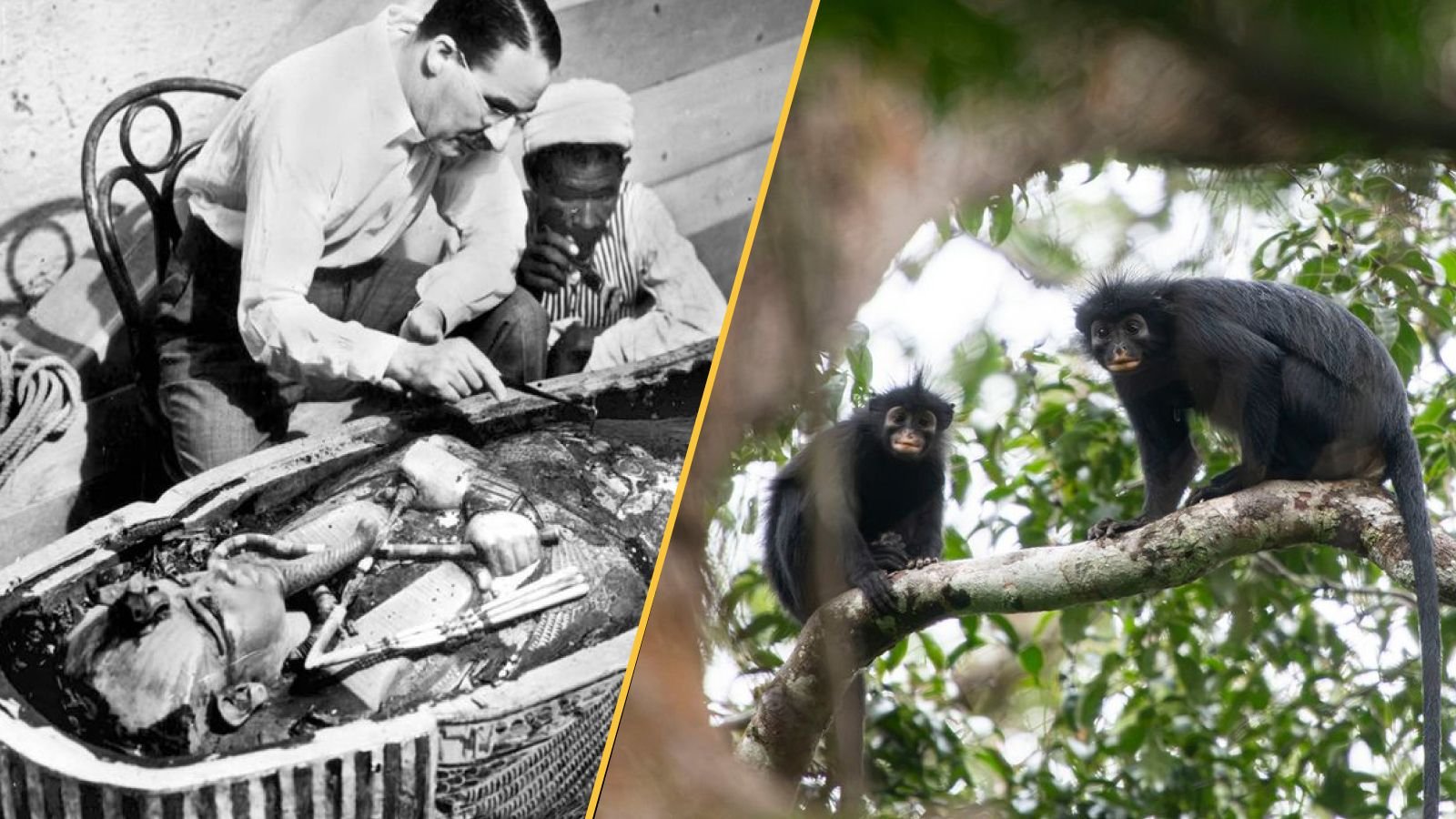
The ancient Egyptians believed that gold was the flesh of the gods, meaning that bestowing gold tongues upon the deceased could help them speak in the afterlife. But it’s not entirely certain whether all of the newly found gold objects were tongues (one may actually depict a wheat ear, a symbol of fertility), and the mystery of a possible false door inside the tomb is also stirring up debate.
A Hubble image of the Milky Way’s center, in the constellation Sagittarius. Researchers have discovered a sugar found in raspberries buried in a cloud in this region.
(Image credit: NASA, ESA, and G. Brammer)
Astrochemists delivered a sweet surprise this week, with news that they had detected a type of sugar called erythrulose in interstellar space, near the center of our Milky Way galaxy.
Erythrulose, consisting of four carbon atoms, is found in raspberries back on Earth. But its presence in space is a mouthwatering sign that the essential ingredients for life are highly abundant across our galaxy. That could make life much more prevalent than we thought, and could mean that aliens may also have a sweet tooth.
Get the world’s most fascinating discoveries delivered straight to your inbox.
A pill bug curls into a round ball for protection.
(Image credit: lophius via Alamy)
Animals come in all shapes and sizes, but are any a satisfyingly perfect sphere? It turns out that this deceptively simple question holds some evolutionarily profound implications.
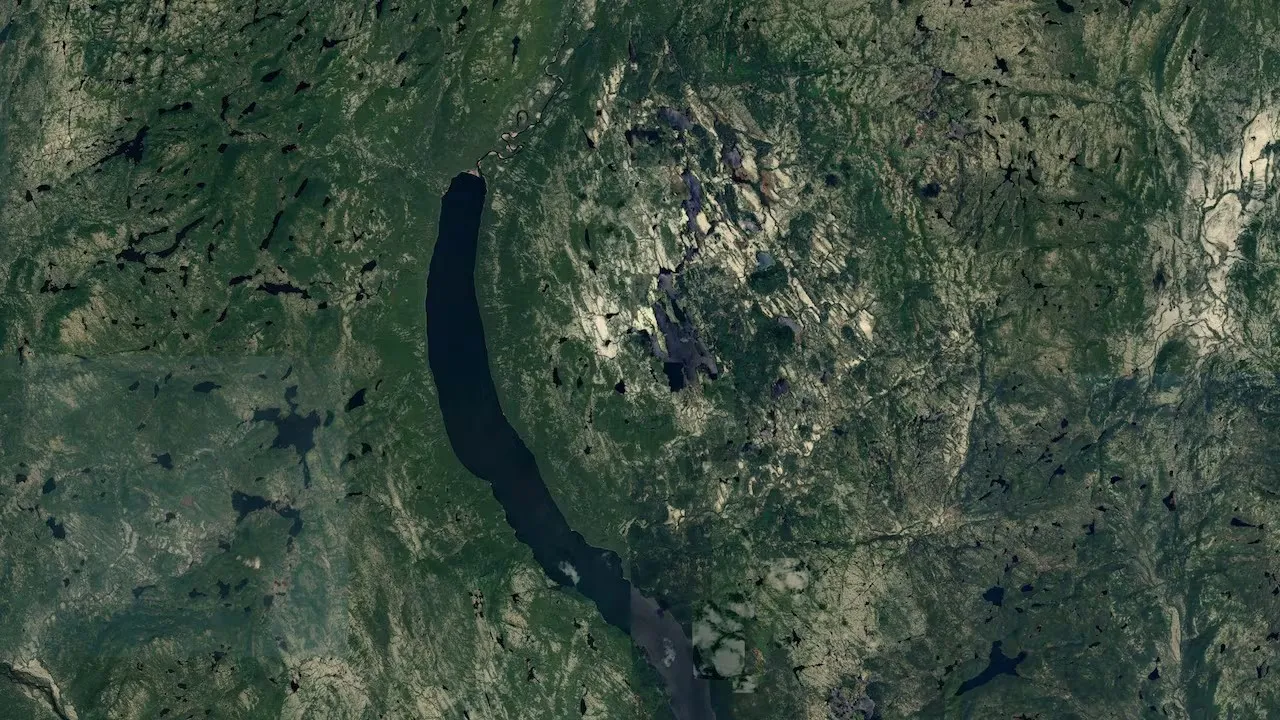
The large pit, discovered on Google Maps in 2024, is actually a 390 million-year-old meteor impact crater.
(Image credit: Gordon Osinski via Google Earth)
Geoguessing emerged in the last decade as a geography game (and later a popular esport) in which players deduce locations from Google Maps imagery. But what about geoguessing something completely undocumented, and one that only trained scientists should be able to recognize?
In that circumstance, amateur astronomer Joël Lapointe should be crowned this year’s champion. Using Google Maps to plan a hiking trip in Quebec’s Côte-Nord region, Lapointe stumbled upon an indentation that has now been confirmed by scientists to be a 390 million-year-old scar from a gigantic asteroid collision.
“I get lots of messages from the public thinking they have found a crater and 99/100 turn out not to be the case,” Gordon Osinski, a professor of planetary geology at Western University in Canada who confirmed the find, told Live Science in an email. “This is one of those rare examples that shows this is possible.”
If you’re looking for things to keep you busy over the weekend, here’s a selection from our best opinion pieces, interviews, diagnostic dilemmas and crosswords that we published this week.
The newly described monkey has orange lips and a patch of white fur around the anus.
(Image credit: Daniel Rosengren, Frankfurt Zoological Society )
Hello! A new monkey just dropped!
Named Colobus congoensis after the remote region of the Democratic Republic of the Congo where it was found, this striking newfound species has orange lips and makes unique roars and snorts.
The monkey’s discovery is remarkable, most of all because finding new primates is extremely rare — with only five new ones being identified in Africa over the past 75 years — and also because of its relatively large size. Pinning down the species took years of careful tracking and documentation, alongside work with people from eight local villages who had knowledge of it.
Besides being a cool find in its own right, the discovery points to there being potentially many more undiscovered mammals, fish, reptiles and plants hidden inside the Congolian rainforest.
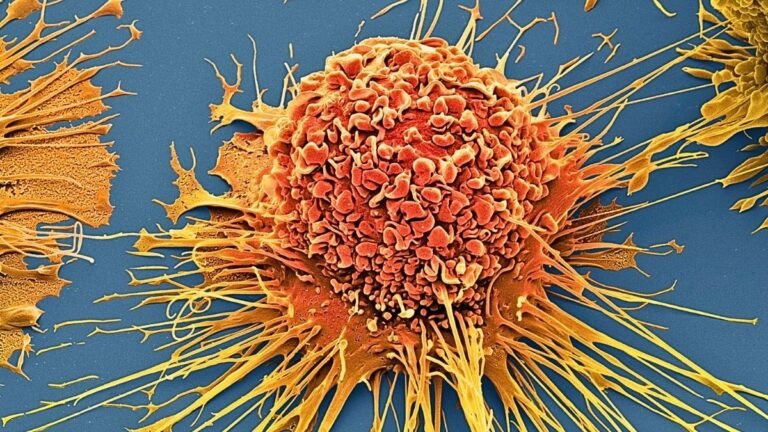
Scientists may have found a way to destroy cancer cells without initially relying on chemotherapy, surgery, or radiation. The approach is called ‘molecular jackhammer’, and it relies on little more than light and a well-established medical molecule. The technique involves using aminocyanine molecules – synthetic dyes already widely used in medical imaging – and stimulating…
1 min read Preparations for Next Moonwalk Simulations Underway (and Underwater) Back to ECF Home Advanced Diagnostics for High-Enthalpy Test Facilities Simulating Spacecraft Atmospheric Entry Damiano BaccarellaUniversity of Tennessee, KnoxvilleApplication of Resonance Enhanced Multi-Photon Ionization Diagnostics to the Characterization of Arcjet Flows Ciprian DumitracheColorado State UniversityUltrafast Laser Diagnostics for Nonequilibrium Flowfields Characterization in Atmospheric Entry…
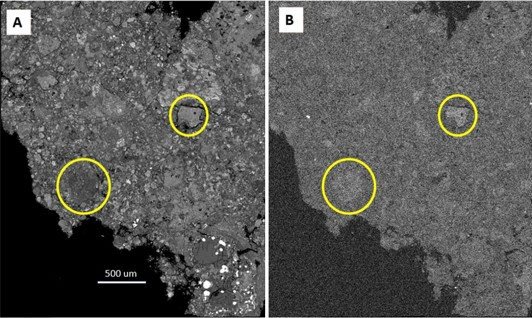
A meteorite recovered immediately upon its fall to Earth on July 16, 2024, is helping NASA scientists uncover new clues about ancient water, the chemical evolution of primitive asteroids, and the ingredients that may have helped make life possible throughout the early solar system. This rapid recovery began when an amateur astronomer in New Jersey…
“Opinion | The Statecraft of Technology”, News 18, July 14, 2026 “On October 7, 2022, the United States Commerce Department published an export regulation so dense with technical classifications that most of the world ignored it. Trade lawyers filed it under compliance. They were wrong. The rule attempted something no tariff has ever attempted: to…
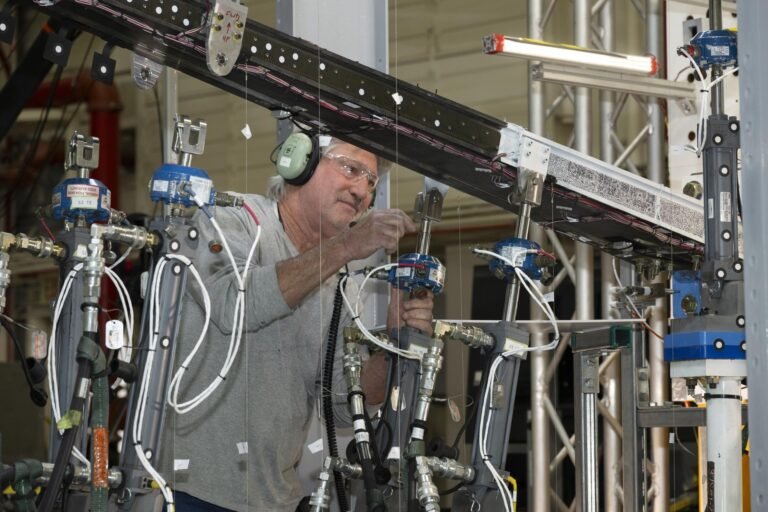
NASA researchers recently put a new wing design, appearing long and thin with a lightweight structural design, through a series of grueling tests to find its structural limits. What they found left them encouraged about the wing’s potential, even when they pushed it past its intended limits. The 15-foot Structural Wing Experiment Evaluating Truss-bracing (SWEET-15)…
India’s burgeoning deep-tech ecosystem is compelling venture capital (VC) firms to recalibrate investment timelines, as emerged from a recent Equirus InnovateX Fund press note. Unlike software firms, deep-tech startups demand extended development timeframes, primarily due to the necessity of technology validation, intellectual property creation, regulatory approvals, and manufacturing preparations before reaching commercial scalability. Since 2016,…