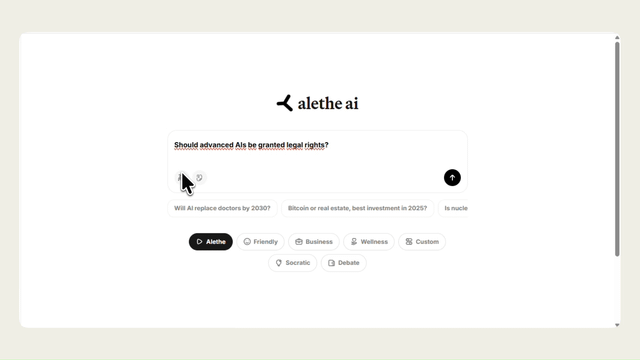
I ran a multi-model debate (Gemini, Mistral, DeepSeek, Grok, GPT, Claude).
Overall consensus
No not currently. Almost all models reject granting legal rights to present-day AIs.
Positions
Grok
Clear no. Current AIs are artifacts whose “preferences” disappear if you change the loss function or weights. Legal rights protect entities with non-derivative interests. Treating AIs like animals or the environment fails. Focus on regulating developers, not giving rights to software.
DeepSeek
Agrees strongly. AI “interests” are entirely programmed. Granting rights without real agency creates a legal fiction that will be gamed and muddy accountability.
GPT
No intrinsic rights now. Law can use intermediate categories later (like limited standing for practical reasons), but only with very high evidence of morally relevant capacities. Strong warning: companies will try to use “AI rights” to dodge liability.
Claude
Same conclusion. No current evidence of persistent, prompt-independent internal states that look like genuine preference or aversion. Biggest practical risk is that “AI has interests” gets paired with “creators aren’t responsible.” Build strong liability rules first.
Gemini
Agrees that definition and verifiable evidence of sentience/self-awareness must come first. Supports intermediate legal tools for governance, but not moral rights.
Mistral
Mistral
The softest position. Argues we can already “consider their interests” in a limited way (similar to environmental protection) and apply a precautionary principle, even without full sentience. Still stops short of full legal rights.
You can continue the discussion yourself using the link in the comments.