Telling our story beyond biopharma’s echo chamber
Scientific breakthroughs have the power to change lives, but science itself is not the only contributor to their impact. The 2026 BiotechTV U.S. Science Summit, presented by title sponsors MassBio and BIO, brought together biotech leaders, researchers, investors and science communicators to discuss the opportunities and challenges shaping the future of the industry. Throughout the event, speakers emphasized that advancing medicine depends not only on innovation in the lab, but also on building public trust, communicating with transparency, and helping more people understand the science behind today’s breakthroughs. These four takeaways highlight why effective communication is just as important as scientific discovery in advancing the future of biotechnology.
The industry must tell its story beyond biotech
The Summit opened with a challenge to the biotech community: scientific breakthroughs alone are not enough if the public does not understand the work behind them. MassBio CEO & President Kendalle Burlin O’Connell urged the industry to move beyond telling its story to itself and instead engage the communities it serves. While Massachusetts is home to one of the world’s leading biotech ecosystems, it is also home to patients and families whose lives depend on continued innovation. Yet much of the public sees only the end result—not the years of research, setbacks, and perseverance required to develop new therapies. “In some cases, they didn’t think that they would have a tomorrow. But because of the work that this industry has done, they do,” Burlin O’Connell said. The future of biotechnology depends not only on advancing science, but also on helping the public understand the purpose, persistence, and human impact behind every breakthrough.
Public trust must be earned – not assumed
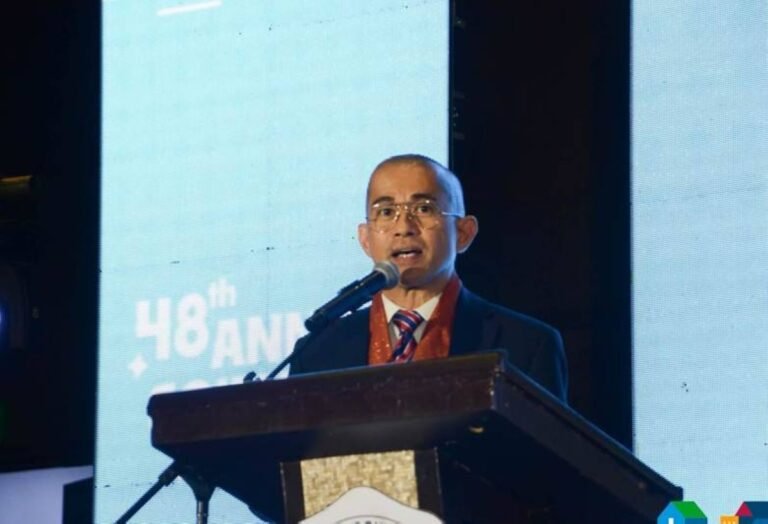
If the biotech industry is to tell its story more effectively, it must first understand why that story has become more difficult to tell. Former NIH Director Dr. Elias Zerhouni reflected on the historical foundation that made the United States a global leader in biomedical research, arguing that scientific leadership has always depended on more than funding alone. Culture, collaboration, and public confidence have been equally essential.
Today, that confidence has eroded. Dr. Zerhouni noted that public trust in science and institutions has declined dramatically over the past several decades, leaving many people skeptical of both scientific research and the organizations behind it. Rebuilding that trust, he argued, requires scientists to communicate differently – meeting people where they are, listening to their concerns, and connecting scientific advances to the experiences of patients and families. Maintaining America’s leadership in biotechnology will depend not only on continued investment in research, but also on the courage to engage openly with the public and earn their trust.
Great science needs great storytellers
Effective science communication begins with understanding the audience. Responding to an audience member’s question about tailoring messages to different groups, Dr. Zerhouni agreed that there is no one-size-fits-all audience for science–no so-called “general public.” Researchers and organizations must instead tailor their message to the people they hope to reach, whether patients, caregivers, policymakers, or future scientists. Clear communication is not about simplifying science itself, but about making it relevant, accessible, and meaningful.
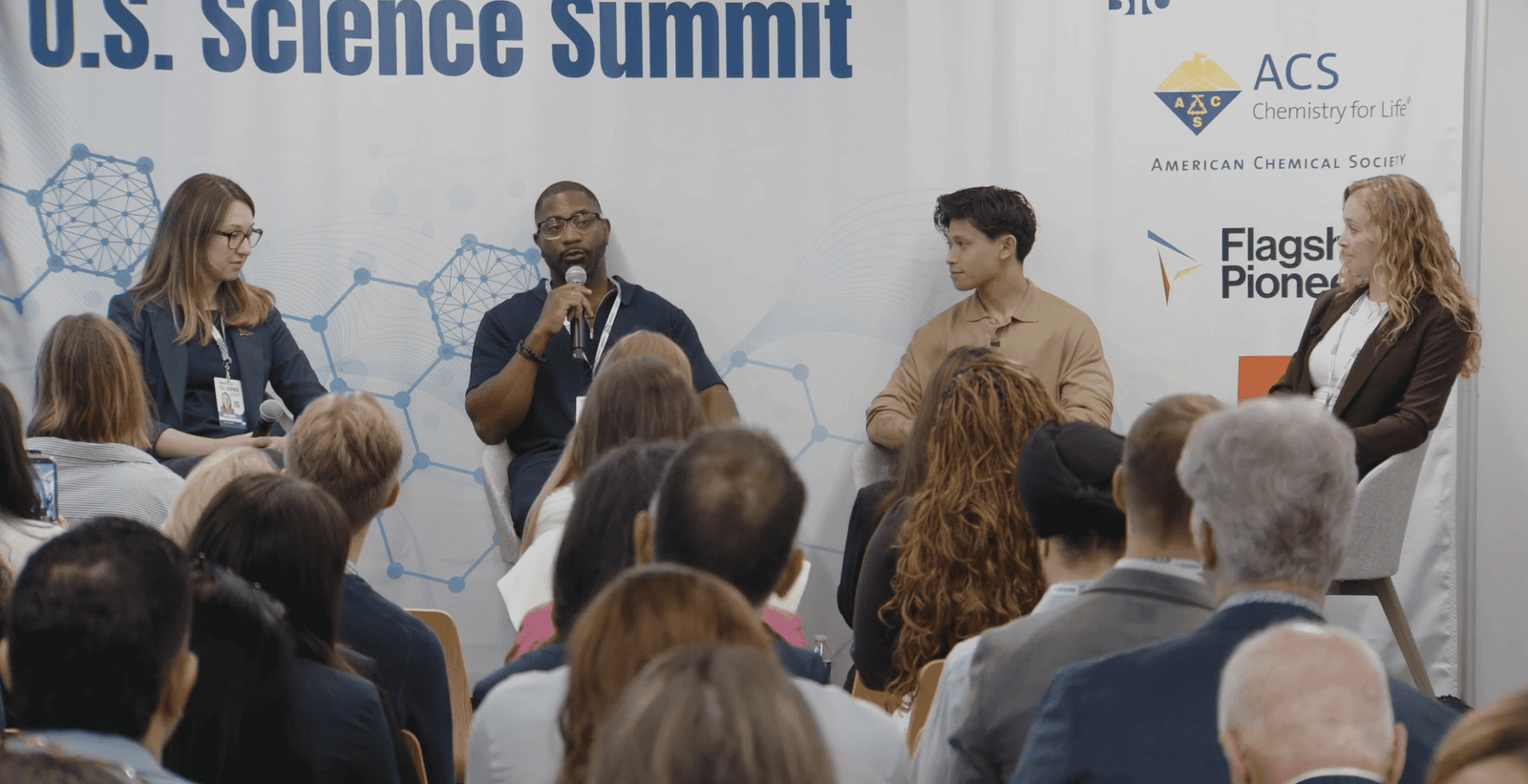
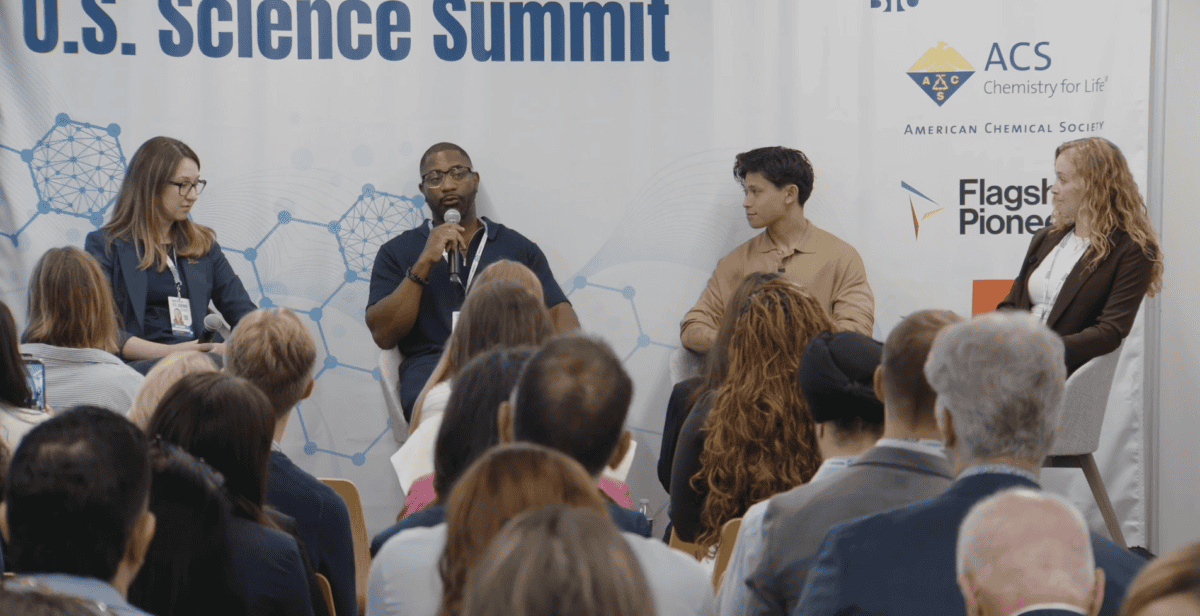
Science communicators and digital creators expanded on that idea during a panel featuring Gabriel Astorga (@GoodOlGab), Maynard Okereke (@HipHopScienceShow), and Alex Dainis (@AlexDainis), who built large online audiences by translating complex scientific concepts into engaging, accessible stories. The panelists, in conversation with Chloe Kirk (@chloe.the.scientist), described storytelling as a skill that can make science more approachable without sacrificing accuracy. They encouraged scientists and companies to meet audiences where they are, speak with empathy, and invite people into the scientific process rather than only sharing the final breakthrough. By making science more accessible and relatable, they argued, the industry can build stronger relationships with the public and foster greater trust in scientific innovation.
Science communication should invite people into the process
The panelists also challenged the traditional way scientific discoveries are communicated. Too often, they argued, the public only sees the final result–a published study, a new therapy, or a company announcement–without understanding the years of experimentation, uncertainty, and iterations that made those breakthroughs possible. By sharing more of the scientific process, communicators can help audiences better understand why scientific knowledge evolves and why changing conclusions are a natural part of research, not a sign that science has failed.
Building public trust requires more than clear explanations. The panelists encouraged scientists and organizations to communicate with empathy, answer questions openly, and create opportunities for people to engage with science rather than simply observe it. As Dainis shared, one comment from a follower captured the kind of relationship she hopes to build: “I’m so glad that I have a scientist that I kind of know that I can ask these questions to.” The panel concluded that the value of science communicators extends far beyond the size of their audiences. Their greatest strength is the credibility they have earned by consistently providing trustworthy, accessible information and helping more people feel included in the conversation about science.
The conversations at the 2026 BiotechTV U.S. Science Summit made one thing clear: the future of biotechnology relies on more than scientific discovery alone. As innovation continues to transform healthcare, the industry also needs to invest in building trust, communicating with transparency, and helping more people understand the story behind each scientific breakthrough. Science has the power to change lives, but only if its story is told in a way that people can understand, believe in, and connect with.
Maeve O’Hara is a marketing and communications intern at MassBio and a rising senior at Penn State University, where she is pursuing a degree in advertising.