Tempel’s trail strengthens | Astronomy Magazine
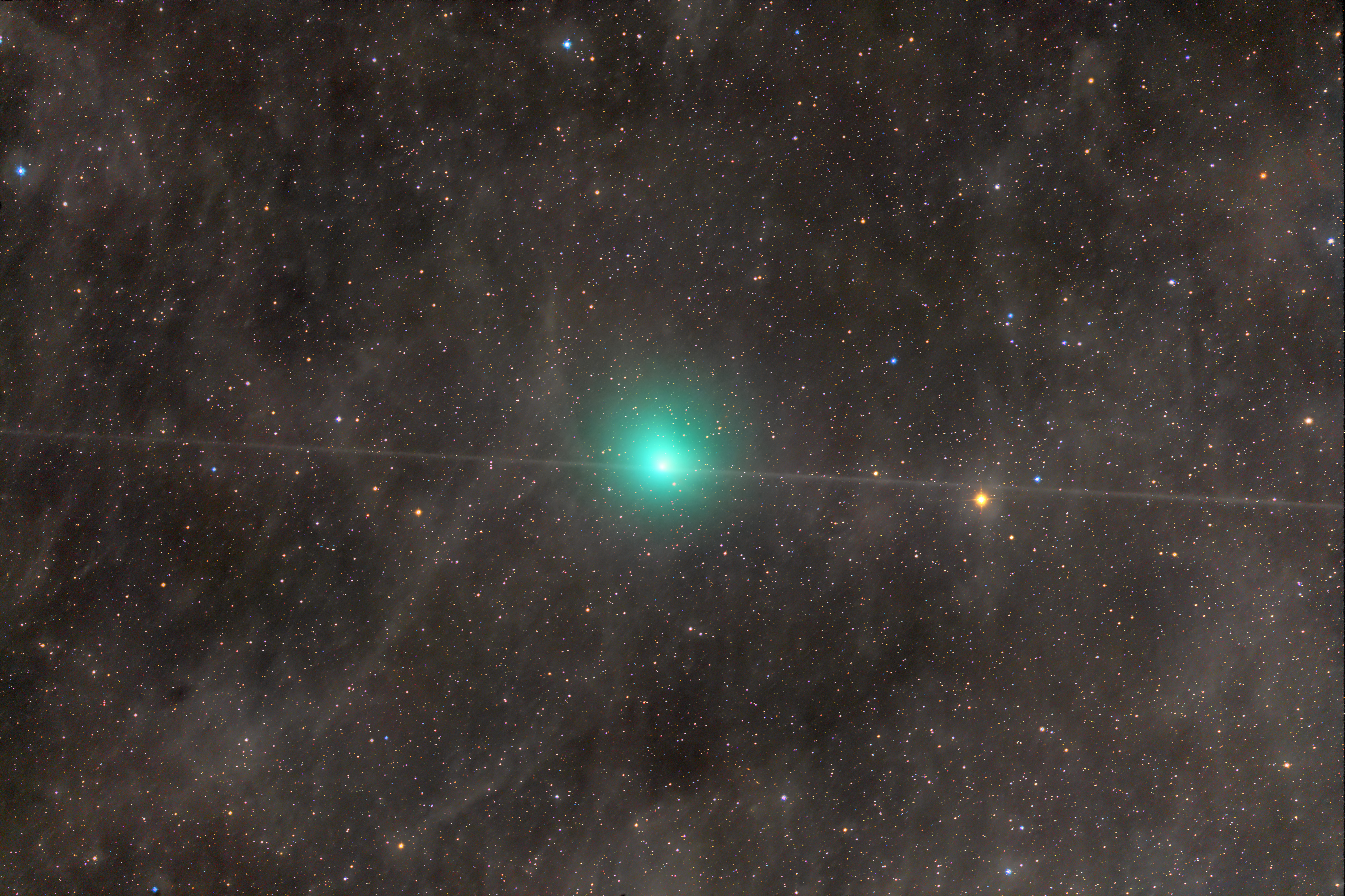
Chris Schur, taken from Happy Jack, Arizona
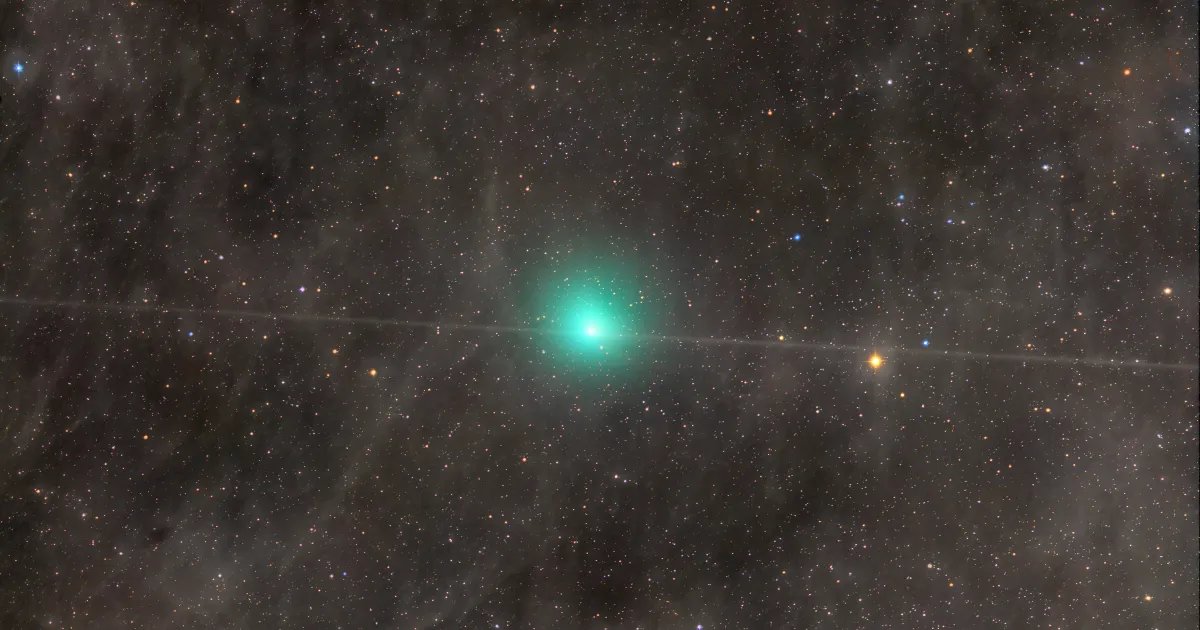
Comet 10P/Tempel 2’s needle-thin dust trail stands out starkly in this image captured earlier this month as the comet was crossing Capricornus, heading toward its Aug. 2 perihelion. This trail of dust is not a traditional comet’s tail, directly blown out by the Sun — rather, it’s dust that has built up in its orbit over time. Such features were first detected throughout our solar system in 1983 by NASA’s Infrared Astronomical Satellite (IRAS), with Tempel 2’s being one of the first. The imager captured one hour of exposure in LRGB filters with an 11-inch f/2.2 astrograph.