Observers and imagers live for comets. Here are the top 20 from the past quarter-century.
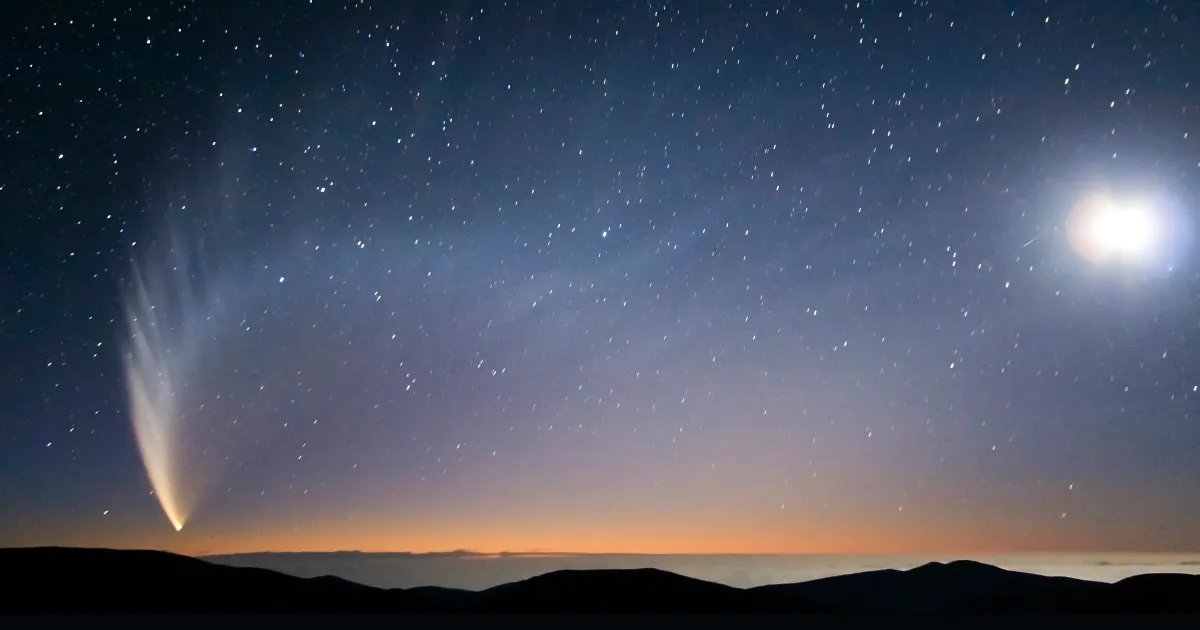
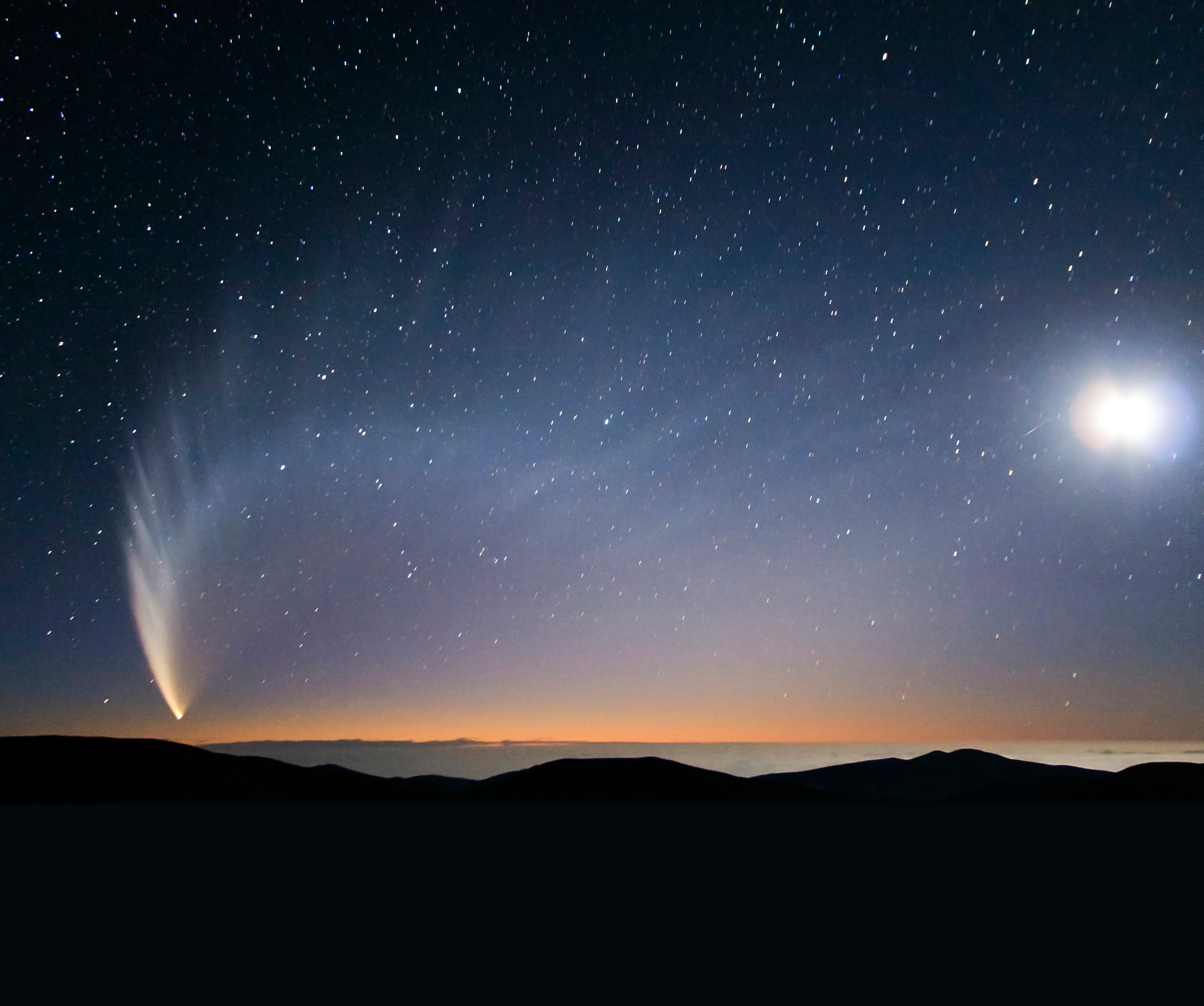
Comet 2006 P1 (McNaught) was a truly spectacular sight throughout the Southern Hemisphere. This image, taken from the European Southern Observatory’s Paranal Observatory in Chile in January 2007, shows the comet and a crescent Moon over the Pacific Ocean. Credit: S. Deiries/ESO, CC BY 4.0
Comets are small, roundish bodies made of dust grains mixed with ice. Most travel along elliptical orbits that occasionally bring them close to the Sun.
The main icy body of the comet is its nucleus. It’s small, generally less than 6 miles (10 kilometers) in diameter. When far from the Sun, comets appear faint because we’re seeing only sunlight reflected off the tiny, frozen nucleus.
But as a comet journeys into the solar system, its radiation begins sublimating the ice, turning it into gas. This forms a cloud of thin material around the nucleus — called the coma — that grows in size and brightness as the comet approaches the Sun. The coma has two ingredients: dust, which reflects more sunlight than the nucleus, and gas, which absorbs ultraviolet radiation and fluoresces.
As comets approach the Sun, they also develop tails of luminous material that extend from the heads. Tails of great comets can be enormous, stretching for tens of millions of miles. The solar wind pushes material away from a comet at different speeds depending on the size and mass of the particles. This can create two types of tails. A dust tail tends to curve because the Sun’s radiation gently pushes on the dust particles; since some dust specks have more mass and are less susceptible to this radiation pressure than others, the dust tail bends and fans out. An ion tail is composed of electrically charged gases with much less mass, so it is swept up in the Sun’s magnetic field along with the solar wind, moving in a nearly straight line pointing away from the Sun.
It’s a sad fact for amateur astronomers that bright comets just don’t come around all that often. And even when one does appear (seemingly out of nowhere), there’s a 50 percent chance that the best views will be reserved for observers on the other side of the equator from you.
With these two factors in mind, I thought it might be nice to revisit some of the best comets that have been visible in our skies in the 21st century. How many do you remember?
Jump between images using j/k or the left and right arrows on your keyboard.
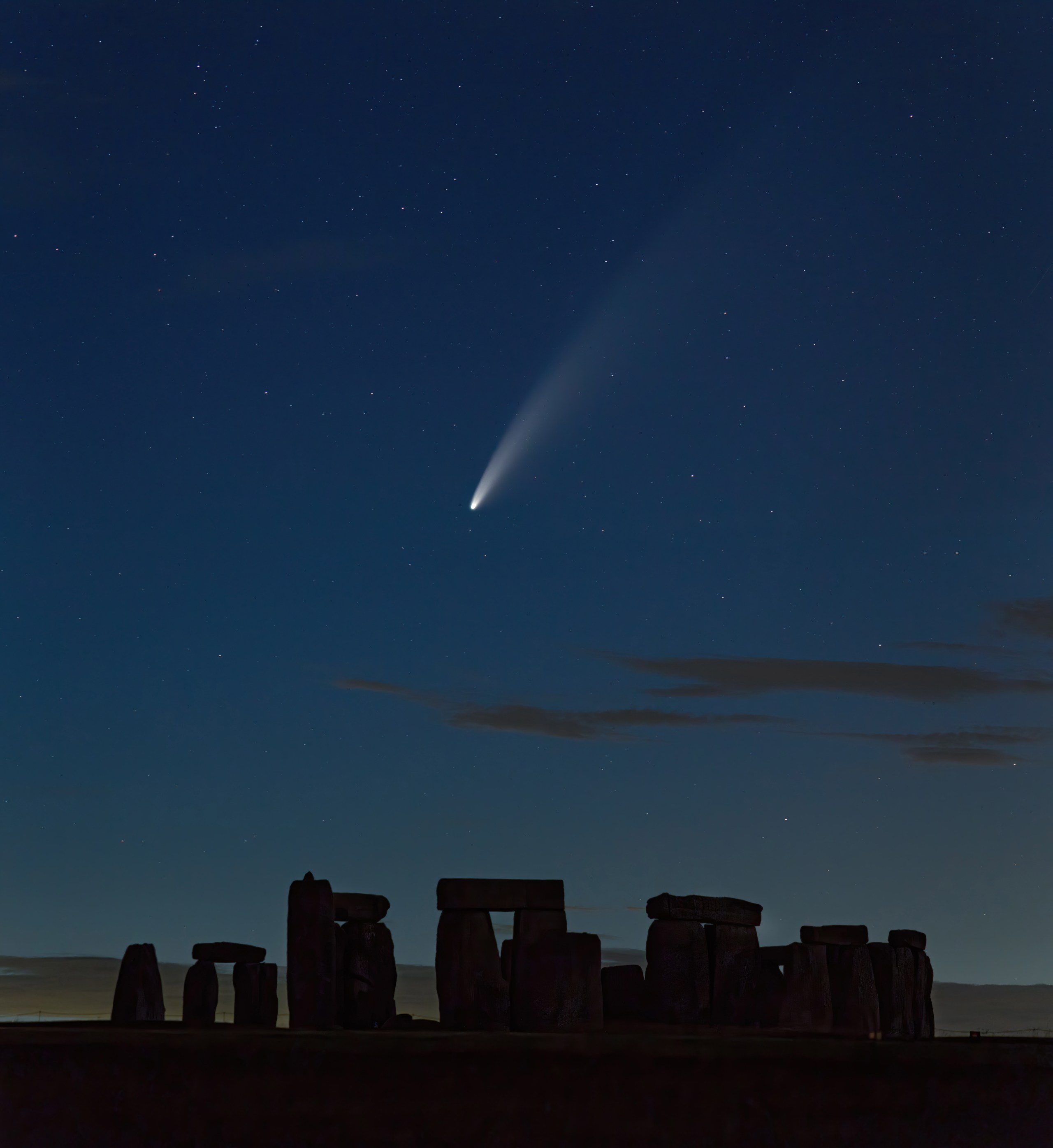
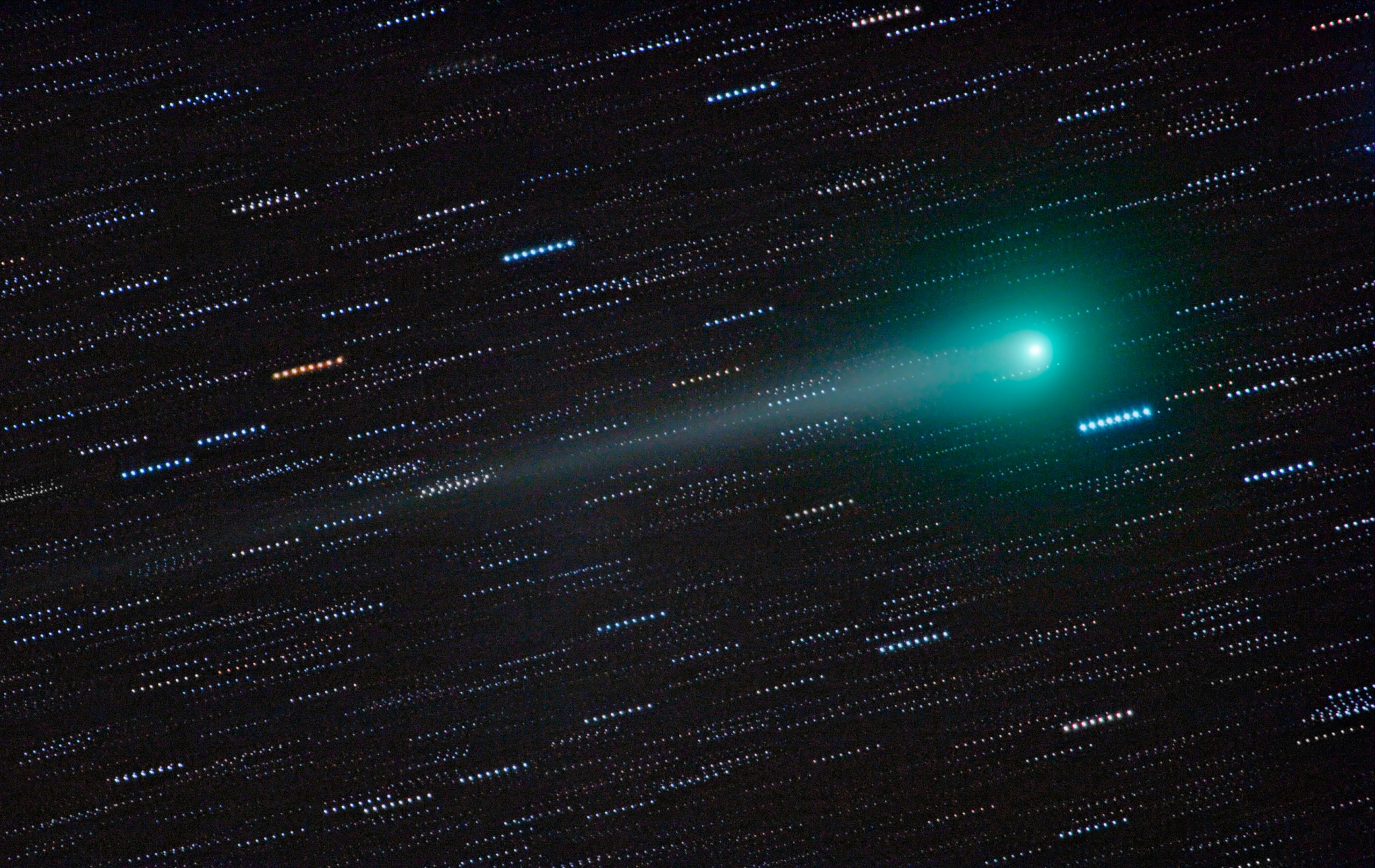
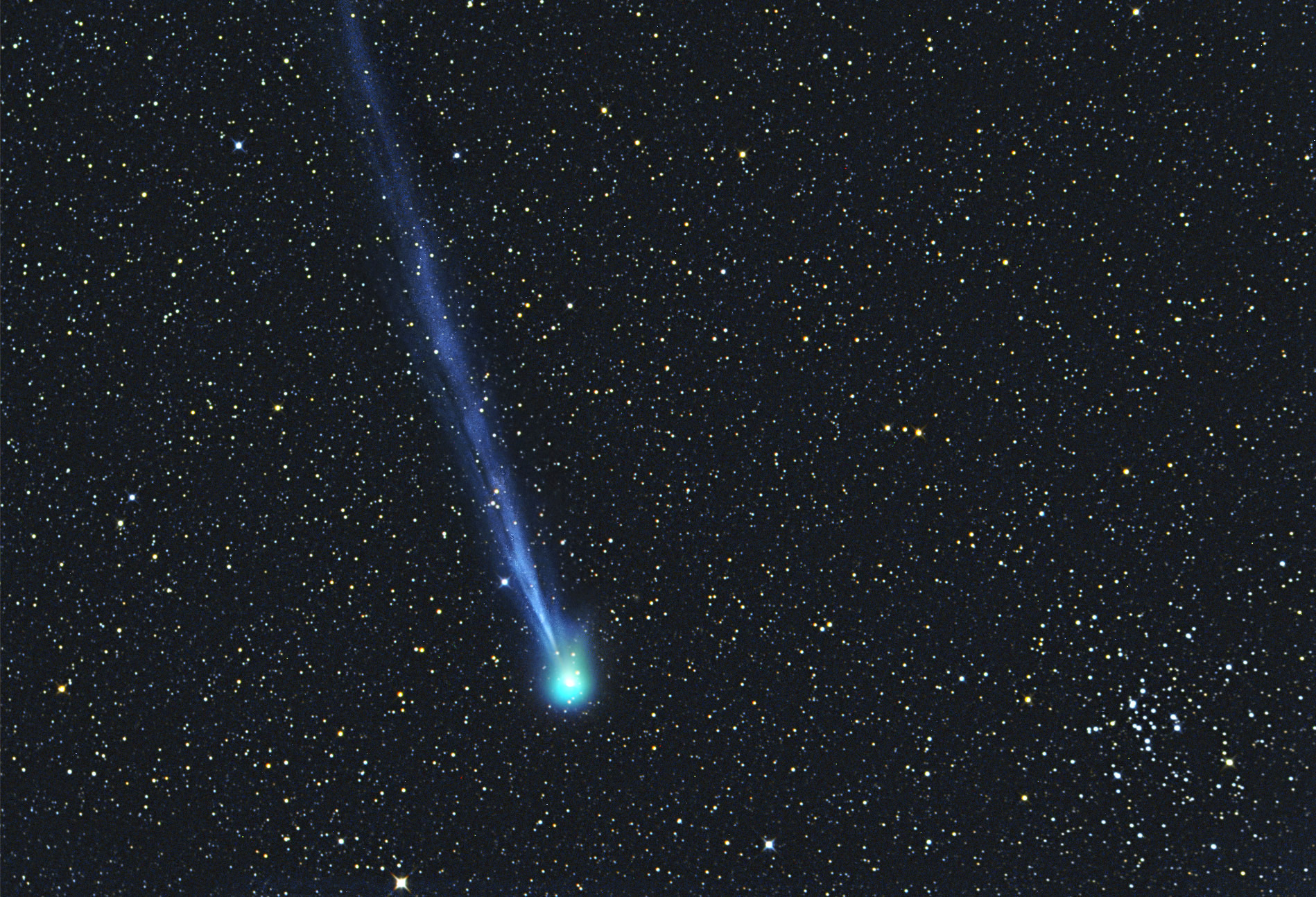
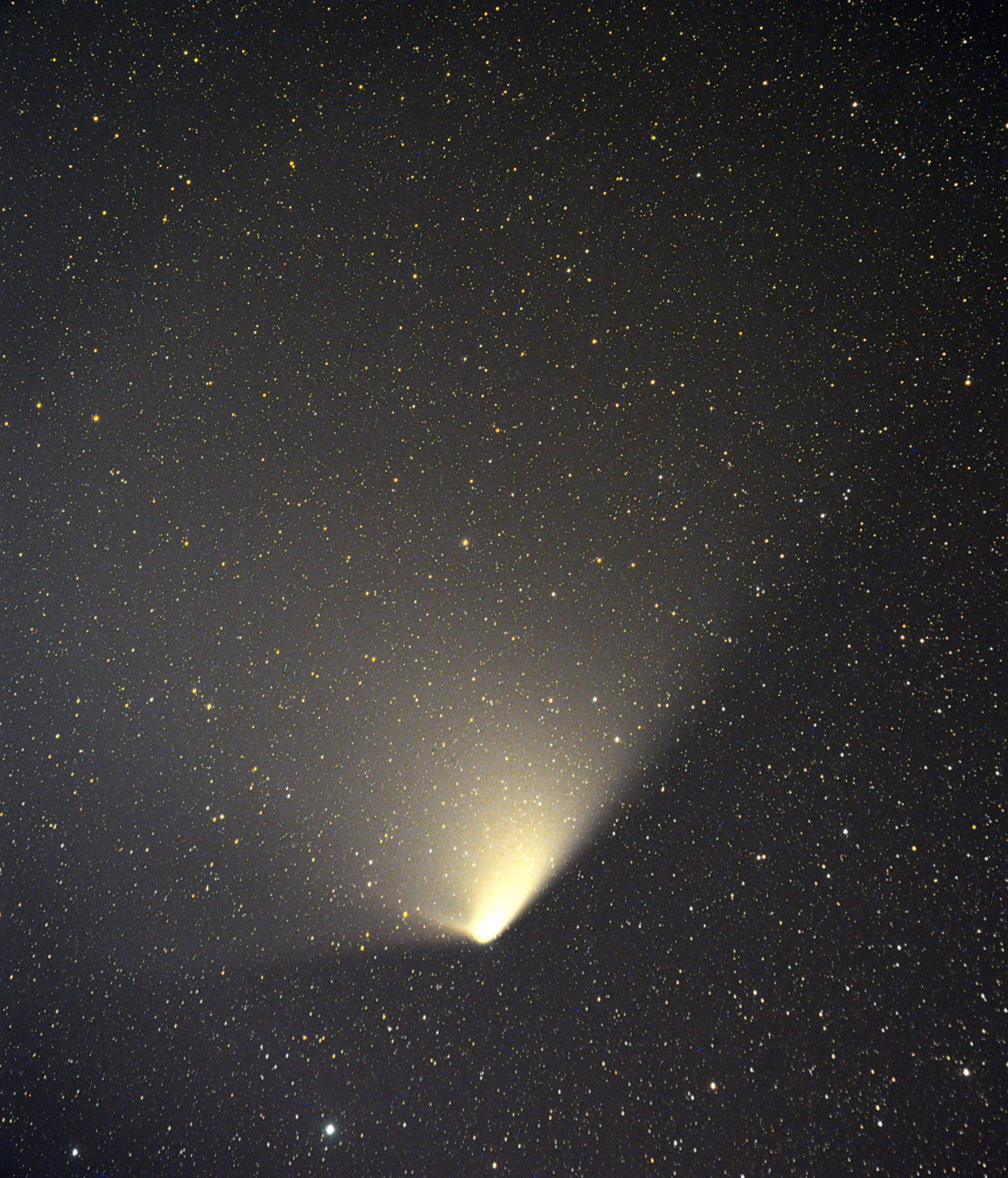
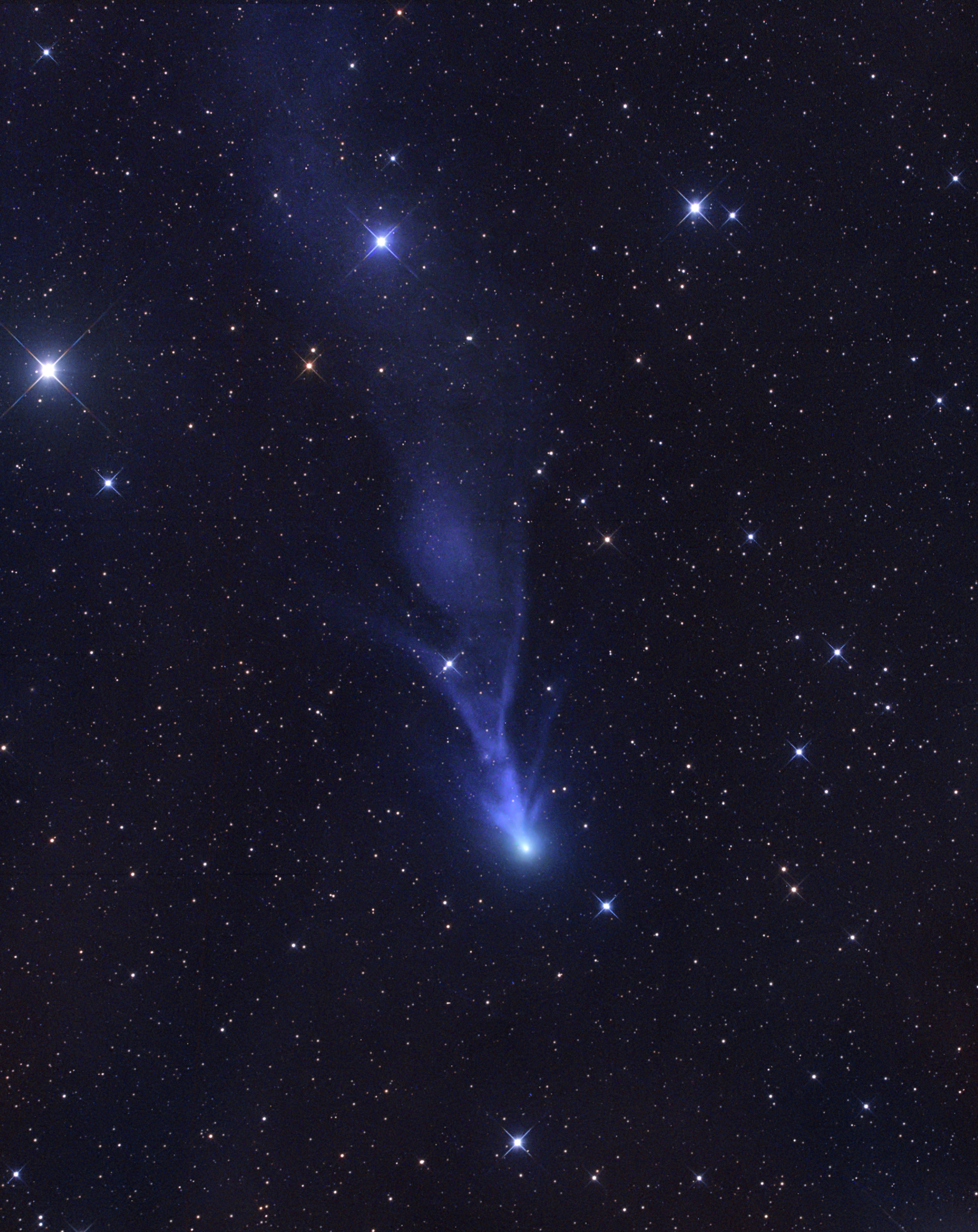
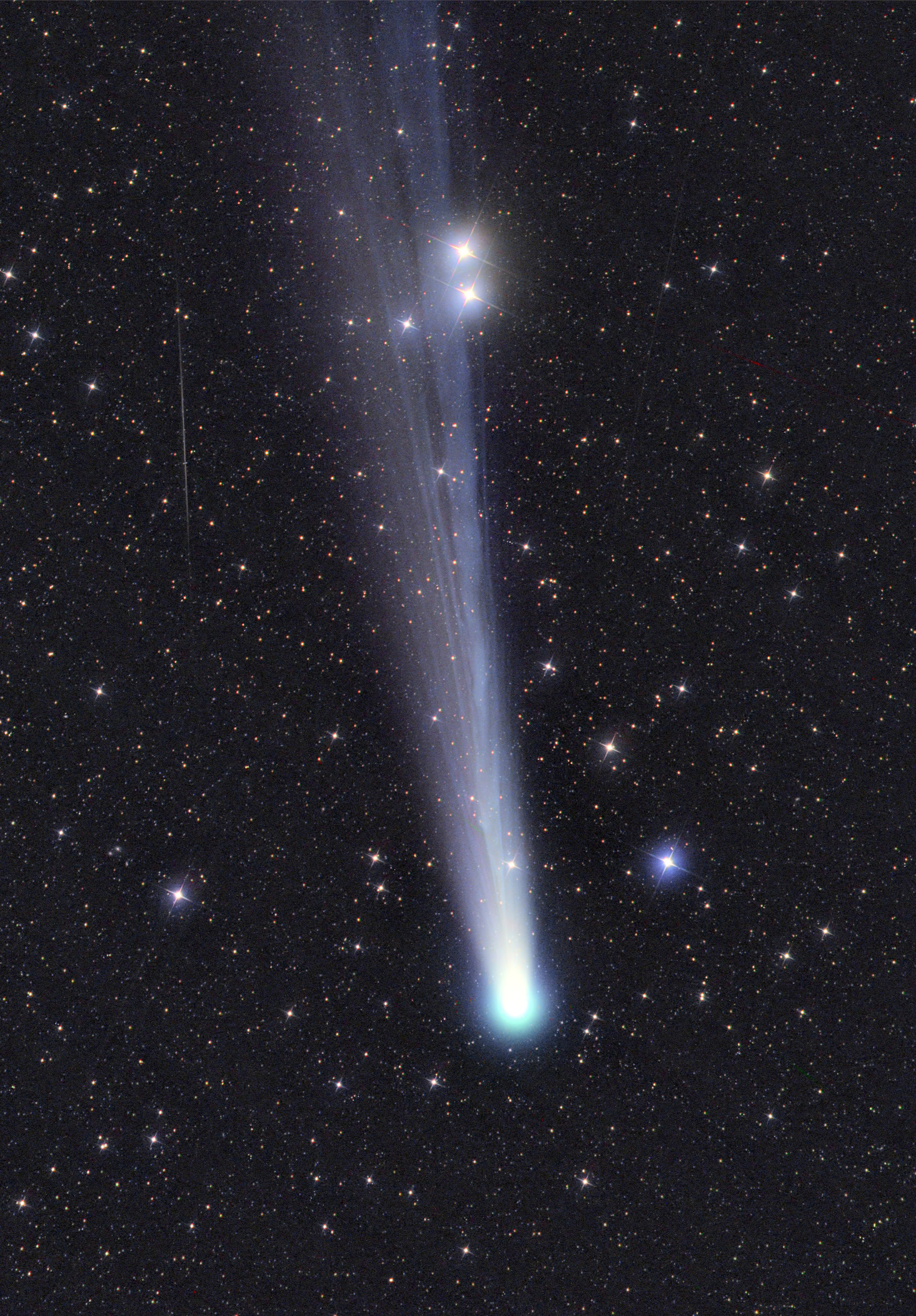
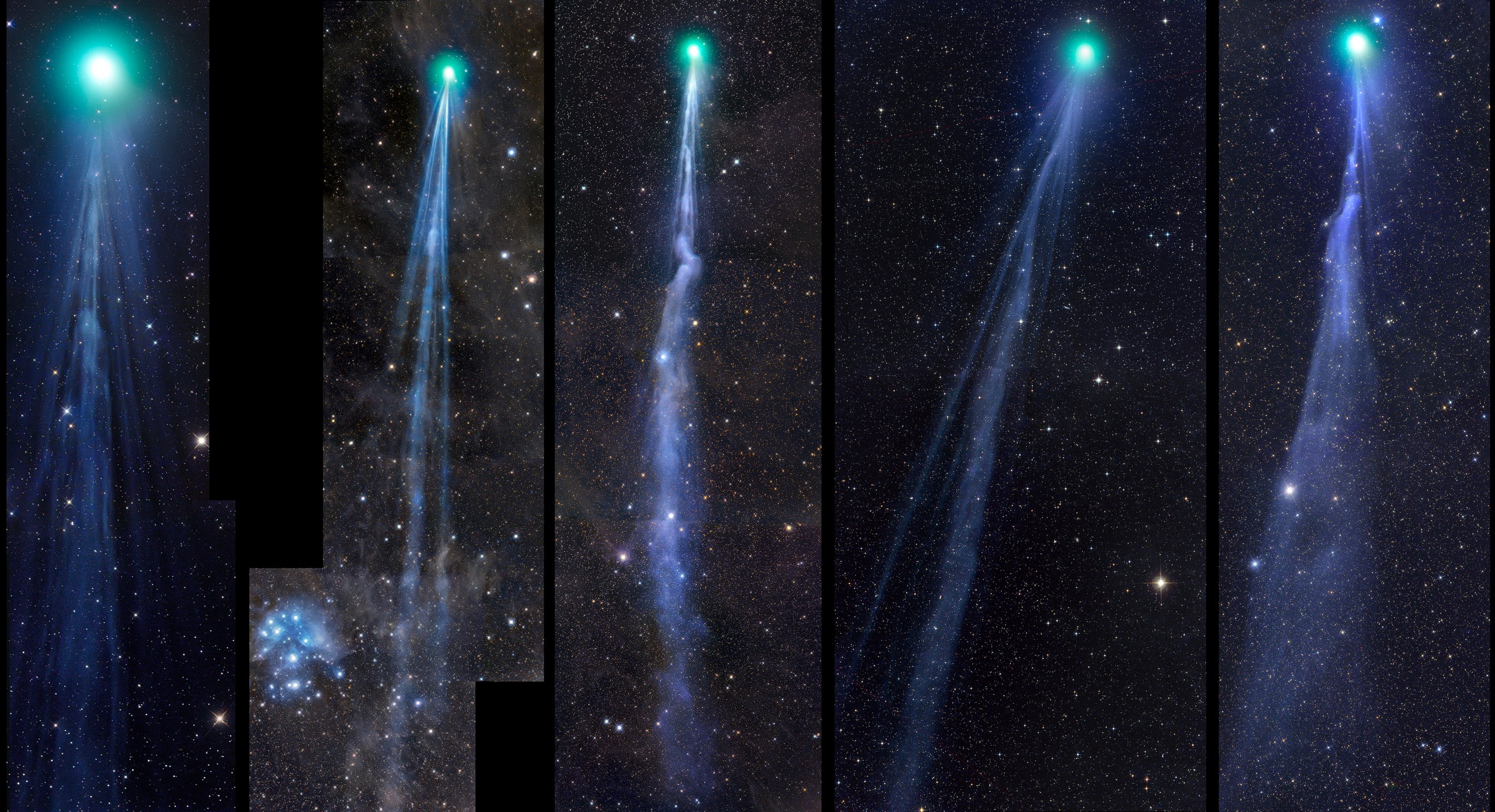
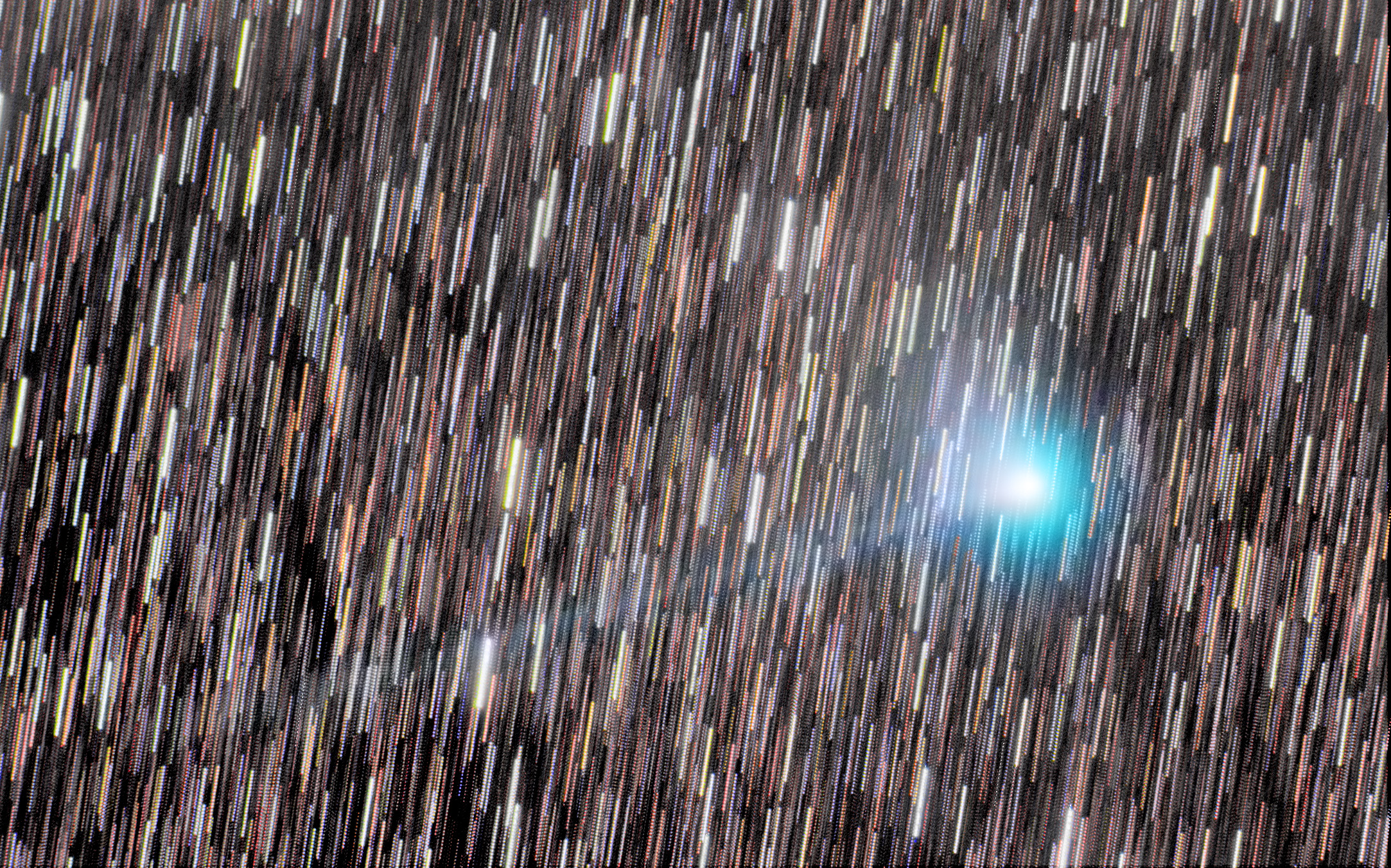
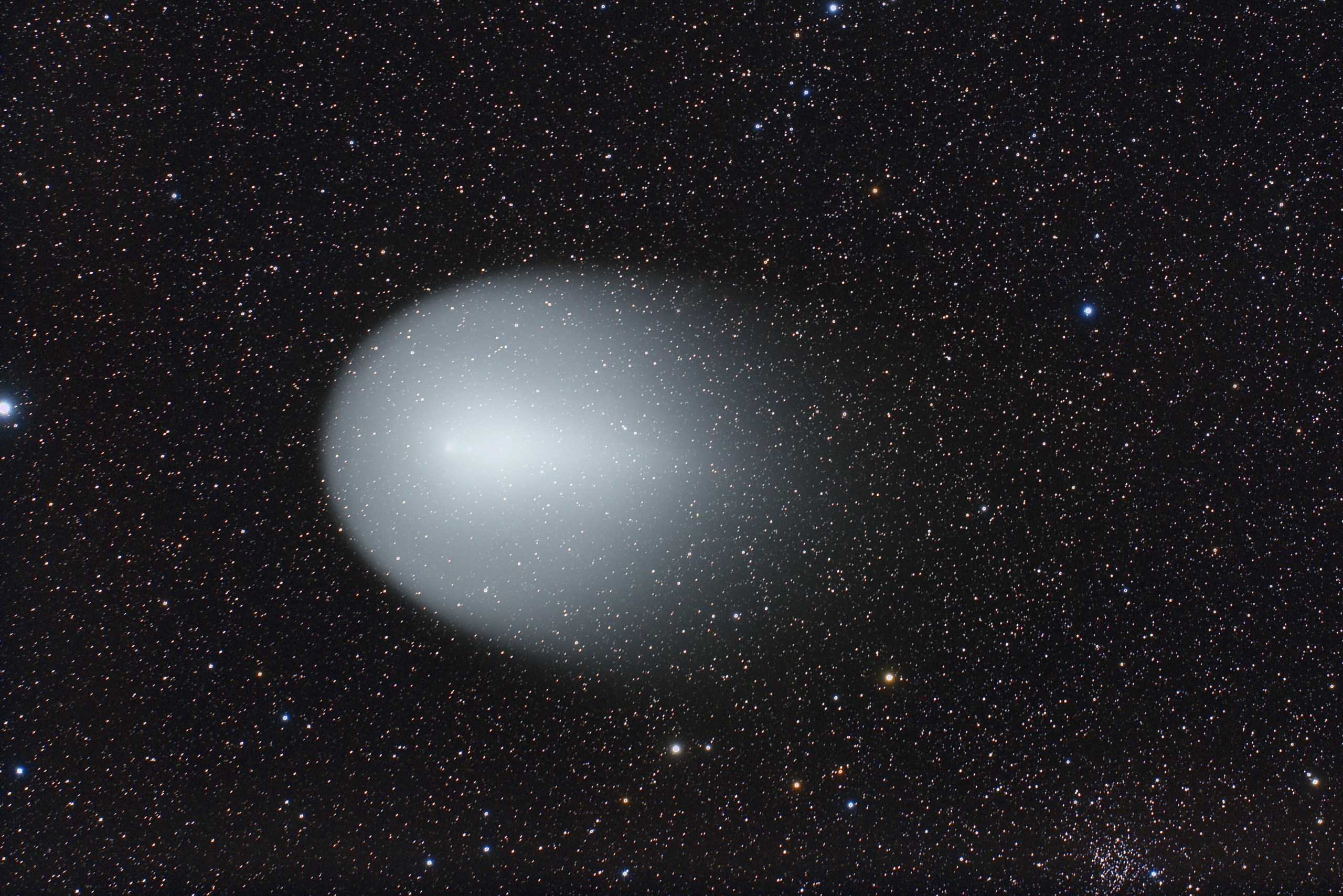
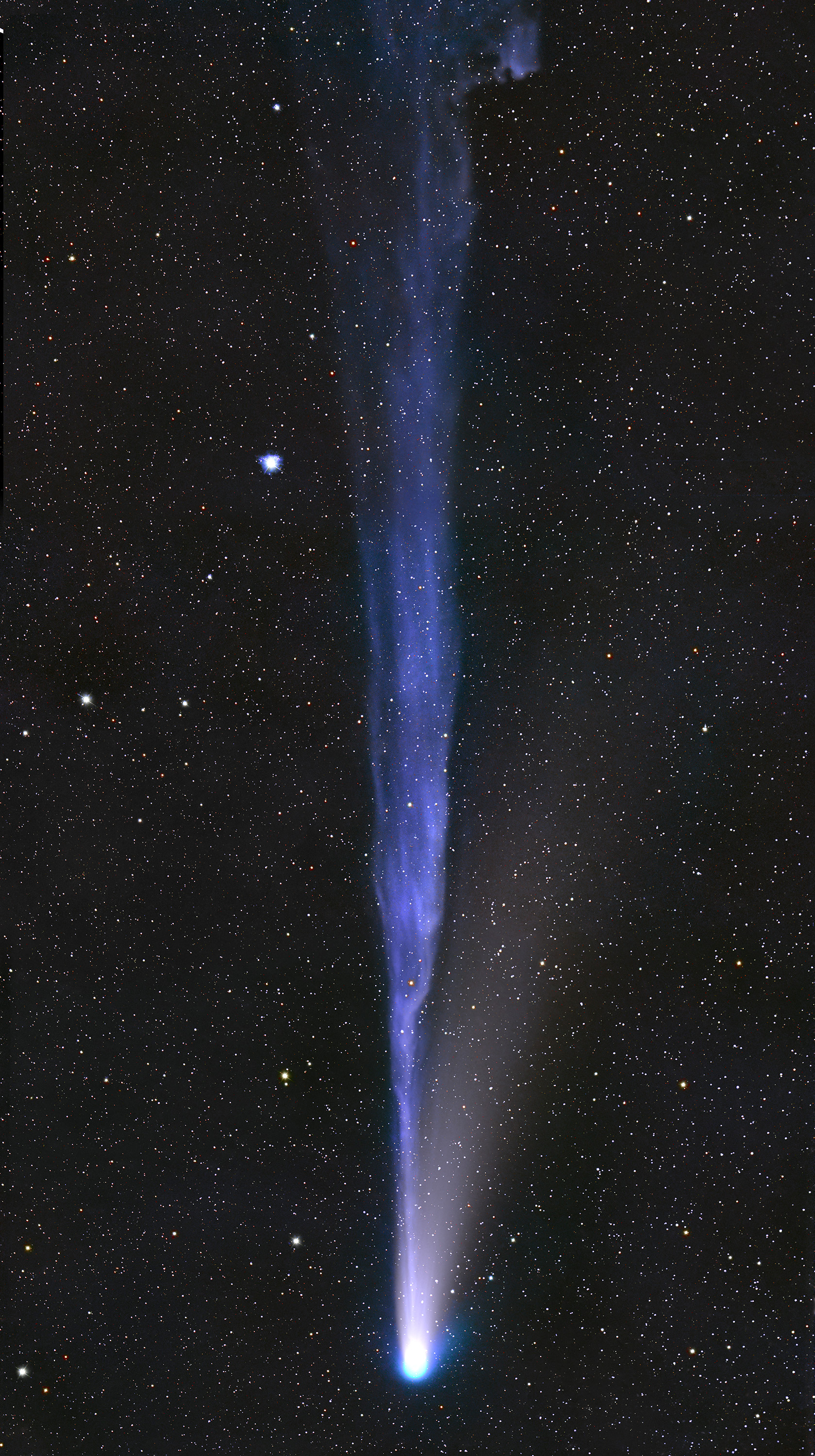
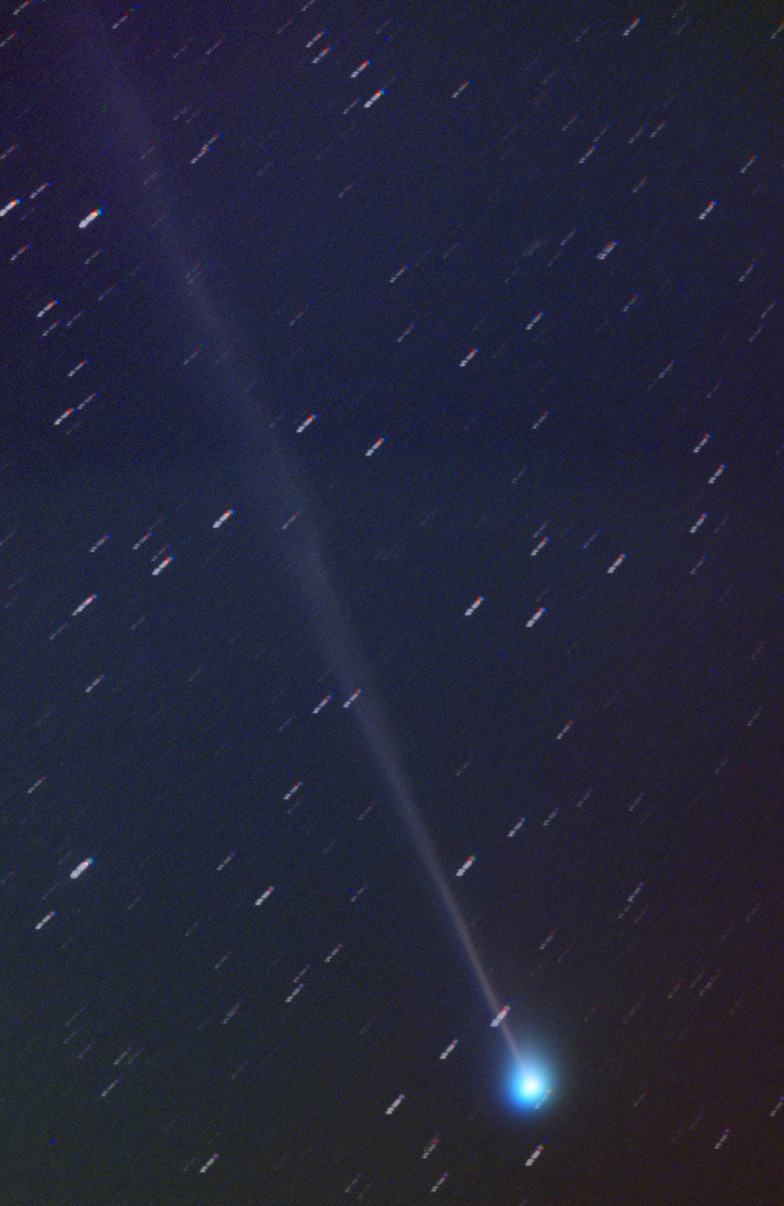
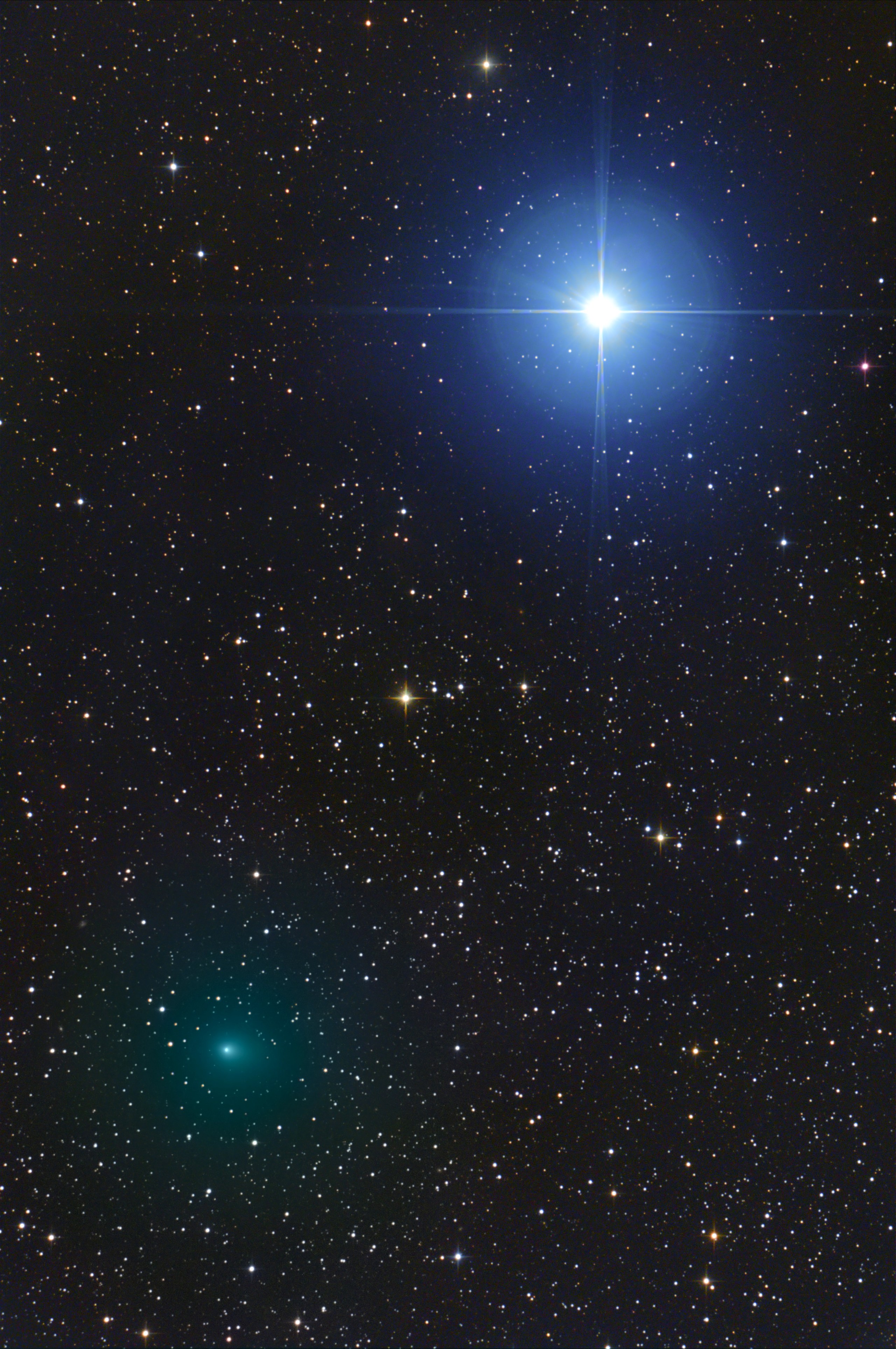
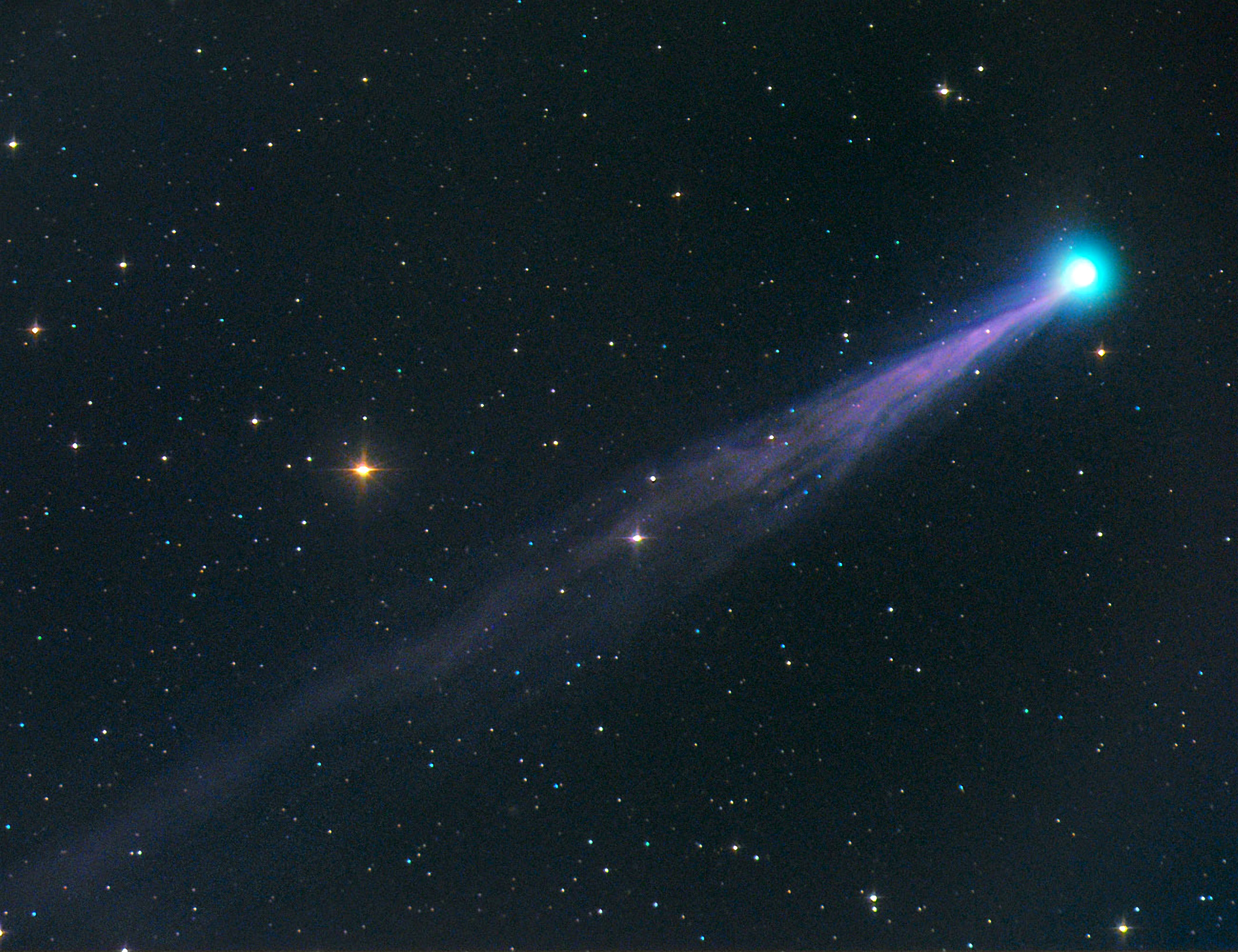
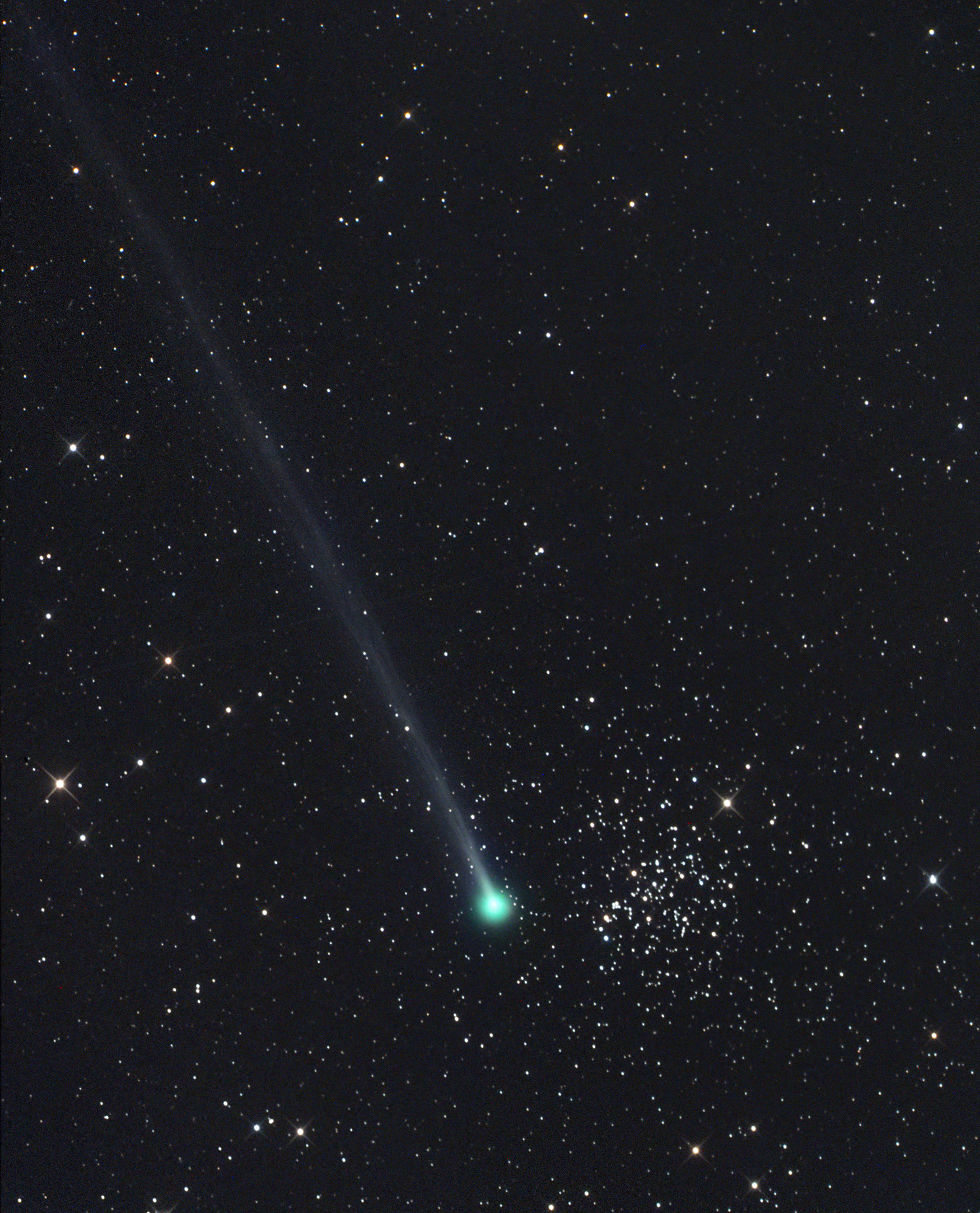
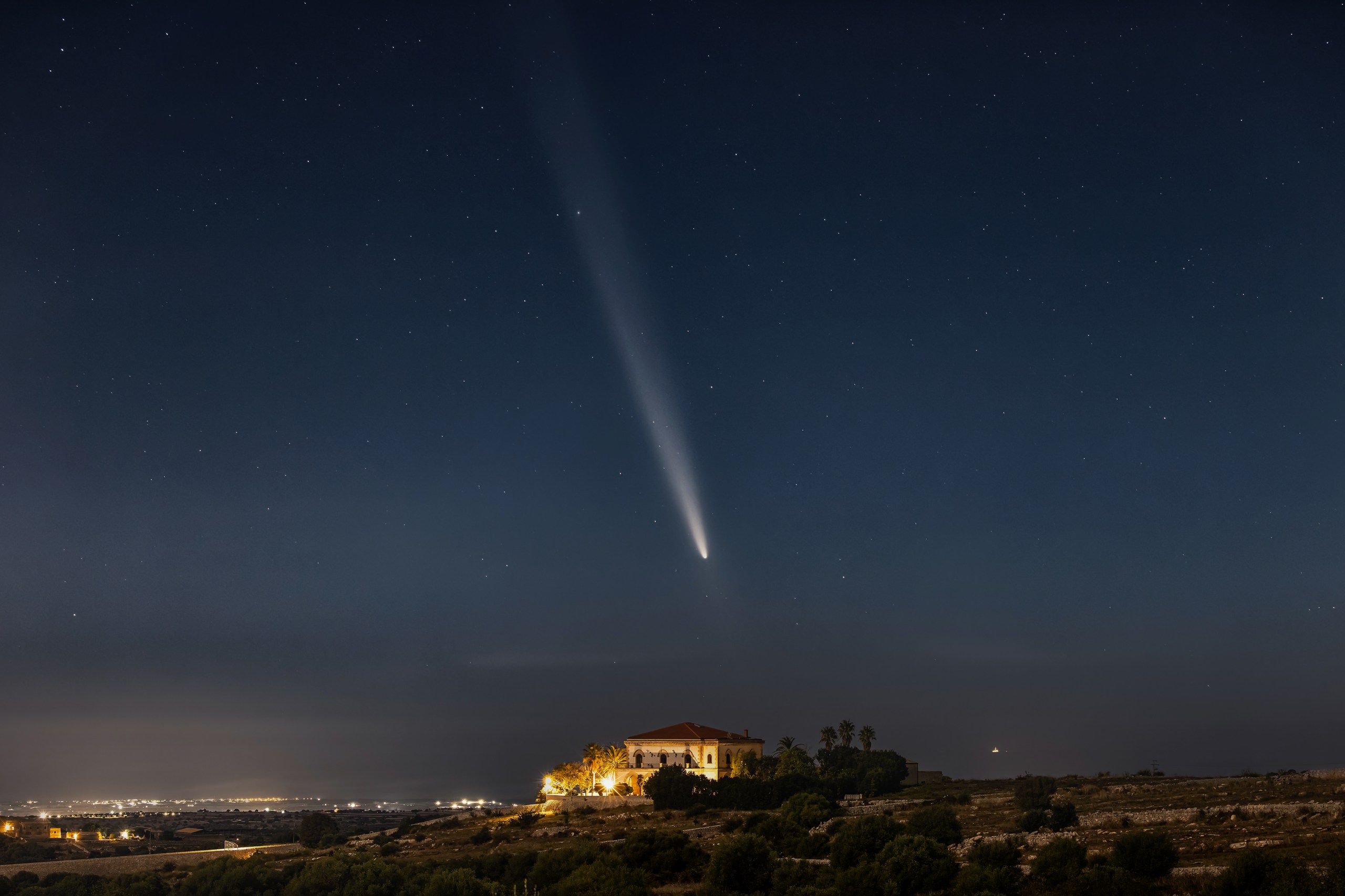
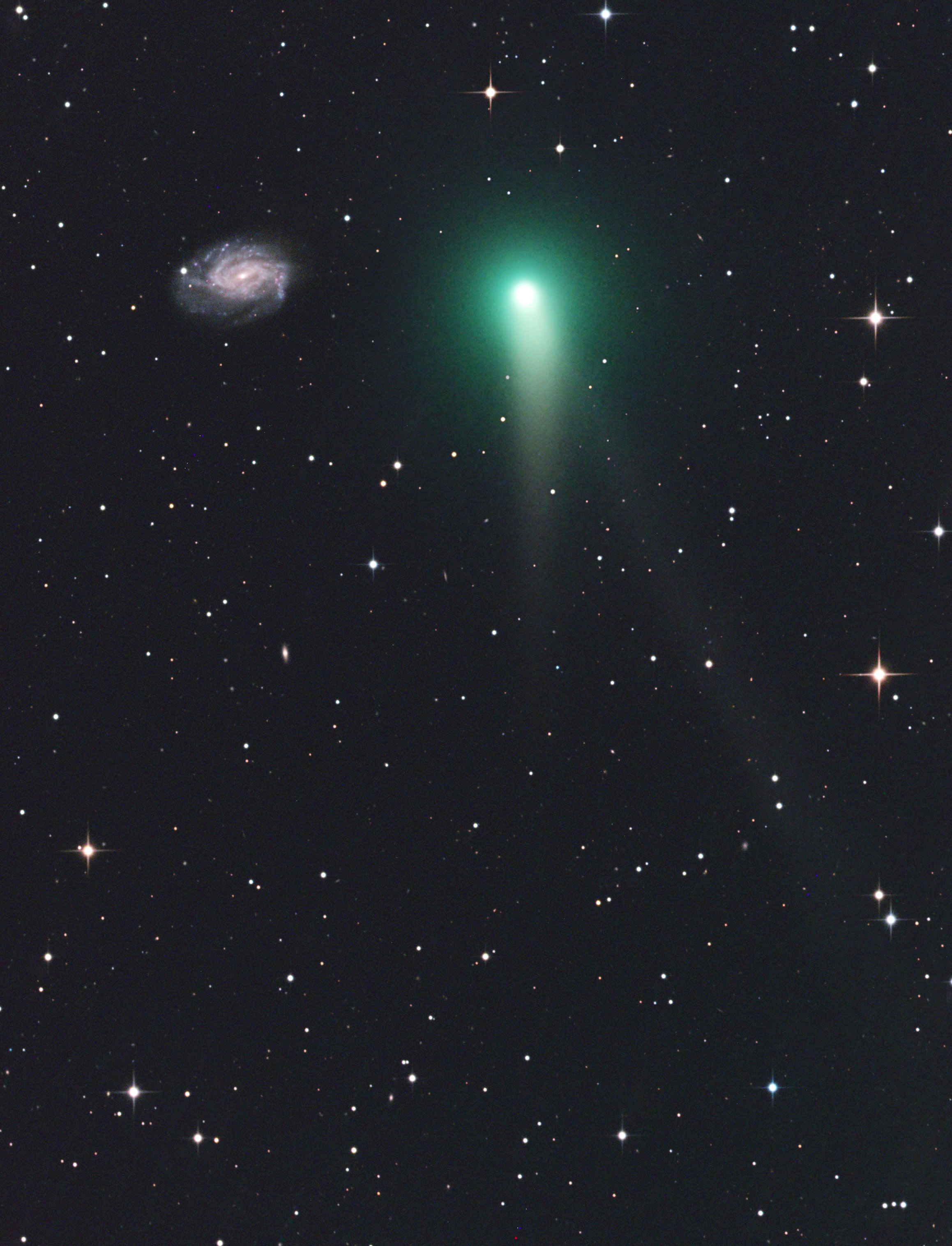
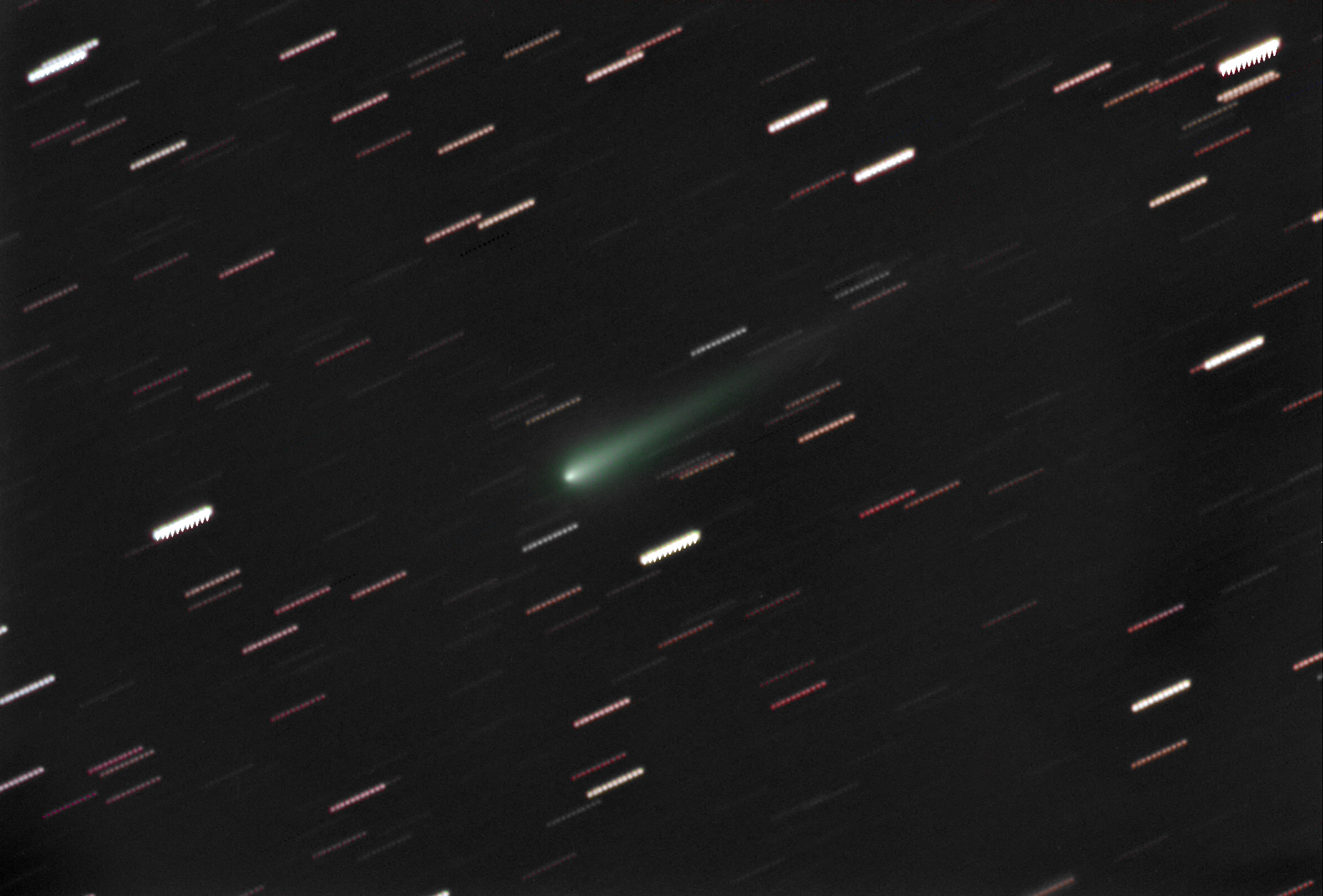
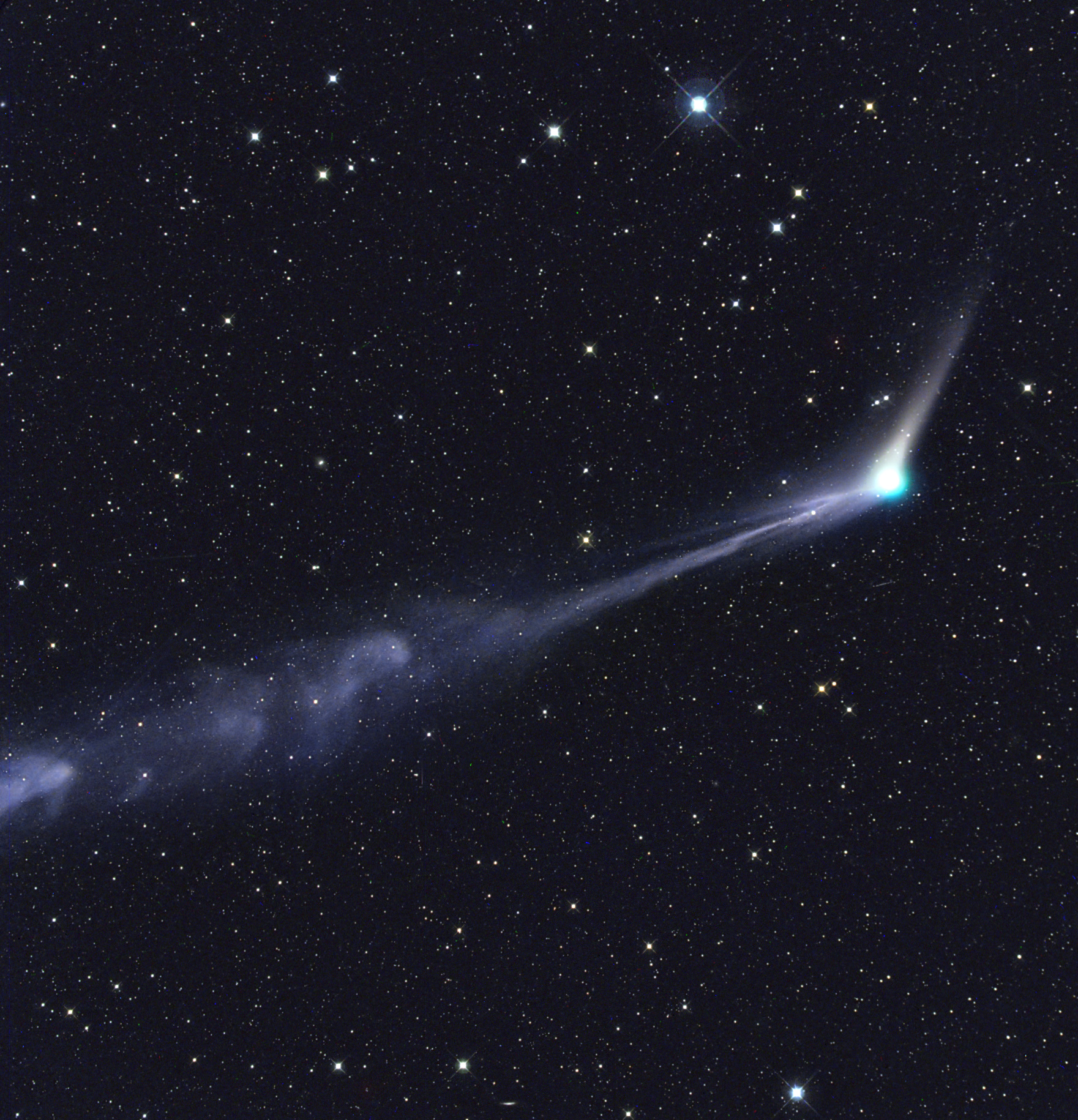
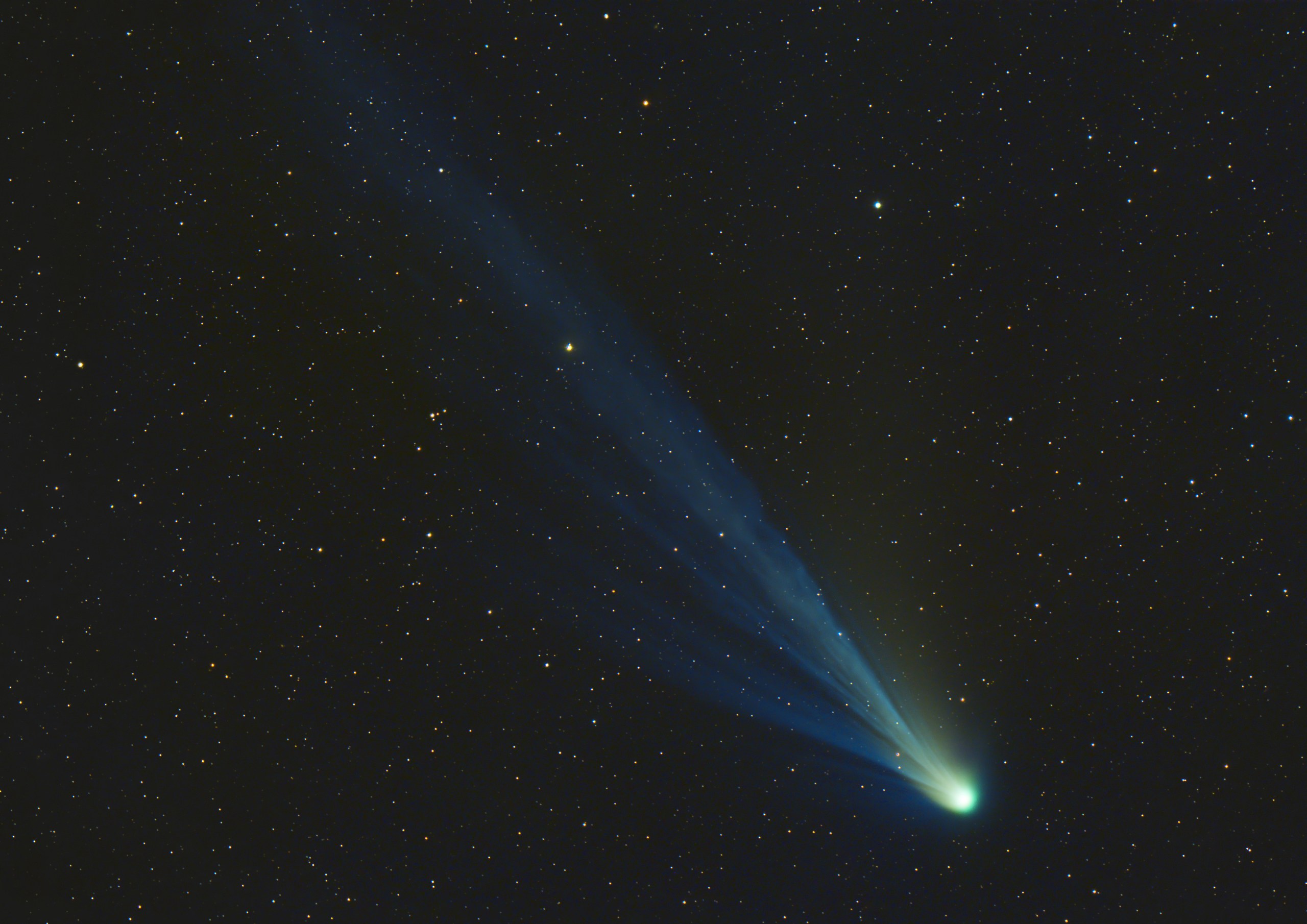
One of the brightest recent comets was C/2020 F3 (NEOWISE). During July 2020, the comet reached 1st magnitude and was an easily visible object to the naked eye. This image shows the comet above Stonehenge. The photographer used a Canon 6D DSLR with a 200mm lens at f/3.5 and an ISO of 1000, and took a 6-second untracked exposure. Credit: Jamie CooperComet 2007 N3 (Lulin) was the subject of numerous comet photos because of its intense anti-tail — dust in the comet’s orbital plane projected onto the comet’s head. This image, taken Feb. 27, 2009, combines eight 5-minute exposures tracking on the comet’s head. Because of the time between exposures, gaps can be seen between the background star images. Credit: Chris SchurAnother Comet McNaught (Robert H. McNaught discovered 82 comets!), C/2009 R1 (McNaught) was quite the sight when this image was captured June 10, 2010, from Farm Tivoli, Namibia. Credit: Gerald RhemannComet 2006 P1 (McNaught) was a truly spectacular sight throughout the Southern Hemisphere. This image, taken from the European Southern Observatory’s Paranal Observatory in Chile in January 2007, shows the comet and a crescent Moon over the Pacific Ocean. Credit: S. Deiries/ESO, CC BY 4.0C/2011 L4 (PanSTARRS) reached 1st magnitude when it arrived at perihelion in March 2013. This image, which shows the amazing fan-shaped tail, was taken April 8 through a 4-inch refractor from Jauerling, Austria. Credit: Gerald Rhemann C/2016 R2 (PanSTARRS) was three months past its May 2018 perihelion passage when this image was taken, but its tail still showed some amazing changes. This RGB image combined 32, 12, and 12 minutes of exposure through each filter, respectively. Credit: Gerald RhemannComet 2013 R1 (Lovejoy) reached perihelion Dec. 29, 2013. This image, which combines 20 minutes of LRGB exposure, was taken Dec. 12. The comet shows up well against a gorgeous star field. Also, is that a meteor to the left of the comet? Credit: Gerald RhemannComet 2014 Q2 (Lovejoy) amazed observers and imagers alike with its 4th-magnitude brightness and ever-changing tail. These images (left to right) were captured in 2015 on Jan. 17, 18, and 21, and Feb. 7 and 13. Credit: Gerald RhemannThis photographer captured C/2014 E2 (Jacques) on Aug. 26, 2014, against an amazingly colorful section of the Milky Way in Cepheus. He tracked on the comet for 45 minutes through a 3.2-inch refractor. The comet moved significantly during that time, which is why the background stars appear trailed. Credit: Chris SchurComet 17P/Holmes unleashed the greatest cometary outburst ever recorded. During a 42-hour span on Oct. 23/24, 2007, it brightened from magnitude 17 to magnitude 2.8. This Dec. 2 image captured the 2°-wide comet in Perseus. The open cluster NGC 1275 is to the lower right. Credit: Chris Schur C/2025 A6 (Lemmon) was the most recent naked-eye comet, coming closest to Earth Oct. 21, 2025. This image, taken Oct. 25, captured 45 minutes of exposure through an 8-inch Celestron Rowe-Ackermann Schmidt Astrograph at f/2. Credit: Chris SchurComet 2007 F1 (LONEOS) didn’t hang around long in our sky, but it had a pleasing appearance to those who took the time to search for it. This LRGB image, which combines 22 minutes of exposure, was taken Oct. 14, 2007, through a 12-inch ASA astrograph at f/3.8. Credit: Gerald Rhemann and Michael JägerC/2020 M3 (ATLAS) wasn’t the brightest comet (it reached 7th magnitude), but on the night of Nov. 14, 2020, it passed near the 1st-magnitude star Bellatrix (Gamma [g] Orionis). The comet’s emerald color contrasted nicely with the blue-white star. Credit: Chris SchurComet 2006 M4 (SWAN) showed lots of color when this image was taken Sept. 30, 2006, two days after the comet had passed perihelion. Hopefully you saw it when it was brightest, because this celestial visitor won’t return to the inner solar system for some 48,000 years. Credit: Gerald Rhemann The second known periodic comet (a comet with an orbital period of 200 years or less), 2P/Encke, drifted by M67 in the constellation Cancer the Crab on July 7, 2020. The photographer captured 22 minutes of exposure through a 12-inch ASA astrograph at f/3.6. Credit: Gerald RhemannC/2023 A3 (Tsuchinshan-ATLAS) became known as the Great Comet of 2024. And that designation was well deserved because on Oct. 9, it reached magnitude –4.9, making it one of the brightest comets of the past century. This 2½-second exposure showing the comet above the Sicilian countryside was taken Oct. 14, 2024, with a Canon EOS R5 DSLR and a lens set at 100mm and f/4.5. Credit: Gianni TuminoOn May 20, 2014, Comet 2012 K1 (PanSTARRS) drifted past the barred spiral galaxy NGC 3726, which lies in the constellation Ursa Major the Great Bear. This photographer captured 75 minutes of exposure through a 12-inch astrograph. Credit: Gerald Rhemann C/2012 S1 (ISON) proved to be a huge disappointment. Because it was a sungrazing comet, some predictions estimated its brightness at perihelion might rival that of the Full Moon. Unfortunately, on its way toward the Sun, the comet broke up and barely reached naked-eye visibility from a dark site. Seventy-five minutes of exposure were captured to create this image, taken Oct. 4, 2013. Credit: Chris SchurThis image of C/2013 US10 (Catalina), taken Dec. 7, 2015 — three days after its perihelion passage — captured the comet’s swirling tail (pointing to lower left) and its strong anti-tail (pointing to upper right). Credit: Gerald RhemannPeriodic comet 12P/Pons-Brooks has an orbital period of 71 years. It returned to the inner solar system in 2024. On April 3 of that year, the comet had a major outburst, brightening to magnitude 3.8. This image, taken on that date, combines 25 minutes of exposure through an 8-inch Celestron Rowe-Ackermann Schmidt Astrograph at f/2. Credit: Chris Schur
Michael E. Bakich is a contributing editor of Astronomy who’s always ready for the next bright (or even not-so-bright) comet.
Mere moments after Argentina lost to France in a Round of 16 match during the 2018 World Cup in Russia, commentators were already predicting it would be his final time on a World Cup pitch. “This was Lionel Messi’s final World Cup match, surely,” one stated, “and maybe his final game for his country.” Messi…
Archaeologists working at the ancient Egyptian site of Oxyrhynchus have made a remarkable discovery: a papyrus containing a passage from Homer’s Iliad was found inside a Roman-era mummy dating back about 1,600 years. Researchers say it is the first known case in archaeological history in which a Greek literary text was intentionally incorporated into the…
As scientists warn that a powerful El Niño, a climate pattern pushing temperatures up, could develop in the coming years, new research suggests a controversial form of solar geoengineering might one day help reduce the natural occurence’s most destructive impacts. The study, published this week in Science Advances by researchers at the Scripps Institution of…
Sign up to see the future, today Can’t-miss innovations from the bleeding edge of science and tech Fresh off a month that saw all but five states mired in severe drought, the US is reeling from multiple crises of national proportions. First, there’s the record-breaking heat dome which is currently baking most of the continental…
Researchers have discovered that children’s brains can contain cells with their mother’s DNA and that these cells can persist for decades. The findings, which were posted to the preprint database bioRxiv June 10 but have not been peer-reviewed yet, are part of a growing body of work showing that a mother and fetus exchange cells…